Best Logo Methods for Custom Gym Shorts: Printing, Embroidery and Heat Transfer
A logo may look perfect on a computer screen but perform very differently after it is applied to lightweight, stretchy gym shorts. The fabric can wrinkle around embroidery, a heat-transfer logo can lift at the edges, and a large screen print can make a breathable panel feel stiff.
These problems normally start before production. The logo method was selected for appearance alone, without considering the fabric, placement, stretch, and expected use of the shorts.
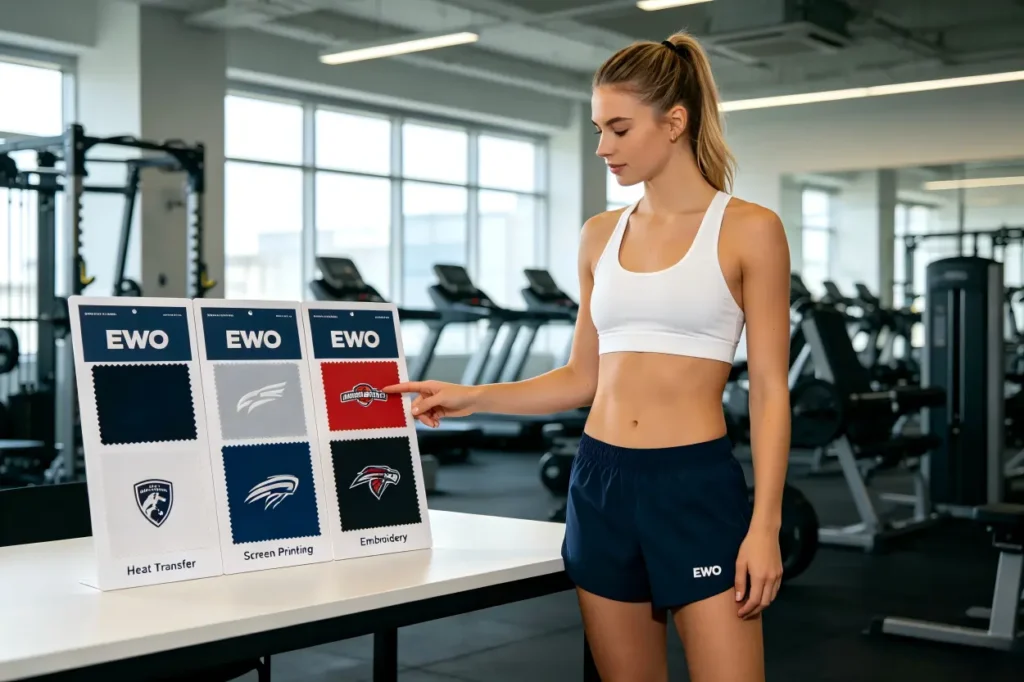
The best logo methods for custom gym shorts are heat transfer for clean and detailed branding, screen printing for bold designs and larger quantities, and embroidery for a textured premium finish. The final choice should match the fabric weight, logo size, placement and brand positioning.
What Are the Best Logo Methods for Custom Gym Shorts?
There is no single method that works for every style. Lightweight running shorts, stretch training shorts and heavy mesh basketball shorts require different decoration decisions.
For most custom gym and running shorts, buyers compare three main options:
- Heat transfer
- Screen printing
- Embroidery
Each method creates a different appearance, hand feel and production requirement.
| Logo method | Best suited for | Main advantage | Main risk |
|---|---|---|---|
| Heat transfer | Lightweight and stretch shorts | Sharp detail and clean finish | Peeling if material or temperature is incorrect |
| Screen printing | Bold logos and larger programs | Strong color and efficient repeat production | Heavy ink can reduce stretch |
| Embroidery | Premium or lifestyle-focused shorts | Textured, high-value appearance | Puckering on thin fabric |
Heat Transfer: Best for Clean and Detailed Logos
Heat transfer uses controlled heat and pressure to bond a prepared logo onto the fabric. It is commonly used on modern gym, running and training shorts because it can produce sharp edges without adding much weight.
It works well for:
- Small chest-style logos placed near the hem
- Multicolor artwork
- Fine lettering
- Reflective branding
- Stretch sportswear
- Samples and smaller product programs
During product development, the transfer material must be matched to the fabric. A transfer suitable for stable polyester may not behave the same way on nylon-spandex or a compression liner.
One issue we frequently encounter is artwork with extremely thin lines. These lines may look clear in the design file but become difficult to cut, position or bond consistently. Slightly increasing the line thickness can produce a cleaner bulk result without changing the overall logo.
When Should You Avoid Heat Transfer?
Heat transfer may not be suitable if the logo crosses a seam, sits over a highly textured mesh, or covers a very large area. Constant stretching can also place stress on the edges.
The sample should be checked for:
- Edge lifting
- Cracking after stretching
- Color change under heat
- Adhesion after washing
- Fabric marks caused by excessive pressure
Screen Printing: Best for Bold and Simple Artwork
Screen printing applies ink through a prepared screen onto the fabric. It is effective for clear, bold logos and designs with limited colors.
This method is often considered for:
- Large brand names
- One- or two-color artwork
- Team and club shorts
- Promotional sports programs
- Repeat orders using the same design
Screen printing can be practical for bulk production because the screen setup can be reused across the order. However, every additional color normally requires another screen and alignment step.
During sample approval, buyers should check the surface feel as well as the color. A thick ink layer may make lightweight shorts feel stiff. On stretch fabric, the ink system must also move with the garment instead of cracking when the wearer squats, runs or trains.
Screen Printing Mistakes to Avoid
A common mistake is approving the logo on a flat fabric panel without reviewing it on the finished shorts. Seams, pockets and curved side panels can change its visual position.
Confirm the following before bulk production:
- Finished logo dimensions
- Pantone or approved color reference
- Distance from the hem and side seam
- Ink finish: matte, gloss or raised
- Stretch and wash-test requirements
Embroidery: Best for a Premium Textured Finish
Embroidery builds the logo with thread, creating a raised and durable appearance. It can make gym shorts feel more premium, especially when used on thicker fabrics, waistbands or lifestyle-oriented training styles.
Embroidery works best for:
- Small, simple logos
- Brand initials
- Crests and badges
- Thick knit or woven fabrics
- Waistband branding
- Premium retail collections
The main limitation is weight. Dense stitching can pull on lightweight fabric and create puckering around the logo. Repeated needle penetration can also affect very thin stretch panels.
Based on our OEM experience, embroidery placement should be tested on the actual fabric rather than a substitute material. Thread density, backing material and logo size may need adjustment before the result looks clean.
How Should a Buyer Select the Logo Method?
A practical decision should consider five factors.
1. Fabric
Lightweight stretch fabric normally works better with a flexible heat transfer. Thicker mesh, knit or woven fabric may support screen printing or embroidery.
2. Logo Design
Detailed, multicolor artwork often suits heat transfer. Bold one-color graphics may suit screen printing. Simple initials and badges are more suitable for embroidery.
3. Placement
Avoid placing a logo directly over seams, pocket openings or areas with heavy stretching. The side hem, lower front panel and waistband are common locations, but the final position depends on the pattern.
4. Brand Positioning
A clean matte transfer creates a modern performance look. Screen printing can create a stronger graphic effect. Embroidery provides a more traditional premium appearance.
5. Repeat Production
For repeat production, the factory should record the approved logo size, color, placement, application settings and material. This helps reduce variation between orders.
What Should Be Approved Before Bulk Production?
The approved sample should become the production reference. A verbal description such as “small logo near the hem” is not accurate enough.
Include these details in the tech pack:
- Vector logo file in AI, EPS or PDF format
- Finished logo width and height
- Exact placement measurements
- Pantone or thread color
- Logo method and finish
- Fabric composition
- Wash-care requirements
- Reference photo of the approved sample
Under a complete OEM and ODM development process, logo testing is coordinated with fabric, construction and fit approval rather than treated as a separate final detail.
Sample production normally takes 8–10 working days once the fabric, measurements, artwork and construction details are approved. Express delivery by FedEx or DHL generally takes another 5–7 days.
After sample approval, bulk production normally takes 25–30 working days. Shipping takes approximately 5–7 days by express or 10–15 days by air freight. The complete production process should include decoration checks before final packing.
FAQ
Which Logo Method Is Most Durable on Gym Shorts?
Durability depends on the fabric, application materials and production control. Well-applied heat transfer, properly cured screen printing and correctly stabilized embroidery can all perform reliably. Testing the chosen method on the actual fabric is more useful than selecting by method name alone.
Can One Pair of Shorts Use More Than One Logo Method?
Yes. A brand may use a heat-transfer logo on the outer shell and a woven or printed label inside the waistband. However, combining several decorative methods can increase cost and make repeat production more complex.
What Should I Send to Get an Accurate Logo Recommendation?
Send your logo file, shorts reference image or tech pack, fabric preference, logo dimensions, placement, target quantity and intended retail position. The factory can then recommend a suitable method and prepare the correct sample.
Final Recommendation
Select the logo method after confirming the shorts fabric and construction—not before. Heat transfer is usually the most flexible choice for lightweight performance shorts, screen printing works well for bold graphic branding, and embroidery is better for thicker fabrics and premium details.
If you are developing a new gym shorts program, send your tech pack or discuss your project before sampling. Confirming the logo method, dimensions and placement early can prevent avoidable changes during bulk production.