When Should You Use a High Spandex Percentage, Around 12–15% or More?
A high spandex percentage is useful only when the product needs strong stretch, close body fit, and high recovery. It is not always the best choice for loose outer shorts.

Use 12–15% Spandex for Compression and Tight-Fit Styles
In our factory, we usually consider 12–15% spandex for products that need a close, supportive fit.
This includes:
- compression shorts
- inner liners for 2-in-1 shorts
- yoga shorts
- cycling shorts
- tight running shorts
- body-hugging training shorts
For these products, the fabric needs to stretch closely with the body and recover quickly after movement. The customer expects support, flexibility, and a smooth fit. In this case, higher spandex is not only a marketing feature. It is part of the product function.
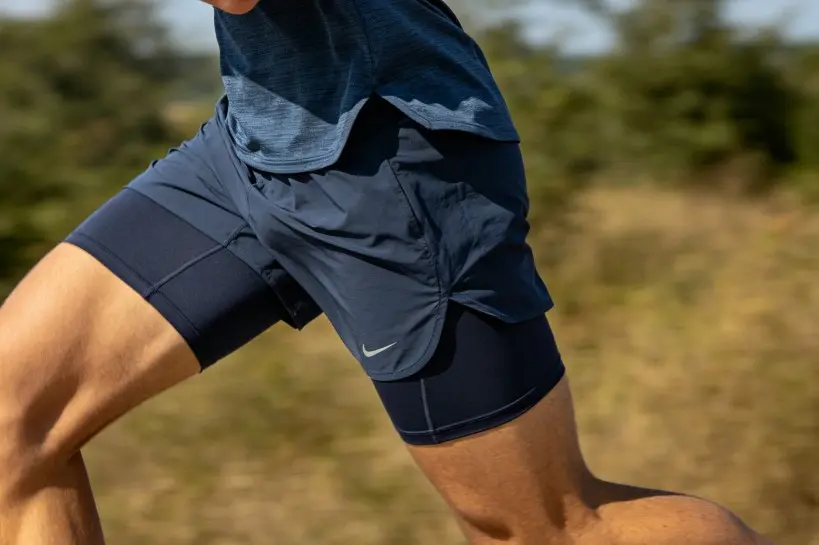
For example, the inner liner of 2-in-1 shorts needs to stay close to the leg during running and training. If the liner has weak recovery, it may ride up, loosen, or feel unstable. A higher spandex percentage can help the liner hold better when paired with the right fabric structure.
Why High Spandex Is Not Always Better
One common mistake from new brands is asking for the highest spandex percentage for a normal gym short.
This can create problems.
More spandex can make the fabric feel heavier, denser, and less breathable. It may also increase cost without improving the customer experience. In some fabric structures, high spandex can also increase the risk of pilling, curling, or sewing instability if the fabric is not selected properly.
For loose outer shorts, the customer usually does not need extreme stretch. They need enough movement, good shape, comfortable hand feel, and durability after washing.
| Product Type | Why High Spandex Is Needed | Common Mistake to Avoid |
|---|---|---|
| 2-in-1 short liners | Provides close fit and support | Using the same fabric for the loose outer shell |
| Compression shorts | Supports body-hugging performance | Ignoring breathability and pilling risk |
| Yoga shorts | Allows deep stretching and flexibility | Choosing stretch without checking recovery |
| Cycling shorts | Needs close fit and movement support | Using weak fabric structure |
| Tight running shorts | Helps reduce loose movement | Making the fabric too heavy or hot |
Factory Advice
Choose 12–15% spandex only when the product needs compression, close fit, or strong 4-way stretch.
Do not use high spandex only because it sounds more premium. For many sports shorts, a balanced fabric performs better than an overly stretchy one.
How to Choose the Right Spandex Percentage for Sports Shorts
The right spandex percentage should match the product type, fit, activity, and customer expectation.
During product development, I prefer to decide spandex percentage after confirming the wearing scene. A running short, training short, board short, and compression liner all need different fabric behavior.
Spandex Percentage Decision Guide
| Spandex Percentage | Best For | Fit Direction | Main Benefit | Main Risk |
|---|---|---|---|---|
| Around 5% | Board shorts, beach shorts, loose casual shorts | Loose or semi-relaxed | Light comfort stretch and structure | Limited recovery for intense training |
| 8–10% | Gym shorts, running shorts, training shorts | Regular athletic fit | Balance of stretch, recovery, and durability | May not be enough for compression fit |
| 12–15%+ | Compression shorts, liners, yoga shorts, tight styles | Close or body-hugging | Strong stretch and recovery | Can feel heavier, warmer, or less breathable |
Buyer Checklist Before Choosing Fabric
Before confirming fabric for custom sports shorts, check these points:
- What activity will the shorts be used for?
- Should the fit be loose, regular, or compression?
- Does the customer need light stretch or strong 4-way stretch?
- Is quick-dry performance important?
- Does the fabric recover well after stretching?
- Will the fabric feel too clingy for the target customer?
- Does the fabric match the target retail price?
- Is the fabric stable for repeat production?
- Can the factory control cutting and sewing during bulk production?
- Does the fabric still perform after washing?
This checklist is useful before sample development. A fabric swatch may feel good by hand, but the real test is how it performs in the final short.
At EWO, sample development usually takes 7–10 days, and the usual MOQ is 300 pcs. Bulk production usually takes 20–30 days, depending on fabric availability, trims, logo method, packaging, order quantity, and production schedule.
Common Mistakes When Choosing Spandex Percentage
A wrong spandex percentage can make the product uncomfortable, unstable, or more expensive than necessary.
Mistake 1: Thinking More Spandex Always Means Better Performance
Higher spandex gives more stretch, but it can also affect breathability, weight, hand feel, and cost. The best fabric is not always the highest-spandex fabric.
Mistake 2: Using Low Spandex for Tight Training Shorts
A low-spandex fabric may not recover well enough for compression or fitted athletic styles. This can create bagging and poor fit after movement.
Mistake 3: Using High Spandex for Loose Outer Shorts
Loose gym shorts or board shorts usually do not need 12–15% spandex. This may increase cost and make the fabric feel too dense or clingy.
Mistake 4: Ignoring Fabric Recovery
Stretch is only half the story. Recovery is just as important. A fabric that stretches but does not return well can lose shape after training or washing.
Mistake 5: Choosing Fabric Before Defining the Product Use
The same spandex percentage can perform differently depending on fabric structure, weight, and finishing. Always define the product use before selecting the fabric.
FAQ: Spandex Percentage in Sports Shorts
Is more spandex better for sports shorts?
Not always. More spandex gives more stretch, but it can also make the fabric heavier, warmer, or more expensive. The right percentage depends on fit, activity, and product type.
Is 5% spandex enough for gym shorts?
5% spandex can work for loose-fit gym shorts or casual athletic shorts. It is usually not enough for compression shorts, yoga shorts, or high-stretch training styles.
What is the best spandex percentage for gym shorts?
For most gym shorts, 8–10% spandex is a practical range. It gives a good balance of stretch, recovery, comfort, and durability.
What spandex percentage is best for 2-in-1 shorts?
For 2-in-1 shorts, the outer short may use a balanced stretch fabric, while the inner liner may need 12–15% spandex for closer fit and better support.
Does spandex affect fabric durability?
Yes. Spandex affects stretch and recovery, but the final durability also depends on fabric construction, yarn quality, weight, finishing, sewing, washing, and use conditions.
Should I choose polyester-spandex or nylon-spandex for sports shorts?
Both can work. Polyester-spandex is common for quick-dry and cost-balanced sports shorts. Nylon-spandex can offer a smoother hand feel and stronger premium texture, depending on fabric quality and construction.
Conclusion
The best spandex percentage for sports shorts is not the highest number. It is the percentage that matches the product’s fit, activity, fabric structure, and customer expectation.
Around 5% spandex works well for loose, casual, or board-short styles. 8–10% spandex is often the best balance for gym shorts, running shorts, and general training shorts. 12–15% spandex is better for compression liners, 2-in-1 shorts, yoga shorts, and tight performance styles.
For B2B buyers, the smartest choice is to define the product use first, then select the fabric. This helps protect comfort, durability, cost, and repeat production stability.
If your brand is developing custom gym shorts, running shorts, training shorts, or 2-in-1 shorts, you can contact EWO to discuss fabric options, send your tech pack, or request a sample.