How to Choose an Activewear Manufacturer for Your Sportswear Brand
A wrong factory choice can drain cash faster than many new brands expect. The first quote may look cheap, but the real cost appears later through wrong fabric, unstable fit, delayed samples, poor bulk consistency, or communication problems during production.
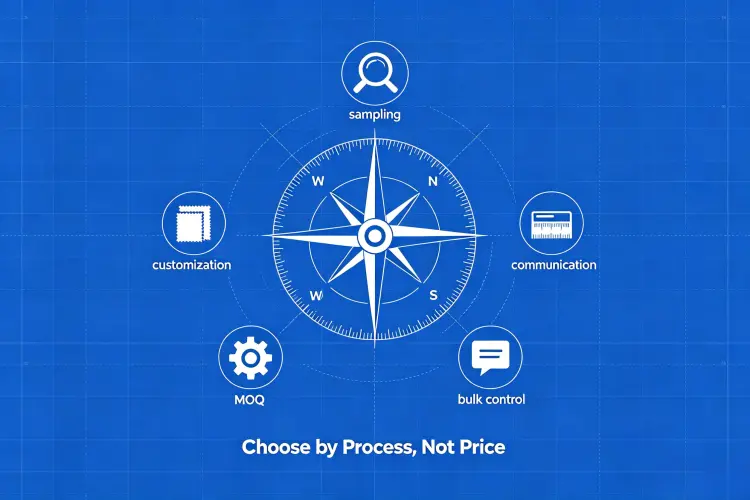
For a sportswear brand, choosing an activewear manufacturer is not only about finding the lowest unit price. It is about finding a supplier that understands fabric performance, customization, sampling, MOQ, bulk production, and repeat orders.
To choose an activewear manufacturer, check their sportswear experience, customization ability, MOQ fit, sampling process, bulk production control, communication quality, and ability to support future reorders. A reliable manufacturer should act like a supply chain partner, not only a price seller.
In our factory, overseas buyers usually come in two ways. Some have a full tech pack, size chart, artwork, and fabric details. Others only have a reference photo, target price, and product idea.
Both can work.
The real issue is not whether the buyer is fully prepared on day one. The real issue is whether the manufacturer knows how to guide the project clearly. A good activewear manufacturer should help the buyer define fabric, fit, construction, MOQ, sampling details, and production risks before bulk production begins.
This is especially important for gym shorts, running shorts, training shorts, board shorts, and other performance apparel. These products are not judged only by how they look on a table. They are judged by how they move, stretch, dry, recover, and hold shape during use.
What Should You Ask Before Requesting a Quote?
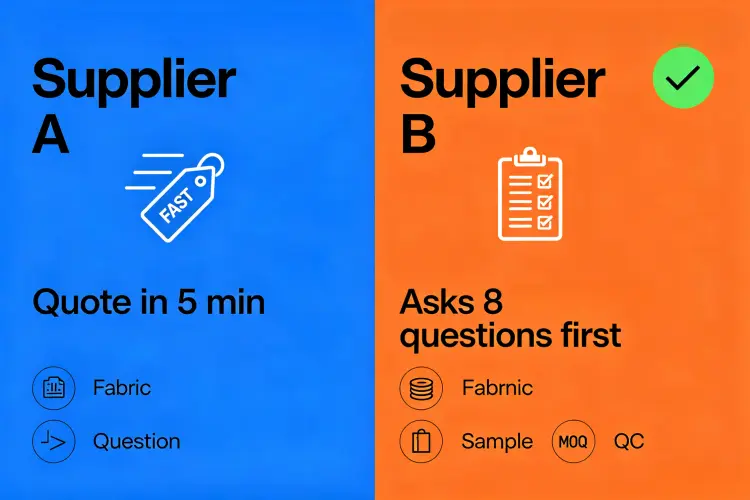
A fast quote can feel helpful, but it can also hide missing information. If the supplier quotes too quickly without asking about fabric, size, construction, and quantity, the price may not be reliable.
A serious activewear manufacturer should ask about your tech pack, size chart, reference sample, fabric needs, design files, order quantity, MOQ target, and future reorder plan before giving a final quote.
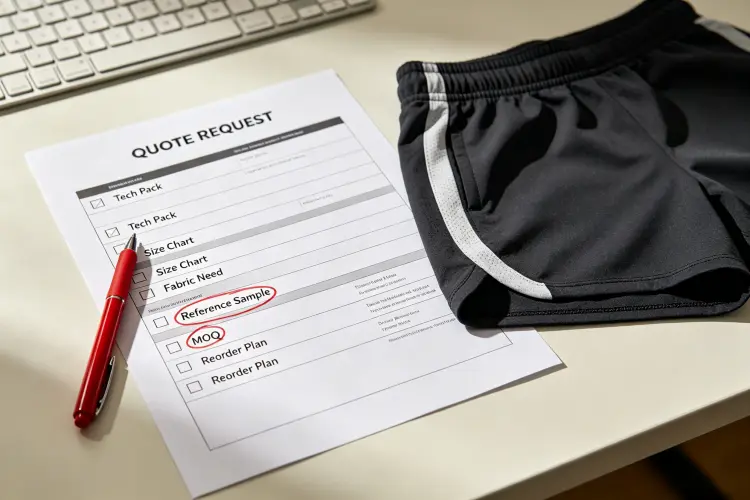
During product development, the first job is not simply to send a number. The first job is to understand what the buyer wants to make and what the product must do.
For example, a basic gym short with an elastic waistband is not the same as a 2-in-1 running short with compression lining, phone pocket, side split, drawcord, and custom logo. If both products receive the same quick quote, at least one quote is probably wrong.
Questions a Manufacturer Should Ask First
| Question | Why It Matters | Risk If Ignored |
|---|---|---|
| Do you have a tech pack? | It shows size, fabric, trims, and workmanship | The sample may not match your idea |
| Do you have a size chart? | Activewear fit is sensitive | Bulk sizes may become inconsistent |
| Do you have a reference sample? | It helps confirm hand feel and fit | Words may be misunderstood |
| What is your first order quantity? | It affects fabric sourcing and cost | The quote may be unrealistic |
| What is your future reorder plan? | It helps judge supplier fit | The factory may not support growth |
One common mistake is asking only, “What is your best price?” before defining the product. A supplier can answer, but the answer may not be useful.
A better discussion starts with product purpose:
- Is the product for gym training, running, beachwear, or daily wear?
- Is it a private label item or a real OEM custom design?
- Does the fabric need quick-dry, stretch, compression, or soft hand feel?
- Is the order for market testing or repeat wholesale supply?
- Does the buyer need standard packaging or custom retail packaging?
These answers change the quote, the sample plan, and the production method.
If your project is focused on performance shorts, you can review EWO’s custom gym and running shorts manufacturing options to compare common fabric, waistband, pocket, logo, and OEM details.
Why Is Activewear Different From Basic Apparel?
Basic clothing can look correct on a hanger. Activewear must perform on the body.
An activewear manufacturer needs to understand fabric performance, stretch direction, recovery, stitching, waistband tension, lining, pocket design, and movement comfort.
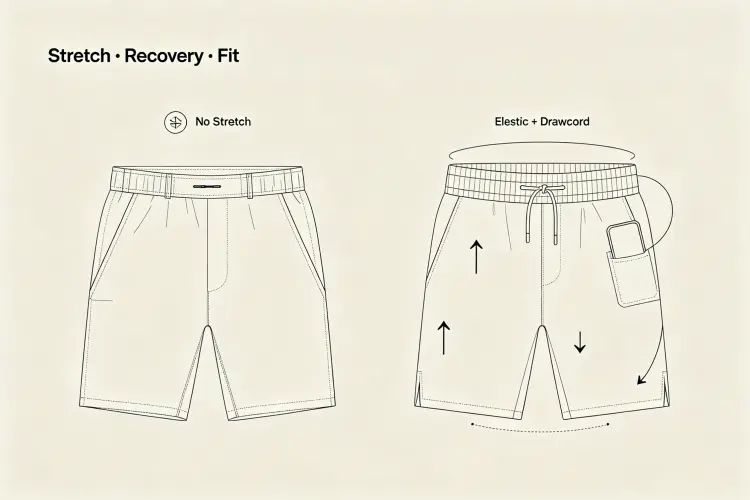
Activewear is not only fabric plus sewing. This becomes clear when buyers move from basic fashion apparel into sportswear. A factory that can sew T-shirts may not automatically understand running shorts, 2-in-1 gym shorts, board shorts, leggings, or sports bras.
Each activewear product has stress points. A seam may look clean when standing, but rub during running. A waistband may feel fine for one minute, but feel too tight during squats. A phone pocket may look useful, but bounce too much during training.
What Activewear Experience Should Cover
| Area | What to Check | Why It Reduces Risk |
|---|---|---|
| Fabric choice | Polyester, nylon, spandex, woven stretch, knit stretch | Wrong fabric changes fit and comfort |
| Fit knowledge | Rise, inseam, leg opening, waistband tension | Bad fit can lead to returns |
| Construction | Flatlock, overlock, bartack, lining attachment | Weak sewing can fail under movement |
| Function details | Zipper pocket, phone pocket, drawcord, mesh panel | Poor details hurt daily use |
| Shrinkage and recovery | Fabric behavior after washing and wearing | Bulk quality may not stay consistent |
Based on our OEM experience, the relationship between fabric and pattern is one of the most important details. A woven running short with a side split needs a different fit logic from a gym short made with stretch knit fabric. A board short needs different water-use thinking from a training short.
Even the waistband can decide whether the product feels professional. If the elastic is too tight, the shorts feel uncomfortable. If it is too loose, the customer loses trust in the brand.
That is why a good activewear manufacturer should talk about use case before price. The garment has to work during motion, not only look correct in photos.
How Should You Judge MOQ?
Low MOQ is attractive when a brand is launching. But MOQ is not only a number. It also shows whether the factory can support both your first order and future growth.
You should judge MOQ by launch risk, fabric availability, customization level, reorder plan, and factory capacity.
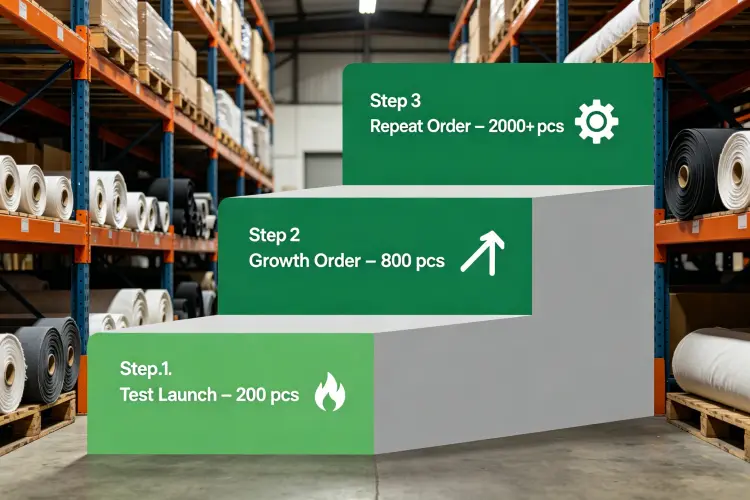
Many growing brands ask about MOQ before fabric, fit, or construction. That is normal. Cash flow matters. Inventory risk matters. A founder may not want to order too many pieces before testing the market.
At EWO, our usual MOQ is 300 pcs, which gives many brands a practical starting point for custom production. But MOQ still depends on fabric, color, trims, logo process, and customization level.
Very low MOQ can create hidden problems. If fabric is bought from spot stock, the next batch may have a different shade or hand feel. If the order is too small for proper production setup, the unit cost can be higher and the quality may be harder to stabilize.
How to Think About MOQ
| MOQ Question | Good Sign | Warning Sign |
|---|---|---|
| Can the factory support small first orders? | They explain limits by fabric and color | They promise anything without checking |
| Can they repeat the same fabric later? | They discuss fabric source and continuity | They ignore shade and batch issues |
| Can they scale volume later? | They explain capacity and lead time | They only focus on the first order |
| Can they handle custom trims? | They tell you trim MOQ clearly | They hide extra MOQ until late |
| Can they mix sizes and colors? | They give a practical breakdown | They give one vague number |
MOQ should match the business stage.
A startup brand needs room to test. A wholesale buyer needs stable supply. An Amazon seller may need careful inventory control. These are different needs.
A plain short made with available fabric may support a more flexible first order. A fully custom short with dyed fabric, custom waistband, custom drawcord, silicone logo, and special packaging may need more planning.
The problem is not MOQ itself. The problem is unclear MOQ logic. A reliable manufacturer should explain what can be flexible, what cannot, and why.
Why Is a Good Sample Not Enough?
A good sample creates confidence, but it does not prove bulk production reliability. Many sourcing problems begin after the sample is approved.
Sampling is the first checkpoint. Bulk production is the real test.
During sample approval, one or two pieces may be made slowly and carefully by a skilled sample worker. Bulk production is different. More fabric rolls, more workers, more sizes, more trims, and more process steps enter the order.
If the factory does not have a clear confirmation system, small differences can appear:
- pocket position may shift
- waistband tension may change
- logo placement may move
- leg opening may become inconsistent
- fabric shade may vary between batches
- packaging details may be missed
For this reason, sample approval should become the production standard, not the end of the checking process.
What to Check After the First Sample
| Stage | What the Buyer Should Confirm | What the Supplier Should Control |
|---|---|---|
| First sample | Fit, fabric, style, function | Construction method and cost reality |
| Revision sample | All comments and changes | Clear record of each update |
| Size set | Size grading and fit balance | Pattern accuracy across sizes |
| Pre-production sample | Final approved standard | Bulk-ready materials and trims |
| Bulk production | Consistency and workmanship | Inline inspection and final check |
In our factory, we prefer written approval points before bulk production starts. Photos are helpful, but they are not enough. The final confirmation should include fabric code, color, size chart, logo method, label position, packaging method, and workmanship notes.
This protects both sides.
If the buyer only says, “Make it like the sample,” the factory still needs a clear production standard. A reliable activewear manufacturer should treat the approved sample as the base standard for bulk production and repeat orders.
At EWO, sample development usually takes 7–10 days, while bulk production is usually 20–30 days, depending on order quantity, fabric, trims, logo process, and packaging requirements.
You can also review our production process to understand how sampling, order confirmation, bulk production, quality control, and shipment are usually managed.
What Does Good Supplier Communication Look Like?
Poor communication is not only frustrating. It is a production risk.
Good supplier communication should explain product details, price logic, MOQ limits, sampling steps, lead time, trade-offs, and possible risks before the buyer places the order.
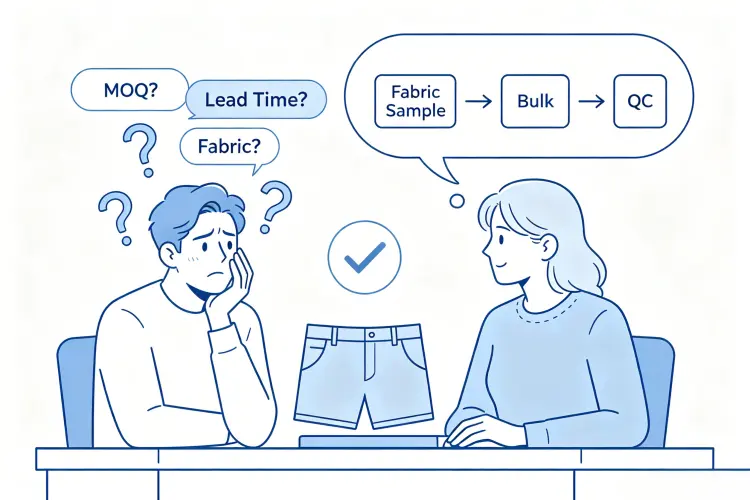
A supplier does not need perfect English to be reliable. What matters more is clear thinking, accurate confirmation, and honest risk explanation.
For example, if a buyer requests a very soft fabric, low price, low MOQ, custom color, and fast delivery at the same time, a good manufacturer should explain which parts conflict with each other. This is not negative. It is professional.
In real production, every choice affects another choice:
- custom color may affect MOQ and lead time
- special fabric may affect price and repeat availability
- complex trims may increase development time
- low MOQ may increase unit cost
- urgent delivery may reduce material options
Communication Signals to Watch
| Supplier Behavior | What It May Mean |
|---|---|
| They ask detailed questions before quoting | They are trying to reduce wrong assumptions |
| They explain why price changes | They understand cost structure |
| They give clear sample timelines | They know their internal process |
| They confirm changes in writing | They care about production accuracy |
| They discuss limits honestly | They may be safer for long-term cooperation |
| They say “yes” to everything | They may be hiding risk or lacking experience |
One issue we frequently encounter in OEM projects is late change confirmation. A buyer may adjust the logo size, packaging, fabric color, or pocket detail after the first quote. These changes are normal, but they must be recorded clearly.
A good activewear manufacturer should be able to explain fabric, construction, MOQ, and production trade-offs in simple language. They should also tell you when something is possible, when it is risky, and when it may not be worth the cost.
Clear communication helps prevent delayed samples, wrong bulk production, surprise costs, and unstable quality.
How Can You Compare Manufacturers Without Choosing Only by Price?
Price matters. Every brand needs margin. But the lowest unit price is not always the lowest total risk.
Compare activewear manufacturers by product understanding, sample process, MOQ fit, communication, production control, and growth support, not only by unit price.
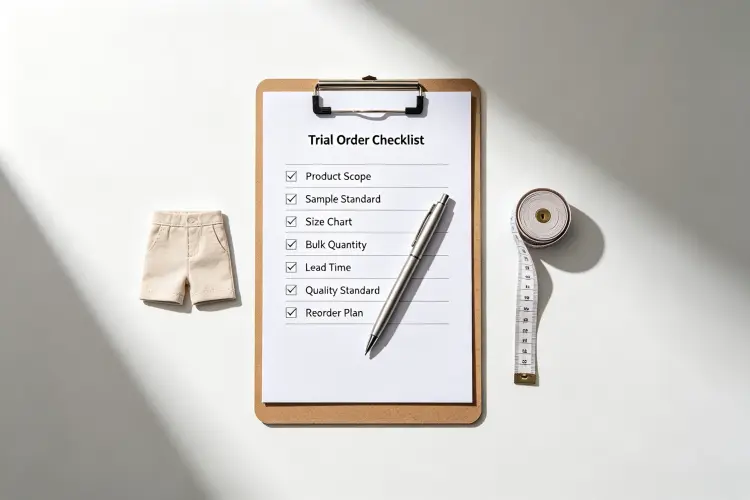
A cheap quote may exclude important details. It may use a different fabric, lower fabric weight, simpler stitching, basic packaging, or a different logo method. It may also assume a larger MOQ or ignore future repeat-order stability.
Before choosing a supplier, ask what is included in the price.
Practical Manufacturer Comparison Framework
| Factor | Better Question to Ask | Why It Matters |
|---|---|---|
| Price | What is included in this price? | Avoids false comparison |
| Fabric | Is this fabric available for repeat orders? | Protects brand consistency |
| Sampling | How many revisions are included? | Controls development cost |
| MOQ | Can this MOQ match my launch and reorder plan? | Protects cash flow |
| Lead time | What affects the timeline? | Prevents missed launch windows |
| Quality control | What is checked before shipment? | Reduces after-sales problems |
| Custom ability | Can you adjust pattern, fabric, and function? | Supports real brand building |
The strongest buyers usually ask more than “how much?” They ask:
- How can we improve the fit?
- Is this fabric stable for future reorders?
- Can the same color be repeated?
- What is the best sample process before bulk?
- Which details increase cost without much value?
- What should we simplify for the first order?
- How should we prepare for the second order?
These questions help both sides build a better product. A reliable manufacturer can then give practical advice instead of only quoting a number.
This is how sourcing becomes a supply chain relationship. For a growing sportswear brand, that relationship is often more valuable than saving a small amount on the first order.
Common Mistakes When Choosing an Activewear Manufacturer
Many supplier problems can be avoided before the first order. Here are the mistakes buyers should watch for.
Mistake 1: Choosing Only by the Lowest Quote
A low quote may look good, but it may not include the same fabric, construction, logo method, packaging, or quality standard. Always compare full specifications.
Mistake 2: Ignoring Activewear Experience
Activewear requires knowledge of movement, stretch, recovery, stitching, waistband tension, and fit. A basic apparel factory may not always understand these details.
Mistake 3: Treating the Sample as the Final Check
A good sample is only the beginning. The factory still needs size grading, pre-production confirmation, bulk material control, inline inspection, and final QC.
Mistake 4: Accepting Vague MOQ Answers
MOQ should be explained by fabric, color, trims, logo method, and order structure. A supplier that promises anything without checking may create problems later.
Mistake 5: Not Planning for Repeat Orders
A first order may succeed, but the second order can fail if fabric, color, trims, or workmanship cannot be repeated. Ask about material continuity early.
Checklist Before Choosing an Activewear Manufacturer
Before confirming a supplier, check these points:
- Do they understand your product category?
- Can they explain fabric options clearly?
- Do they ask about use case before quoting?
- Can they support OEM / ODM customization?
- Is their MOQ suitable for your launch plan?
- Can they explain sample development steps?
- Do they confirm changes in writing?
- Do they have a clear bulk production process?
- Can they control size grading and workmanship?
- Do they discuss repeat-order fabric availability?
- Can they support your future growth, not only one order?
For sportswear brands developing custom shorts, it is also helpful to review the supplier’s product focus. A factory that understands gym shorts, running shorts, training shorts, and board shorts can usually give more practical advice on fabric, fit, pockets, waistband, and production details.
You can explore EWO’s custom shorts product range if you are comparing different activewear categories for your next collection.
FAQ: How to Choose an Activewear Manufacturer
What should I look for in an activewear manufacturer?
Look for sportswear experience, fabric knowledge, customization ability, MOQ fit, sample development process, quality control, communication quality, and repeat-order support.
Why is activewear harder to manufacture than basic clothing?
Activewear must perform during movement. The factory needs to understand stretch, recovery, seam strength, waistband tension, lining comfort, pocket function, and fit across different sizes.
What MOQ is suitable for a new sportswear brand?
MOQ depends on fabric, color, logo method, trims, packaging, and customization level. At EWO, the usual MOQ is 300 pcs, which is often a practical starting point for custom production.
How long does activewear sample development take?
Sample development usually takes 7–10 days, depending on fabric availability, construction complexity, logo method, and how clear the buyer’s brief is.
How long does bulk production usually take?
Bulk production usually takes 20–30 days, depending on order quantity, fabric sourcing, trims, logo process, packaging requirements, and factory schedule.
Should I choose the cheapest activewear manufacturer?
Not always. A cheaper supplier may reduce fabric quality, simplify construction, exclude packaging, or lack bulk production control. Compare full specifications and total sourcing risk before deciding.
Conclusion
Choosing an activewear manufacturer is not only a price decision. It is a supply chain decision that affects product quality, launch timing, customer reviews, and repeat production.
A reliable manufacturer should understand activewear fabric, fit, function, sampling, MOQ, quality control, and long-term growth. They should ask clear questions, explain trade-offs, and help you avoid mistakes before bulk production begins.
If your brand is developing gym shorts, running shorts, training shorts, board shorts, or other custom activewear products, you can contact EWO to discuss your project, send your tech pack, or request a sample.