Do Premium Fabrics Increase Profit Margins for Custom Athletic Shorts?
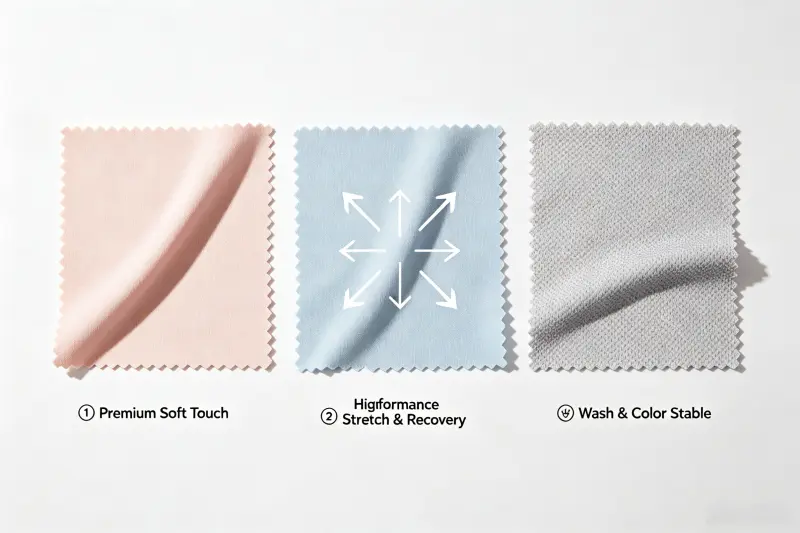
Many sportswear brands assume that choosing a lower-cost fabric automatically leads to higher profit margins. In reality, fabric decisions influence much more than manufacturing cost. They affect product positioning, customer perception, repeat purchases, and ultimately the price customers are willing to pay.
Based on our OEM manufacturing experience, premium fabrics don't increase margins simply because they cost more. They create value when they improve comfort, performance, durability, and overall product quality in ways customers can clearly recognize.
During product development, we've worked with brands targeting different price segments—from entry-level gym shorts to premium 2-in-1 training shorts. The most successful products rarely use either the cheapest or the most expensive fabric. Instead, they use fabrics that match the brand's positioning and customer expectations.
This guide explains how to evaluate premium fabrics from a business perspective and when investing in higher-quality materials can improve long-term profitability.
Why Should Retail Price Come Before Fabric Cost?
Many buyers compare fabric quotations before deciding how they want their product to compete in the market. That approach often leads to products that are difficult to differentiate and forced into price competition.
A more effective process is to determine your target retail price first, then select fabrics that support the quality level customers expect at that price.
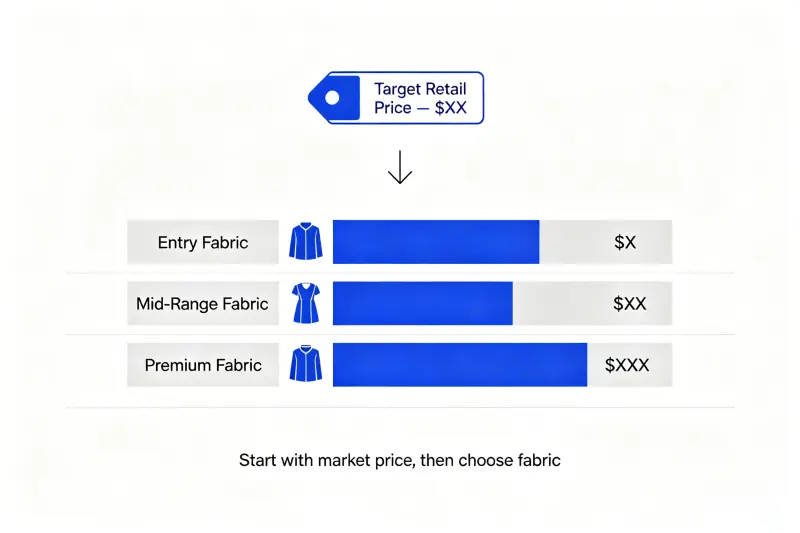
During OEM consultations, one of the first questions we ask isn't about fabric weight or composition. Instead, we ask:
What retail price is this product expected to support?
The answer influences nearly every material decision that follows.
For example:
- Entry-level training shorts prioritize cost efficiency and reliable functionality.
- Mid-range products require noticeable improvements in comfort and fit.
- Premium collections demand superior hand feel, stretch recovery, and construction quality.
Starting with market positioning helps avoid selecting fabrics that either exceed the product's value or fail to meet customer expectations.
Build Fabric Selection Around Market Expectations
Instead of choosing the lowest-cost material available, evaluate fabrics according to the customer experience you want to deliver.
Important questions include:
| Question | Why It Matters |
|---|---|
| What is the target retail price? | Determines the quality level customers expect. |
| Who is the target customer? | Different users prioritize different fabric characteristics. |
| How is the brand positioned? | Premium brands require stronger product differentiation. |
| What customer complaints should be avoided? | Helps prioritize comfort, durability, and performance. |
During one OEM project, a growing activewear brand wanted to move from entry-level products into a higher retail category.
Initially, the discussion focused on reducing FOB cost. After reviewing the intended retail price and competitive products, the conversation shifted toward perceived value instead of simply lowering manufacturing cost.
The final solution wasn't the most expensive fabric available. It was a balanced performance fabric that noticeably improved comfort, recovery, and appearance while remaining commercially viable.
This approach allowed the brand to justify a higher retail price without dramatically increasing production costs.
What Makes a Fabric Feel Premium to Customers?
Customers don't judge fabrics by supplier quotations or technical specifications.
They judge them by how the garment feels during the first fitting, the first workout, and after multiple washes.
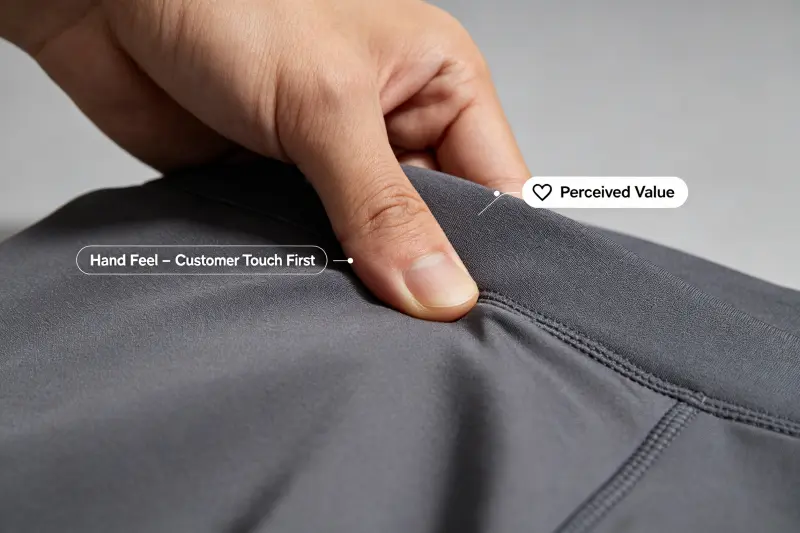
During sample development, we focus on characteristics that customers immediately notice rather than features that exist only on a specification sheet.
These include:
- Soft hand feel
- Smooth surface texture
- Four-way stretch
- Recovery after repeated movement
- Breathability
- Moisture management
- Color consistency
- Shape retention
These factors directly influence how customers evaluate product quality.
For example:
A premium gym short should remain comfortable throughout strength training.
A running short should feel lightweight without becoming transparent.
A 2-in-1 short should balance the outer shell and compression liner without causing friction.
A board short should dry quickly while maintaining color after repeated exposure to sunlight and water.
| Fabric Characteristic | Customer Benefit | Business Value |
|---|---|---|
| Soft hand feel | Higher perceived quality | Supports premium pricing |
| Four-way stretch | Better freedom of movement | Improves product reviews |
| Recovery | Maintains original shape | Builds long-term durability |
| Better drape | Cleaner appearance | Enhances product presentation |
| Color stability | Consistent appearance after washing | Strengthens brand reputation |
| Batch consistency | Repeat orders match previous production | Improves customer confidence |
Not every product requires every premium feature.
However, every fabric upgrade should create a noticeable improvement that customers can actually experience.
If users cannot recognize the difference, paying significantly more for the material rarely creates additional commercial value.
Related Reading: Learn how we develop performance fabrics during our Custom Gym & Running Shorts Manufacturing process, from material sourcing to production approval.
When Can Lower-Cost Fabrics Reduce Profit Margins?
Lower-cost fabrics certainly have their place in the market. For promotional products, entry-level activewear, or price-sensitive wholesale programs, they can provide excellent value. Problems arise when inexpensive fabrics are expected to support a premium product strategy.
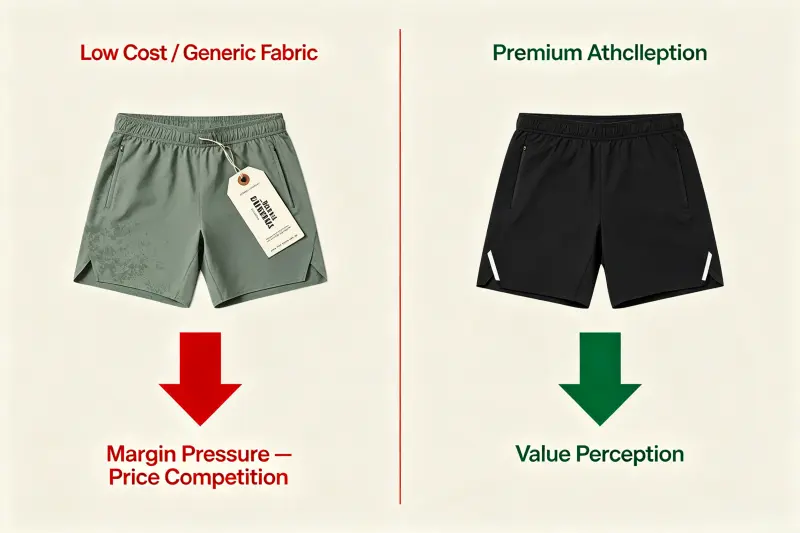
Based on our OEM experience, the greatest risk isn't using an affordable fabric—it's creating a mismatch between the product promise and the customer experience.
For example, a sportswear brand may advertise premium performance while selecting fabrics with limited stretch recovery, inconsistent color, or a rough hand feel. Customers notice these differences immediately, even if they don't know the technical specifications behind the fabric.
When perceived quality doesn't match the selling price, brands often rely on discounts to drive sales, reducing profit margins far more than a moderate increase in fabric cost would have.
Separate Low Cost From Low Value
A lower-cost fabric isn't automatically a poor choice.
For many product categories, it's exactly the right solution.
The key is selecting fabrics that match the product's positioning rather than trying to maximize margins through material savings alone.
| Fabric Strategy | Potential Outcome |
|---|---|
| Cost-efficient fabric for entry-level products | Competitive pricing with appropriate customer expectations |
| Budget fabric used in premium collections | Higher risk of disappointing customers |
| Fabric with poor stretch recovery | Garments lose shape more quickly |
| Inconsistent fabric batches | Repeat orders vary in quality |
| Poor colorfastness | Increased returns and lower customer satisfaction |
During product sourcing, we often encourage buyers to compare two questions instead of one:
- How much does this fabric cost?
- How much value does this fabric create for the customer?
That shift in thinking usually leads to stronger long-term product decisions.
The fabric is one of the first things customers experience. They touch it before they notice construction details, labels, or branding. If the material feels generic, the entire product can feel generic—even if every other component is well designed.
Is the Most Expensive Fabric Always the Best Choice?
Not necessarily.
Higher-priced fabrics only create additional value when they support the product's intended use, target customer, and retail positioning.
During OEM development, we frequently recommend fabrics that balance performance, durability, availability, and production cost rather than simply choosing the highest-priced option.
A premium material can actually reduce product competitiveness if it introduces unnecessary cost without creating meaningful benefits for the end user.
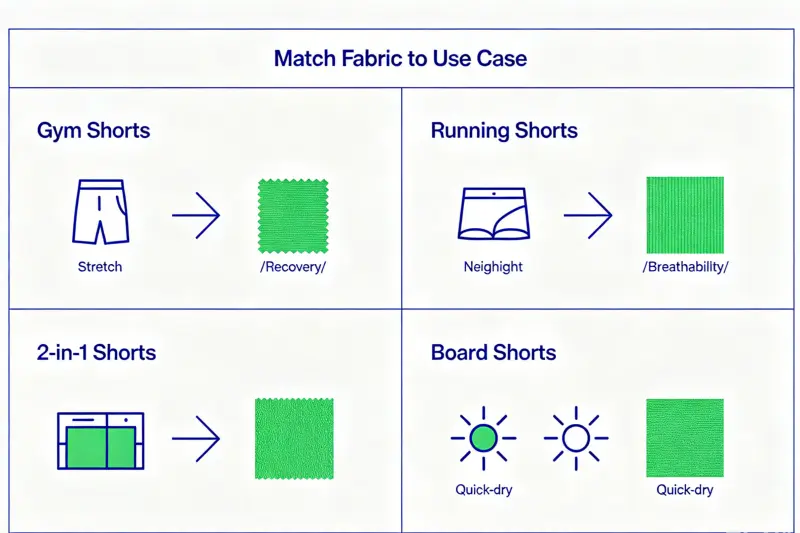
Match Fabric to the Product, Not the Price
Each product category requires different performance characteristics.
For example:
| Product Type | Recommended Fabric Focus |
|---|---|
| Gym Shorts | Stretch recovery, durability and shape retention |
| Running Shorts | Lightweight construction and breathability |
| 2-in-1 Shorts | Compatibility between shell fabric and compression liner |
| Board Shorts | Quick-drying performance and colorfastness |
| Lifestyle Athletic Shorts | Soft hand feel, drape and everyday comfort |
Fabric should always complement the overall product design.
A lightweight running short may become uncomfortable if an overly heavy fabric is selected.
Conversely, an extremely lightweight material may feel inexpensive if construction quality isn't sufficient to support it.
During product development, we evaluate fabrics together with:
- Pattern design
- Waistband construction
- Pocket layout
- Compression liner
- Sewing methods
- Overall garment weight
These elements work together to determine the final wearing experience.
Balance Performance and Commercial Viability
Retail pricing also plays an important role.
Many successful mid-range sportswear brands don't use the most expensive performance fabrics available.
Instead, they choose materials that deliver:
- Reliable stretch
- Comfortable hand feel
- Consistent bulk production
- Good wash durability
- Stable long-term supply
This balanced approach allows brands to maintain healthy profit margins while delivering a product customers perceive as excellent value.
Over-specifying fabrics can create unnecessary manufacturing costs, reduce pricing flexibility, and sometimes complicate future reorders if specialty materials become difficult to source.
Based on our factory experience, the best-performing products are rarely built around the most expensive fabric—they're built around the most appropriate fabric.
Related Reading: Learn more about our OEM & ODM Manufacturing Services and how we help brands select fabrics that balance performance, positioning, and production efficiency.
How Should You Test Fabric Before Bulk Production?
Selecting a fabric based on a swatch alone is rarely enough. A small fabric sample can demonstrate texture and color, but it cannot accurately show how the finished garment will perform during training or after repeated washing.
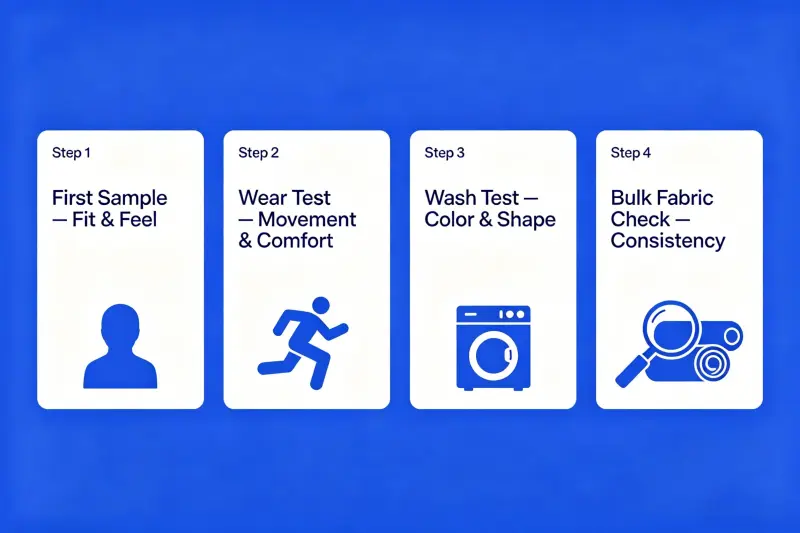
Based on our OEM experience, the most reliable fabric decisions are made after completing a structured sampling process rather than evaluating fabric cards in isolation.
During product development, we encourage buyers to assess fabrics through real-world testing instead of relying solely on specifications such as GSM or fiber composition.
Evaluate the Fabric in the Finished Garment
Once a sample has been produced, review the entire product—not just the material itself.
Questions worth asking include:
- Does the fabric drape naturally?
- Does it stretch comfortably during movement?
- Does the waistband work well with the body fabric?
- Does the liner create unnecessary heat?
- Does the pocket construction affect the garment's balance?
- Does the fabric maintain its appearance after washing?
These factors often become much clearer once the material is sewn into a finished pair of shorts.
| Testing Stage | Purpose |
|---|---|
| First sample evaluation | Review fit, drape, stretch and overall comfort |
| Wear testing | Assess performance during actual workouts |
| Wash testing | Check colorfastness, shrinkage and recovery |
| Bulk fabric verification | Confirm production fabric matches approved sample |
| Cost review | Compare material investment with target retail positioning |
During sample approval in our factory, we recommend that buyers actually wear the shorts instead of simply reviewing measurements or appearance.
Simple activities such as:
- Squats
- Running
- Lunges
- Sitting
- Stretching
often reveal issues that aren't visible on a fitting table.
We've also found that comparing two or three fabric options side by side helps buyers identify where premium materials genuinely improve the product—and where additional cost creates little practical benefit.
Sampling Reduces Long-Term Production Risk
A sample isn't intended to predict exact sales performance.
Its primary purpose is to reduce manufacturing uncertainty before bulk production begins.
For example:
- Premium collections should already feel premium during sample approval.
- Mid-range collections should clearly deliver value within their target price range.
- Entry-level products should achieve reliable quality without unnecessary material costs.
This process allows buyers to make more informed sourcing decisions before committing to large production quantities.
At EWO, every OEM and ODM project begins with structured sample development.
Our standard process includes:
- 7–10 days for sample development
- Fabric confirmation before bulk cutting
- Sample approval before production
- Bulk production in approximately 15–20 days for orders of around 600 pieces
Following a structured approval process significantly reduces revision costs and improves production consistency.
How Can Premium Fabrics Encourage Repeat Purchases?
The first sale is often driven by marketing, branding, or product photography.
Repeat purchases are usually driven by the customer's actual experience.
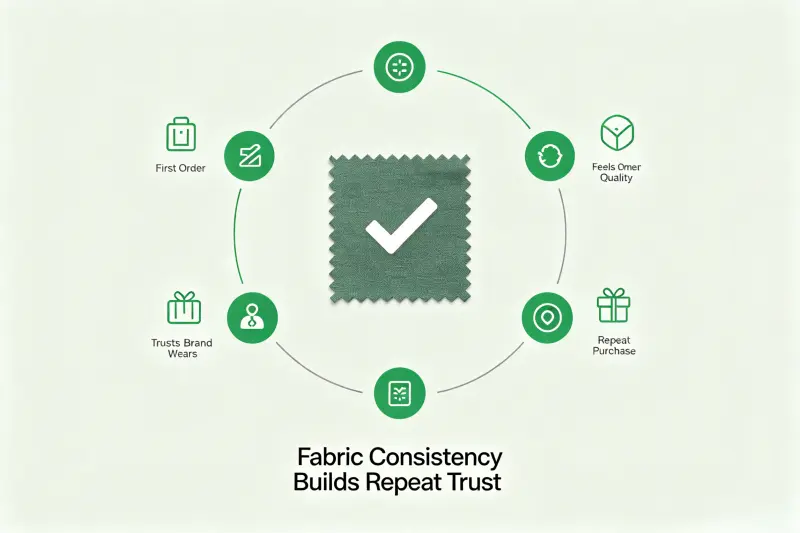
While premium fabrics can help attract customers initially, their greatest value often appears after weeks or months of use.
Customers are more likely to purchase again when the garment continues to deliver:
- Comfortable wear
- Stable fit
- Reliable stretch
- Consistent color
- Durable appearance
These qualities strengthen confidence in both the product and the brand.
Consistency Builds Long-Term Brand Value
One challenge many growing brands face is maintaining consistency across multiple production runs.
Even if the first order performs well, differences in later batches can reduce customer confidence.
For this reason, our factory places significant emphasis on maintaining approved production standards for repeat orders.
This includes documenting:
- Fabric specifications
- Color standards
- Pattern measurements
- Approved trims
- Sewing methods
- Packaging requirements
These production records help ensure future orders remain consistent with previously approved samples.
| Repeat Purchase Driver | Why Fabric Matters |
|---|---|
| Comfort after repeated wear | Soft, stable fabrics improve long-term satisfaction |
| Shape retention | Good recovery helps garments maintain their fit |
| Appearance after washing | Color and surface quality influence customer perception |
| Production consistency | Matching previous batches builds brand trust |
| Customer confidence | Reliable quality encourages repeat purchases |
Based on our manufacturing experience, customers rarely remember a fabric's technical name.
What they remember is how the shorts felt during training, how they looked after washing, and whether the next purchase delivered the same quality as the first.
That consistency is often more valuable than choosing the most expensive fabric available.
Premium Fabric Selection Checklist
Before finalizing your fabric choice, ask yourself these questions:
| Evaluation Point | Why It Matters |
|---|---|
| Does the fabric match the target retail price? | Supports the intended market position |
| Can customers feel the quality difference? | Increases perceived product value |
| Does it suit the intended activity? | Improves product performance |
| Has the fabric been tested in a finished sample? | Reduces production risk |
| Can the supplier source it consistently? | Ensures repeat-order stability |
| Does it support long-term brand positioning? | Builds customer loyalty instead of competing only on price |
Frequently Asked Questions
Do premium fabrics always increase profit margins?
No. Premium fabrics increase margin potential only when customers recognize and value the improvement. Higher material costs alone do not guarantee higher profitability.
How do I know if a fabric upgrade is worth the cost?
Compare the finished samples side by side rather than relying only on fabric swatches. If the improvement in comfort, performance, or appearance is obvious, the upgrade is usually easier to justify.
What is the best fabric for premium gym shorts?
There is no single best fabric. The ideal choice depends on the product's intended use, retail price, target customer, and overall brand positioning.
Should I always choose the most expensive performance fabric?
Not necessarily. The best-performing products often use balanced materials that provide excellent comfort, durability, and production consistency without unnecessary cost.
Conclusion
Premium fabrics don't automatically create higher profit margins. Their value comes from helping brands build products that customers genuinely prefer to wear, recommend, and purchase again.
During OEM product development, successful fabric selection starts with understanding the target market—not simply reducing material costs. By matching fabrics to the intended retail price, customer expectations, and product positioning, brands can create stronger differentiation while maintaining healthy long-term margins.
At EWO, every project begins with structured sample development to help brands evaluate fabrics before committing to bulk production.
Our manufacturing services include:
- 7–10 days sample development
- MOQ from 300 pcs
- 15–20 days bulk production for approximately 600 pieces
- Factory-direct OEM & ODM manufacturing
- Fabric selection guidance
- Quality inspection before shipment
Whether you're developing an entry-level activewear collection or a premium performance line, selecting the right fabric is one of the most important decisions you'll make before production begins.
Ready to Develop Premium Custom Athletic Shorts?
If you're planning a new custom athletic shorts collection, we'd be happy to help you compare fabric options and recommend materials that match your target market and price positioning.
Send us your:
- Tech Pack
- Reference samples
- Fabric requirements
- Target retail price
- Estimated order quantity
We'll help you identify the most suitable material before sampling begins.
Next Steps
- Request a Quote
- Discuss Your Project
- Send Your Tech Pack