Performance T-Shirt Manufacturing can become frustrating when a simple design idea turns into unclear quotes, repeated samples, and bulk quality surprises. A reference photo may look clear, but it does not tell a factory enough to produce consistent goods. The better path is to convert the idea into specifications that can be sampled, checked, and repeated.
Performance T-Shirt Manufacturing is the process of turning a sportswear design into a producible T-shirt through fabric selection, fit development, logo method, sampling, bulk production, inspection, and export packaging. Successful buyers define the product details early, approve samples carefully, and manage tolerances before mass production begins.
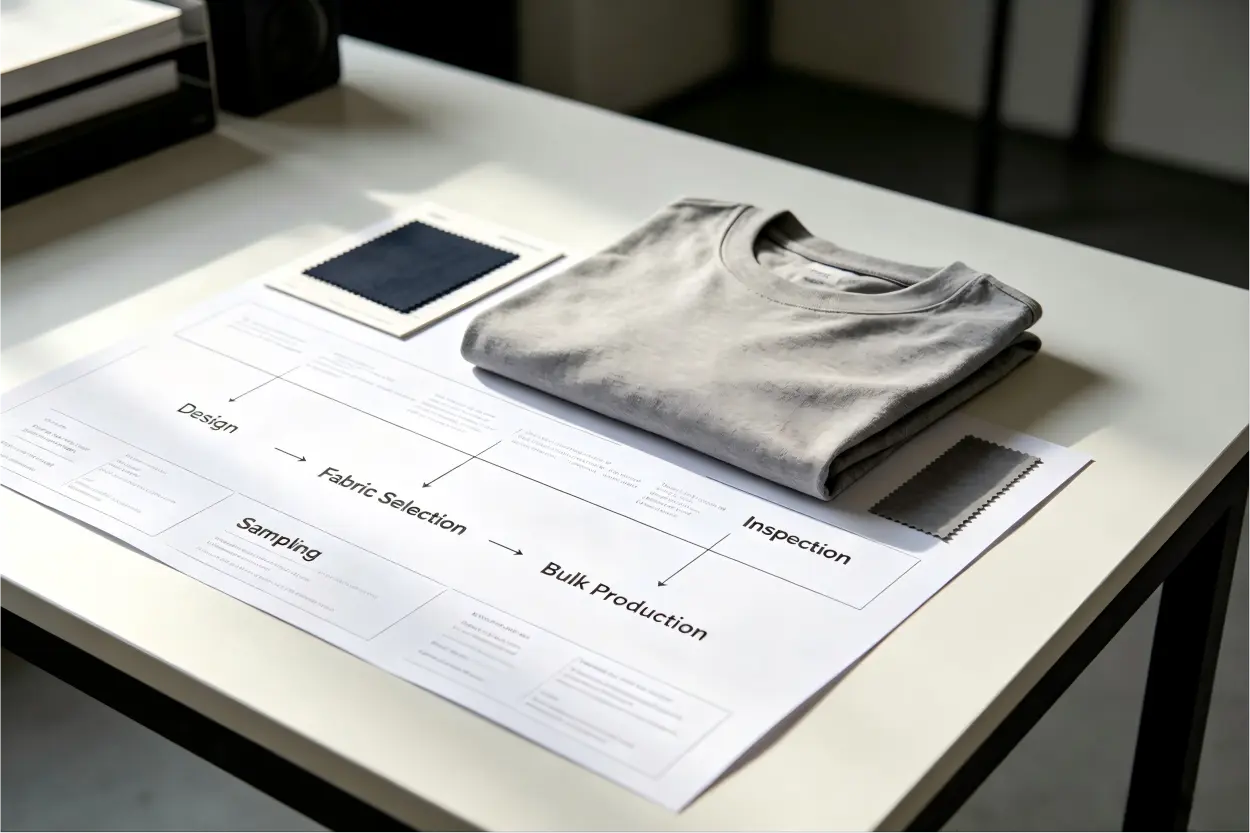
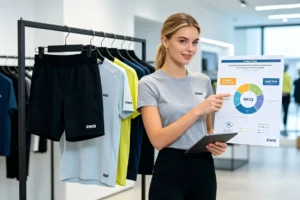
Many overseas buyers come to us with a photo, a logo, and a target launch date. That is a good start, but it is not enough for reliable production. The real work begins when we turn visual direction into factory-ready decisions.
Why Does Performance T-Shirt Manufacturing Need More Than a Reference Image?
A reference image creates a shared direction, but it can also hide missing details. Buyers may expect a quote quickly, while the factory still needs fabric, size, logo, and workmanship information. If these points stay unclear, sampling can move slowly and bulk production can become risky.
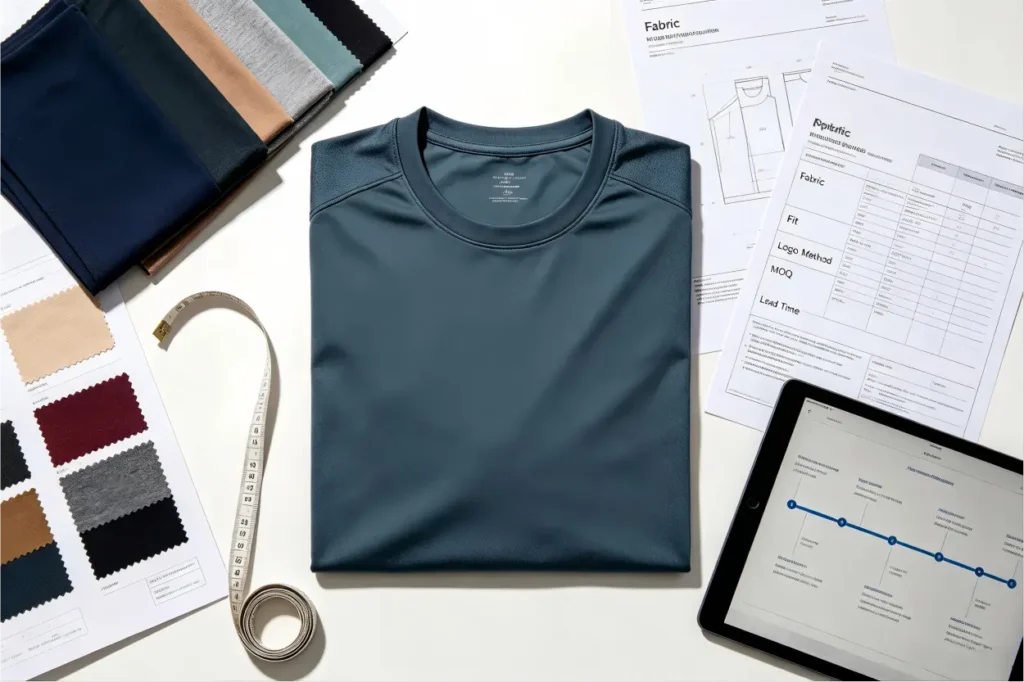
A reference image is not enough for Performance T-Shirt Manufacturing because a factory must confirm fabric composition, GSM, stretch, color, size chart, trims, logo method, stitching, packaging, MOQ, and timeline before giving reliable sampling or bulk pricing.
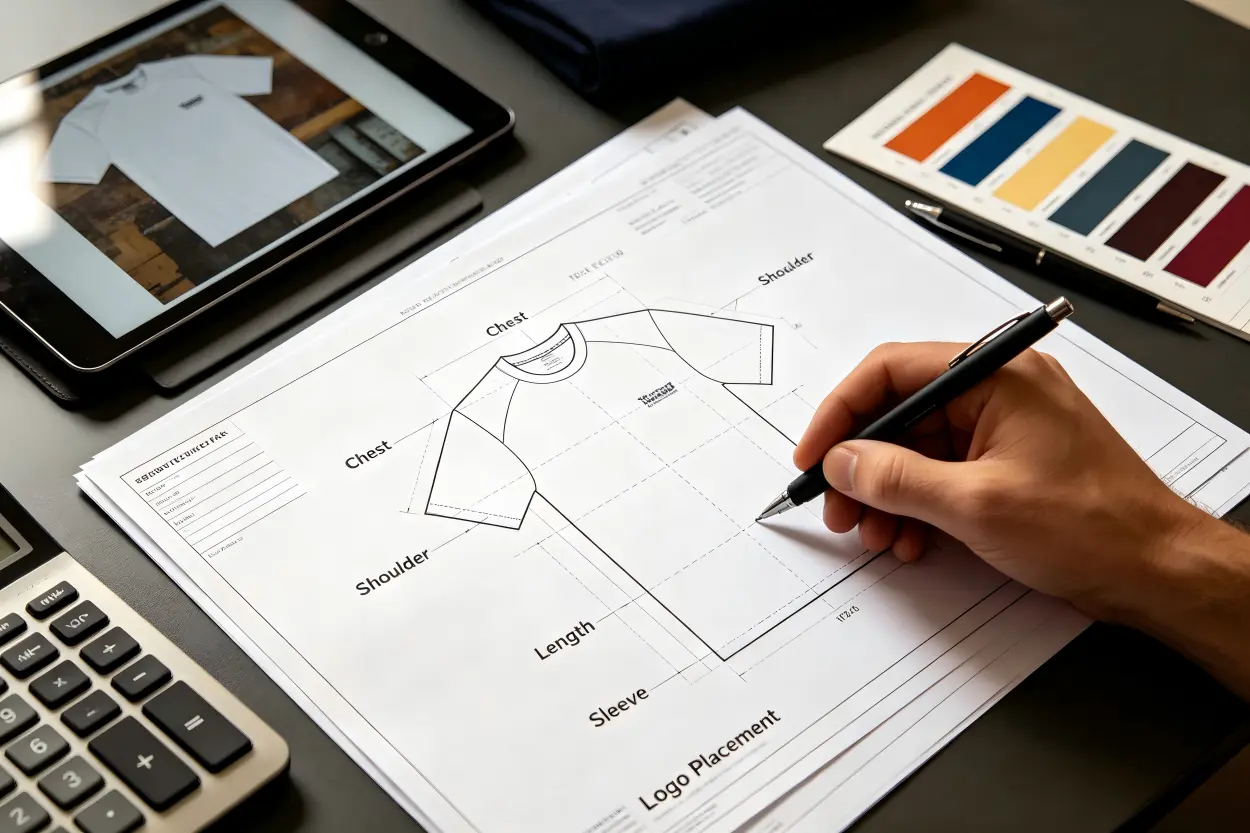
During product development, our team often receives messages like, "Can you make this T-shirt?" The photo may show a slim athletic tee, but it does not show the fabric weight, elasticity, neck rib quality, side seam shape, or logo technique. Two shirts can look similar on screen and feel completely different in hand.
That is why I treat the reference image as the starting point, not the specification.
What a Factory Needs Before Serious Quoting
For a reliable quote, we need to understand several basic production variables:
| Detail | Why It Matters for Production |
|---|---|
| Fabric composition | Affects hand feel, stretch, moisture behavior, cost, and durability |
| Fabric weight / GSM | Changes opacity, drape, seasonality, and perceived quality |
| Elasticity | Affects movement comfort and fit recovery |
| Color standard | Helps reduce misunderstandings in lab dips and bulk dyeing |
| Size chart | Controls fit, grading, and measurement inspection |
| Logo method | Impacts appearance, durability, price, and lead time |
| Stitching details | Affects comfort, strength, and active movement |
| Packaging | Changes unit cost, carton size, barcode work, and export preparation |
A buyer may say, "We need a breathable gym T-shirt." That is useful, but it is not yet a production instruction. "Breathable" can mean lightweight polyester mesh, a cotton-poly blend with soft hand feel, or a smooth recycled polyester fabric with moisture-wicking finish. Any performance claim should depend on the actual fabric, supplier documentation, and, where required, third-party testing.
Common Mistake: Asking for Price Before Defining the Product
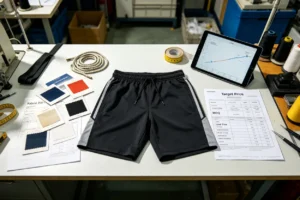
One issue we frequently encounter is a price request before the buyer has confirmed product direction. The question is natural. Every buyer has a budget. However, early pricing can be misleading if the specifications are not fixed.
Before pricing, we normally confirm:
- Order quantity or expected MOQ
- Fabric type and weight
- Number of colors
- Logo size and technique
- Size range
- Packaging requirements
- Target delivery date
- Whether the buyer needs OEM or ODM support
A simple one-color training tee with heat transfer logo will not cost the same as a multi-panel running tee with reflective print, custom neck tape, hang tags, polybags, and carton labels.
For buyers who are still shaping their first product, our OEM/ODM sportswear development service is often the more suitable starting point than asking for a bulk quote immediately. It allows the design, material, and production route to become clear before larger decisions are made.
Practical tip: If you do not have a full tech pack, prepare at least a reference photo, target fabric feel, size chart, logo file, expected quantity, and packaging needs. This helps the factory respond with fewer assumptions.
How Should Buyers Define "Performance" Before Sampling?
The word "performance" can sound clear in marketing, but it becomes vague in production. A gym brand, running club, school team, and lifestyle activewear label may all request performance T-shirts. Each use case may need a different fabric, fit, and decoration decision.
Buyers should define performance by use case before sampling. A training T-shirt may need stretch and durability, a running T-shirt may need lightweight breathability, teamwear may need logo clarity, and daily activewear may need softness, wash resistance, and comfortable fit.
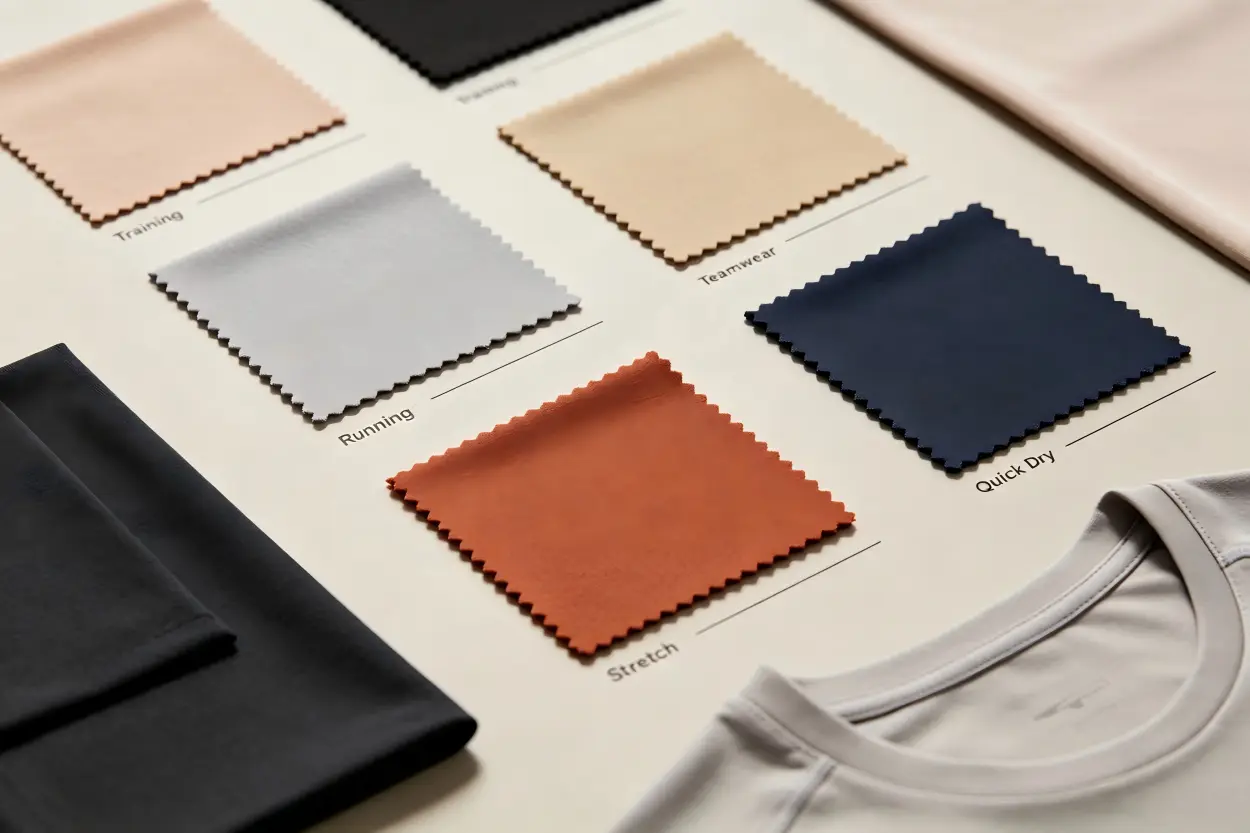
Based on our OEM experience, the best product conversations begin with the activity. The body moves differently during weight training, long-distance running, basketball warmups, and everyday wear. A fabric that works well for one use may not be ideal for another.
Use Case First, Fabric Second
A buyer may ask for "quick-dry fabric," but the better question is: quick-dry for what kind of wearer and activity? A lightweight running shirt may prioritize airflow and low weight. A gym shirt may need more structure because the wearer stretches, lifts, sweats, and washes it often. A team shirt may need strong color consistency and clean logo display across many sizes.
Here is a practical comparison:
| Use Case | Common Buyer Priority | Production Consideration |
|---|---|---|
| Gym training | Stretch, recovery, durability | Fabric must handle movement and repeated washing |
| Running | Light weight, breathability, low irritation | Seams and trims should reduce rubbing |
| Teamwear | Color consistency, logo visibility, size range | Decoration and grading need careful approval |
| Active daily wear | Soft hand feel, easy care, stable fit | Fabric should balance comfort and wash performance |
Fabric Decisions That Affect the Final Shirt
Performance T-Shirt Manufacturing depends heavily on fabric decisions. The same design can become a budget team tee, a premium training tee, or a running event shirt depending on material choice.
Buyers usually need to decide:
- Composition: polyester, cotton-poly, nylon blend, spandex blend, recycled polyester, or other options
- Weight: lighter fabrics may feel airy; heavier fabrics may feel more structured
- Surface: smooth, bird-eye mesh, jacquard, pique, heather, or brushed hand feel
- Stretch: mechanical stretch or spandex content
- Finish: moisture-wicking or antibacterial claims should be verified through material documentation or testing
- Color: stock fabric color, custom dye, or lab dip approval
No responsible manufacturer should guarantee broad performance claims without verified materials. If a customer needs documented wicking performance, recycled content, or compliance documents, the buyer should request certificates and test reports from the material source and verify whether they match the actual order.
Buyer Pain Point: The Shirt Looks Right but Feels Wrong
A common first-sample problem is that the T-shirt looks close to the reference image but does not feel right. The fabric may be too thin, too stiff, too shiny, or not stretchy enough. This is not always a factory mistake. Often, it happens because the original request described appearance but not touch, function, or movement.
During style discussion, I like to clarify:
- Does the brand want a soft cotton-like touch or a cool synthetic feel?
- Should the fit be compression, slim, regular, or relaxed?
- Will the shirt be worn under equipment, jackets, or uniforms?
- Does the decoration need to survive frequent washing?
- Is the buyer targeting retail, teams, wholesale, or events?
These questions reduce sample revisions. They also help prevent a buyer from approving a fabric that only works in photos.
If your brand is developing both T-shirts and shorts for the same collection, it can help to align fabric feel and color story with related products such as custom training shorts. A coordinated product line often feels more professional to end customers.
Why Is Sampling the Key Checkpoint in Performance T-Shirt Manufacturing?
Sampling can feel like a small step, but it is where many expensive bulk problems are prevented. Buyers may rush sample approval because they want delivery faster. However, if fit, logo position, fabric feel, or measurements are wrong at this stage, bulk production will repeat those problems.
Sampling is the key checkpoint in Performance T-Shirt Manufacturing because it allows buyers to approve fit, hand feel, color, logo placement, decoration effect, measurements, stitching, and movement comfort before bulk fabric, trims, and production capacity are committed.
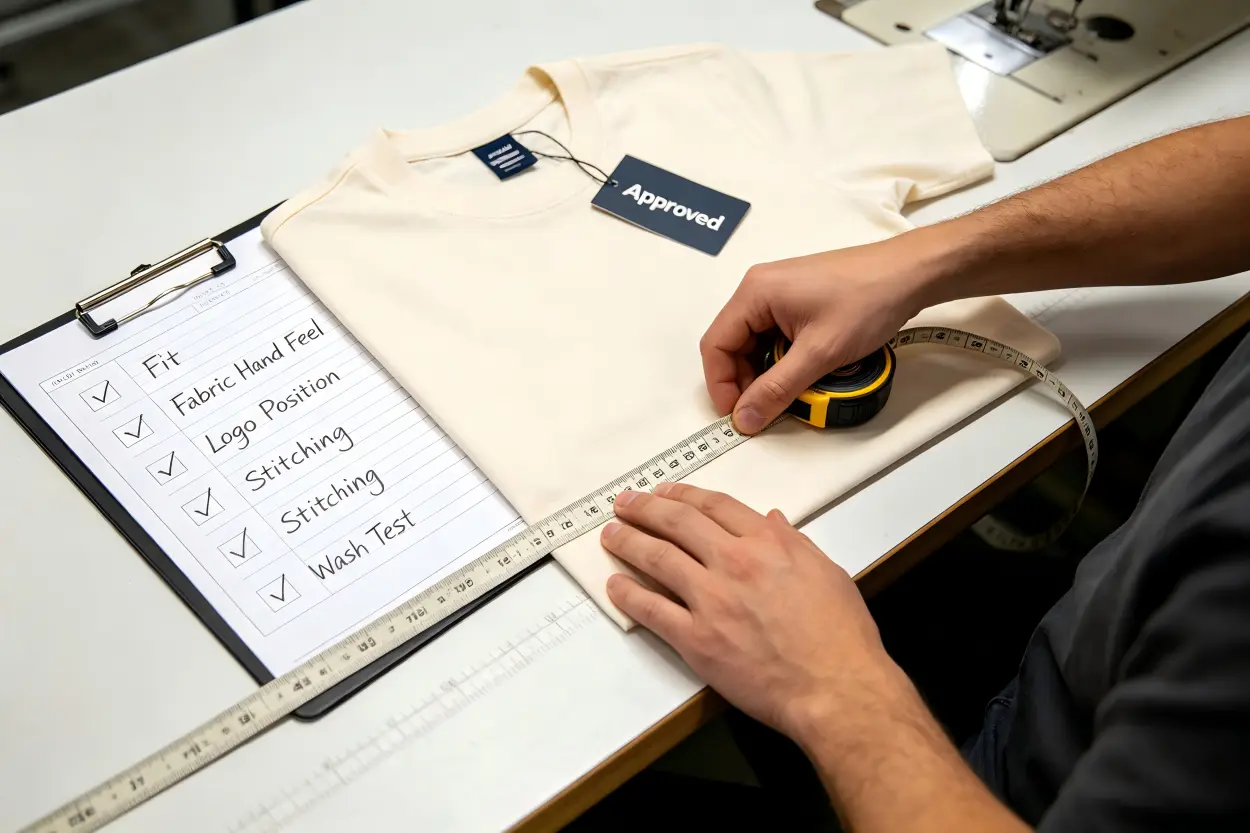
During sample approval, the buyer should not only check whether the shirt "looks good." The buyer should wear it, move in it, wash it if needed, and compare it against the intended product standard. Sampling is not a formality. It is a decision gate.
Our standard sample production time is usually 8–10 working days once everything is approved, followed by 5–7 days for express shipping. This timing depends on fabric availability, logo method, and whether special trims or custom colors are involved.
What Buyers Should Review on a Performance T-Shirt Sample
A sample review should be structured. Otherwise, the buyer may focus on the logo and miss the fit or fabric issue.
Use this checklist:
-
Fabric hand feel
The fabric should match the target market and price level. -
Fit and movement
The wearer should raise arms, stretch, bend, and move as the final customer would. -
Measurements
The sample should be checked against the approved size chart. -
Color
The buyer should compare the color under suitable light and approve lab dips if custom dyeing is used. -
Logo placement
The logo should be checked for height, scale, angle, and balance on different sizes. -
Decoration effect
Heat transfer, screen print, embroidery, and sublimation each create a different look and hand feel. -
Stitching and workmanship
Neckline, shoulder seam, hem, sleeve opening, and side seams should be reviewed. -
Packaging direction
Hang tag, size sticker, barcode, polybag, and carton requirements should be discussed before bulk.
Decoration Choice Can Change the Product
Logo technique is often underestimated. A performance T-shirt is worn during movement and sweating, so decoration should match the use case.
| Logo Method | Suitable For | Buyer Should Check |
|---|---|---|
| Heat transfer | Clean logos, teamwear, fitness brands | Stretch, wash durability, hand feel |
| Screen print | Larger graphics, cost control | Print thickness and cracking risk |
| Embroidery | Premium look, small logos | Weight, irritation, and fabric puckering |
| Sublimation | All-over print polyester shirts | Color accuracy and fabric limitation |
| Reflective print | Running or visibility details | Certified reflectivity if required |
Any durability or wash performance claim should be confirmed through actual testing standards if the buyer needs a formal guarantee. For normal commercial production, we discuss expected use, material documents, and inspection criteria instead of making unsupported promises.
Practical Tip: Approve the Sample Like You Are Approving Bulk
One mistake is approving a sample with comments like, "Looks fine, please adjust in bulk." Some small adjustments are normal, but unclear comments can create disputes. If the sample needs changes, the buyer should mark them clearly.
A good approval message may include:
- "Approve fabric hand feel."
- "Move chest logo 2 cm higher."
- "Increase body length by 1.5 cm."
- "Change neck rib to slightly tighter recovery."
- "Approve print color based on this sample."
- "Please update size chart before bulk."
For more detail about how development moves from discussion to production, our production process overview explains the general OEM workflow. The most important point is simple: sample approval should create written, inspectable standards for the bulk order.
How Does Bulk Production Control Keep Approved Designs Repeatable?
Bulk production can still bring variation even after sample approval. Fabric batches can differ slightly. Color can shift within acceptable limits. Measurements need tolerances. Labels and packaging must match buyer instructions. Without production control, a good sample may not lead to stable repeat goods.
Bulk production control keeps Performance T-Shirt Manufacturing repeatable by managing fabric batch variation, color approval, size tolerance, logo placement, stitching quality, inspection standards, packaging labels, delivery planning, and communication before shipment.
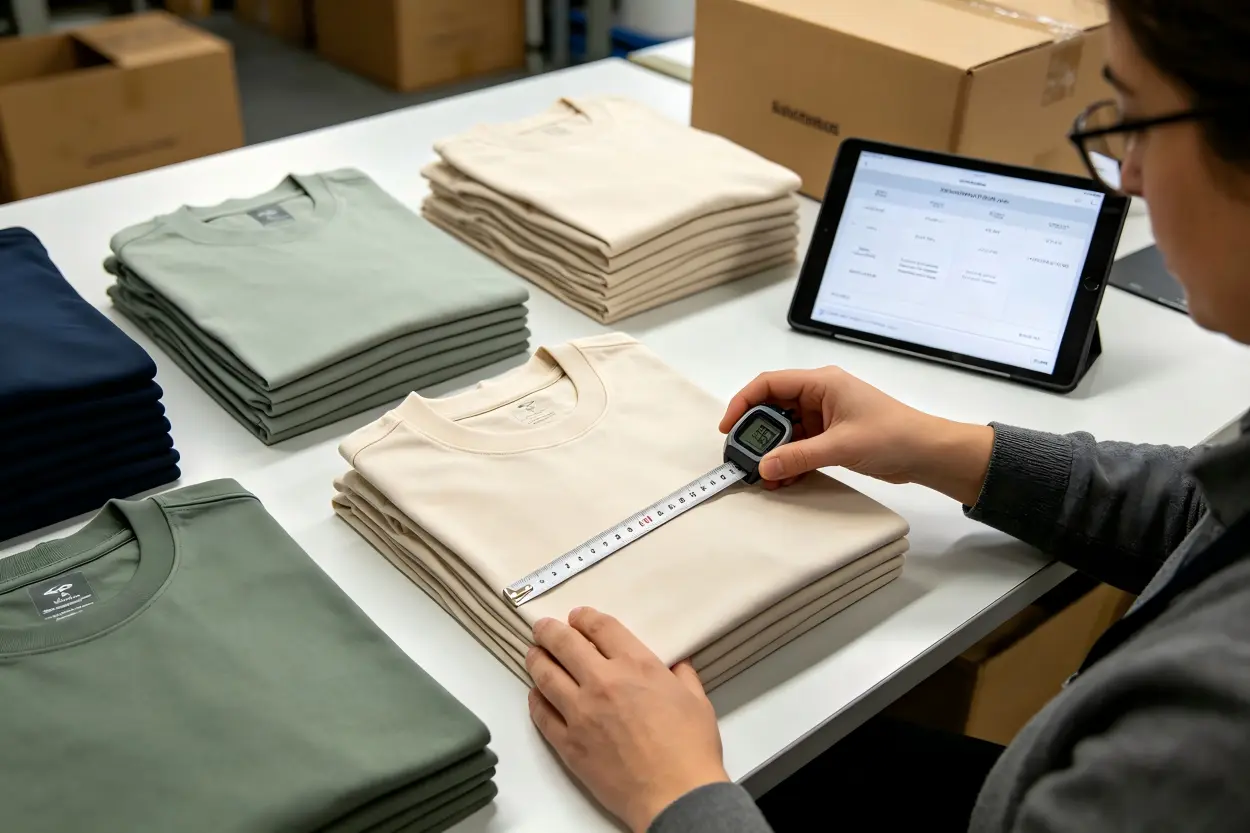
During bulk production, the focus changes from development to consistency. The factory must follow the approved sample and production file. The buyer must understand that bulk goods are controlled by tolerances, not by the idea that every unit will be 100% identical in every detail.
Our usual bulk production time is 25–30 working days, depending on order size, material readiness, decoration complexity, and packaging. Shipping normally takes 5–7 days by FedEx/DHL express or 10–15 days by air freight. Sea freight may be used for larger orders, but timing depends on route and season.
Normal Production-Control Issues Buyers Should Expect
Bulk manufacturing includes many moving parts. A responsible buyer should plan for the following:
- Fabric batch variation: Different fabric lots may have slight differences in shade, hand feel, or stretch.
- Color tolerance: Custom colors should be approved through lab dips or bulk fabric approval.
- Size tolerance: Garments are sewn products, so reasonable measurement tolerance should be defined.
- Logo placement tolerance: Placement should be checked against approved reference points.
- Decoration consistency: Print pressure, curing, embroidery tension, or transfer temperature can affect results.
- Packing accuracy: Size stickers, carton marks, barcodes, and polybag warnings need clear instructions.
- Inspection standard: Buyers should confirm acceptable quality level or inspection method before shipment.
Sample Approval Does Not Remove the Need for Inspection
A production sample is a target. Bulk inspection is the control system. This is especially true for custom T-shirts with multiple sizes, colors, and logo versions.
A practical inspection plan may include:
-
Pre-production confirmation
The factory checks final fabric, trims, logo files, size chart, and packaging. -
Inline production checking
The team checks early sewing output before the full order is completed. -
Final random inspection
The goods are checked for measurements, workmanship, stains, holes, color, logo, labels, and packing. -
Shipment preparation
Carton marks, packing list, and delivery method are confirmed before dispatch.
For export-oriented customization, communication matters as much as sewing. During bulk production communication, we often confirm small but important details such as size order in cartons, SKU stickers, mixed-size packing, team name separation, or wholesale barcode requirements.
Decision Framework for Buyers
Before placing a bulk order, buyers should align five trade-offs:
| Decision Area | Low-Risk Direction | Possible Trade-Off |
|---|---|---|
| Fabric | Use available tested or familiar fabric | Less unique but faster development |
| Color | Choose stock color | Fewer branding options |
| Logo | Use simple decoration | Less visual complexity |
| Packaging | Standard polybag/carton | Less retail presentation |
| Lead time | Approve details early | Requires better preparation |
Low price and fast delivery should not be the only priorities. MOQ, fabric choice, decoration complexity, inspection requirements, and timeline all affect the final quotation. A very low quote may remove fabric quality, sampling time, inspection detail, or packing accuracy from the process.
If a buyer already has a tech pack, logo files, and order plan, the most efficient next step is to discuss the project through our custom T-shirt manufacturing page. If the project is still early, a development conversation may be better than rushing into bulk pricing.
Frequently Asked Questions
What information should I send before requesting a performance T-shirt quote?
You should send a reference image, fabric preference, GSM if known, size chart, logo file, logo method, quantity, color requirements, packaging needs, and target delivery date. If you do not have all details, send your intended use case and target market so the factory can guide the development discussion.
How long does sampling take for custom performance T-shirts?
Sample production usually takes 8–10 working days once all details are approved. Express shipping usually takes another 5–7 days. Timing may change if the fabric is custom dyed, the logo method is complex, or the buyer requests multiple revision rounds.
Can the bulk order be exactly the same as the approved sample?
Bulk goods should follow the approved sample, but sewn garments are managed through tolerances. Fabric batch, color, measurements, stitching, and logo placement can have small acceptable variations. Buyers should define inspection standards before production to reduce disputes and quality surprises.
Which fabric is best for performance T-shirts?
The best fabric depends on the use case. Running shirts may need lightweight breathability. Gym shirts may need stretch and durability. Teamwear may need strong color and logo clarity. Any technical performance claim should be supported by verified material documents or third-party testing when required.
What affects the price of Performance T-Shirt Manufacturing?
Price depends on quantity, fabric composition, fabric weight, color method, logo technique, size range, packaging, inspection requirements, and delivery timeline. A simple stock-fabric tee with one logo is very different from a custom-dyed shirt with multiple decorations and retail packaging.
Conclusion
Performance T-Shirt Manufacturing works best when buyers treat development as a specification-building process, not only a price search. A reference image starts the conversation, but fabric, fit, logo method, sampling approval, tolerances, inspection, and packaging turn the idea into repeatable bulk production. If you are planning custom performance T-shirts for a brand, team, or wholesale program, you can contact us to discuss your project, send your tech pack, or request a sample.