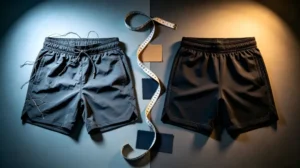
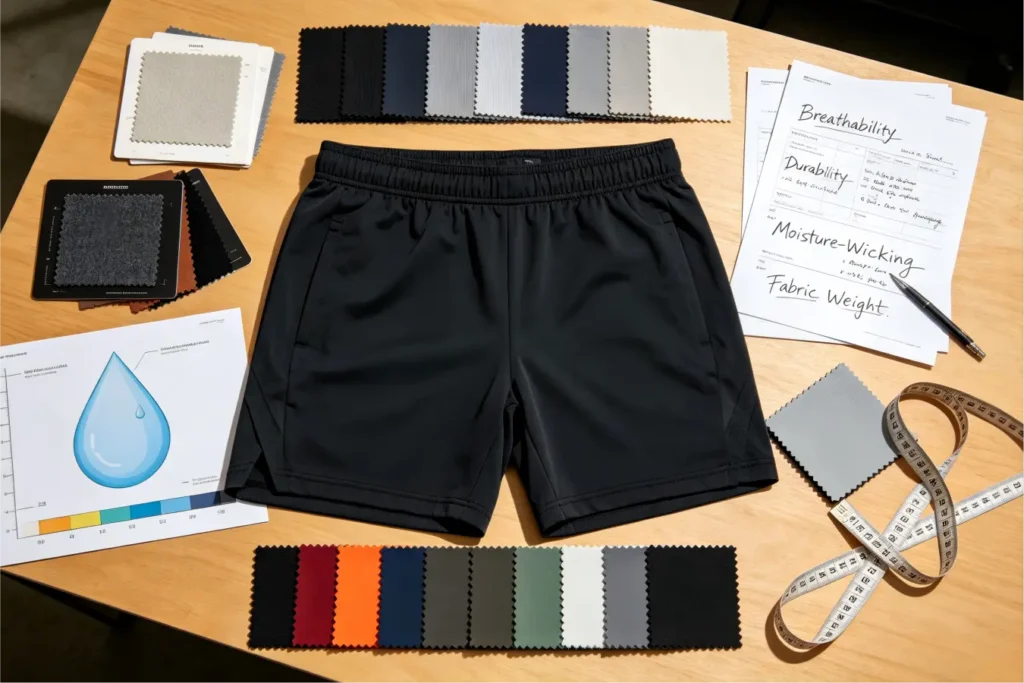
[Fabrics for gym shorts can look perfect on a swatch but perform very differently after training, washing, printing, and bulk production. A lightweight fabric may still trap heat, while a heavier fabric may pill or lose shape. The safer path is to match fabric structure, fit, trims, and customization method to the real use case.
There is no single best breathable and durable fabric for gym shorts. Brands should evaluate fabric weight, weave or knit structure, fiber blend, stretch recovery, moisture management, anti-pilling performance, logo method, waistband construction, lining, stitching, and bulk consistency. The right choice depends on training scenario, product positioning, target price, and complaint risk.
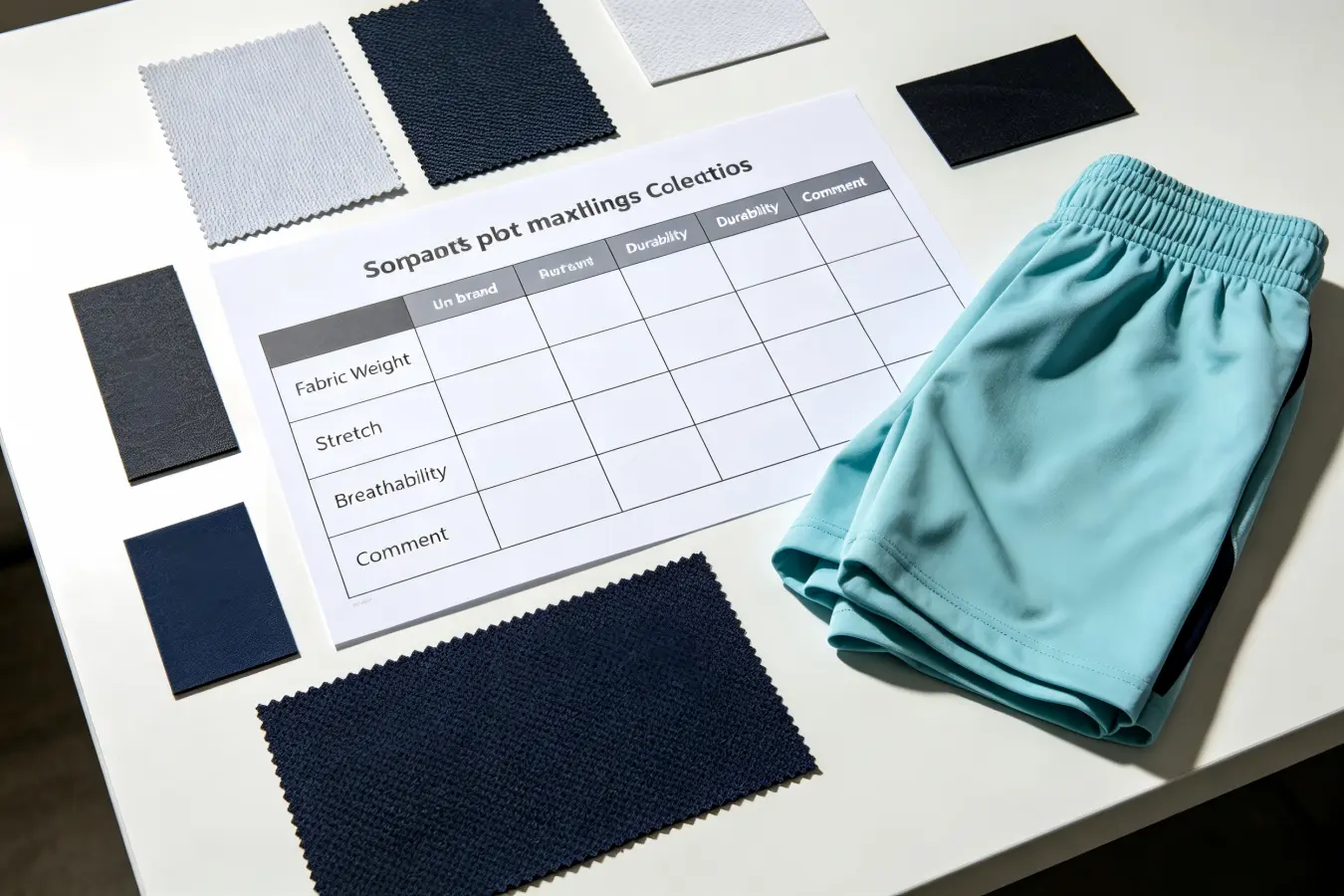
A fabric name alone rarely tells the full story. During product development, many buyers ask for "polyester spandex" or "nylon spandex" as if that solves everything. In real sampling work, the result depends more on the complete construction and how the shorts will be used.
Are breathable and durable fabrics for gym shorts always the same thing?
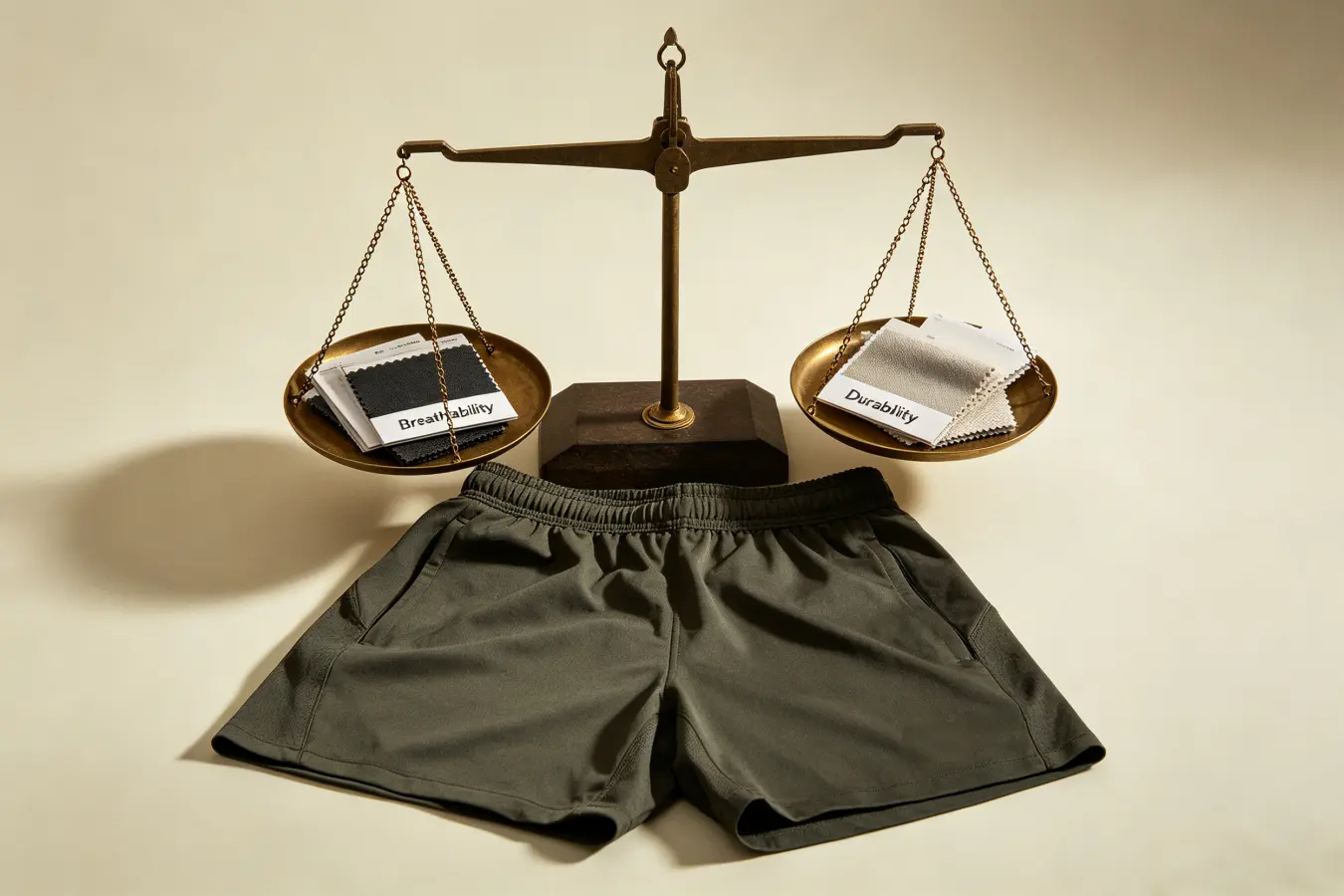
Breathability and durability often pull in different directions. A brand may request the lightest fabric for airflow, then worry about tearing, pilling, or transparency. Another brand may ask for thick fabric, then discover the shorts feel hot during high-sweat training.
Breathable and durable fabrics for gym shorts are not one fixed category. Breathability depends on airflow, moisture movement, drying speed, and fabric structure. Durability depends on abrasion resistance, stretch recovery, seam strength, pilling resistance, and wash performance. Brands need to balance both instead of chasing one material name.
Why thin fabric is not always more breathable
Many buyers connect "thin" with "cool." That can be true, but not always. A thin fabric with poor moisture movement can stick to the skin. A dense weave can block airflow even if the fabric feels light in hand. A mesh structure, textured yarn, or engineered ventilation zone may breathe better than a flat thin fabric.
During sampling, I pay attention to how the fabric behaves after movement. A fabric that feels soft on a table may cling during squats, lunges, or treadmill work. That is why brands should not approve fabrics for gym shorts based only on swatch hand feel.
Useful questions include:
- Does the fabric dry quickly after sweat?
- Does it cling to the thigh during movement?
- Does it become transparent under stretch?
- Does the inner surface feel comfortable against skin?
- Does the fabric recover after repeated stretching?
Why thick fabric is not always more durable
Thickness can help structure, but it does not guarantee durability. Some thicker fabrics still pill after repeated washing. Some feel strong at first but lose elasticity because the stretch recovery is weak. Others become too warm for intense gym use.
Durability comes from several factors working together:
| Factor | Why it matters for gym shorts |
|---|---|
| Fiber quality | Affects strength, hand feel, and wash behavior |
| Knit or woven structure | Affects stretch, airflow, and abrasion resistance |
| Spandex content and recovery | Affects shape retention after training |
| Anti-pilling finish | Helps reduce surface fuzz and complaints |
| Stitching and seam construction | Affects real garment durability |
| Washing performance | Affects repeat wear and customer reviews |
For gym shorts, a fabric must survive more than one fitting session. Buyers often need to consider daily washing, friction from benches, barbell contact, repeated stretching, and logo durability. A material that feels premium in a showroom may not be the safest choice for a team, gym, or wholesale order.
For brands developing custom gym products, fabric selection should be discussed alongside fit, inseam length, waistband tension, pocket design, and logo method. If you are still defining the product type, our page for custom gym and running shorts manufacturing gives a broader view of how these product categories are usually developed.
Which fabrics for gym shorts work better for strength training and general gym use?
Strength training shorts face rubbing, stretching, washing, and pressure from equipment. A fabric that only feels breathable may fail if it pills, bags out, or restricts movement. A fabric that only feels tough may become too stiff for squats or functional training.
For strength training and general gym use, fabrics for gym shorts usually need balanced stretch, abrasion resistance, wash durability, comfort, and shape retention. Polyester-spandex, nylon-spandex, stretch woven fabrics, and stable knit structures can all work, depending on target price, hand feel, fit, and branding requirements.
What brands should prioritize for gym training shorts
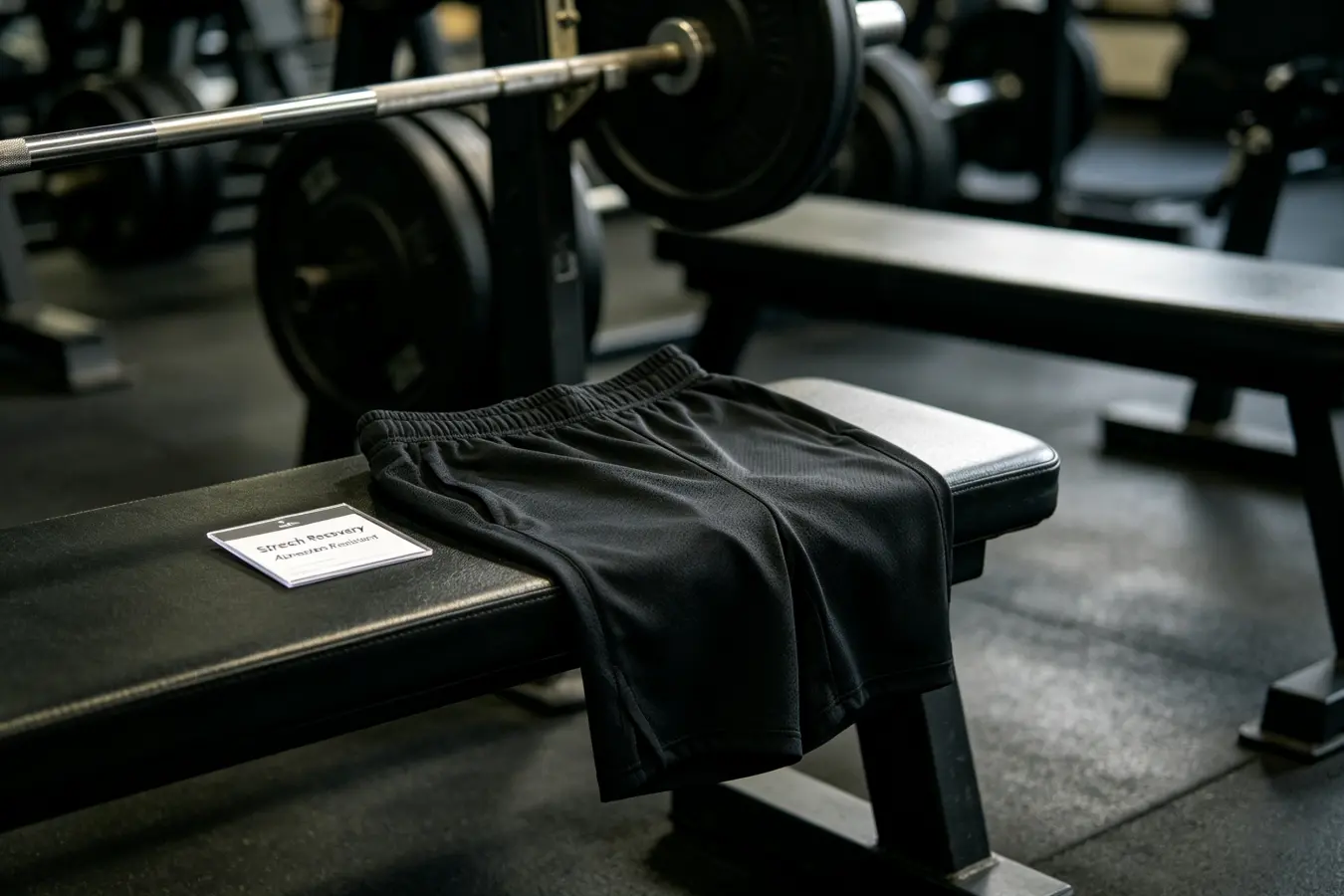
In our factory discussions, gym shorts for strength training often create the most trade-offs. The shorts need freedom of movement, but they also need enough structure. They should feel comfortable during lifting, but they should not look flimsy after several washes.
For general gym use, I normally check these areas before recommending a fabric direction:
-
Stretch direction
Two-way stretch may be enough for basic training shorts. Four-way stretch can improve movement, especially for deep squats, HIIT, and mixed training. -
Stretch recovery
Recovery matters as much as stretch. If the fabric stretches but does not return, the leg opening, seat, and waistband area can look tired quickly. -
Surface resistance
Gym shorts often rub against benches, machines, barbells, and flooring. A fabric with poor abrasion behavior can develop fuzz or pilling. -
Opacity under movement
Some fabrics look fine when relaxed but become too sheer during squats or stretching. -
Waistband compatibility
A strong fabric with a weak waistband still creates complaints. Elastic width, drawcord quality, and waistband stitching all affect comfort and durability.
Common fabric directions for gym use
No single fabric is the winner for every brand. Still, these directions appear often in OEM sampling:
| Fabric direction | Typical strengths | Buyer caution |
|---|---|---|
| Polyester-spandex knit | Good stretch, cost control, easy performance positioning | Check pilling and heat retention |
| Nylon-spandex knit | Softer hand feel, strong recovery potential | Cost may be higher; color matching needs care |
| Stretch woven fabric | Cleaner look, structure, good for training and lifestyle crossover | Check stretch comfort and noise during movement |
| Interlock or double-knit | Stable, smooth, more substantial feel | May feel warmer if too dense |
| Mesh panel combination | Better ventilation zones | Panel placement and seam comfort must be tested |
Finished garment execution matters
One issue we frequently encounter is that a buyer approves a fabric, then later adds embroidery, a heavy waistband, inner lining, and large prints. The original breathability changes. The shorts may still be made from breathable and durable fabrics for gym shorts, but the finished garment can feel different.
Brands should review:
- Logo size and placement
- Heat-transfer print temperature
- Embroidery backing
- Inner brief or compression liner
- Pocket bags
- Side seam stitching
- Waistband thickness
- Drawcord ends and eyelets
A training short is a system. Fabric is the base, but construction decides how the base performs. For product lines focused on lifting, fitness, or team training, this is also where a proper tech pack helps reduce sampling rounds. Our custom training shorts page explains more about that product direction.
Which fabrics for gym shorts are safer for running and high-sweat workouts?
Running and high-sweat workouts create a different problem. The shorts may not face heavy abrasion like lifting shorts, but they must handle sweat, heat, stride movement, and drying speed. A strong fabric can still disappoint runners if it feels heavy after moisture absorption.
For running and high-sweat workouts, fabrics for gym shorts should lean toward lightweight structure, quick drying, smooth movement, and ventilation. Polyester-based performance fabrics, lightweight stretch woven materials, mesh zones, and breathable linings can all be suitable if they match the brand's price point and fit expectations.
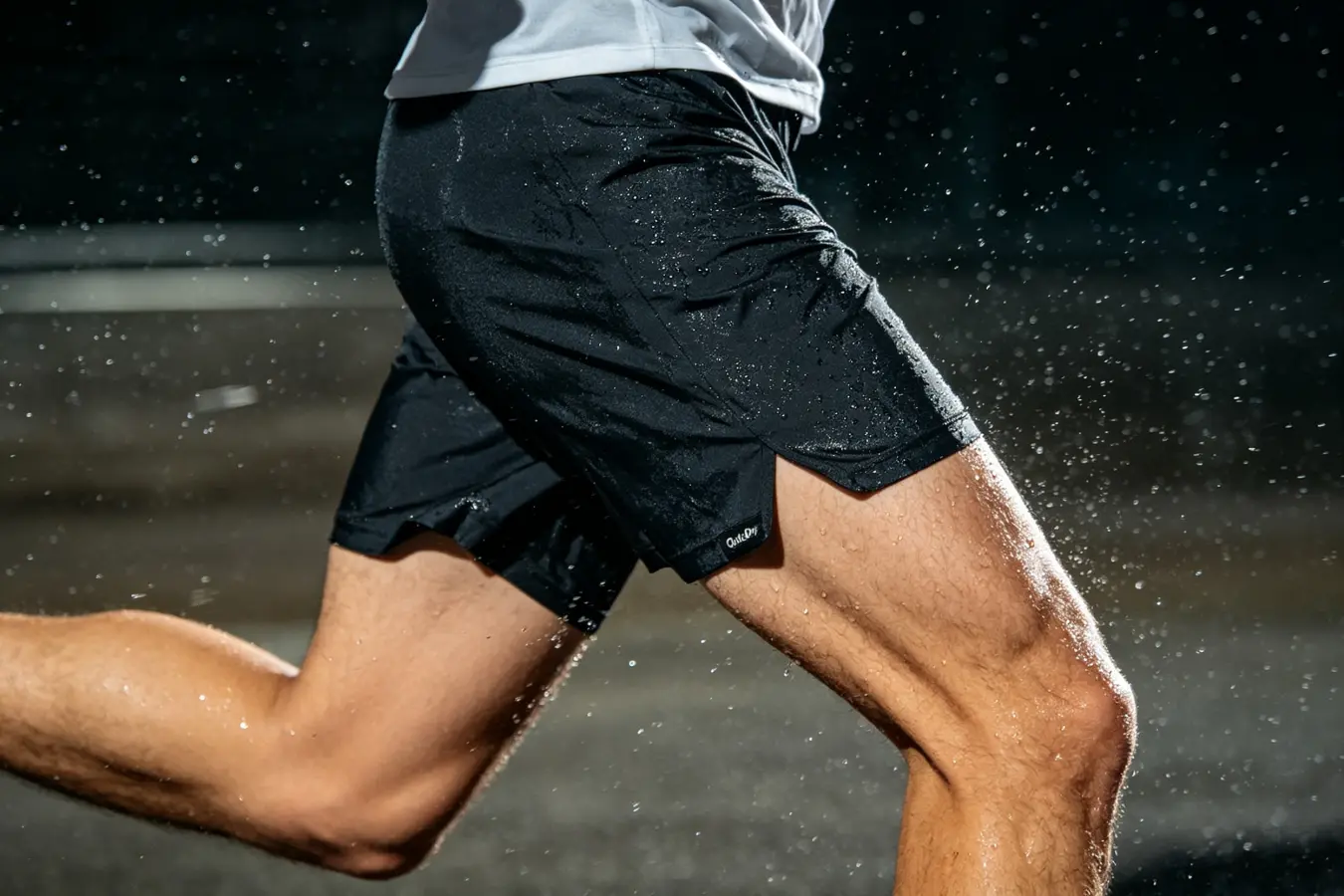
Running shorts need moisture control, not only airflow
Airflow helps, but sweat movement is also critical. A fabric may allow air through, but if it holds moisture against the skin, the shorts can feel sticky. Another fabric may not look very open, but it can dry faster because of yarn structure and finish.
During sample approval, brands often test running shorts by wearing them briefly. That helps, but it does not always show the real issue. A better review includes movement, sweating, washing, and checking the lining after repeated wear.
For high-sweat use, buyers should pay attention to:
- Fabric weight
- Drying behavior
- Inner surface texture
- Lining breathability
- Leg opening shape
- Side split or gusset design
- Pocket placement
- Waistband moisture retention
Lining can make or break breathability
Many running shorts include an inner brief or liner. This helps support and comfort, but it can also reduce airflow. If the outer shell is breathable but the liner is dense, the user may still feel hot.
Common lining choices include:
| Lining type | Benefit | Risk |
|---|---|---|
| Mesh brief | Breathable, light, common for running | Can feel scratchy if quality is poor |
| Smooth knit brief | Comfortable hand feel | May trap heat if too dense |
| Compression liner | Supportive, modern look | Adds weight and warmth |
| No liner | Flexible for different users | May need better opacity and seam comfort |
For running-focused products, the outer fabric and lining should be tested together. The waistband also matters. A thick waistband can absorb sweat and feel heavy. A softer waistband can improve comfort, but it must still hold shape after washing.
Practical fabric selection logic for running shorts
A startup brand may want one short for running, gym, and casual wear. That is possible, but compromise is involved. A very light running short may not feel substantial enough for lifting. A durable gym short may not dry fast enough for long runs.
A simple decision path works well:
-
Define the main activity first.
Running, HIIT, gym training, and casual fitness use different fabric priorities. -
Choose the silhouette.
A 5-inch running short, 7-inch training short, and loose team short need different structures. -
Decide on lining.
Lined and unlined shorts should not use the same fabric logic. -
Confirm logo method early.
Heat transfer, screen print, embroidery, and woven labels behave differently on lightweight fabrics. -
Test wash and wear before bulk.
A sample should be checked after washing, not only after unboxing.
For sampling and production planning, timelines also matter. Once all details are approved, sample production usually takes 8–10 working days, and express shipping often takes 5–7 days. Bulk production commonly takes 25–30 working days, depending on order details and approval status.
How should brands compare fabrics for gym shorts before sample approval?
Sample approval is where many fabric mistakes become expensive. A swatch may feel premium, but the finished shorts may pull at the seams, trap heat, or fail logo application. Bulk production also needs consistency, not just one nice prototype.
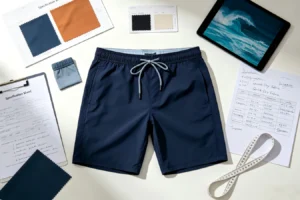
Brands should compare fabrics for gym shorts by reviewing fabric structure, stretch recovery, opacity, wash behavior, logo compatibility, waistband performance, lining, stitching, fit, and supplier consistency. A physical sample should be worn, washed, measured, and checked against the intended retail or team-use scenario before approval.
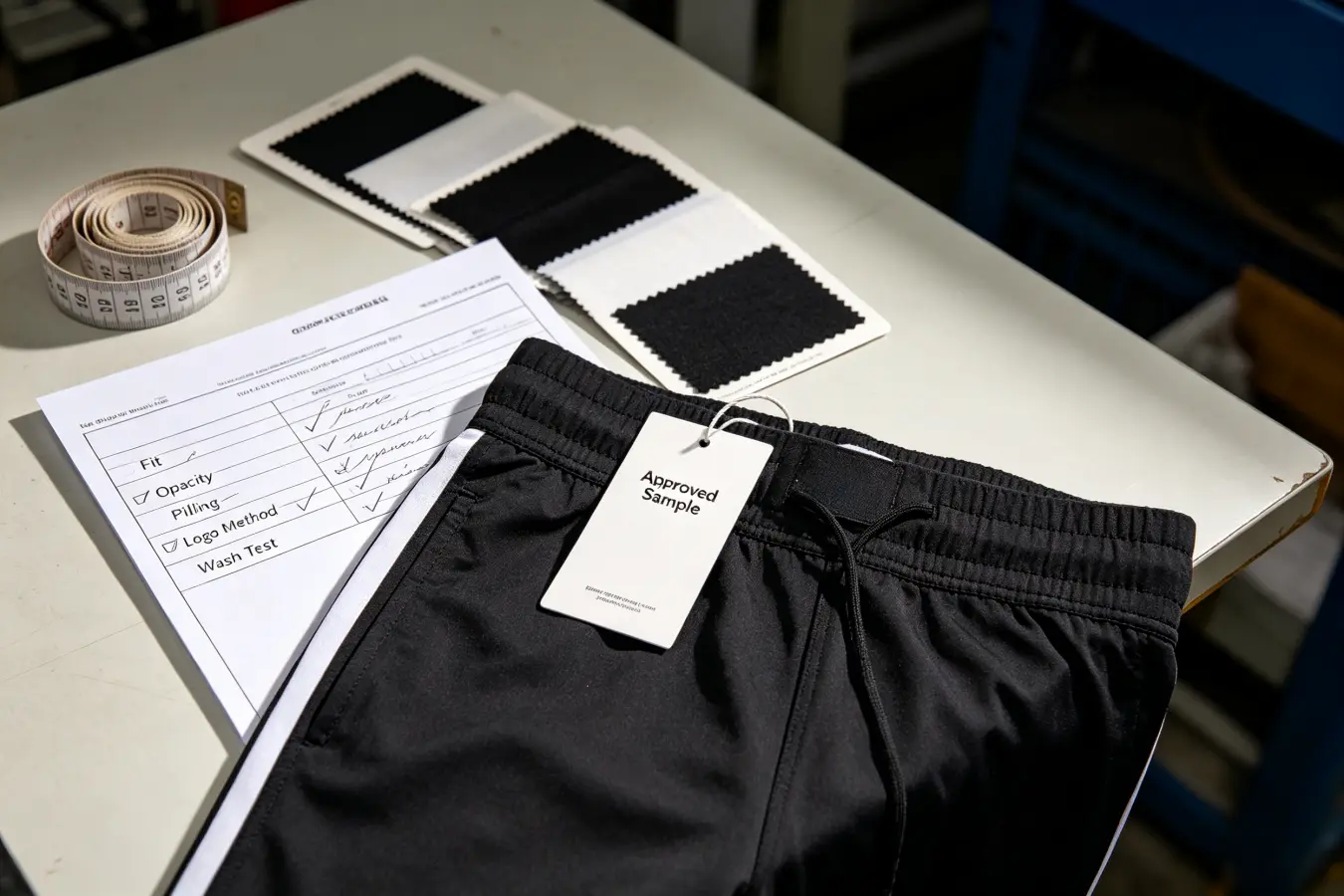
A practical sample review checklist
During product development, the best buyers do not only ask, "Is this fabric good?" They ask, "Is this fabric good for this short, this customer, this price, and this production run?"
Here is a practical checklist:
- Hand feel: Does the fabric match the brand position?
- Weight: Does the short feel too light or too heavy for the activity?
- Stretch: Does the wearer move freely?
- Recovery: Does the fabric return after stretching?
- Opacity: Does the fabric become sheer under movement?
- Breathability: Does the short feel hot during real activity?
- Drying: Does it stay wet too long after sweat or washing?
- Pilling: Does the surface fuzz after friction or wash?
- Logo method: Does printing or embroidery affect comfort?
- Waistband: Does it roll, twist, or absorb too much sweat?
- Lining: Does it support the use case?
- Stitching: Do seams feel strong and comfortable?
- Bulk risk: Can the supplier keep fabric color, weight, and hand feel consistent?
Comparing fabric options without overcomplicating the process
A simple comparison table can help buyers avoid emotional decisions during sampling.
| Evaluation area | Low-risk choice usually means | Higher-risk warning sign |
|---|---|---|
| Breathability | Fabric and construction support airflow and drying | Fabric feels cool only as a swatch |
| Durability | Good recovery, low pilling risk, stable seams | Fabric stretches out or fuzzes quickly |
| Branding | Logo method matches fabric surface | Heavy print blocks airflow or cracks |
| Fit | Fabric supports intended cut | Fabric fights the pattern |
| Bulk production | Supplier can repeat quality | Sample uses special fabric that is hard to source again |
| Customer use | Matches training scenario | One short tries to serve every activity |
Common mistakes I try to prevent early
One common mistake is approving fabrics for gym shorts before deciding the logo. For example, a large rubberized heat-transfer logo may reduce breathability in that area. Embroidery can look premium, but it adds backing and stiffness. Screen printing may work well on some surfaces but not others.
Another mistake is ignoring color. Dark colors may hide sweat and transparency better. Light colors may need stronger opacity. Melange or textured fabrics can look rich, but they may affect print clarity.
A third mistake is treating bulk orders like sample orders. Team, gym, and wholesale buyers often care about low complaint risk. They need consistent sizing, stable color, washable logos, and reliable delivery more than a dramatic fabric story.
For buyers planning OEM or ODM production, the fabric decision should sit inside a broader development process. You can review our OEM/ODM customization process if you want to understand how fabric, sample, logo, sizing, and bulk production usually connect.
What should teams, gyms, and wholesalers consider for low-risk bulk orders?
Bulk buyers often need reliable shorts more than experimental materials. A gym may reorder the same style for staff or members. A team may need consistent sizing and logos. A wholesaler may need a product that creates fewer complaints across many customers.
For teams, gyms, and wholesalers, fabrics for gym shorts should prioritize consistency, wash resistance, logo compatibility, comfort across body types, and stable bulk production. A slightly safer fabric choice is often better than a highly specialized fabric that looks impressive but creates sizing, washing, or decoration problems.
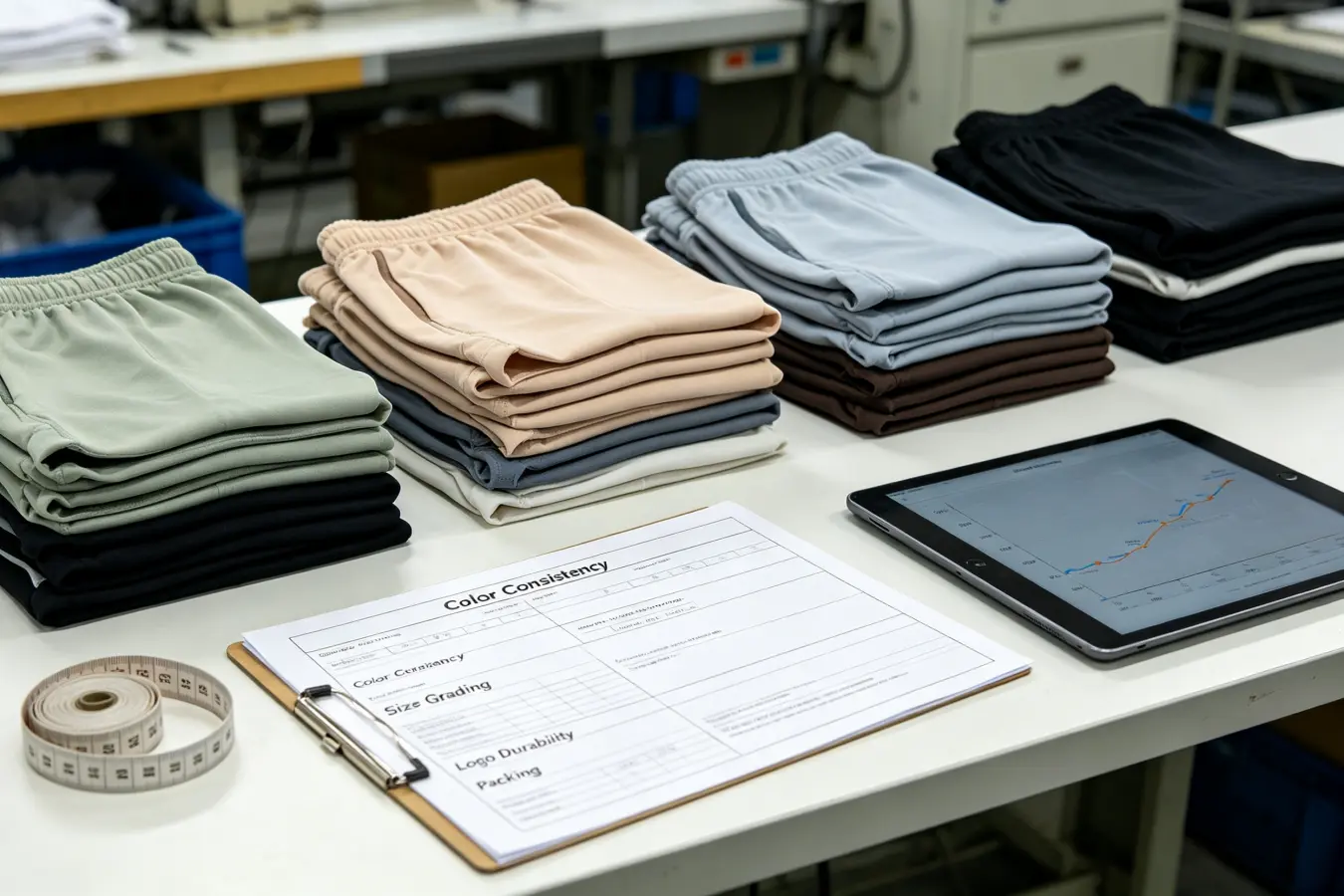
Bulk orders need repeatability
In our factory, repeat production discussions often focus on consistency. A brand may approve a sample, then expect the next order to look and feel exactly the same. That goal is reasonable, but it requires planning.
Bulk orders should confirm:
- Fabric availability
- Color consistency
- Shrinkage control
- Logo process
- Size grading
- Waistband tension
- Packaging method
- Inspection standard
- Delivery timeline
For repeat orders, a complicated fabric may create sourcing risk. A special texture, custom color, or unusual blend can be attractive, but it may require higher planning control. Brands should ask whether the supplier can support repeat production before building a whole line around one fabric.
Logo compatibility matters for teams and gyms
Team and gym shorts often carry logos, names, numbers, or sponsor marks. The fabric must work with the decoration method.
| Logo method | Good for | Fabric caution |
|---|---|---|
| Heat transfer | Clean logos, fitness brands, smaller runs | Temperature and stretch must be tested |
| Screen print | Larger graphics, cost control | Surface texture affects clarity |
| Embroidery | Premium or team identity | Adds weight and backing |
| Woven label | Subtle branding | Placement affects comfort |
| Sublimation | Full-print designs | Requires suitable fabric and design planning |
A breathable fabric can lose comfort if the logo area becomes stiff. A durable fabric can still create complaints if the print cracks after washing. This is why I prefer to test logo methods on the actual fabric, not only on a similar swatch.
Best-practice decision framework
For brands, teams, gyms, and wholesalers, this framework keeps the decision grounded:
-
Start with the wearer.
Is the wearer lifting, running, coaching, playing, or using the short casually? -
Define the complaint you most want to avoid.
Heat, pilling, transparency, loose waistband, fading logo, or inconsistent sizing? -
Set the price position.
Premium retail, team uniform, gym merchandise, or wholesale volume? -
Select the fabric direction.
Do not lock the fiber name too early. Review structure, stretch, weight, and finish. -
Build the sample as a finished product.
Include real logo, real waistband, real pockets, and real lining. -
Wash and review.
Check the short after washing before bulk approval. -
Confirm production details.
Bulk production usually takes 25–30 working days after approvals. Shipping may take 5–7 days by express or 10–15 days by air freight, depending on the shipping plan.
If your team already has a tech pack, logo file, or target sample, the next step is simple: send those details through our contact page so we can discuss fabric direction, sampling, and production feasibility.
Frequently Asked Questions
What is the most breathable fabric for gym shorts?
There is no single most breathable fabric for gym shorts. Lightweight polyester, mesh structures, and some stretch woven fabrics can all support breathability. The final result depends on fabric weight, construction, moisture movement, lining, waistband, fit, and logo placement.
Are nylon gym shorts more durable than polyester gym shorts?
Nylon can offer a soft hand feel and strong performance in some structures, but it is not automatically more durable than polyester. Durability depends on yarn quality, fabric construction, stretch recovery, pilling resistance, stitching, washing, and how the shorts are used.
Should gym shorts use spandex?
Spandex can improve stretch and movement, especially for training, running, and fitted styles. However, too much stretch without good recovery can cause shape problems. Brands should evaluate spandex content together with fabric structure, fit, and wash behavior.
How should I test fabrics for gym shorts before bulk production?
You should test the finished sample, not only the fabric swatch. Wear it, stretch it, wash it, check opacity, review logo durability, inspect seams, and confirm waistband comfort. Bulk approval should happen after the full garment matches the intended use case.
Can one fabric work for running, gym training, and team orders?
One fabric can sometimes cover several uses, but it will involve compromise. Running needs lightweight drying and ventilation. Gym training needs stretch and abrasion resistance. Team or wholesale orders need consistency and low complaint risk. Brands should define the main use first.
Conclusion
Fabrics for gym shorts should be selected through use case, construction, and production risk rather than material names alone. Breathability, durability, stretch, wash resistance, logo method, waistband design, lining, and stitching all affect the final product. Based on our OEM experience, the safest fabric choice is the one that matches the wearer, price point, customization plan, and bulk order requirements. If you are developing custom gym shorts, you can send your tech pack, target sample, or design idea and discuss your project with us.