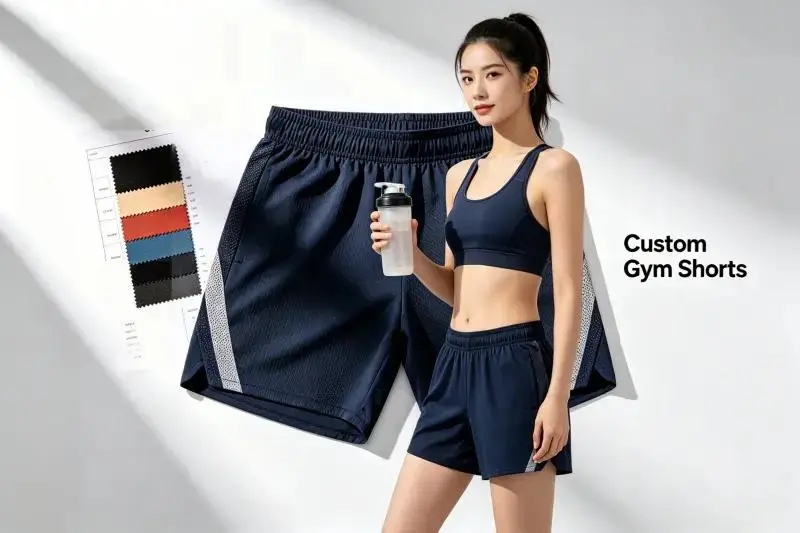
Gym Shorts vs Regular Shorts: What's the Difference and Which One Is Better for Your Brand?
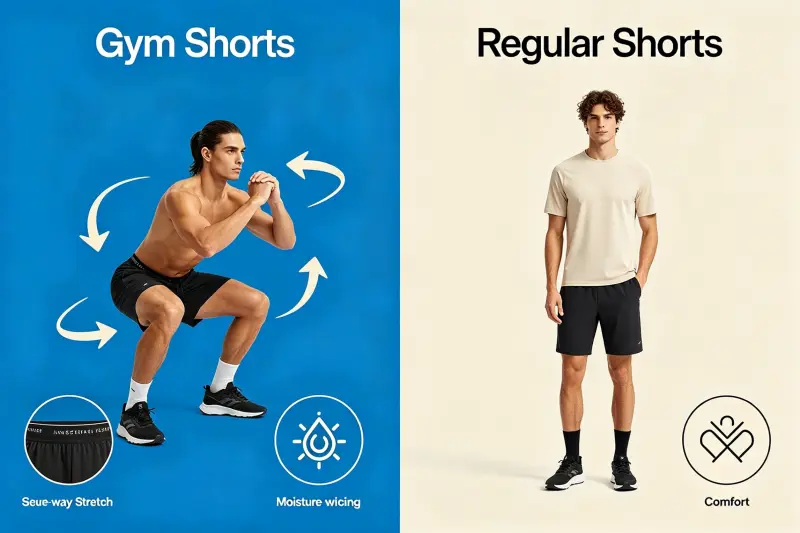
Many shorts look almost identical on a product page, but their performance can be completely different once they're worn in the gym. For sportswear brands, choosing between gym shorts and regular shorts is not simply a styling decision—it affects product positioning, customer satisfaction, and repeat purchases.
Based on our OEM manufacturing experience, the biggest difference isn't appearance. It comes down to how the shorts are intended to be used. Gym shorts are engineered for movement, moisture management, and repeated training sessions, while regular shorts are primarily designed for everyday comfort and casual wear.
During product development, we've seen buyers focus on copying the look of an existing product while overlooking how it performs during squats, running, HIIT, or strength training. That often leads to additional sampling rounds, higher development costs, and unnecessary launch delays.
This guide explains the practical differences between gym shorts and regular shorts from a manufacturer's perspective, helping brands choose the right product before investing in sampling or bulk production.
Why Does the Intended Use Matter More Than the Product Name?
Many buyers begin a project by requesting "gym shorts," but that description alone isn't enough for product development. Before selecting fabrics or creating patterns, the first question should always be:
What activities are these shorts actually designed for?
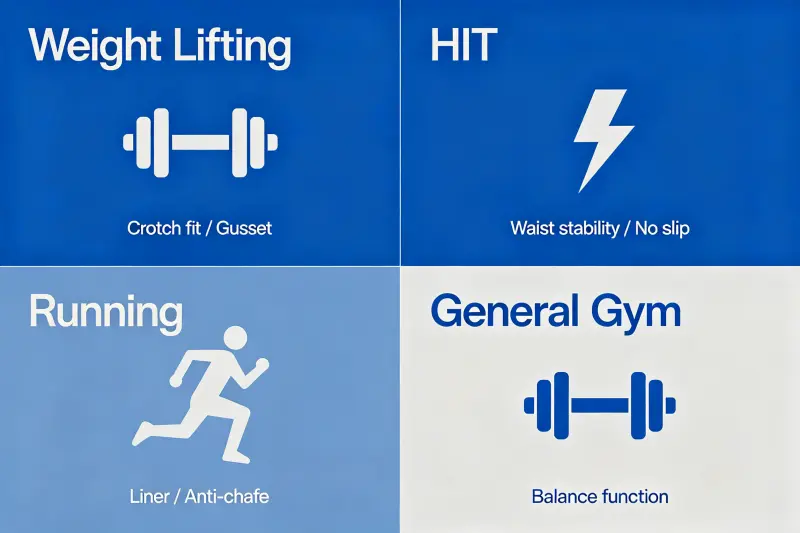
During sample development in our factory, the intended use determines nearly every technical decision, including:
- Fabric selection
- Stretch level
- Inseam length
- Waistband construction
- Pocket placement
- Liner configuration
- Pattern design
For example, two products may both be called "gym shorts," but their requirements can be completely different:
- A 5-inch running short prioritizes lightweight construction and unrestricted stride.
- A 7-inch training short emphasizes coverage and stability during strength exercises.
- A 2-in-1 short requires additional support, moisture management, and liner comfort.
Without defining the training scenario first, it's easy to develop a product that looks athletic but performs like a casual short.
One of the most common mistakes we encounter during OEM projects is that buyers provide only a reference image. While a photo helps communicate style, it doesn't reveal critical functional details such as waistband tension, stretch recovery, liner support, or pocket stability during movement.
Before discussing pricing or material options, our product team typically confirms several key questions:
- What type of workout is the product designed for?
- Who is the target customer?
- Will users carry a phone or keys?
- Is a compression liner required?
- Should the shorts prioritize running, lifting, HIIT, or everyday training?
Clarifying these details early usually shortens the sampling process and reduces costly revisions later.
| Training Scenario | Potential Development Risk | Key Design Focus |
|---|---|---|
| Weight training | Restricted movement during squats | Gusset, inseam, stretch |
| HIIT workouts | Waistband slipping | Elastic strength, drawcord, fit |
| Running | Chafing and pocket bounce | Liner, pocket design, length |
| General gym training | Compromised overall performance | Fabric balance and functionality |
| Gym-to-casual wear | Overly technical appearance | Comfort, styling and hand feel |
Rather than using one standard specification for every product, successful sportswear brands usually define the end use first and build the garment around that purpose. That approach leads to better samples, fewer revisions, and more consistent production results.
How Do Fabrics Separate Gym Shorts from Regular Shorts?
Fabric selection is often where the biggest performance differences begin. Two shorts may have the same fabric weight, yet behave completely differently during exercise.
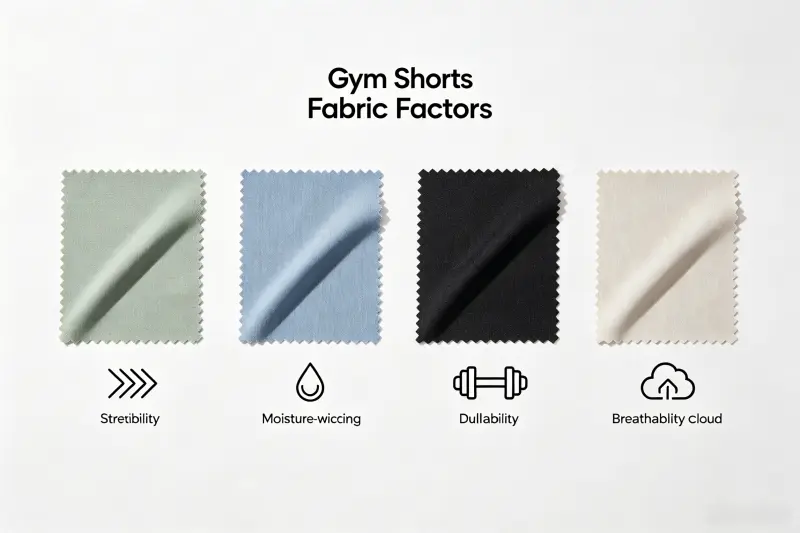
Based on our OEM experience, many first-time buyers ask for a specific GSM—such as 140 or 160 GSM—assuming that fabric weight alone determines quality. In reality, GSM is only one specification among many.
During fabric sourcing and sample approval, we evaluate several performance characteristics before recommending a material for production:
- Four-way stretch
- Recovery after repeated movement
- Breathability
- Moisture management
- Abrasion resistance
- Surface texture and hand feel
These factors determine how the shorts perform after hundreds of workouts, not just how they look in a showroom.
For example, two fabrics with the same weight may produce very different results:
- One may recover quickly after stretching, while another permanently loses its shape.
- One may dry rapidly after intense training, while another retains moisture.
- One may remain quiet during movement, while another creates noticeable friction noise.
These differences become obvious only after real-world wear testing.
| Fabric Characteristic | Why It Matters for Gym Shorts | Typical Focus for Regular Shorts |
|---|---|---|
| Stretch | Supports unrestricted movement | Optional depending on style |
| Recovery | Maintains original shape | Shape retention is less critical |
| Breathability | Improves comfort during workouts | Less important for casual wear |
| Moisture Management | Helps sweat evaporate quickly | Softness may take priority |
| Abrasion Resistance | Handles repeated equipment contact | Daily wear experiences less friction |
| Hand Feel | Balances comfort with performance | Softness is often the main priority |
Instead of searching for a universally "best" fabric, experienced manufacturers select materials according to the product's intended use, price point, target market, and brand positioning.
For brands developing performance collections, fabric selection should always support the training environment rather than simply matching a specification sheet.
Related Reading: Learn more about our Custom Gym & Running Shorts Manufacturing process, from fabric selection to production planning.
How Do Fit and Construction Affect Athletic Performance?
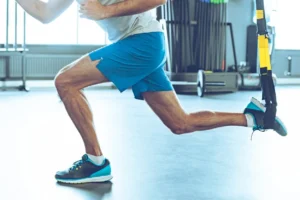
Regular shorts may look great in product photos, but gym shorts must continue to perform when the wearer squats, lunges, sprints, or changes direction quickly. That's where pattern design and garment construction become just as important as fabric selection.
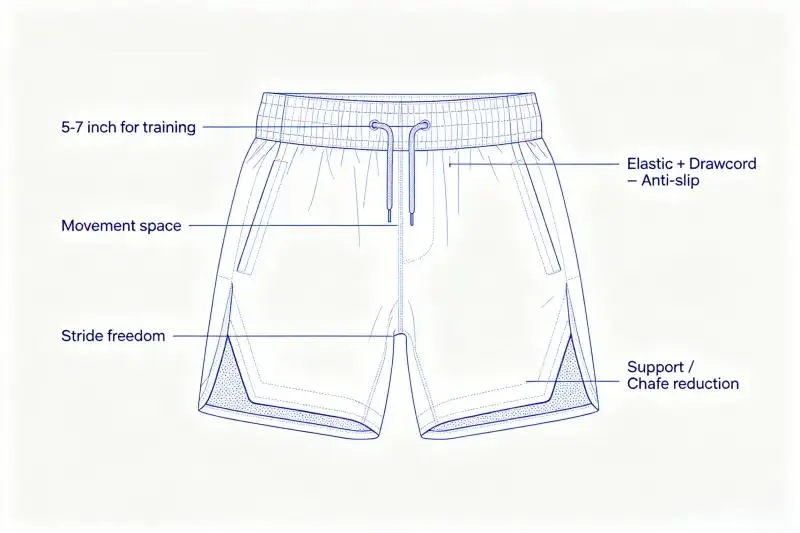
During sample approval, we often find that fit—not fabric—is the biggest reason a prototype requires revision.
A pair of shorts may fit well while standing still, yet reveal issues once the wearer starts training. The front rise may pull during deep squats, the leg opening may restrict movement during lunges, or the waistband may shift during HIIT sessions. These problems rarely appear on a measurement chart alone. They only become obvious during real movement testing.
For this reason, our development team always recommends evaluating samples during actual workouts rather than relying solely on visual inspection.
Several construction details have a direct impact on performance:
- Inseam length influences mobility and coverage.
- Leg opening affects freedom of movement around the thighs.
- Gusset construction reduces stress at the crotch during repeated stretching.
- Side splits improve stride length for running and dynamic exercises.
- Waistband structure helps keep the shorts stable throughout training.
- Liner design provides additional support but must remain breathable and comfortable.
- Pocket placement should securely hold essentials without bouncing or creating pressure.
Even small adjustments to these components can significantly improve the overall wearing experience.
| Construction Detail | Performance Benefit | Common Sampling Issue |
|---|---|---|
| Inseam length | Balances mobility and coverage | Too short or too long for intended use |
| Leg opening | Allows unrestricted thigh movement | Tight during squats or lunges |
| Gusset | Improves flexibility and durability | Excessive seam stress |
| Side split | Increases stride freedom | Poor appearance if oversized |
| Waistband | Maintains a secure fit | Rolling, twisting, or slipping |
| Compression liner | Adds support and comfort | Heat buildup or chafing |
| Pocket design | Secures phone and valuables | Excessive bounce or bulk |
Based on our OEM experience, the most successful gym shorts aren't necessarily the most complicated. Instead, each design feature should support the intended training environment without adding unnecessary complexity.
Why Do Buyers Often Compare the Wrong Things?
When evaluating gym shorts, many buyers naturally compare price, fabric weight, or appearance first. While these factors matter, they rarely determine whether the finished product performs well during training.
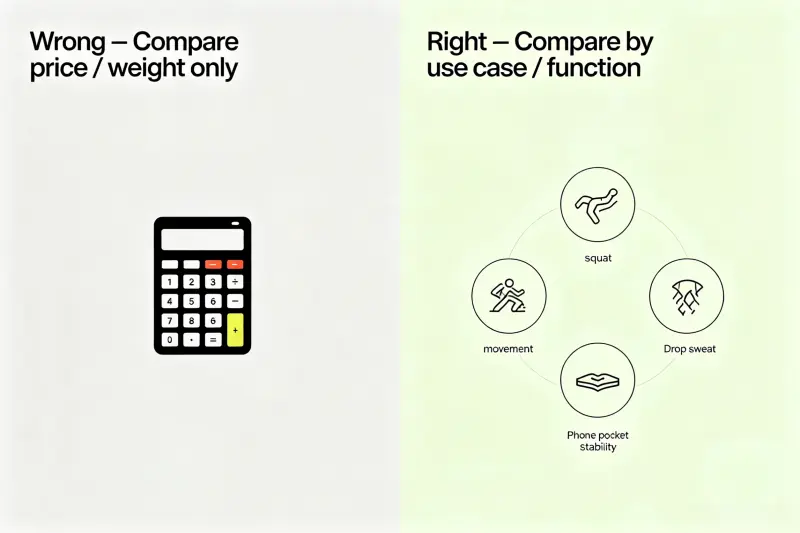
In our factory, we've found that unclear product briefs create far more development problems than limited budgets.
A common example is when a buyer sends a reference photo and requests "the same shorts." Although the overall style can be reproduced, a photo cannot communicate many of the characteristics that determine product performance, including:
- Stretch recovery
- Waistband support
- Pocket stability
- Liner comfort
- Pattern balance
- Fabric behavior after repeated washing
As a result, the first sample may look correct while still requiring multiple revisions after wear testing.
We've also seen brands spend several additional weeks refining products because the initial brief focused only on aesthetics instead of actual use. Once founders tested the samples themselves, they discovered issues such as:
- Waistbands shifting during workouts
- Phone pockets pulling the shorts to one side
- Compression liners feeling restrictive
- Outer fabric sticking to the legs after sweating
- Insufficient stretch during deep squats
Most of these problems could have been identified much earlier through a clearer development brief.
| Common Buying Question | Why It Can Cause Problems | Better Question to Ask |
|---|---|---|
| Which fabric is the cheapest? | Ignores performance requirements | Which fabric best matches the workout? |
| Can you copy this design? | Doesn't explain hidden construction | Which features are essential for performance? |
| What GSM should we use? | Weight alone doesn't determine quality | How should the fabric perform during training? |
| Can we use a standard pattern? | May not suit the target customer | Should the pattern be adjusted for this market? |
| Can pockets be added anywhere? | Placement affects balance and comfort | What items will users actually carry? |
Slowing down during the planning stage usually speeds up the overall project. A detailed brief helps both the buyer and manufacturer make informed decisions, reducing unnecessary revisions and improving consistency before bulk production begins.
For brands launching a new product line, it's often more valuable to define how the shorts should perform than to define how they should look.
Related Reading: Our OEM & ODM Sportswear Development Process explains how product concepts are transformed into production-ready gym shorts through sampling, material selection, and technical refinement.
How Should You Prepare a Better Gym Shorts Brief Before Contacting a Manufacturer?
A well-prepared product brief is one of the simplest ways to shorten development time and improve sample accuracy. Instead of relying on a reference photo alone, provide the key information that affects product performance and manufacturing.
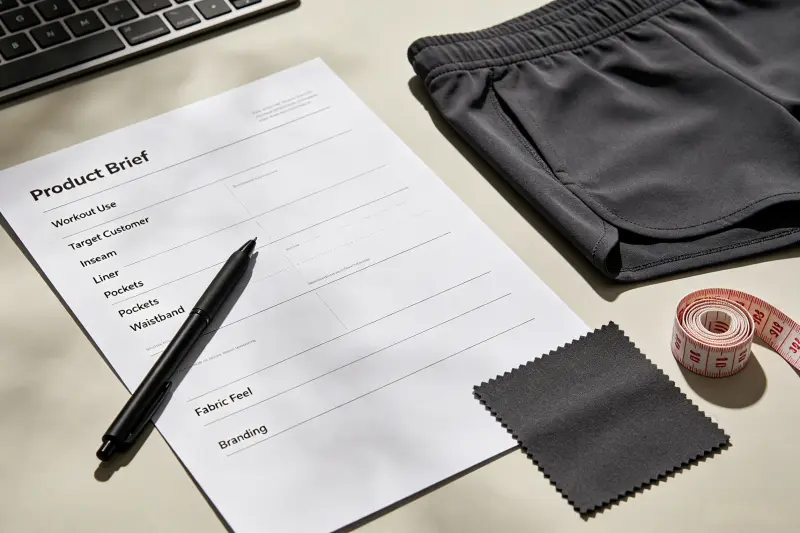
Based on our OEM experience, projects with a clear product brief usually require fewer revisions than those developed from a single image or a general product description.
During sample development, our team reviews each project from both a manufacturing and end-user perspective. Rather than asking only about colors or logos, we evaluate how the shorts will actually be used after launch. This allows us to recommend appropriate fabrics, construction methods, and production techniques before sampling begins.
A practical product brief doesn't need to be highly technical. It simply needs to answer the questions that influence fit, function, and manufacturing.
What Information Should Be Included?
The following checklist helps both the buyer and the factory stay aligned throughout product development.
| Product Brief Item | Example | Why It Matters |
|---|---|---|
| Primary workout | Strength training & HIIT | Determines fit and construction |
| Target customer | Men's activewear brand (US market) | Guides sizing and style direction |
| Inseam length | 5-inch or 7-inch | Influences movement and appearance |
| Liner | Compression liner or no liner | Affects comfort and manufacturing cost |
| Pocket design | Side pocket + hidden zipper pocket | Determines pattern layout |
| Waistband | Elastic waistband with drawcord | Improves fit stability |
| Fabric preference | Lightweight four-way stretch fabric | Narrows suitable material options |
| Logo application | Heat transfer logo | Determines decoration process |
| Reference sample | Existing product or tech pack | Reduces communication errors |
A complete Tech Pack is ideal, but it's not mandatory. Even a simple document describing your product goals can significantly improve communication and reduce unnecessary sampling revisions.
Test Samples Like Your Customers Will
Receiving a sample is only the beginning of product evaluation.
During sample approval, we always recommend testing the garment under real training conditions instead of only checking measurements or appearance.
For example, wear the shorts while:
- Performing squats
- Running on a treadmill
- Stretching
- Sitting on gym equipment
- Carrying a phone in the pocket
These simple tests often reveal issues that are impossible to identify while the garment is lying flat on a table.
We've seen buyers approve samples based solely on appearance, only to discover problems after production began. Spending an extra day testing a sample can save weeks of revisions later.
If you're developing a private-label collection, investing more time in sample approval is usually far less expensive than correcting issues during bulk production.
Related Reading: Our Production Process explains how each stage—from sample development to quality inspection—helps ensure consistent production quality.
When Are Regular Shorts Still the Better Choice?
Although gym shorts are designed for athletic performance, they are not the right solution for every product line.
The best choice depends on how your customers intend to wear the shorts.
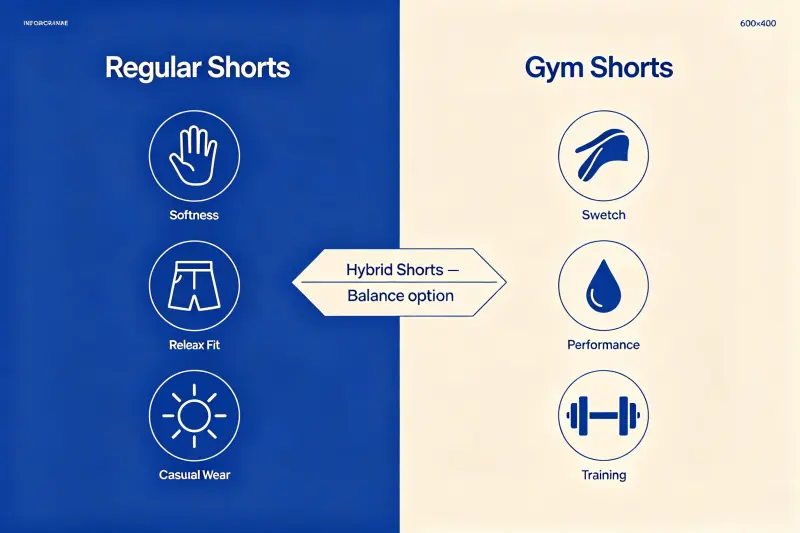
Regular shorts remain an excellent option for:
- Everyday casual wear
- Travel
- Lifestyle collections
- Leisure activities
- Warm-weather fashion
- Light outdoor use
In these situations, customers often prioritize comfort, appearance, and softness over technical performance.
Gym shorts, by comparison, are designed to withstand repeated movement, perspiration, and intensive workouts. They generally feature more functional construction, performance fabrics, and athletic pattern design.
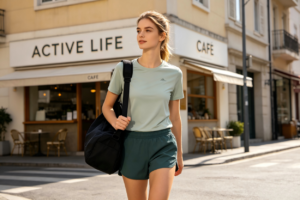
Many brands today also choose to develop hybrid shorts that bridge the gap between training and casual wear. These products combine moderate stretch, clean styling, and lightweight fabrics to create versatile everyday athletic shorts.
| Product Type | Best Application | Primary Design Priority |
|---|---|---|
| Regular Shorts | Casual and daily wear | Comfort, relaxed fit and style |
| Gym Shorts | Strength training and fitness | Mobility, stability and performance |
| Hybrid Shorts | Gym-to-street collections | Balance between function and lifestyle |
| 2-in-1 Shorts | Running and high-intensity training | Support, liner comfort and storage |
| Board Shorts | Beach and water sports | Quick drying and water performance |
The most common positioning mistake occurs when a casual short is marketed as a high-performance training short.
Customers quickly notice if the product lacks sufficient stretch, moisture management, or stability during workouts. On the other hand, an overly technical gym short may feel unnecessary for customers simply looking for comfortable everyday clothing.
Choosing the correct product category from the beginning helps brands build stronger customer trust and reduce return rates.
Conclusion
Although gym shorts and regular shorts may appear similar, they are designed for very different purposes.
For sportswear brands, the biggest differences are found in fabric performance, pattern design, construction, fit, and intended use—not simply in appearance.
Based on our factory's OEM and ODM experience, successful product development starts with understanding how customers will actually use the garment. A clear product brief, thorough sample evaluation, and realistic performance testing lead to better products and more consistent bulk production.
At EWO, every custom project begins with sample development before mass production. Our standard process includes:
- 7–10 days for sample development
- MOQ starting from 300 pcs
- 20–30 days for bulk production of approximately 600 pieces
- Factory-direct OEM & ODM manufacturing
- Quality inspection before shipment
Whether you're developing a dedicated gym short, a hybrid activewear collection, or a casual athletic line, defining the product's purpose before production will help reduce development costs and improve long-term customer satisfaction.
Ready to Develop Your Custom Gym Shorts?
If you're planning a new activewear collection, we'd be happy to review your concept and recommend the most suitable fabrics, construction methods, and manufacturing solutions.
Whether you already have a complete Tech Pack or only a reference image, our development team can help turn your idea into production-ready samples.
Next Steps:
- Contact us to discuss your project
- Send your Tech Pack or reference design
- Request a quotation
- Start your OEM or ODM sample development