
Performance T-Shirts Quality Control Guide: From Fabric Inspection to Final Shipment
A performance T-shirt can look correct in a product photo and still fail in bulk production.
The fabric may feel different from the approved sample. Measurements may drift. Logos can be positioned incorrectly. Necklines can lose shape. Packaging can be mixed between sizes.
That is why quality control needs to start before sewing.
Performance T-shirt quality control is the process of checking fabric, measurements, construction, decoration, workmanship, labels, packaging, and shipment preparation against approved production standards. Effective QC starts with incoming materials, continues through inline production, and finishes with final inspection before goods are packed and shipped.
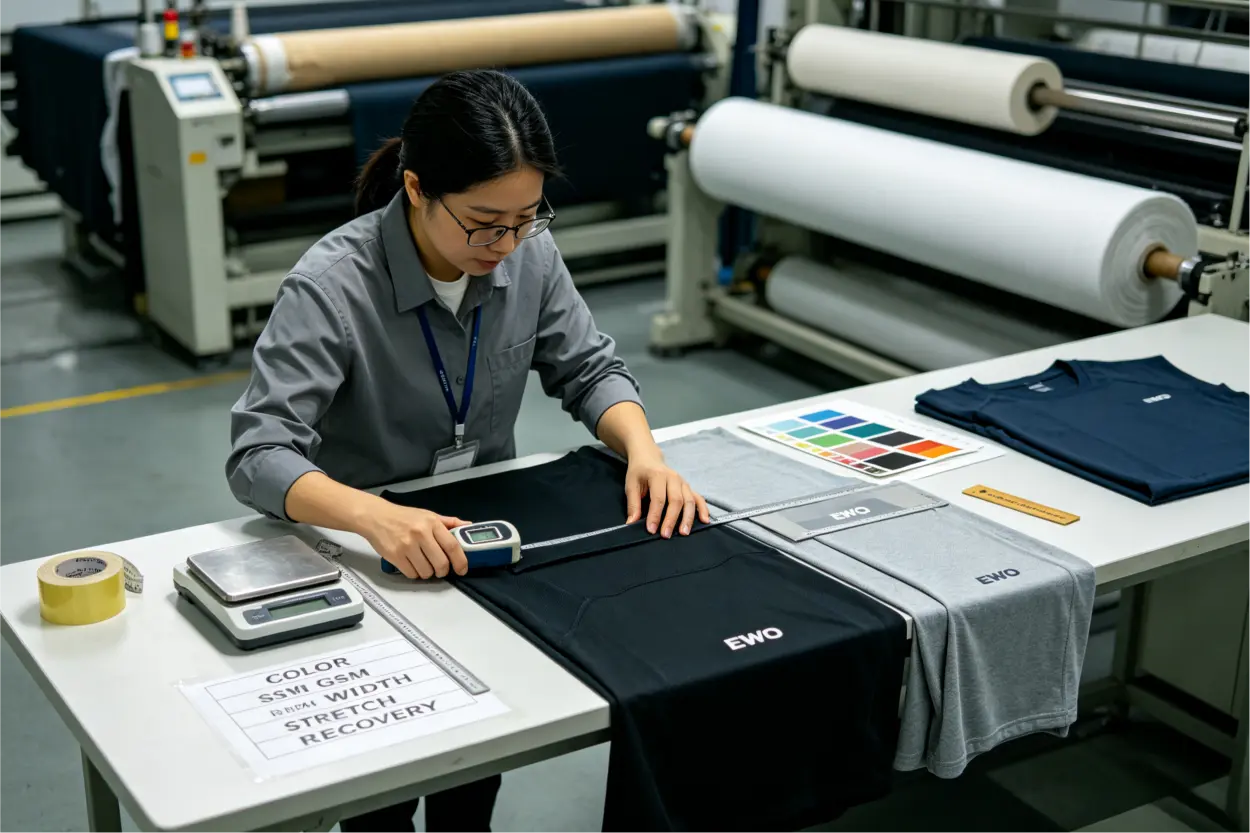
For buyers, the goal is not to inspect defects only at the end.
The goal is to stop problems before they spread across an entire order.
Why Does Performance T-Shirt Quality Control Start Before Production?
Quality problems often begin with materials rather than sewing.
If the wrong fabric batch enters production, even excellent sewing cannot correct the issue later.
Before cutting, the factory should confirm that the actual materials match the approved specification.
Typical checks include:
- Fabric composition
- Fabric GSM
- Width
- Color
- Surface appearance
- Stretch and recovery
- Hand feel
- Shade consistency
- Shrinkage requirements
- Trim specifications
During product development, buyers often spend a lot of time discussing fit and logo placement but less time defining what the approved fabric should actually feel and perform like.
That creates unnecessary risk.
What Should Be Checked During Fabric Inspection?
Fabric inspection should confirm that the bulk material matches the approved sample or agreed material standard.
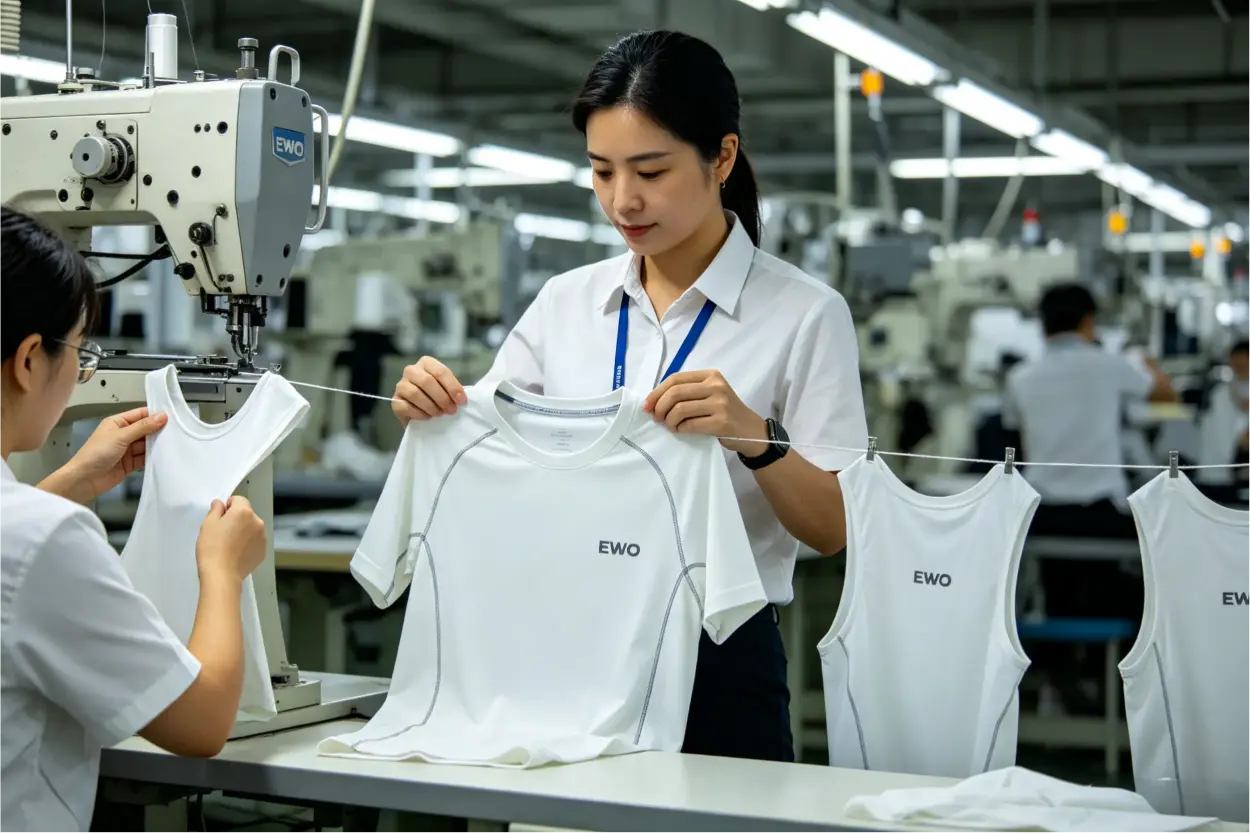
A practical fabric inspection may include:
| Inspection Point | Why It Matters |
|---|---|
| Color | Prevents noticeable shade differences |
| GSM | Affects weight, opacity, drape, and feel |
| Width | Influences cutting efficiency and consumption |
| Surface defects | Identifies holes, stains, lines, or knitting defects |
| Stretch | Affects fit and movement |
| Recovery | Helps garments return to shape after stretching |
| Hand feel | Ensures the bulk fabric matches the approved direction |
| Fabric lot | Helps manage batch consistency |
For performance apparel, the words quick-dry, moisture-wicking, or antibacterial should not be treated as automatic guarantees.
If a buyer needs formal technical performance claims, these should be supported by relevant fabric documentation or testing.
How Should Fabric Color and Shade Be Controlled?
Color variation is one of the most visible bulk-production problems.
A single T-shirt may look acceptable on its own, but two garments placed side by side can reveal shade differences immediately.
This is especially important for:
- Black
- Navy
- Dark green
- Custom-dyed colors
- Matching tops and shorts
- Repeat orders
One issue we frequently encounter in apparel development is assuming that a digital Pantone reference will automatically produce exactly the same appearance on every fabric.
The final result can be affected by fiber content, fabric surface, dyeing method, lighting, and production lot.
For custom colors, lab-dip or bulk fabric approval can reduce misunderstandings before cutting begins.
What Should Be Checked During Cutting?
Once fabric is approved, cutting becomes the next control point.
The cutting team should follow the approved:
- Pattern
- Size grading
- Fabric direction
- Marker
- Panel quantity
- Color separation
Incorrect cutting can create measurement problems that sewing cannot fully correct.
For example, if one panel is cut too short, the operator may compensate during sewing, but the final garment may still fall outside the approved tolerance.
Common Cutting Problems
Typical issues include:
- Mixed sizes
- Incorrect panel direction
- Uneven cutting edges
- Missing panels
- Shade mixing between fabric lots
- Incorrect pattern version
For repeat production, version control is particularly important.
The factory needs to know which pattern, size chart, and approved specifications belong to the current order.
How Does Inline Quality Control Reduce Bulk Defects?
Waiting until the end of production is risky.
By then, hundreds or thousands of garments may already contain the same problem.
Inline quality control checks garments while sewing is still in progress.
Inline QC is used to identify repeated workmanship, measurement, and construction problems early enough for production teams to correct them before the full order is completed.
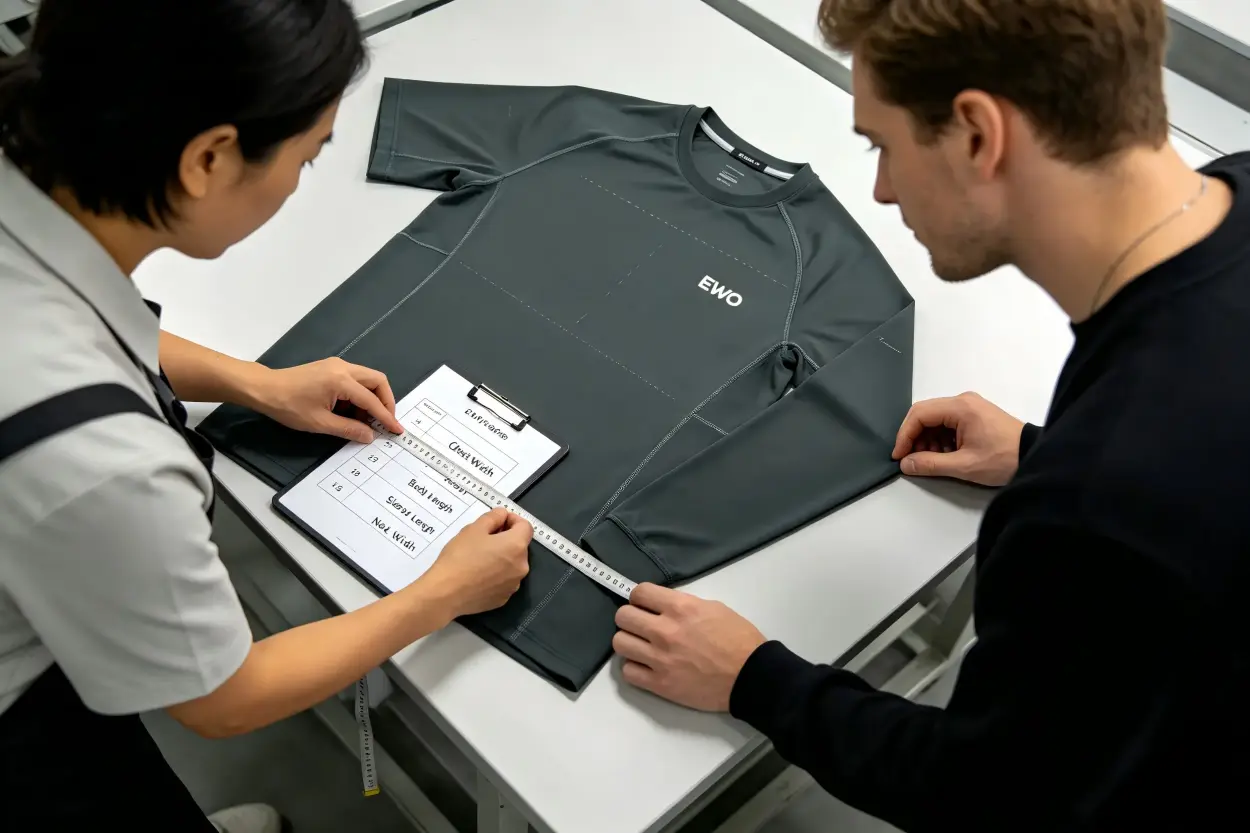
During inline production, checks may focus on:
- Stitching
- Seam strength
- Seam alignment
- Neckline shape
- Sleeve attachment
- Hem quality
- Side seams
- Measurement points
- Logo preparation
- Construction consistency
Based on our OEM experience, early checks are especially useful when a style contains new construction, a new fabric, or new decoration.
A small issue found in the first production pieces is much easier to correct than the same problem found after the full order is finished.
You can see how these production stages fit together in our sportswear production process overview.
What Quality Problems Are Common in Performance T-Shirts?
Performance T-shirts create some different QC concerns from basic casual T-shirts.
Neckline Problems
The collar may:
- Stretch
- Twist
- Ripple
- Sit unevenly
- Recover poorly after washing
Neck rib and sewing tension should match the garment fabric.
Seam Problems
Performance fabrics can be lightweight, elastic, or slippery.
Possible problems include:
- Wavy seams
- Skipped stitches
- Loose threads
- Uneven stitch density
- Fabric puckering
Measurement Variation
Sewn garments will have reasonable tolerances, but measurements should still follow the approved size chart.
Important measurement points often include:
- Chest
- Body length
- Shoulder width
- Sleeve length
- Sleeve opening
- Bottom opening
- Neck width
Fabric Damage
Some performance fabrics can be more sensitive to:
- Heat
- Needle marks
- Snags
- Oil stains
- Surface abrasion
QC should therefore look at both workmanship and material appearance.
How Should Logo and Decoration Quality Be Checked?
Logo quality can strongly affect perceived garment quality.
A well-made T-shirt with a poor logo still looks like a poor product.
Different logo methods create different QC points.
| Logo Method | Main QC Points |
|---|---|
| Heat transfer | Position, adhesion, stretching, surface damage |
| Screen print | Color, cracking, thickness, registration |
| Embroidery | Thread tension, puckering, position |
| Silicone logo | Edge quality, adhesion, thickness |
| Reflective print | Position, appearance, required performance |
| Sublimation | Color, print alignment, image clarity |
During sample approval, buyers should confirm logo size and placement using measurable reference points.
“Move it slightly higher” is not a reliable bulk production instruction.
“Move the logo 2 cm higher from the approved reference point” is much clearer.
If you are developing customized technical tops, our custom performance T-shirt manufacturing page explains more about the product-development side before quality control begins.
How Should Measurements Be Controlled During Bulk Production?
A size chart is not useful unless production is actually measured against it.
Measurements should be checked during:
- Sample approval
- Early bulk production
- Inline inspection
- Final inspection
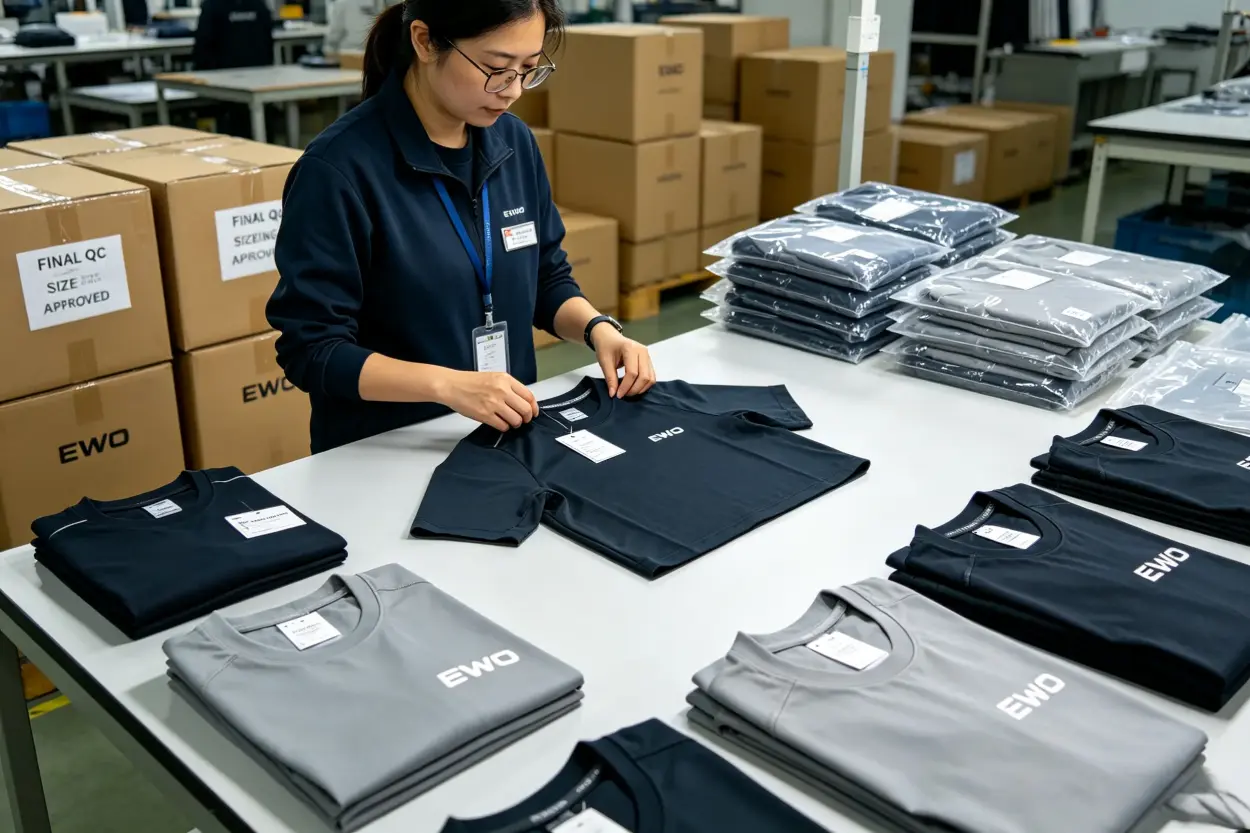
One common buyer mistake is expecting every garment to measure exactly the same.
Apparel production works with measurement tolerances.
The important point is that those tolerances should be defined and agreed rather than assumed.
Different measurement points may also require different tolerances depending on the product and construction.
What Should Final Inspection Include?
Final inspection takes place after production is substantially completed and before shipment.
The objective is to compare finished garments against the approved specifications and packaging requirements.
A final inspection may cover:
Appearance
Check for:
- Stains
- Holes
- Snags
- Loose threads
- Fabric defects
- Uneven seams
- Poor pressing
Measurements
Finished garments should be measured against the approved size chart and agreed tolerances.
Workmanship
Inspect:
- Neckline
- Shoulder seams
- Sleeves
- Side seams
- Hem
- Reinforcement
- Stitch consistency
Branding
Confirm:
- Logo
- Main label
- Size label
- Care label
- Hang tag
Packaging
Confirm:
- Correct folding
- Correct size sticker
- Correct polybag
- Correct barcode
- Correct carton quantity
- Correct carton marks
Why Is Packaging Part of Quality Control?
Packaging mistakes may not affect the garment itself, but they can create serious problems for buyers.
A retailer receiving mixed size stickers or incorrect SKU labels may need to reopen cartons and inspect every unit.
For wholesale or e-commerce brands, that creates additional labor and delays.
During bulk production communication, packaging instructions should be confirmed just as carefully as garment specifications.
Common issues include:
- Wrong size sticker
- Incorrect barcode
- Mixed styles
- Incorrect carton assortment
- Missing hang tags
- Wrong carton marks
The final product is not complete until it is correctly identified and packed.
Performance T-Shirt Final QC Checklist
Before shipment, buyers and factories should confirm:
- Fabric matches the approved standard
- Color is acceptable
- Measurements are within agreed tolerance
- Stitching is clean and consistent
- Neckline shape is correct
- No obvious fabric damage is present
- Logo position is correct
- Logo quality is acceptable
- Labels match the approved artwork
- Size information is correct
- Hang tags are correct
- Polybags are correct
- Carton quantities are correct
- Carton marks are correct
- Shipping documents match the order
This checklist should be adjusted according to the product.
A compression T-shirt may require different attention from a loose running shirt or standard training tee.
How Does Quality Control Fit Into the Production Timeline?
Quality control should happen throughout production rather than becoming one final step.
Our normal project timeline is approximately:
| Stage | Typical Timing |
|---|---|
| Sample production | 8–10 working days after details are approved |
| Express sample shipping | 5–7 days |
| Bulk production | 25–30 working days |
| FedEx/DHL shipping | 5–7 days |
| Air freight | 10–15 days |
Actual timing can vary according to fabric availability, decoration, quantity, packaging, and order complexity.
Rushing approval can sometimes save a few days at the beginning but create much larger problems later if the specifications are unclear.
Common Quality Control Mistakes Buyers Should Avoid
Approving Only by Photo
Photos help with visual confirmation but cannot show fabric hand feel, stretch, measurements, or construction clearly.
Physical sample approval is much safer for custom products.
Leaving Tolerances Undefined
Without clear tolerance standards, the buyer and factory may judge the same garment differently.
Changing the Product After Bulk Starts
Late changes to size, logo, labels, or packaging increase production risk.
Checking Only Finished Goods
QC should include incoming materials and inline production, not only finished cartons.
Assuming the Sample Guarantees Bulk Quality
The approved sample establishes the target.
Production control and final inspection are what help maintain that target in bulk.
Frequently Asked Questions
What is the most important step in Performance T-Shirt Quality Control?
There is no single inspection point that replaces the others. Fabric approval, sample confirmation, inline inspection, measurement control, and final inspection all work together to reduce production risk.
Should buyers inspect every performance T-shirt?
Inspection methods depend on order requirements and the agreed QC standard. Buyers should confirm inspection expectations with the manufacturer before bulk production.
Why can bulk fabric look different from the sample?
Fabric batches can have reasonable variation in shade, hand feel, or stretch. This is why bulk fabric approval and lot control can be important for custom orders.
Can quality problems still happen after sample approval?
Yes. Sample approval establishes the product standard, but bulk production still requires material control, sewing control, measurement checks, decoration inspection, and final QC.
Conclusion
Performance T-shirt quality control should begin with fabric and end only after the correct garments are packed for shipment.
The strongest QC process does not depend on one final inspection.
It controls the product through material approval, cutting, inline sewing checks, measurement control, logo inspection, finishing, packaging, and final shipment preparation.
For buyers, the most practical way to reduce quality problems is to define the product clearly before production and approve measurable standards rather than relying on assumptions.
If you already have a tech pack, reference sample, size chart, or performance T-shirt specification, you can contact us to discuss your project, send your specifications, or request a sample.