What Is Activewear OEM Manufacturing and Who Is It Best For?
Some buyers contact a sportswear factory with only a reference photo. Others already have a tech pack, size chart, fabric specification, logo artwork, and packaging requirements.
Those two projects need very different levels of manufacturing support.
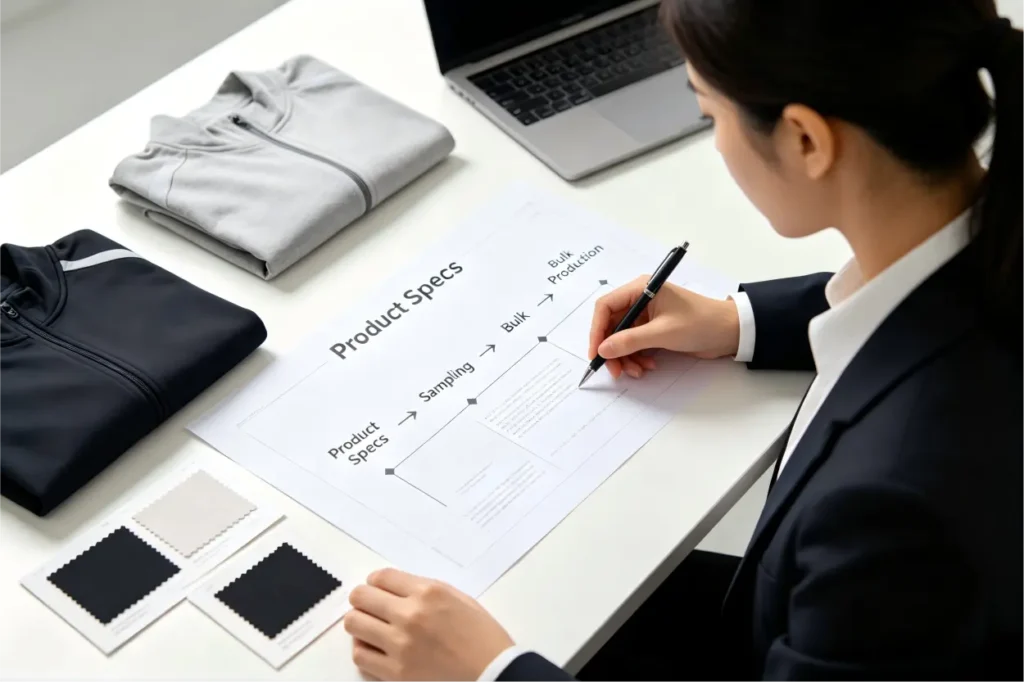
Activewear OEM manufacturing is a production model in which a factory produces sportswear according to the buyer’s own specifications. It is best suited to sportswear brands, private-label businesses, importers, teams, and product developers that already have a relatively clear product direction and need a factory to turn those specifications into approved samples and repeatable bulk production.
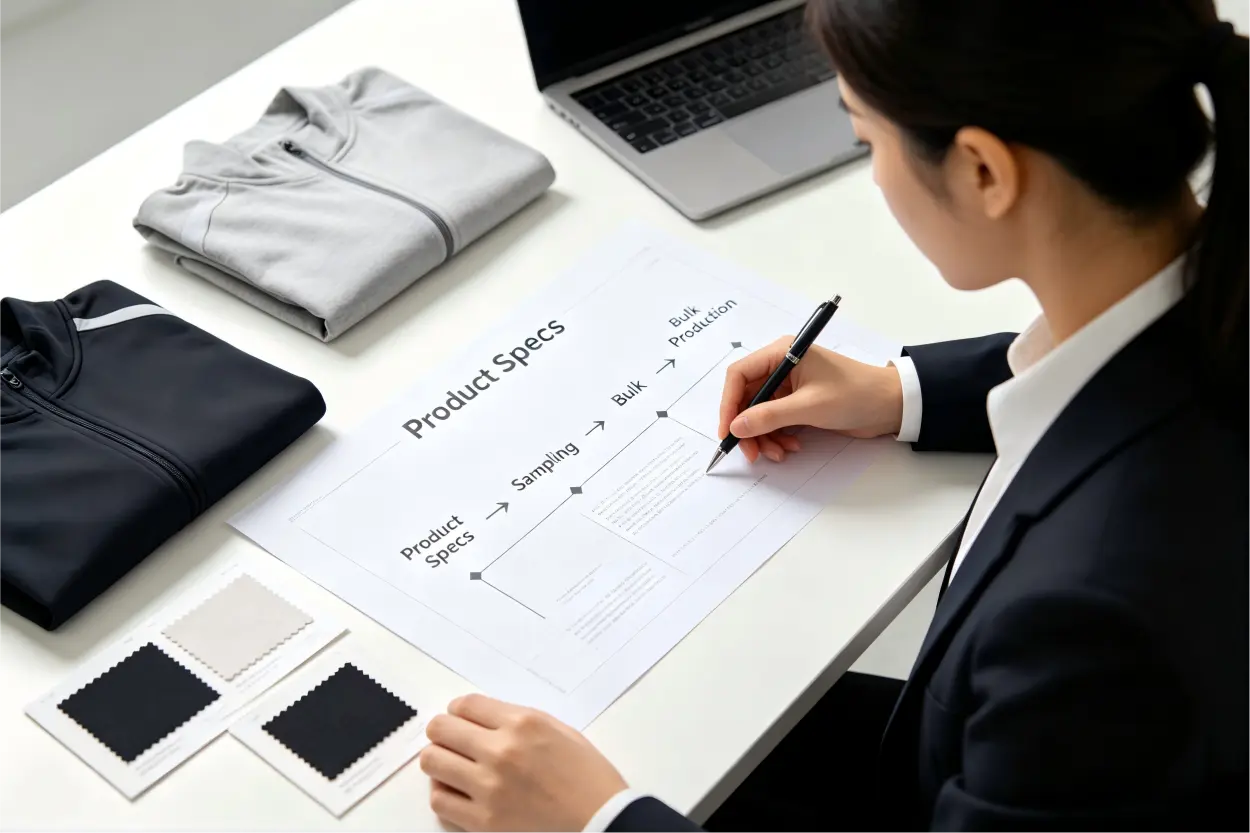
For buyers who already know what they want to manufacture, OEM offers greater control over fabric, fit, construction, branding, labels, packaging, and repeat production.
The important point is that the product needs to be defined clearly enough before manufacturing begins.
What Is Activewear OEM Manufacturing?
OEM stands for Original Equipment Manufacturer.
In activewear manufacturing, OEM means the buyer provides the main product direction while the factory develops and manufactures the garment according to those approved specifications.
A buyer may provide:
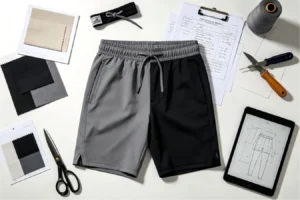
- Product drawings or tech packs
- Reference samples
- Fabric composition and GSM
- Size charts
- Color standards
- Logo artwork
- Printing or embroidery requirements
- Labels and packaging
- Functional requirements
- Target quantity
For example, a sportswear brand may request training shorts using a polyester-spandex outer fabric, elastic waistband, internal drawcord, zip pockets, silicone logo, custom woven label, and branded polybag.
The factory’s responsibility is not simply to find a similar existing product.
It must turn those requirements into a garment that can be sampled, checked, approved, and reproduced in bulk.
Our OEM and ODM sportswear manufacturing service follows this type of development process.
OEM Is More Than Adding a Logo
One common misunderstanding is that OEM only means adding a custom logo to an existing garment.
That is closer to basic private labeling.
A true activewear OEM project can involve decisions about:
- Fabric construction
- Garment fit
- Pattern
- Measurements
- Stitching
- Panel design
- Waistband construction
- Pocket structure
- Logo technique
- Labels
- Packaging
The more customized the garment becomes, the more important accurate specifications become.
How Does Activewear OEM Manufacturing Work?
A reliable OEM project usually begins with product information rather than bulk pricing.
1. Product Specification Review
During product development, the factory first checks whether the buyer has provided enough information to understand the garment.
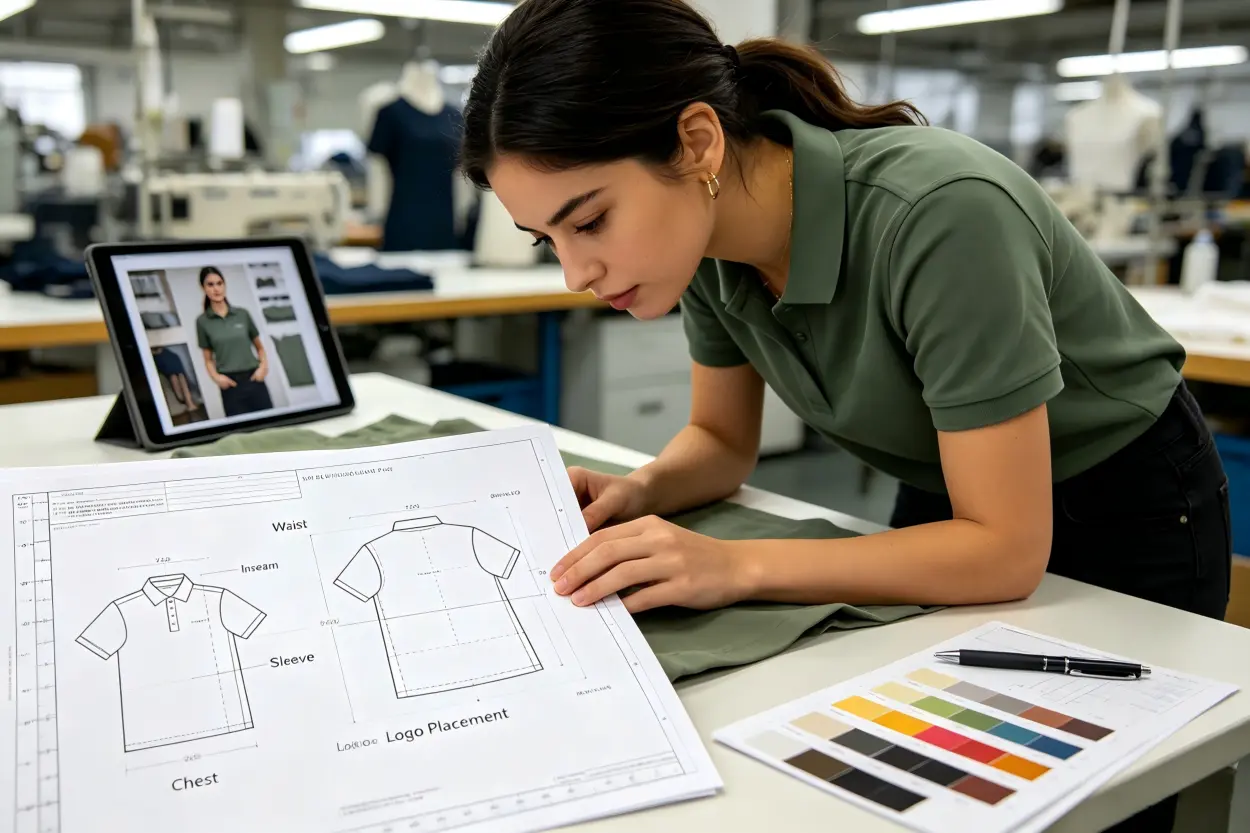
Typical production details include:
| Product Detail | Why It Matters |
|---|---|
| Fabric composition | Affects stretch, hand feel, durability, and performance |
| Fabric GSM | Influences weight, drape, structure, and opacity |
| Size chart | Controls fit and grading |
| Construction | Defines how the garment is assembled |
| Logo method | Affects appearance, durability, and cost |
| Color | Helps manage bulk consistency |
| Packaging | Affects presentation and shipment preparation |
One issue we frequently encounter is a buyer sending a reference photo and immediately asking for a quotation.
The image may communicate the overall look, but it does not show the fabric weight, stretch, exact measurements, internal construction, seam type, or acceptable production tolerance.
A reference photo is useful.
It is not a complete production specification.
2. Fabric and Construction Confirmation
The next step is confirming whether the selected materials and construction match the intended activity.
Activewear may require:
- Four-way stretch
- Moisture management
- Breathability
- Lightweight construction
- Quick drying
- Compression
- Flatlock seams
- Abrasion resistance
The correct material depends on the garment.
A running short, gym short, compression T-shirt, and boxing short should not automatically use the same fabric simply because they all fall under activewear.
3. Sample Development
Sampling turns the specification into a physical product.
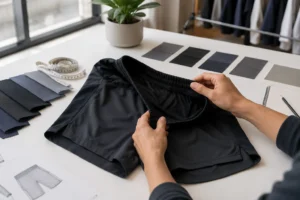
During sample approval, buyers should check more than appearance.
Review:
- Fit
- Measurements
- Fabric hand feel
- Stretch
- Color
- Logo position
- Stitching
- Pocket construction
- Waistband tension
- Labels
- Packaging direction
Our standard sample production time is 8–10 working days once everything is approved.
Express sample shipping normally takes another 5–7 days by FedEx or DHL.
The sample should become the reference for bulk manufacturing, rather than simply acting as a visual prototype.
4. Bulk Production
Once the final sample, materials, measurements, branding, and packaging details are approved, bulk production can begin.
A typical process may include:
fabric preparation → cutting → sewing → logo application → finishing → inspection → packing.
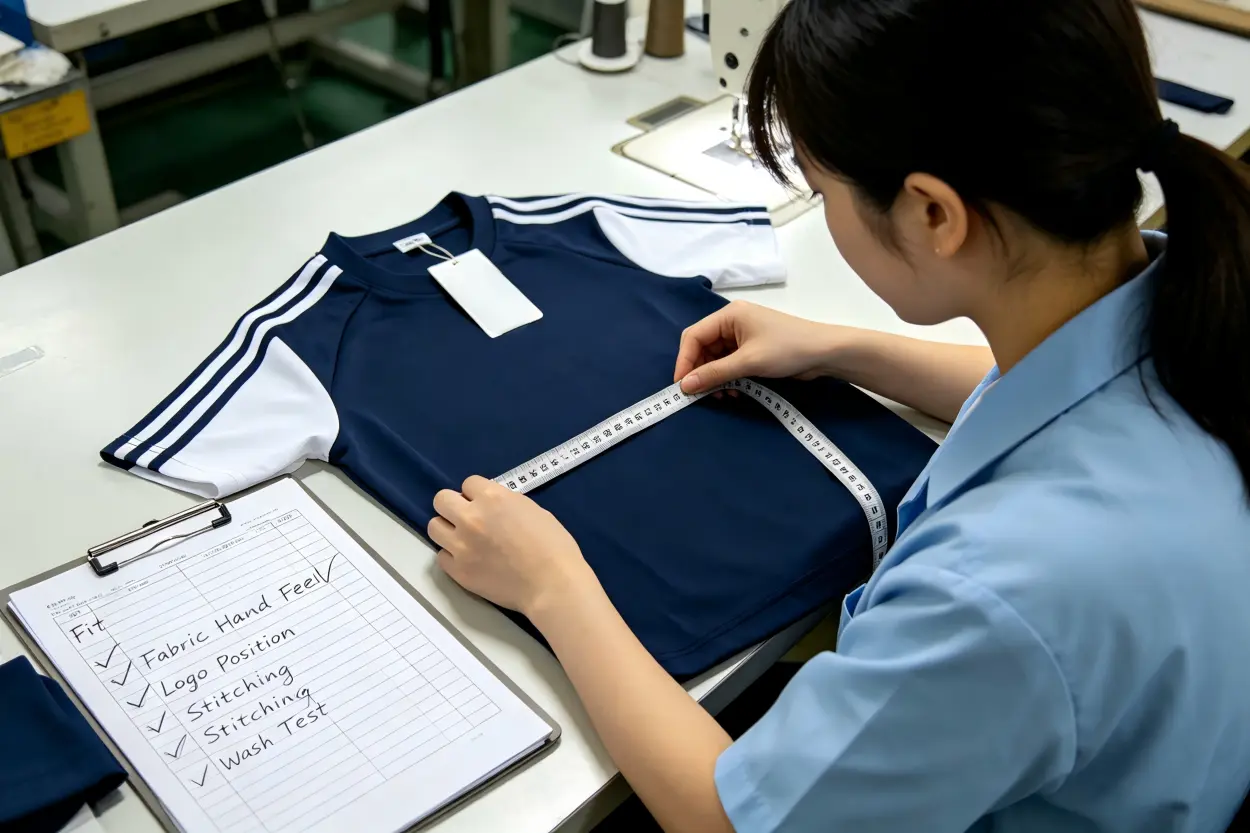
Our normal bulk production time is around 25–30 working days, depending on product complexity, order quantity, material readiness, decoration, and packaging.
Shipping normally takes:
- FedEx/DHL Express: 5–7 days
- Air freight: 10–15 days
You can see how these stages connect on our sportswear production process page.
Who Is Activewear OEM Manufacturing Best For?
OEM works best when the buyer already has meaningful control over the product.
Sportswear Brands With Existing Products
An established activewear brand may already have its own fit, size chart, fabric requirements, construction details, and branding standards.
The brand usually does not want a factory to redesign the product.
It wants the supplier to reproduce the approved specifications consistently.
For repeat production, this consistency becomes especially important.
If the fabric, fit, or construction changes between orders, customers may notice the difference immediately.
Private-Label Brands Developing Original Products
OEM also suits private-label brands that want more differentiation than selecting a standard catalogue garment.
For example, a buyer developing custom performance T-shirts may want control over:
- Fit
- Fabric weight
- Stretch
- Neckline construction
- Sleeve length
- Logo method
- Size labels
- Packaging
OEM gives the brand more control over how the final product looks, feels, and performs.
Importers and Wholesalers
Importers often already understand what their target market needs.
They may know the preferred size range, price position, quality level, packaging standard, and expected order quantity.
OEM allows them to provide these requirements to a manufacturer instead of purchasing a generic product with limited differentiation.
Teams, Clubs, and Specialized Sportswear Buyers
Some sports products require specific construction based on movement and use.
Running shorts, training shorts, boxing shorts, and performance shirts may each require different fabric, fit, seam, and decoration decisions.
OEM is useful when those requirements need to be defined before production rather than selected from a ready-made garment.
Who Is Activewear OEM Manufacturing Not Ideal For?
OEM is not always the best starting point for a buyer who only has a general concept.
For example:
“I want to start an activewear brand. Can you send me some designs?”
That buyer may need more ODM support.
If the project does not yet have:
- A clear product category
- Fabric direction
- Size specification
- Construction concept
- Product reference
- Branding direction
then many development decisions still need to be made.
That usually means the project is not yet a straightforward OEM order.
Activewear OEM vs ODM Manufacturing
The main difference is how much product direction comes from the buyer.
| OEM | ODM |
|---|---|
| Buyer provides the main specifications | Factory provides more development support |
| Higher buyer control | Faster starting point |
| Better for defined products | Better for early-stage concepts |
| More customization possible | Often builds from existing factory capabilities |
| Requires clearer specifications | Requires fewer technical details from the buyer |
Neither model is automatically better.
The right choice depends on how developed the product already is.
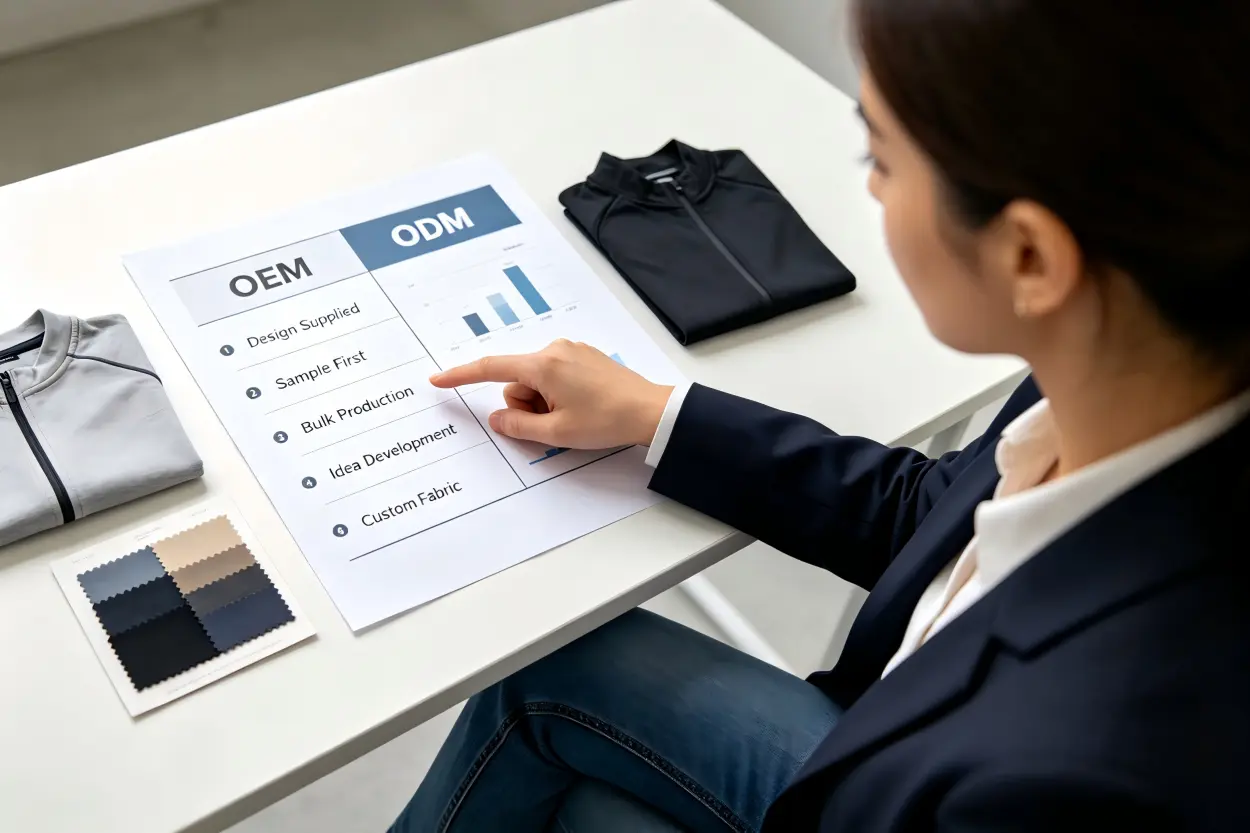
In real production, some projects fall between the two.
A buyer may already have the design, size chart, and logo placement but ask the factory to recommend a suitable performance fabric.
This is common in OEM development.
Common Activewear OEM Mistakes Buyers Should Avoid
Sending Only Product Photos
A product image cannot confirm GSM, measurements, construction, tolerances, or exact fabric requirements.
Provide a tech pack when possible.
If you do not have one, send as much measurable information as possible.
Asking for Price Before Defining the Product
Reliable pricing depends on the product specification.
Before requesting serious bulk pricing, it helps to confirm:
- Product type
- Quantity
- Fabric
- Colors
- Size range
- Logo method
- Packaging
- Target delivery date
A simple one-color training short with a small heat-transfer logo will not cost the same as a multi-panel short using custom fabric, zippers, several trims, and retail packaging.
Approving a Sample Too Quickly
During sample approval, do not only check whether the garment looks similar to the reference image.
Check it as the final customer would use it.
Wear it.
Move in it.
Measure it.
Check the seams.
Inspect the logo.
Confirm the fabric.
Sampling is where many bulk-production problems can still be corrected relatively early.
Changing Specifications During Bulk Production
Once production starts, specification changes can cause delays and inconsistencies.
Fabric, measurements, trims, logo artwork, labels, and packaging should be confirmed before bulk manufacturing whenever possible.
Is Activewear OEM Manufacturing Right for Your Brand?
Use this simple decision framework before starting an OEM project.
Ask:
- Do we already know what product we want to manufacture?
- Do we have a reference sample, tech pack, or measurement specification?
- Do we know the intended fabric and performance direction?
- Do we require our own branding, labels, or packaging?
- Do we expect repeat production if the first order performs well?
If most answers are yes, activewear OEM manufacturing is probably suitable.
If the concept is still very early and requires considerable product-development support, ODM may be more practical.
Practical Activewear OEM Buyer Checklist
Before contacting an OEM factory, prepare as much of the following as possible:
- Product reference
- Tech pack
- Size chart
- Fabric composition
- Target GSM
- Color references
- Logo artwork
- Logo size and placement
- Expected quantity
- Packaging requirements
- Target delivery date
The purpose is not to make the buyer do the factory’s work.
It is to reduce assumptions.
Based on our OEM experience, smoother projects are usually the ones where the buyer and factory define the product clearly before sampling and bulk production begin.
Frequently Asked Questions
What does OEM mean in activewear manufacturing?
OEM means a factory manufactures activewear according to product specifications provided by the buyer. These specifications may include fabric, measurements, fit, construction, logos, colors, labels, and packaging.
Do I need a tech pack for activewear OEM production?
A professional tech pack is strongly recommended, but it is not always mandatory.
A detailed reference sample, measurement chart, fabric requirements, logo artwork, and construction information can also provide a useful starting point.
Is activewear OEM the same as private label manufacturing?
Not exactly.
Private label describes products sold under the buyer’s own brand.
OEM describes the manufacturing relationship in which the factory produces according to the buyer’s product specifications.
Is OEM better than ODM for a new activewear brand?
It depends on how developed the product is.
OEM is usually better when the buyer already has clear specifications.
ODM may be more suitable when the buyer still needs help defining the product design, material direction, or construction.
Conclusion
Activewear OEM manufacturing works best when a buyer already has a clear product direction and needs a factory to turn that specification into repeatable production.
The process involves much more than sewing.
Fabric, fit, measurements, construction, logo method, sampling, tolerances, inspection, and packaging all need to work together.
A well-prepared OEM project usually creates fewer misunderstandings during development and provides a clearer standard for bulk and repeat production.
If you already have a tech pack, reference sample, size chart, or activewear concept, you can contact us to discuss your project, send your specifications, or request a sample.