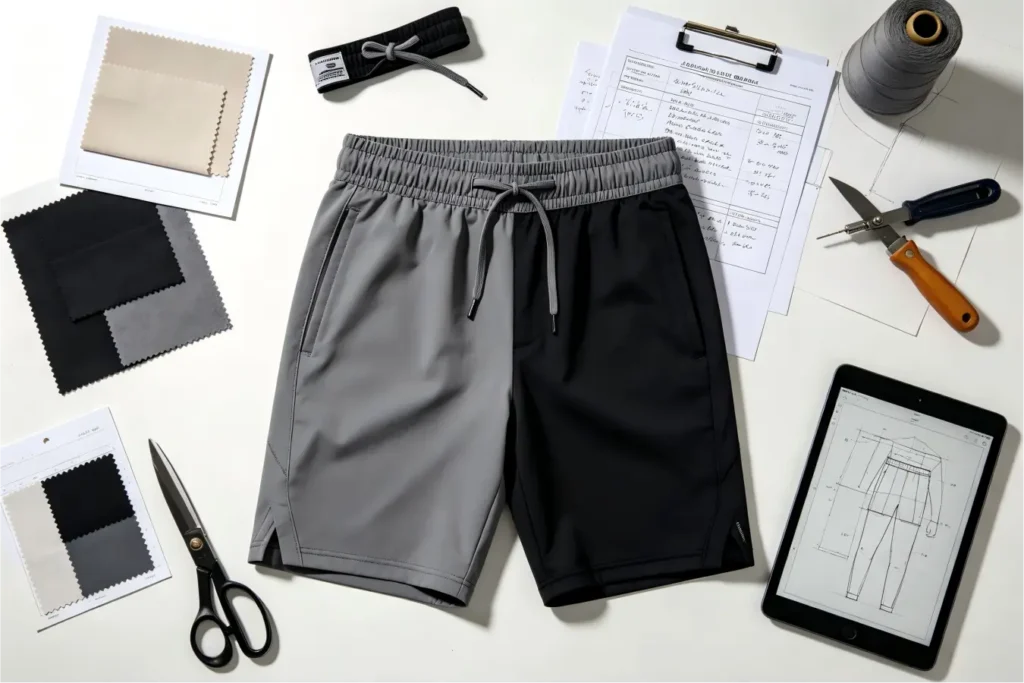
[A custom gym shorts manufacturer can save you from an expensive mistake, but only if your idea is clear enough to quote, sample, and produce. Many buyers start with "mesh shorts" or "athletic shorts," then discover that fabric, waistband, pockets, lining, logo, MOQ, and delivery all change the final result.
A custom gym shorts manufacturer helps brands, teams, and wholesalers turn a rough product idea into a production-ready specification. The real decision is not only mesh versus drawstring. It is about matching sport use, wearer type, fabric handfeel, fit, decoration, quantity, price target, sampling risk, and bulk production control.
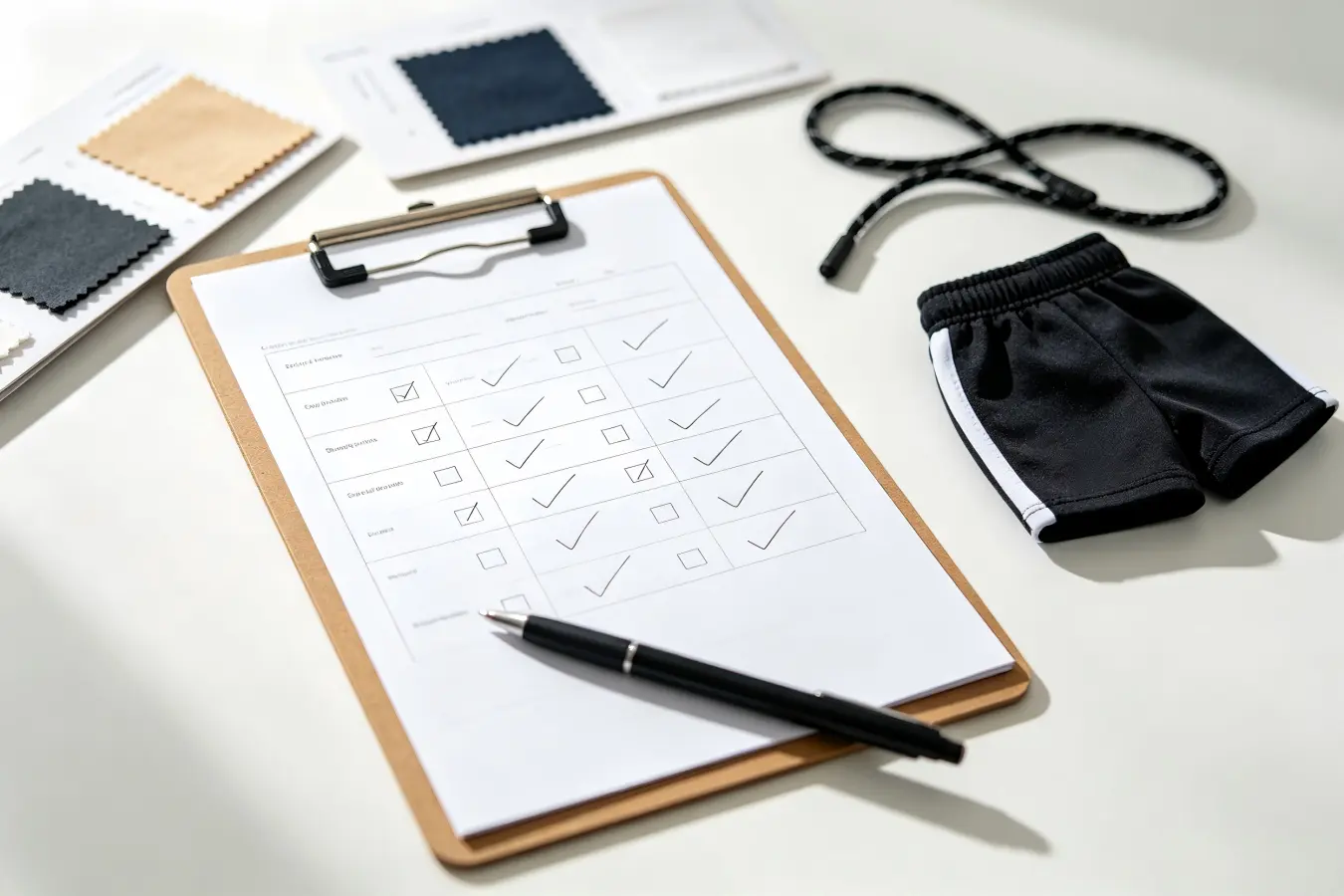
Shorts look simple from the outside. In factory communication, they are not simple at all. A small change in fabric weight, waistband construction, or logo method can affect comfort, cost, and delivery. That is why I treat every inquiry as a specification project, not just a price request.
How Does a Custom Gym Shorts Manufacturer Turn a Vague Idea into Specs?
Many overseas buyers send a photo and ask, "How much for this?" That sounds easy, but it creates risk. A custom gym shorts manufacturer needs more than a reference image because the hidden details decide whether the sample matches your expectation.
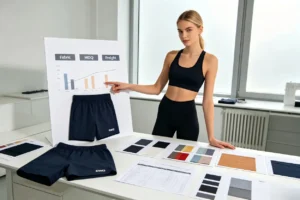
A custom gym shorts manufacturer turns a vague idea into specs by confirming the sport scenario, target wearer, fabric type, GSM, stretch, waistband, drawstring, pockets, lining, logo method, size range, color plan, quantity, packaging, and delivery deadline before quoting or sampling.
During OEM communication, one issue we frequently encounter is that buyers describe the product by category only. They say "gym shorts," "mesh shorts," or "basketball shorts." Those names help us understand the direction, but they do not tell us how the shorts should perform.
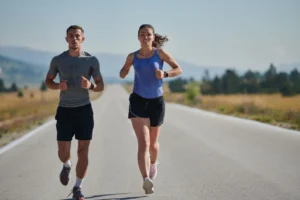
A gym training short for weightlifting may need a stable waistband and durable stretch fabric. A running short may need lighter fabric, better breathability, and less bulk. A basketball short may need more length, relaxed movement, and sometimes bigger side panels. A boxing short may need a wide waistband and strong visual branding.
The first questions I need to clarify
A good factory conversation usually starts with these points:
-
Sport scenario
Is the short for gym training, running, basketball, boxing, teamwear, or lifestyle retail? -
Target user
Is it for men, women, youth teams, fitness clubs, or general wholesale? -
Fabric direction
Does the buyer want mesh, interlock, woven stretch, polyester-spandex, or a lightweight quick-dry fabric? -
Fit and length
Should the shorts be above-knee, mid-thigh, relaxed, compression-layered, or loose teamwear style? -
Branding method
Does the logo need heat transfer, screen print, embroidery, woven label, or sublimation? -
Order plan
Is this a first test order, repeat program, team order, or retail launch?
Here is a simple way to think about the early decision stage:
| Buyer says | Manufacturer must clarify | Why it matters |
|---|---|---|
| "I need mesh shorts" | Mesh type, weight, lining, stretch, opacity | Mesh can feel very different depending on structure |
| "I want gym shorts" | Training type, fit, pockets, waistband | Gym use can mean lifting, HIIT, or casual wear |
| "Same as photo" | Measurements, fabric, logo, trims | Photos cannot show GSM, stretch, or construction |
| "Best price" | Quantity, size range, logo, packaging | Price is meaningless without production details |
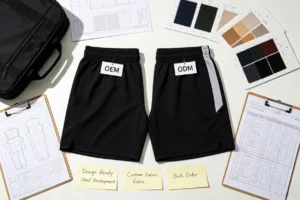
Based on our OEM/ODM experience, unclear specifications often lead to repeated sampling. That adds time and cost for both sides. For most custom projects, a practical starting point is MOQ 300 pcs, sample time 7–10 days, and bulk production 25–30 days for around 600 pcs, depending on fabric, trims, and approval speed.
If you already have sketches or a product plan, our OEM/ODM custom shorts service explains how we support development from design to production.
What Mesh Shorts Options Should a Custom Gym Shorts Manufacturer Clarify?
Mesh shorts sound straightforward, but the word "mesh" covers many constructions. If a buyer only asks for breathable mesh, the final product may still be too thin, too see-through, too heavy, or unsuitable for the intended sport.
A custom gym shorts manufacturer should clarify mesh structure, fabric weight, stretch, opacity, lining, handfeel, pocket design, waistband type, and logo method. Mesh works well for basketball, gym, teamwear, and casual athletic styles, but each use case needs different comfort and durability choices.
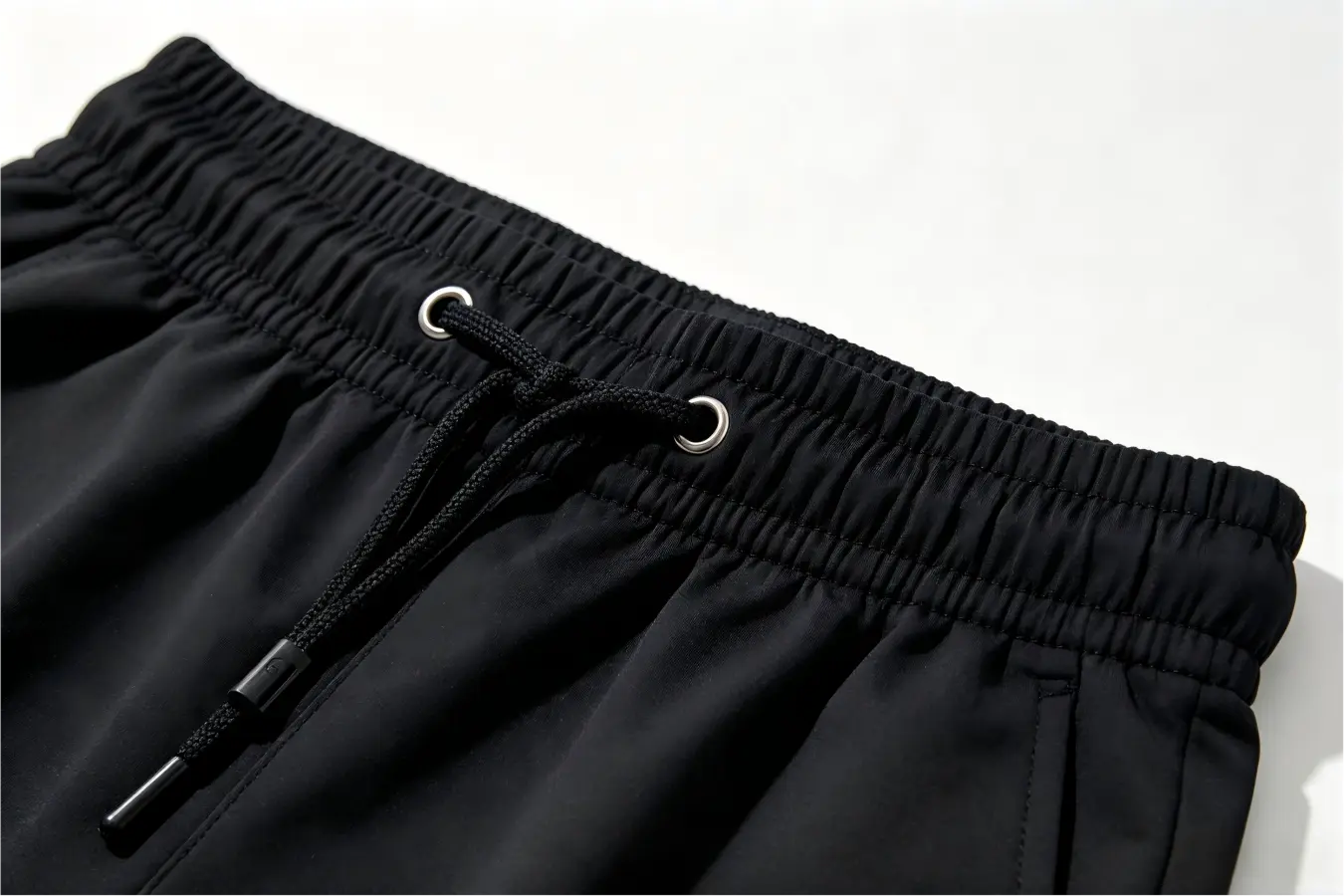
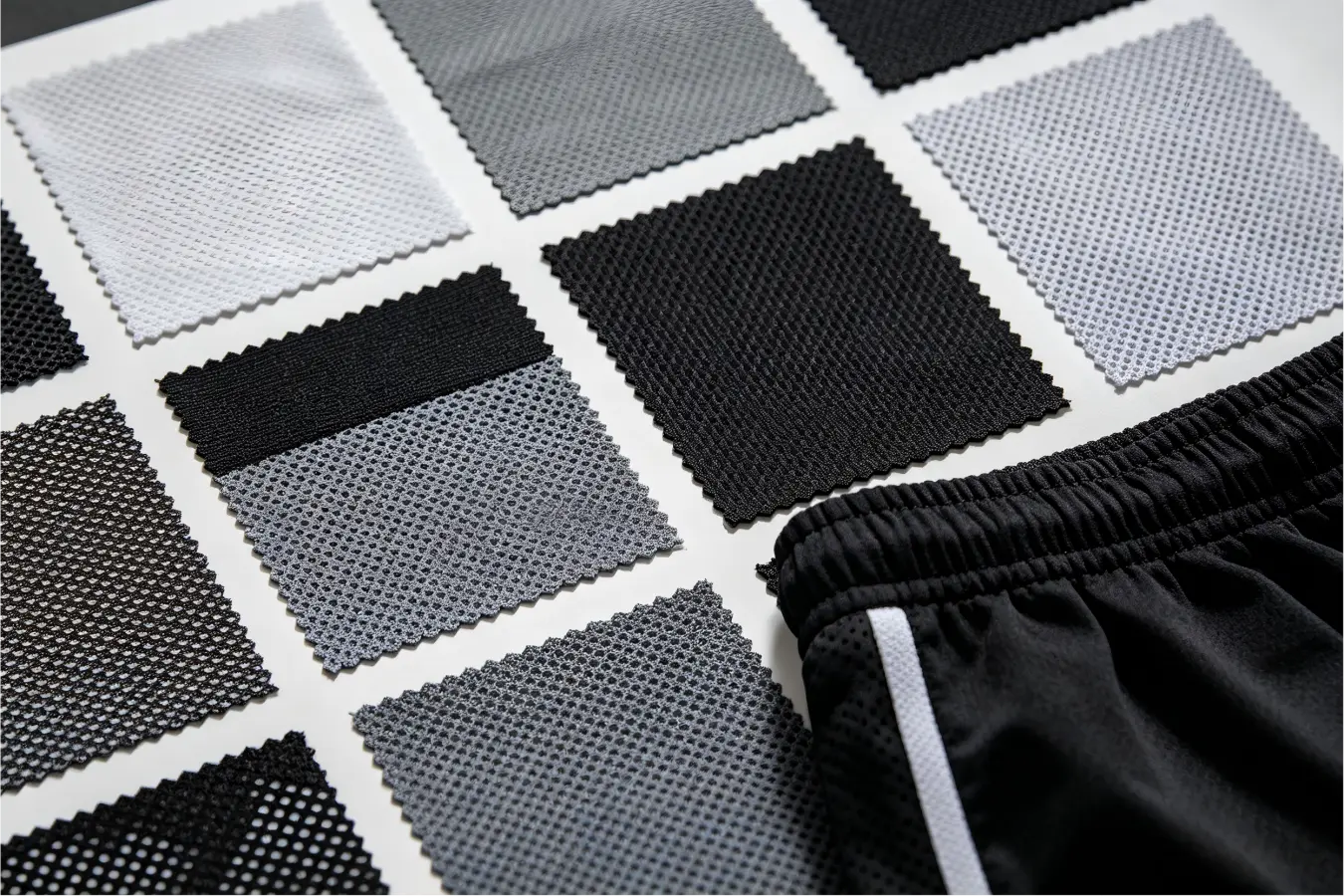
Mesh is one of the most requested fabrics in athletic shorts inquiries. It has a sporty look, allows airflow, and suits many team or training products. However, mesh is not one single fabric. Some mesh feels soft and drapey. Some feels firm and structured. Some has larger holes, while some has a tighter surface that prints better.
Mesh variables that change the product
A factory should not treat mesh as a decorative choice. Mesh affects comfort, durability, privacy, and cost.
Key variables include:
- Fabric weight: Heavier mesh may feel more premium but can feel warmer.
- Hole size: Larger holes improve airflow but may reduce opacity.
- Stretch: Stretch mesh supports movement better but may cost more.
- Lining: A lining improves coverage but adds weight and labor.
- Surface texture: Smooth mesh may work better for some logo methods.
- Color depth: Dark colors often look more solid than light colors in open mesh.
Mesh shorts by use case
| Use case | Suggested mesh direction | Main risk to avoid |
|---|---|---|
| Basketball shorts | Medium to heavier mesh, relaxed fit | Shorts feel too thin or transparent |
| Gym team shorts | Durable mesh, stable waistband | Waist slips during movement |
| Boxing-style shorts | Shiny or structured mesh, wide waistband | Fabric does not match the visual style |
| Casual athletic shorts | Softer mesh, clean pockets | Product feels too sporty for retail |
One buyer once sent a reference image of loose mesh shorts and wanted them for gym training. The photo looked like basketball shorts, but the intended wearer wanted to squat and do functional training. The first discussion changed from "mesh shorts price" to "how much stretch, how secure at the waist, and whether pockets should be zipped." That kind of clarification prevents disappointment later.
Logo methods for mesh shorts
Logo choice matters more on mesh than many first-time buyers expect.
Common options include:
- Heat transfer: Clean look, good for many gym and team products.
- Screen print: Cost-effective for larger simple graphics.
- Embroidery: Premium feel, but it may pull on lighter mesh.
- Sublimation: Good for all-over patterns, usually needs suitable fabric and color planning.
- Woven patch: Strong brand look, but adds trimming and sewing steps.
A reliable custom gym shorts manufacturer should explain which methods suit your mesh, not just accept every request. A logo that looks good on thick cotton may not work the same way on open mesh.
How Should a Custom Gym Shorts Manufacturer Design Drawstring and Waistband Details?
A drawstring looks like a small detail, but it controls fit confidence. If the waistband rolls, twists, or slips, the wearer blames the whole short. A custom gym shorts manufacturer must treat drawstring and waistband design as functional decisions.
A custom gym shorts manufacturer should design drawstring and waistband details based on sport movement, wearer preference, fit stability, cost target, and brand style. Internal drawstrings feel cleaner, external drawstrings look sportier, and elastic width affects comfort, support, and production cost.
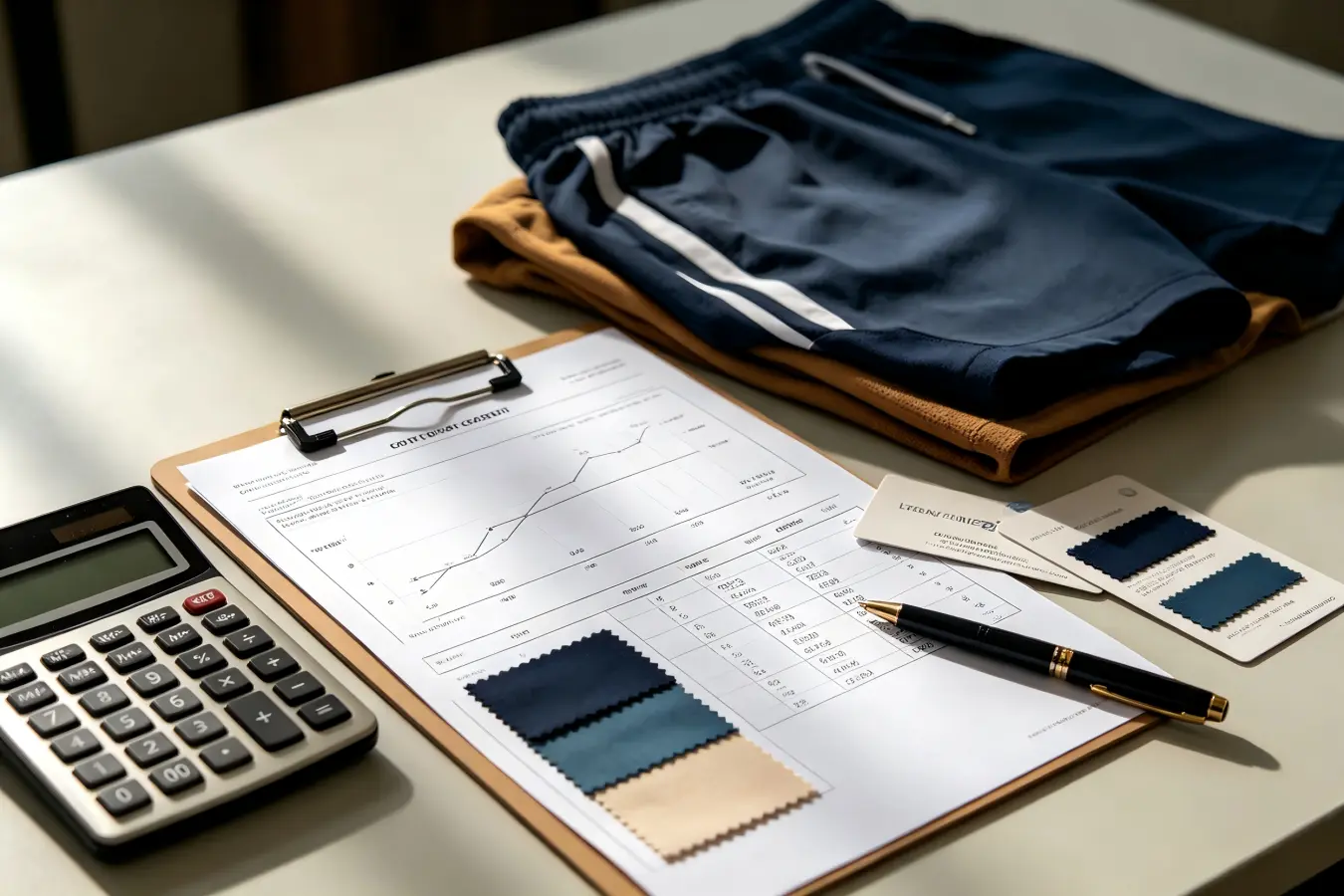
Drawstrings are often requested because buyers want "adjustable waist." That is correct, but the construction has several choices. The cord can be flat or round. The drawstring can sit inside or outside. The waistband can be narrow, medium, or wide. Eyelets can be metal, stitched, or omitted. Each choice changes both appearance and manufacturing steps.
Common waistband options
| Waistband type | Best for | Notes |
|---|---|---|
| Basic elastic waistband | Entry-level gym shorts, wholesale | Simple and cost-controlled |
| Elastic with internal drawstring | Clean retail look | Drawcord is hidden when worn |
| Elastic with external drawstring | Teamwear, basketball, boxing | Sporty and easy to adjust |
| Wide waistband | Boxing, women's training, premium gym shorts | More support, higher material use |
| Rib waistband | Lifestyle athletic shorts | Softer casual feel |
Drawstring decisions that affect production
A small trim can create many questions:
- Should the drawstring match body color or contrast?
- Should the drawstring tips be plastic, metal, or heat-sealed?
- Should the waistband have eyelets?
- Should the drawstring be round cord or flat tape?
- Should it be functional or decorative?
- Should the inside seam be clean-finished for comfort?
During sample approval, waistband feedback is common. Buyers may say the waist feels too loose, too tight, too bulky, or not premium enough. Those comments are normal, but they are easier to fix at the sample stage than during bulk production.
Practical advice from factory communication
For gym training shorts, I prefer to confirm the waist measurement, elastic width, and drawstring position before sampling. If the product is for heavy movement, the waistband should feel secure without cutting into the body. If the product is for retail lifestyle use, comfort and appearance may matter more than tight support.
For teamwear, external drawstrings are practical because players can adjust quickly. For running shorts, bulky cords and heavy waistbands may feel uncomfortable. For boxing shorts, the waistband becomes a visual feature, not just a fit component.
A good custom gym shorts manufacturer will ask these questions before giving a final sample cost. If those details are skipped, the first sample may look close in photos but feel wrong in wear.
Which Athletic Shorts Details Affect Cost, MOQ, and Sampling Risk?
Many buyers compare unit prices too early. The price can look attractive, but missing details often create hidden costs. Athletic shorts are affected by quantity, fabric, trims, logo, pockets, lining, packaging, and approval speed.
Athletic shorts cost depends on order quantity, fabric choice, size range, colors, logo method, pocket construction, lining, waistband, packaging, and timeline. MOQ is commonly around 300 pcs for custom orders, while sampling usually takes 7–10 days after details are confirmed.
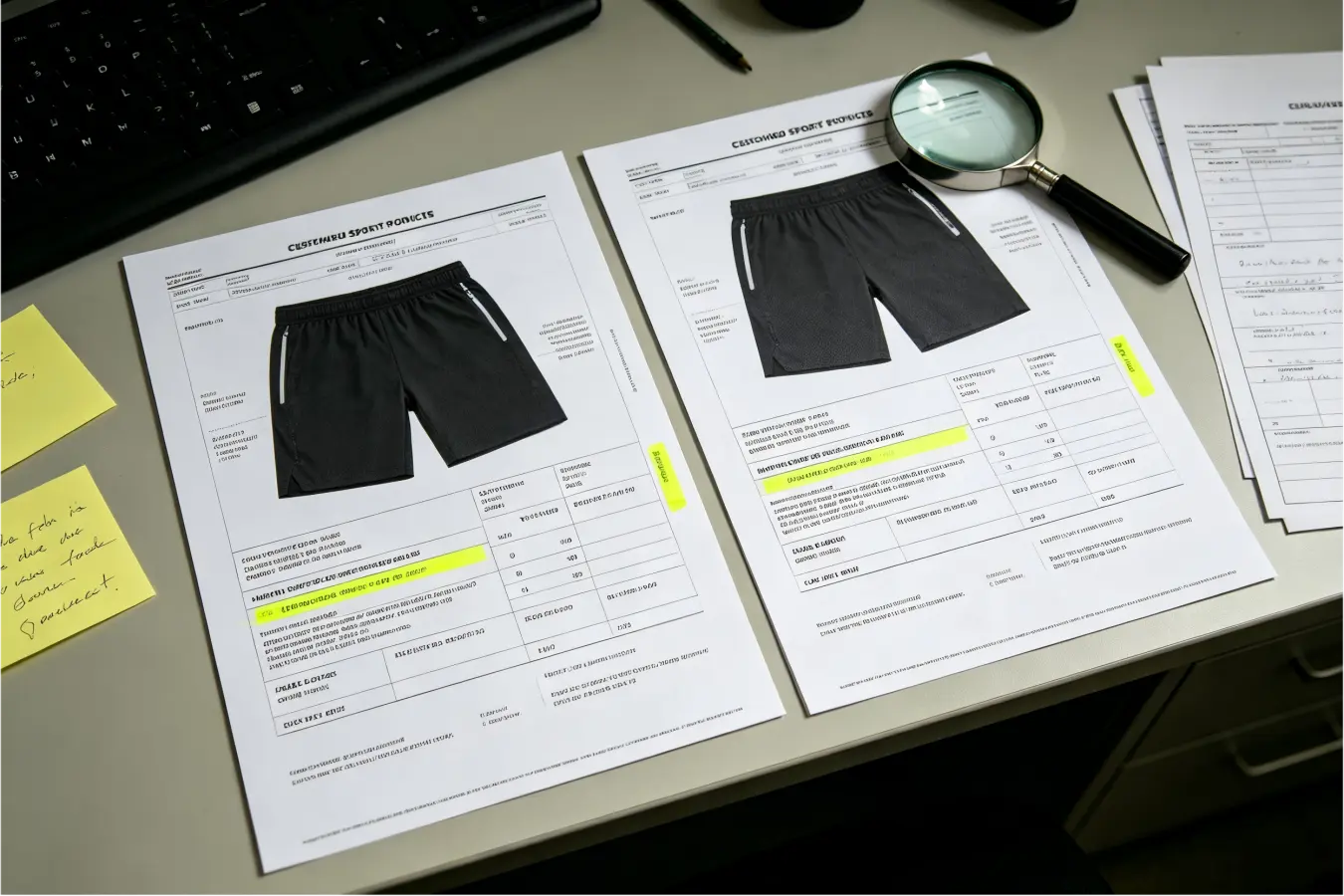
A low unit price is not useful without context. If one quote includes pockets, custom labels, heat transfer logo, individual polybags, and five sizes, while another quote only includes plain shorts in one color, the comparison is not fair.
Main cost factors
Here are the details that often change the price:
-
Fabric type and weight
Polyester mesh, woven stretch, knit interlock, and spandex blends have different costs. -
Order quantity
Larger orders spread setup and handling costs better. Small custom runs need tighter planning. -
Size range
XS–3XL may need more grading work and more fabric consumption than S–XL. -
Color count
Multiple colors can increase fabric sourcing and cutting complexity. -
Logo method
Heat transfer, embroidery, screen print, and sublimation do not have the same cost structure. -
Pocket design
No pockets, side pockets, zipper pockets, and hidden pockets all require different labor. -
Lining
Built-in briefs, compression liners, and full lining add materials and sewing time. -
Packaging
Bulk packing is simpler. Retail packaging needs labels, barcodes, hangtags, or custom bags.
Sampling risk comes from unclear choices
One common mistake is asking for a sample before the product is defined. A rushed sample may answer the wrong question. For example, if the buyer has not confirmed pocket type, logo size, or waistband style, the sample only proves that the factory can sew shorts. It does not prove that the product is ready for bulk.
For a first custom project, I suggest preparing:
- Reference image or physical sample
- Desired sport use
- Fabric preference
- Target price range
- Logo file
- Size chart or target market size range
- Estimated order quantity
- Packaging needs
If your project is focused on training and gym performance styles, this page on custom training shorts may help you compare product directions before sampling.
How Can You Compare Custom Gym Shorts Manufacturer Quotes Without Hidden Risk?
Quote comparison can be confusing because every supplier may format information differently. If the quote is not based on the same specification, the lowest price may simply mean fewer details are included.
You can compare custom gym shorts manufacturer quotes by checking whether each quote includes the same fabric, GSM, size range, quantity, logo method, waistband, pockets, packaging, sample cost, MOQ, lead time, and production terms. Equal specifications make price comparison meaningful.
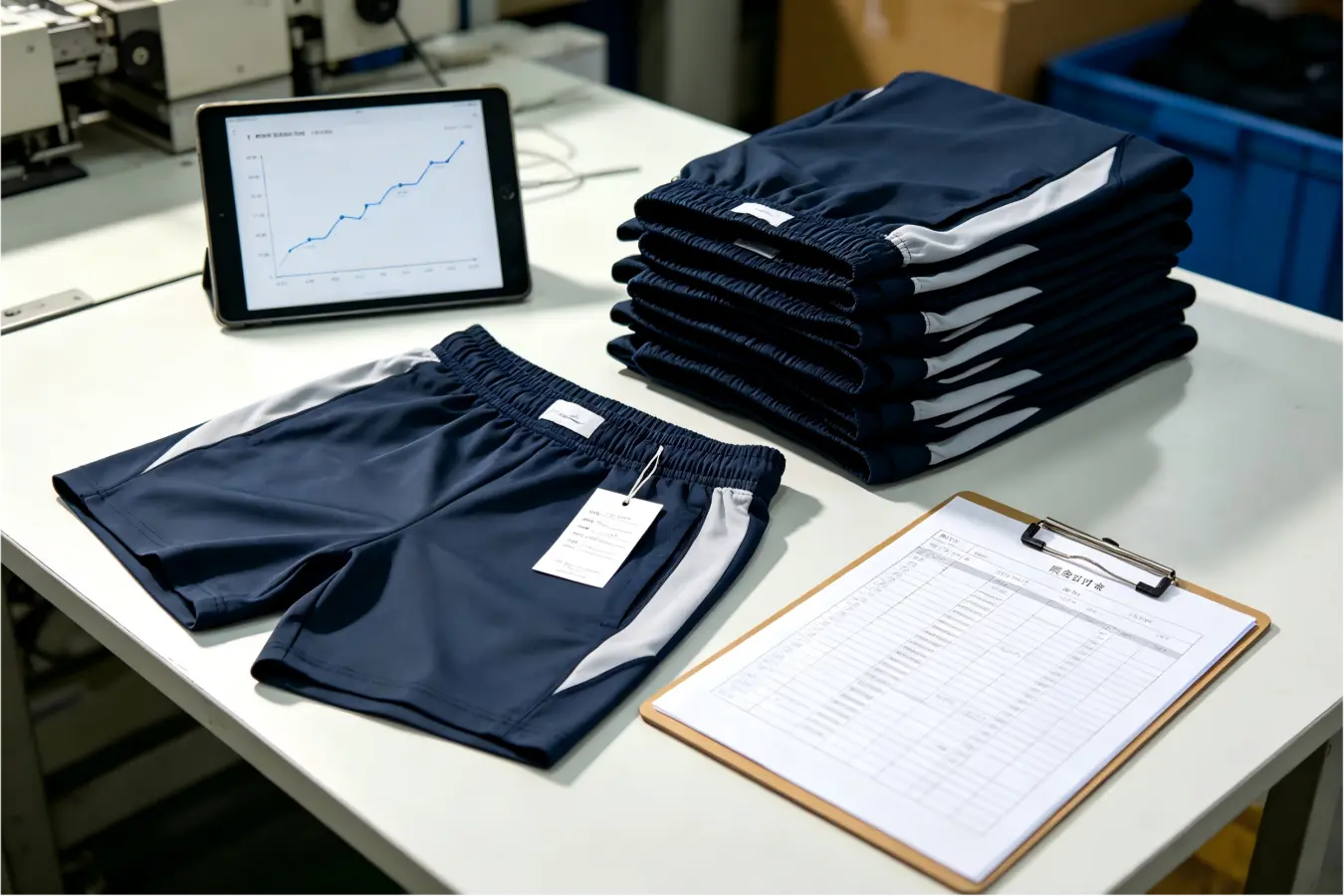
A serious quote should make assumptions visible. If a factory quotes too quickly from only one picture, the price may change later after the real details are confirmed. That does not always mean the factory is dishonest. It often means the inquiry was incomplete.
What a quote should include
A clean quote for custom gym shorts should mention:
- Product name or style reference
- Fabric composition and approximate weight if confirmed
- Quantity and MOQ
- Size range
- Color quantity
- Logo method and logo position
- Waistband and drawstring details
- Pocket and lining details
- Packaging method
- Sample time
- Bulk production lead time
- Payment and shipping terms if applicable
For our usual communication, sample time is around 7–10 days after details are confirmed. For bulk production, 25–30 days for about 600 pcs is a practical reference, depending on material readiness, logo process, and final approval.
Red flags during quote comparison
Be careful when you see these problems:
- The quote does not state fabric quality.
- The MOQ is unclear.
- Logo cost is not included or not explained.
- The sample timeline starts before fabric confirmation.
- The supplier does not ask about size range.
- Packaging is ignored.
- The buyer receives only a unit price and no production notes.
Better comparison table for buyers
| Comparison point | Supplier A | Supplier B | What to verify |
|---|---|---|---|
| MOQ | 300 pcs | 500 pcs | Does MOQ apply per style or per color? |
| Fabric | Mesh | Polyester mesh 160–180gsm | Is weight confirmed? |
| Logo | Included | Heat transfer included | Is logo size included? |
| Pockets | Not stated | Side pockets | Are zippers included? |
| Sample time | 5 days | 7–10 days | Is fabric ready or custom sourced? |
| Bulk time | Not stated | 25–30 days | Does timing start after sample approval? |
In my experience, a slightly more detailed quote is usually more useful than a very fast number. The goal is not to make the quote complicated. The goal is to reduce surprises before the buyer commits.
What Workflow Helps Approved Samples Match Bulk Production?
A buyer's biggest worry is simple: "Will bulk production match the approved sample?" That concern is valid. A good workflow helps reduce differences between sample and bulk by locking details before cutting fabric.
Approved samples match bulk production more consistently when the manufacturer confirms specs, materials, measurements, logo files, trims, packaging, size grading, and approval comments before production. A clear production process reduces misunderstanding between sales, sampling, cutting, sewing, printing, inspection, and packing.
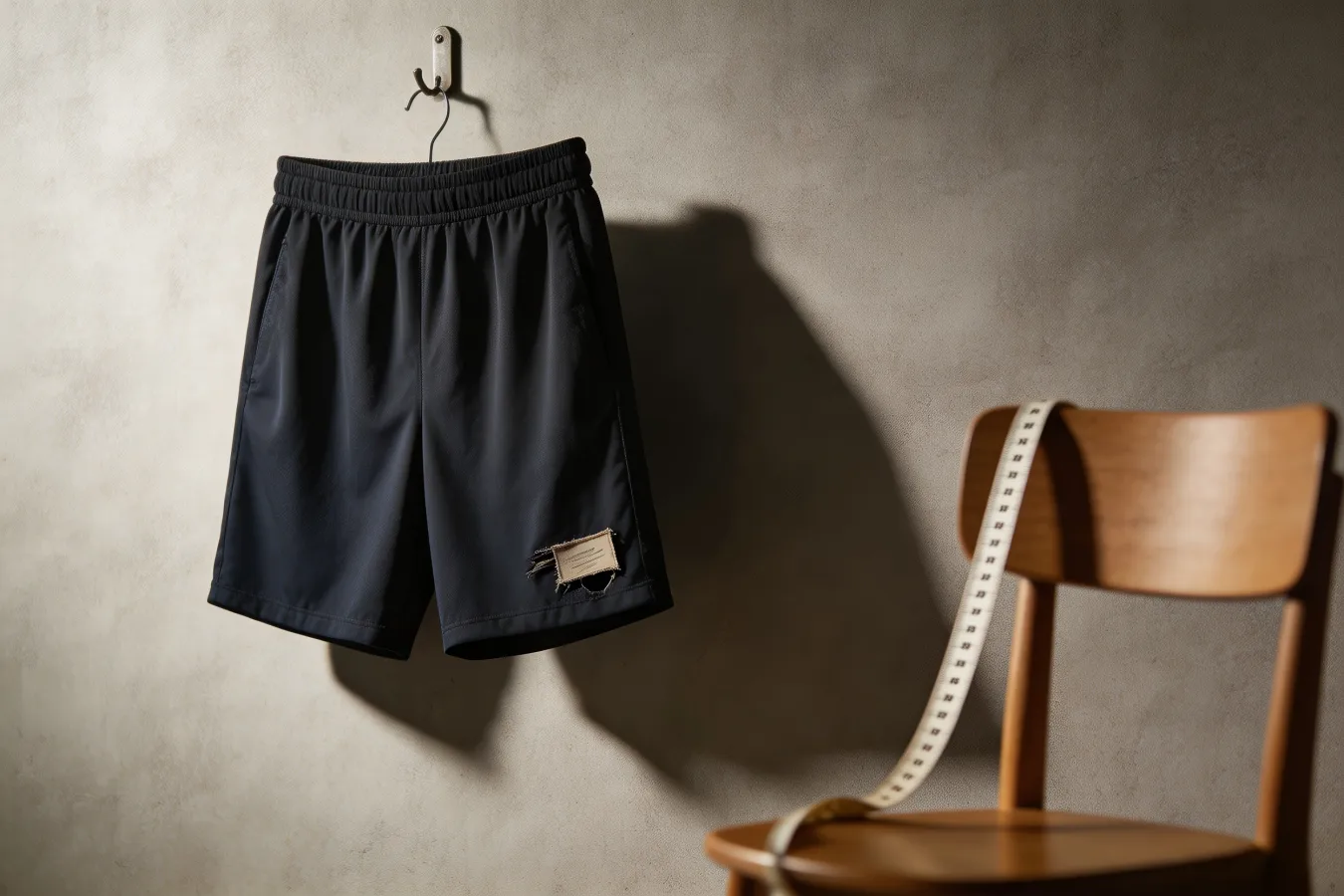
During bulk production, the sample becomes the reference. But the sample alone is not enough. The factory also needs written specifications. If the buyer approves a sample but later changes pocket depth, logo size, or waistband tightness, production risk increases.
A practical OEM workflow
A stable custom shorts project usually follows this path:
-
Inquiry review
The buyer sends sport scenario, reference image, quantity, and logo needs. -
Specification confirmation
The factory confirms fabric, fit, waistband, pockets, lining, and packaging. -
Quotation
The quote is based on agreed details, not just a product name. -
Sample development
The sample is made after fabric and trim direction are clear. -
Sample approval or revision
The buyer checks fit, handfeel, logo, measurements, and construction. -
Bulk pre-production check
The factory confirms final comments before mass cutting. -
Bulk production
Cutting, sewing, logo application, trimming, and packing follow the approved standard. -
Quality check and shipment preparation
Measurements, appearance, labels, packing, and quantity are checked before shipping.
You can review our general production process if you want to understand how sampling and bulk steps connect.
What should be locked before bulk production?
Before mass production starts, I prefer to confirm these items in writing:
- Final fabric and color
- Approved sample comments
- Measurement chart and tolerance
- Logo artwork, size, and placement
- Waistband and drawstring details
- Pocket construction
- Label and packaging requirements
- Quantity by size and color
- Delivery plan
This may feel like extra work, especially for first-time private label buyers. However, it protects both sides. The buyer gets a clearer product. The factory gets fewer change requests. The approved sample becomes easier to repeat.
The best custom gym shorts manufacturer is not only a sewing supplier. It is a communication partner that helps convert ideas into controllable production details.
Frequently Asked Questions
What is the normal MOQ for custom gym shorts?
For many custom gym shorts projects, MOQ starts around 300 pcs, depending on fabric, color, logo method, and customization level. Some styles may need higher quantities if the fabric is custom dyed, trims are special, or the buyer needs many colors and sizes.
How long does sampling take for custom athletic shorts?
Sampling usually takes about 7–10 days after the fabric, design details, logo method, and measurements are confirmed. If the buyer changes fabric, waistband, pockets, or artwork during sampling, the timeline may extend because the sample specification changes.
Are mesh shorts better than regular athletic shorts?
Mesh shorts are better when breathability, sporty appearance, and teamwear style are priorities. They are not automatically better for every sport. Running, gym training, boxing, and retail fitness shorts may need different fabrics, stretch levels, linings, or waistband structures.
What information should I send to get an accurate quote?
You should send the sport scenario, reference image or sample, estimated quantity, size range, colors, logo file or logo method, waistband preference, pocket needs, packaging requirements, and delivery timeline. Better information helps the manufacturer quote with fewer assumptions.
Can bulk production match my approved sample?
Bulk production can match the approved sample more closely when all specs are confirmed before cutting. The approved sample, measurement chart, fabric record, logo placement, trims, labels, packaging, and buyer comments should all be locked before mass production begins.
Conclusion
A custom gym shorts manufacturer should help you make decisions before you spend money on sampling and bulk production. Mesh, drawstring, pockets, lining, waistband, and logo method are not small decorations. They affect comfort, fit, price, durability, and production risk. Before requesting a quote, prepare your sport scenario and target user, reference image or sample/design file, estimated quantity, size range, colors, and logo method. If you are planning a new OEM/ODM shorts project, send your details and request a sample or quote through our contact page.