Cost to Make Custom Gym Shorts: What Really Affects the Factory Quote?
A low quote can look attractive in the first email. The problem usually appears later, when the fabric feels weak, the waistband loses shape, the fit is unstable, or the final product does not match the brand’s price level.
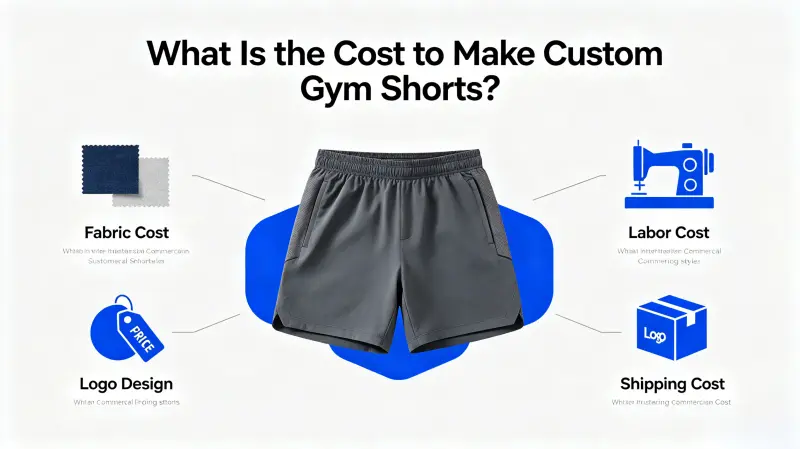
For custom gym shorts, cost is not one fixed number. It depends on fabric, construction, MOQ, logo method, trims, packaging, and the buyer’s target market.
The cost to make custom gym shorts depends on the full specification, not only the style photo. A factory needs to check fabric, fit, waistband, pockets, lining, logo, packaging, quantity, and market positioning before giving a reliable quote.
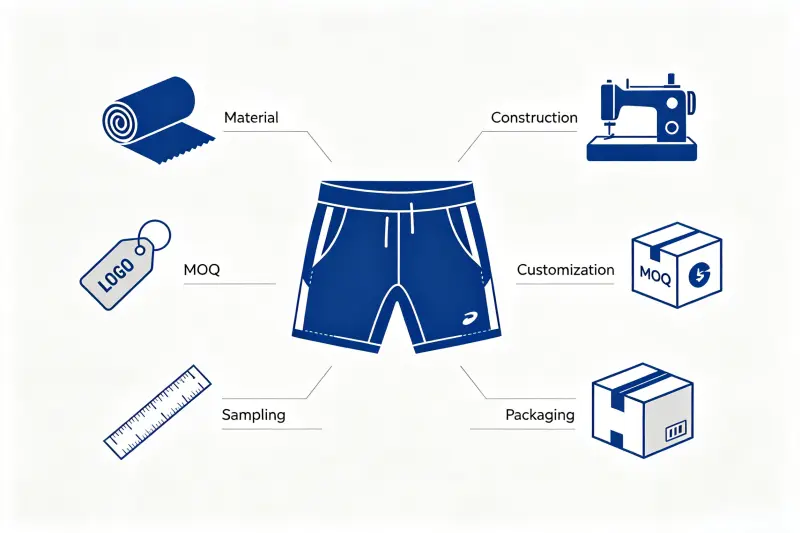
In our factory, many quotation discussions start with one simple question: “How much for custom gym shorts?”
That question is understandable. Buyers need to control budget, test inventory, and compare suppliers. But for OEM production, the better first question is: what kind of gym shorts should this brand make for its target customer?
A budget Amazon listing, a premium DTC fitness short, a 2-in-1 training short, and a wholesale club short may look similar in photos, but their costs can be very different. The fabric, liner, waistband, stitching, pocket structure, logo method, and packaging all change the final quote.
At EWO, we usually work with MOQ 300 pcs, 7–10 days sample development, and 20–30 days bulk production, depending on fabric, logo, trims, order quantity, and packaging details.
Why Is There No Single Cost for Custom Gym Shorts?
There is no single fixed cost for custom gym shorts because each order is built from different materials, construction details, customization methods, and quantity requirements.
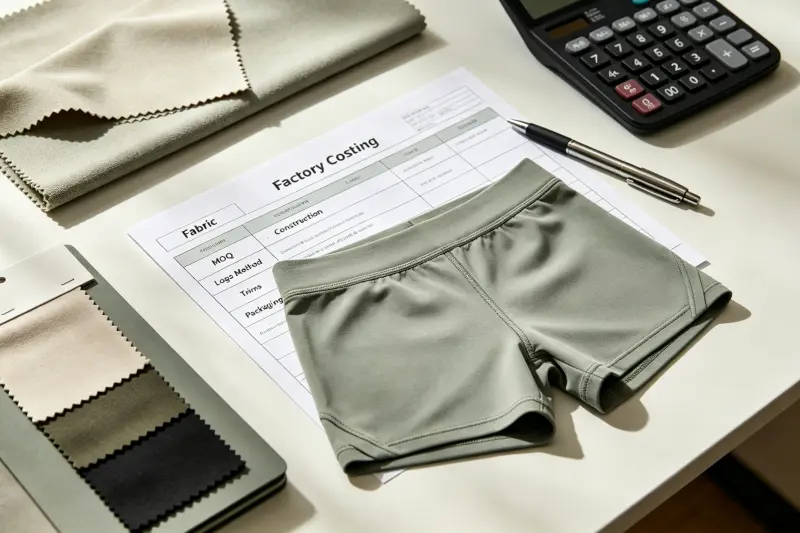
During product development, a reference photo is only the starting point. It shows the general style, but it does not show the full factory specification.
A photo cannot confirm:
- fabric composition
- fabric weight
- 2-way or 4-way stretch
- inner liner quality
- waistband construction
- pocket type
- stitching method
- logo durability
- drawcord quality
- packaging requirements
- size range
- production quantity
That is why two gym shorts can look almost the same online but have very different factory costs.
Main Factory Cost Factors
| Cost Factor | What We Check | Why It Changes Cost |
|---|---|---|
| Fabric | Composition, weight, stretch, hand feel, function | Better performance and texture usually raise cost |
| Construction | Lining, pockets, seams, waistband | More parts require more labor and production time |
| MOQ | Quantity per style and color | Smaller orders carry higher setup pressure per unit |
| Customization | Logo, labels, trims, packaging | Custom materials and processes add cost |
| Sampling | Pattern, fabric trial, fit check | Sampling reduces bulk risk but adds development work |
One common mistake is comparing only the unit price without comparing the specification. A lower quote may remove the liner, use weaker fabric, simplify the waistband, or change the logo method. The quote looks cheaper, but the final product may no longer match the brand’s market position.
For B2B buyers, factory cost and landed cost should also be separated. Factory cost covers production. Shipping, import duties, taxes, warehouse fees, and destination charges belong to landed cost. Mixing these together too early can make supplier comparison confusing.
How Much Does Fabric Affect the Cost to Make Gym Shorts?
Fabric is often one of the biggest cost variables in custom gym shorts manufacturing.
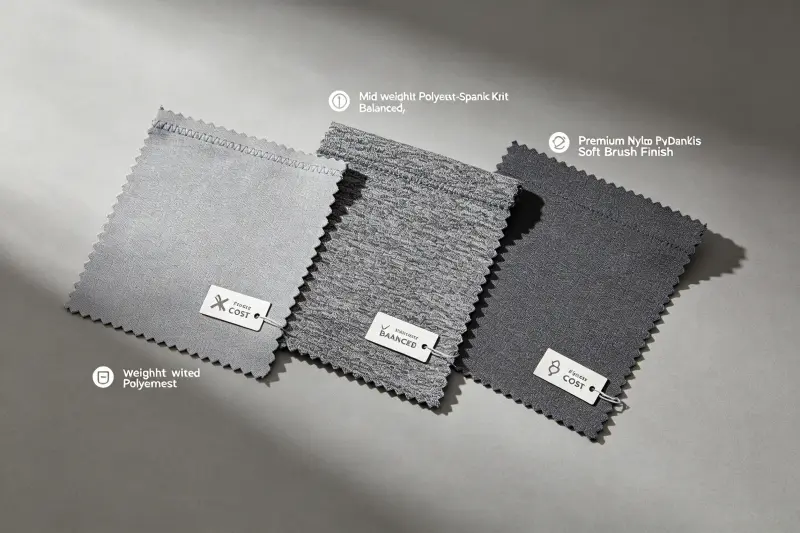
Based on our OEM experience, fabric is where many misunderstandings happen. A buyer may ask for “the same look but cheaper.” Sometimes cost can be reduced, but a low-grade fabric cannot create the same hand feel, recovery, and performance as a better fabric.
Gym shorts are not only viewed. They are touched, stretched, washed, sweated in, and worn during movement. The customer quickly notices fabric quality.
Common Fabric Questions Before Quotation
| Question | Why It Matters |
|---|---|
| Are the shorts for gym training, running, or casual wear? | The use case affects stretch, weight, and breathability |
| Is the target customer budget, mid-market, or premium? | Fabric hand feel must match the retail price |
| Is quick-dry or moisture-wicking performance required? | Functional finishing can increase cost |
| Is 2-way or 4-way stretch needed? | Stretch level affects fabric selection and price |
| Should the shorts feel lightweight or structured? | Fabric weight changes both cost and fit |
A growing sportswear brand may need better stretch, stronger recovery, and a more premium hand feel to support repeat purchases. A wholesaler may need a more price-sensitive fabric for a broader market. Neither choice is automatically right or wrong.
The correct fabric depends on the final customer, sales channel, retail price, and reorder plan.
If the goal is to develop a performance-focused product, you can review EWO’s custom gym and running shorts manufacturing page to compare common fabric and construction options for OEM orders.
Why Can Similar-Looking Gym Shorts Have Very Different Costs?
Similar-looking gym shorts can have different costs because the inside details are often not visible in product photos.
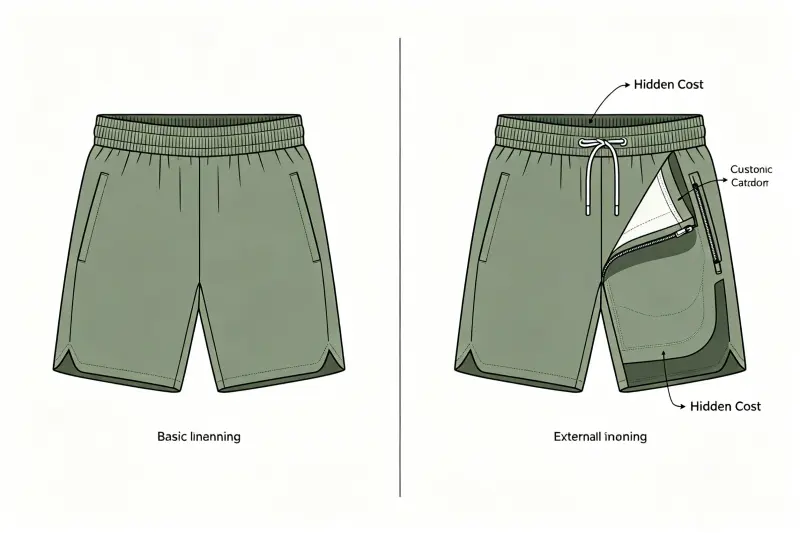
A black gym short with a small logo may look simple on screen. But after checking the construction, it may become a completely different product.
For example, an unlined gym short with simple side pockets is much easier to produce than a 2-in-1 gym short with compression liner, phone pocket, wide waistband, custom drawcord, heat transfer logo, zipper pocket, and branded packaging.
Details That Change the Unit Cost
| Detail | Lower-Cost Version | Higher-Cost Version |
|---|---|---|
| Lining | No lining | Built-in compression liner |
| Pockets | Simple side pockets | Zipper pockets or inner phone pocket |
| Waistband | Basic elastic waistband | Wider waistband with stronger recovery |
| Logo | Simple print | Heat transfer, silicone, embroidery, or badge |
| Trims | Standard drawcord and label | Custom drawcord, aglets, woven label, hangtag |
| Packaging | Plain polybag | Custom bag, barcode sticker, size sticker, insert card |
During sample approval, these details need to be confirmed clearly. If a buyer compares only photos, the cheaper quote may look better. If the buyer compares fabric, stitching, liner, trims, and packaging, the cost difference often becomes easier to understand.
For private label buyers, every detail should have a reason. Some details support product value, such as a secure phone pocket or better waistband recovery. Other details may only increase cost without improving customer experience. A good factory should help the buyer simplify unnecessary details while protecting the parts that affect comfort, fit, and repeat purchase.
How Do MOQ and Sampling Change the Real Manufacturing Cost?
MOQ and sampling affect cost because custom production requires setup work before bulk sewing begins.
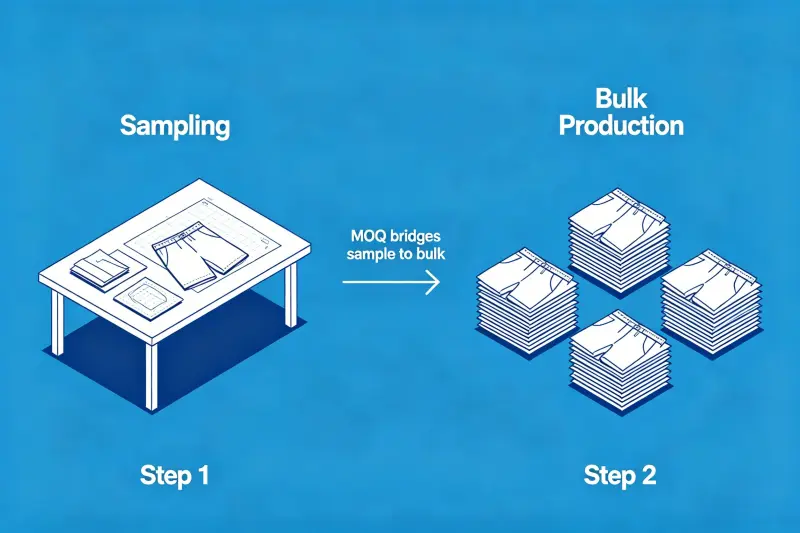
For custom gym shorts, the factory still needs to prepare the pattern, source fabric, test trims, arrange logo work, cut fabric, sew samples, check fit, grade sizes, pack goods, and inspect production.
A smaller MOQ can help new brands reduce inventory pressure, but it also means the setup cost is spread across fewer units. That is why very small custom orders often have a higher unit cost.
How MOQ Changes Cost Thinking
| Quantity Situation | Factory Reality | Buyer Benefit | Buyer Risk |
|---|---|---|---|
| Very small test order | Higher setup cost per unit | Lower inventory pressure | Higher unit cost |
| MOQ 300 pcs | More realistic for custom production | Better balance of risk and factory efficiency | Requires clearer product plan |
| Repeat bulk order | Better material planning | More stable quality and cost | Needs sales forecast |
| Larger order | More efficient production | Better unit cost potential | Higher inventory commitment |
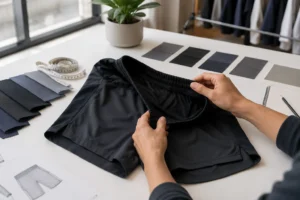
Sampling also protects the buyer. A digital mockup cannot show waistband recovery. A photo cannot show liner comfort. A fabric name cannot show how the shorts move during training.
During sample development, we usually confirm:
- fabric hand feel
- fit and size proportion
- waistband tightness
- liner comfort
- pocket depth
- inseam length
- leg opening
- logo size and position
- stitching details
- packaging method
At EWO, sample development is usually 7–10 days when the brief is clear. Bulk production is usually 20–30 days, depending on fabric availability, logo process, trims, packing requirements, and order complexity.
For buyers who want to understand how sampling, order confirmation, bulk production, QC, and shipment connect, the production process page can help clarify the full workflow.
What Information Do You Need to Get an Accurate Quote?
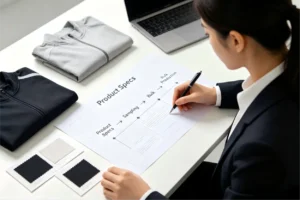
A vague request creates a vague quote. A clear product brief helps the factory calculate cost more accurately and prevents wrong expectations before sampling.
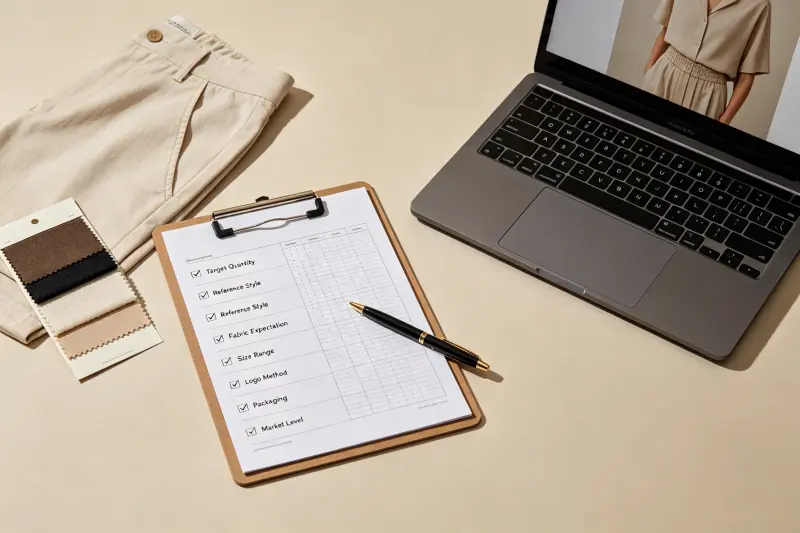
For an accurate custom gym shorts quote, a buyer should provide target quantity, reference style, fabric expectation, size range, logo method, color plan, lining choice, packaging needs, and intended market level.
The brief does not need to be perfect. A factory can help refine it. But there should be enough information to understand what the buyer is trying to build.
Quote Brief for Custom Gym Shorts
| Information | Useful Input Example |
|---|---|
| Target quantity | 300 pcs per color, or 1,000 pcs total |
| Reference style | Photo, sample, tech pack, or competitor link |
| Fabric expectation | Lightweight stretch woven, soft knit, quick-dry feel |
| Construction | Lined or unlined, pocket type, waistband style |
| Size range | S–XXL, or full graded size chart |
| Logo method | Heat transfer, embroidery, woven patch, silicone print |
| Packaging | Plain polybag, custom polybag, barcode label, hangtag |
| Market level | Amazon mid-market, premium DTC, wholesale program |
One practical question I often ask buyers is the target retail price. This is not to push the factory price higher. It helps match the production plan with the selling plan.
If the brand wants to sell premium gym shorts, the product should not feel like a basic promotional short. If the buyer sells to a price-sensitive wholesale channel, the design should avoid unnecessary trims and complex packaging.
A useful quote should support the buyer’s business model, not only look cheap in the first message.
How Should a Brand Choose the Right Fabric Instead of the Cheapest Fabric?
A low fabric cost can look attractive, but it may create returns, bad reviews, and weak repeat orders if it does not match the customer’s expectations.
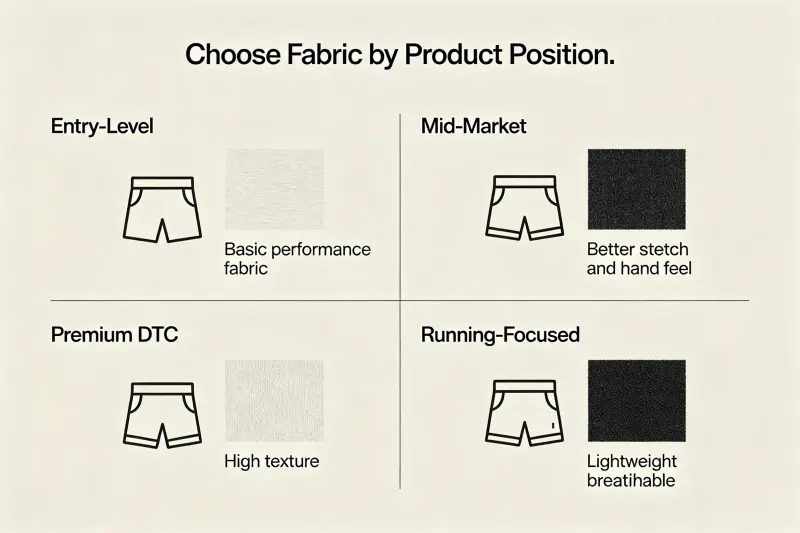
The better question is not “what is the cheapest fabric?” The better question is:
Who will wear these shorts, and why will they buy again?
A serious gym customer may expect stretch, sweat comfort, secure waistband recovery, and strong seams. A runner may care more about lightweight movement and quick-dry performance. A casual fitness customer may prefer softness and daily comfort.
Each product position needs a different fabric direction.
Fabric Choice by Product Position
| Product Position | Fabric Direction | Cost Logic |
|---|---|---|
| Entry-level gym short | Standard performance fabric | Cost control matters most |
| Mid-market fitness brand | Better stretch and hand feel | Balance cost and repeat purchase |
| Premium DTC brand | Higher texture and stronger details | Product feel must support retail price |
| Running-focused short | Light, breathable, quick-dry direction | Function matters more than thickness |
| 2-in-1 training short | Outer fabric plus inner liner | Two fabric systems raise cost |
Not every brand needs premium fabric. That would be unnecessary for some channels. But the cheapest fabric is not always safe either.
The correct fabric sits between customer expectation and business margin. For a long-term sportswear brand, the first order should not only be cheap. It should be good enough to make the second order easier.
During repeat production, stable fabric sourcing becomes important. If the first order uses one fabric and the second order changes to a different hand feel or stretch recovery, customers may notice the difference. That can hurt product reviews and reorder confidence.
What Is the Best Way to Control Cost Without Hurting Quality?
Good cost control does not mean removing every detail. It means protecting the parts that affect fit, comfort, durability, and brand trust while simplifying the parts that do not add enough value.
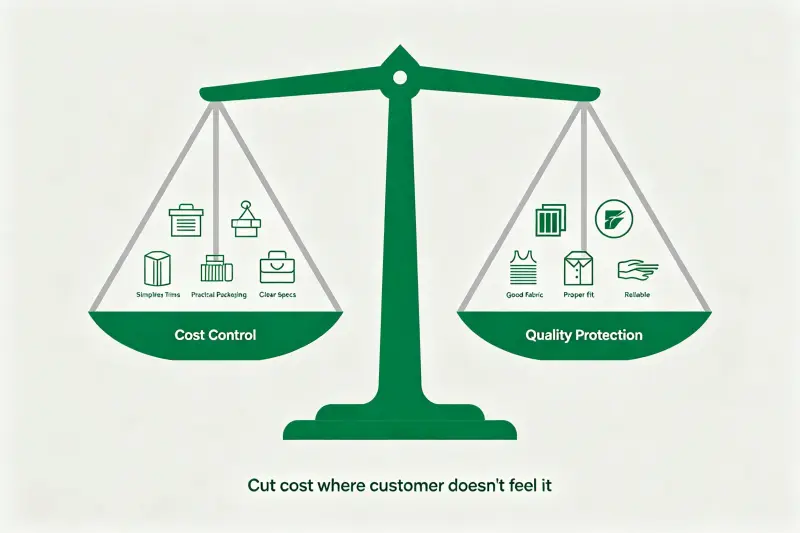
Many cost problems start before production. If the buyer changes fabric after sampling, changes the logo method late, adds packaging after quotation, or expands the size range without review, the final cost will move.
This is normal in custom manufacturing, but it can be controlled with clearer planning.
Smart Cost Control Choices
| Cost Control Area | Better Choice | Risky Choice |
|---|---|---|
| Fabric | Match fabric to market level | Pick the cheapest fabric without testing |
| Design | Keep useful performance details | Add many details only for appearance |
| Logo | Choose a method that fits fabric and volume | Use a method that cracks or feels wrong |
| MOQ | Start with a realistic test quantity | Order too small for many custom details |
| Sampling | Confirm fit, fabric, and logo early | Skip sample to save time |
| Packaging | Use clean, practical packaging | Overbuild packaging for a low-price product |
For many growing brands, a balanced first version is the safest path. Keep the main selling points: good fabric, clean fit, strong waistband, reliable stitching, and suitable logo quality. Reduce details that do not strongly affect the customer experience, such as unnecessary trims or overly complex packaging.
After the first order sells well, the brand can upgrade the next version with more colors, better trims, or custom packaging.
This is often a better growth path than trying to build the most complicated product in the first order.
Common Mistakes When Comparing Custom Gym Shorts Quotes
A cheaper quote is not always a better quote. Before choosing a supplier, buyers should compare the full specification behind the price.
Mistake 1: Comparing Photos Instead of Specifications
Two shorts may look similar in a product image, but the fabric, liner, waistband, stitching, logo, and packaging may be different. Always compare the full spec.
Mistake 2: Asking for the Lowest Price Before Defining the Product
If the product position is not clear, the factory can only quote a rough direction. This often leads to revisions, delays, and cost changes later.
Mistake 3: Ignoring Fabric Recovery
Gym shorts are stretched repeatedly during training. Poor recovery can cause bagging, loose fit, and weak customer feedback.
Mistake 4: Adding Too Many Custom Details Too Early
Custom drawcords, special trims, complex packaging, and multiple logo methods can raise cost quickly. Start with details that clearly support product value.
Mistake 5: Skipping Sample Approval
Skipping samples may look faster, but it increases bulk production risk. During sample approval, buyers can check fabric feel, fit, pocket depth, waistband tension, logo placement, and packaging before committing to bulk production.
Practical Checklist Before Requesting a Gym Shorts Quote
Before asking for a final factory quote, prepare these details:
- Target order quantity
- Number of colors
- Size range
- Reference photo or tech pack
- Fabric type or fabric hand feel
- Lined or unlined construction
- Waistband style
- Pocket requirements
- Logo method and logo size
- Label and packaging needs
- Target market level
- Expected launch timeline
- Shipping destination
This checklist helps the factory give a more realistic quotation. It also helps the buyer avoid comparing incomplete prices from different suppliers.
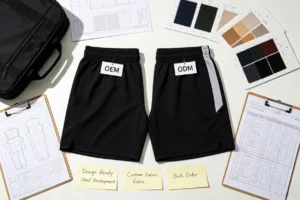
If your brand has a tech pack, reference sample, or only a product idea, EWO can support both OEM and ODM development through its OEM / ODM manufacturing service.
FAQ: Cost to Make Custom Gym Shorts
What affects the cost to make custom gym shorts?
The main cost factors include fabric, construction, MOQ, logo method, trims, labels, packaging, size range, and order complexity. A reliable quote should be based on the full specification, not only a product photo.
Why are 2-in-1 gym shorts more expensive?
2-in-1 gym shorts usually cost more because they use both outer fabric and inner compression liner. They may also need extra stitching, phone pockets, stronger waistband construction, and more careful fit testing.
What MOQ is common for custom gym shorts?
At EWO, the usual MOQ is 300 pcs. MOQ can affect unit cost because fabric sourcing, cutting, logo setup, sewing, QC, and packing all require preparation work.
How long does it take to make custom gym shorts samples?
Sample development usually takes 7–10 days, depending on fabric availability, logo process, construction complexity, and how clear the buyer’s brief is.
How long does bulk production take for custom gym shorts?
Bulk production usually takes 20–30 days, depending on order quantity, fabric, logo method, trims, packaging, and production schedule.
How can a brand reduce gym shorts cost without hurting quality?
The safest way is to simplify non-essential details while protecting the parts that affect customer experience, such as fabric, fit, waistband, stitching, and logo quality.
Conclusion
The cost to make custom gym shorts is not decided by one photo or one fixed unit price. It comes from the full product plan: fabric, construction, MOQ, logo, trims, packaging, size range, and target market.
A good quotation should help the buyer understand what they are paying for. It should also support the brand’s selling plan, not only reduce the first order cost.
For B2B buyers, the best approach is to prepare a clear brief, confirm the sample carefully, and choose cost-control decisions that protect fabric, fit, comfort, and repeat production stability.
If your brand is planning custom gym shorts, 2-in-1 training shorts, or running shorts, you can contact EWO to discuss your product idea, send your tech pack, or request a sample.