Why Brands Choose Custom Shorts Over Stock?
Many growing sportswear brands start with stock shorts because they offer a quick way to enter the market. However, once sales begin to grow, many founders realize that using the same ready-made product as dozens of competitors makes it difficult to improve margins, build customer loyalty, or maintain consistent product quality.
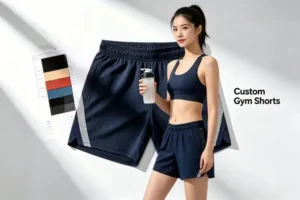
Custom shorts give brands greater control over fabric, fit, functionality, sizing, branding, and repeat production. While stock shorts are useful for validating a market, custom manufacturing creates a stronger foundation for long-term brand growth and product consistency.
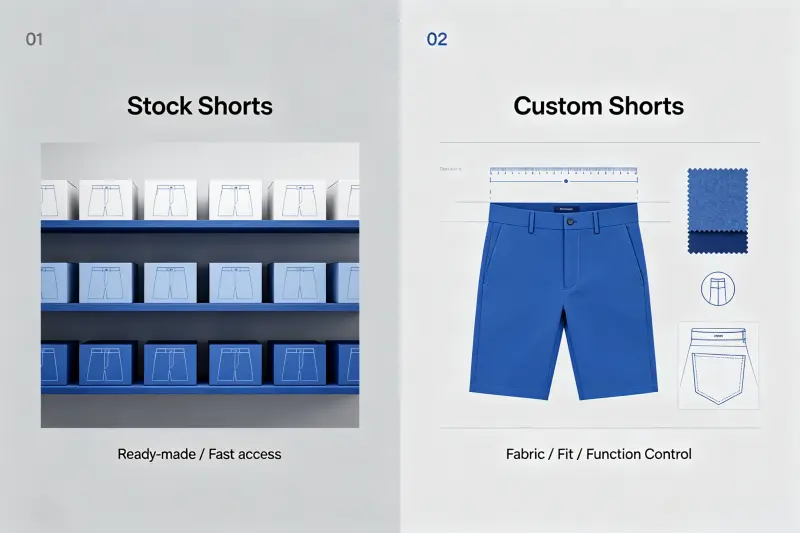
Over the past several years, we've worked with startup activewear brands, private label buyers, wholesalers, and importers developing custom gym shorts for different markets. One question appears in almost every conversation:
"Should we continue buying stock shorts, or is it time to develop our own product?"
The answer usually depends less on today's order quantity and more on where the brand wants to be twelve months from now. Brands focused on long-term growth typically outgrow stock products because they need better product differentiation, more reliable repeat production, and greater control over customer experience.
For many buyers, the transition does not need to happen all at once. Starting with a focused customization plan—such as improving fit, upgrading fabrics, or developing a unique waistband—can significantly reduce risk while building a product customers remember.
When Do Stock Shorts Still Make Sense?
Stock shorts are still a practical option for many businesses. They help brands launch quickly, test demand, and reduce initial inventory investment before committing to full product development.
Stock shorts generally work best when speed is more important than differentiation.
Stock Shorts Can Be A Smart Starting Point
Many new brands assume they must begin with fully customized products. In reality, that is not always the most practical approach.
For first-time sellers, testing the market with stock shorts can reduce financial pressure while helping validate customer demand. We've seen startups successfully launch with basic products before investing in private-label development.
| Situation | Stock Shorts Can Work | Main Risk |
|---|---|---|
| Early product validation | ✅ Yes | Limited product differentiation |
| Very small startup budget | ✅ Yes | Less quality control |
| Temporary inventory replenishment | ✅ Yes | Product specifications may change |
| Building a premium sportswear brand | ❌ Usually Not | Difficult to establish unique positioning |
However, stock products should be viewed as a temporary business strategy rather than a long-term competitive advantage.
The Challenges Begin As Your Brand Grows
As sales increase, consistency becomes much more important.
One challenge we often see is that buyers receive an excellent first batch, but later shipments feel slightly different. The fabric changes, the waistband tension varies, or the overall fit becomes inconsistent because the original stock supplier updates its inventory.
Customers rarely know why the product changed—but they immediately notice the difference.
For growing brands, repeat consistency often becomes more valuable than the lowest purchase price.
If your goal is to create a recognizable sportswear brand instead of simply reselling available products, developing your own specifications becomes increasingly important.
Many buyers begin this transition by customizing one core product instead of their entire collection. For example, developing a signature pair of custom gym & running shorts allows the brand to establish consistent fit, fabric standards, and functional details while keeping inventory risk manageable.
👉 Learn more about our custom development capabilities: https://shortsoem.com/custom-gym-running-shorts-manufacturer/
What Makes Custom Shorts Different From Simple Logo Placement?
Many suppliers advertise "custom shorts," but in reality they only offer logo printing on existing blank products.
True custom manufacturing goes much further.
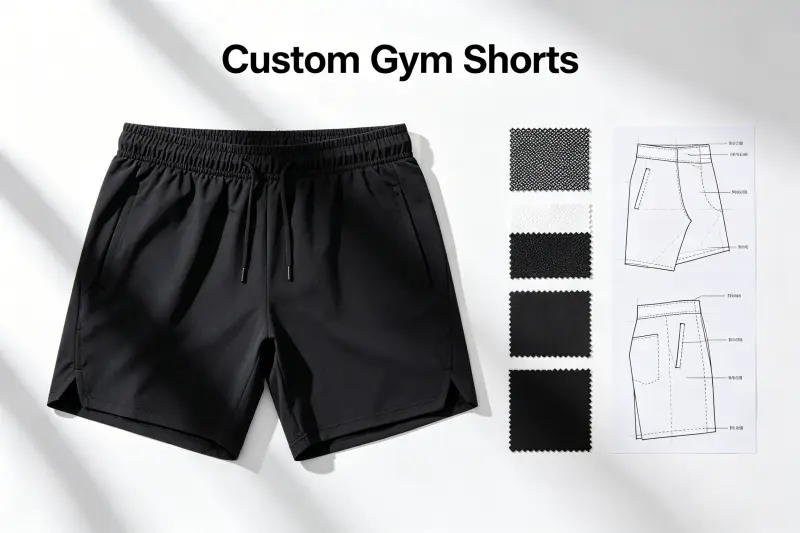
Custom shorts allow brands to control every major product component—from fabric selection and pattern development to waistband construction, liner design, pocket configuration, branding, sizing, packaging, and repeat production standards.
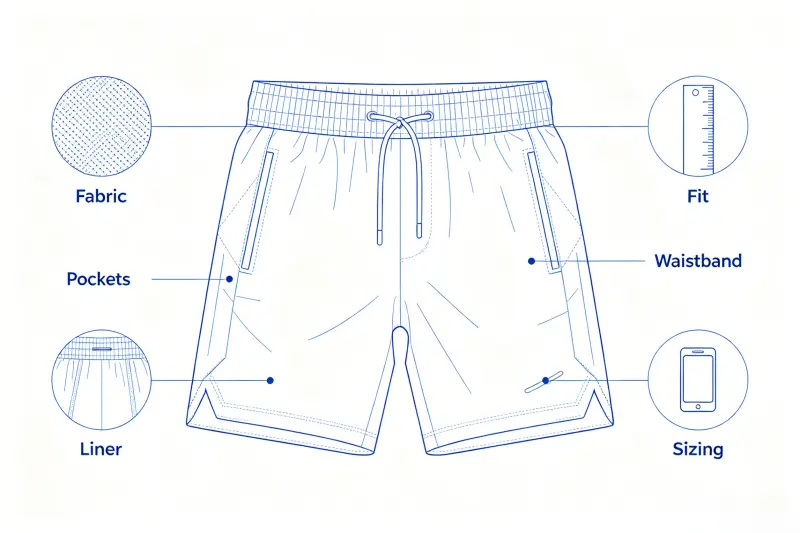
Real Custom Development Starts Before The Logo
When we begin a new OEM project, the logo is rarely the first discussion.
Instead, we start by understanding how the shorts will actually be used.
Questions like these guide the entire development process:
- Is the product designed for gym training or running?
- Will customers wear it for CrossFit, basketball, or everyday fitness?
- Should it include a compression liner?
- Does the buyer need secure phone storage?
- What inseam length fits the target market?
The answers determine far more than appearance—they influence pattern development, fabric recommendations, construction methods, and long-term customer satisfaction.
| Custom Part | Why It Matters |
|---|---|
| Fabric | Determines stretch, comfort, durability, and moisture management |
| Fit | Shapes movement, appearance, and customer satisfaction |
| Compression Liner | Improves support and athletic performance |
| Waistband | Influences comfort, stability, and perceived quality |
| Pocket Design | Adds functionality for training and everyday use |
| Size Specification | Reduces returns and improves repeat purchases |
One project that stands out involved a buyer who initially requested a simple black pair of gym shorts. During sample development, we discovered the actual goal was much more specific: a cleaner front appearance, softer waistband tension, deeper phone pocket, and a slightly shorter athletic fit.
Although the visual difference appeared small, those refinements completely changed how the shorts performed during training and how customers perceived the brand.
This is why custom development is not simply about creating a unique look—it is about creating a product experience that competitors cannot easily copy.
As product specifications become more detailed, a structured development process becomes increasingly valuable. From sample approval to bulk production, documenting every approved material and construction detail helps ensure future orders remain consistent.
👉 You can see how our sample development and production workflow supports repeat quality here:
https://shortsoem.com/production-process/
A Small Detail Can Change The Whole Product
One conversation with a new activewear brand illustrates why customization goes far beyond appearance.
The buyer initially asked for "a simple black pair of gym shorts." At first glance, the project looked straightforward. However, after discussing the target customer, we discovered the brand actually wanted a cleaner silhouette, a softer waistband that stayed comfortable during long workouts, a secure phone pocket, and an athletic fit that looked modern without feeling restrictive.
None of those improvements dramatically changed the appearance of the shorts, but together they completely changed how the product performed.
This is the real value of custom manufacturing. Rather than choosing from existing inventory, brands can design how customers experience the product—from the first workout to the hundredth wash.
Custom development also creates consistency. Once fabrics, measurements, construction details, logo placement, trims, and packaging are approved, they become repeatable production standards instead of changing from batch to batch.
For brands planning long-term growth, consistency often becomes one of the strongest competitive advantages.
How Can A Brand Move To Custom Shorts Without Taking Too Much Risk?
Many founders hesitate to develop custom shorts because they expect high MOQs, long lead times, and significant upfront investment.
In reality, successful brands rarely customize everything at once.
The safest approach is to improve the product step by step, beginning with the features that have the greatest impact on customer experience.
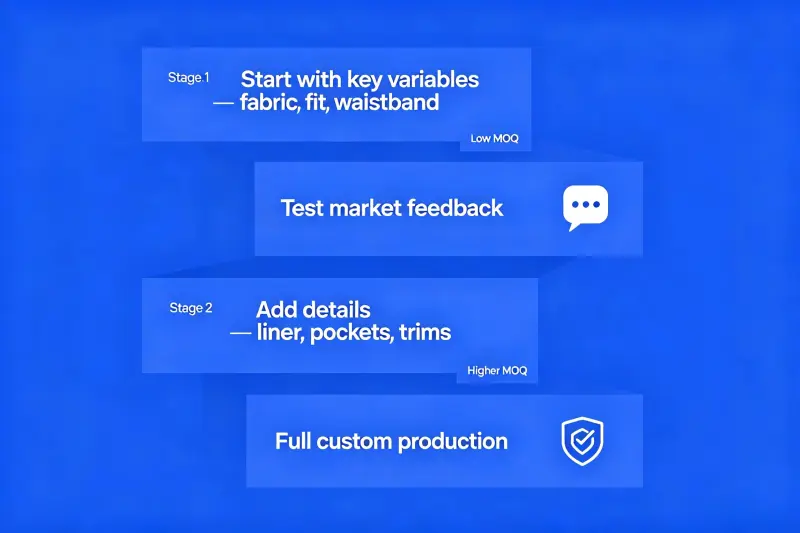
Focus On What Matters Most First
When discussing new OEM projects, we usually encourage buyers to separate essential improvements from future upgrades.
That keeps development costs under control while allowing the product to evolve with customer feedback.
| Decision Area | Recommended First Step | Future Upgrade |
|---|---|---|
| Fabric | Select a proven performance fabric | Develop an exclusive fabric specification |
| Fit | Adjust inseam and leg opening | Build a proprietary size block |
| Waistband | Improve comfort and elasticity | Add jacquard branding or premium construction |
| Pockets | Add secure side pockets | Introduce hidden zip or dedicated phone pockets |
| Compression Liner | Choose a reliable standard liner | Develop premium support construction |
This staged approach allows brands to improve the product without creating unnecessary development costs during the early growth stage.
Sampling Reduces Product Risk
Sampling should never be viewed as an extra expense.
It is one of the most effective ways to reduce production risk before bulk manufacturing begins.
During sample development, buyers can evaluate:
- Fabric hand feel
- Stretch and recovery
- Overall fit
- Pocket functionality
- Waistband comfort
- Logo positioning
- Construction quality
At our factory, most custom gym shorts samples are completed within 7–10 working days after confirming the tech pack, materials, and branding details. That allows brands to identify improvements before production begins instead of after inventory arrives.
The sample stage also gives both sides a chance to document approved specifications, helping maintain consistency for future repeat orders.
MOQ Should Match Your Business Stage
MOQ is one of the first questions buyers ask, but it should never be viewed as a single number.
Instead, MOQ should support your business model, cash flow, and inventory strategy.
For growing brands, ordering excessive inventory can create unnecessary financial pressure, while ordering too little may increase unit costs or limit material choices.
The goal is to find the right balance.
A shorts-focused manufacturer should help buyers evaluate:
- Expected sales volume
- Product complexity
- Fabric availability
- Future reorder plans
- Budget and inventory capacity
Rather than recommending the highest possible MOQ, experienced manufacturers should help buyers choose a production plan that supports sustainable growth.
If you're developing your first custom collection, understanding the complete development process before placing an order can significantly reduce project risk.
👉 Learn how our development workflow moves from sampling to bulk production:
https://shortsoem.com/production-process/
For buyers who are still comparing OEM and ODM manufacturing models, understanding the differences can also make early product decisions much easier.
👉 Read more about our OEM & ODM manufacturing services:
https://shortsoem.com/odm-oem/
What Long-Term Risks Do Stock Shorts Create For Growing Brands?
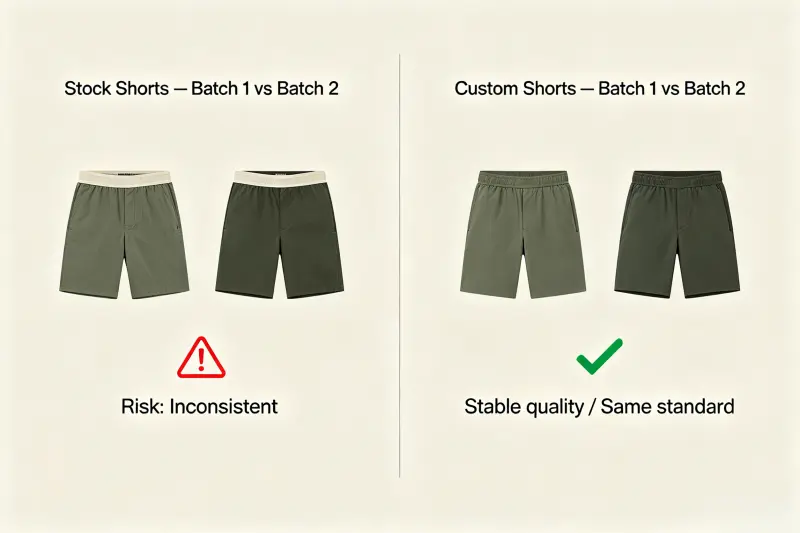
Many buyers compare stock shorts and custom shorts based on the first purchase price. While that seems logical at the beginning, the greater costs often appear months later through inconsistent products, customer complaints, and lost repeat business.
For growing sportswear brands, the biggest challenge isn't selling the first order—it's delivering the same quality every time customers come back.
The Biggest Risk Is Losing Product Consistency
One pattern we've seen across many OEM projects is that successful brands rely on consistency more than low purchasing cost.
When a stock supplier changes fabrics, trims, or production sources, buyers often receive products that look similar but feel noticeably different. Even small changes in waistband elasticity, fabric texture, or sizing can affect customer satisfaction.
Customers rarely know what changed behind the scenes—they simply know the product no longer feels like the one they purchased before.
| Stock Shorts Risk | Business Impact |
|---|---|
| Fabric changes between batches | Customers lose confidence in the product |
| Inconsistent sizing | Higher return rates and negative reviews |
| Supplier changes production source | Difficult to maintain product standards |
| Limited customization | Product problems cannot be fully solved |
| Generic product design | Harder to build pricing power |
For brands selling through Shopify, Amazon, or retail stores, repeat consistency directly influences customer reviews and long-term profitability.
Repeat Orders Reveal The Real Manufacturing Partner
The first production run is only the beginning of a supplier relationship.
The true test comes with the second, third, and fourth orders.
An experienced manufacturer should be able to reproduce:
- Fabric performance
- Color consistency
- Size specifications
- Waistband construction
- Pocket dimensions
- Logo placement
- Packaging standards
without requiring the buyer to start over each season.
During repeat production, our factory keeps approved specifications, material records, measurement charts, and production notes to help maintain consistency across future orders. While no manufacturing process is completely free of variation, documenting approved standards significantly reduces production risk.
For brands planning long-term growth, repeat production control is often more valuable than achieving the absolute lowest unit price.
Custom Manufacturing Creates A Repeatable Standard
Unlike stock products, custom development creates a documented product specification.
That specification can include:
- Approved shell fabric
- Compression liner construction
- Waistband tension
- Drawcord type
- Pocket dimensions
- Stitch construction
- Logo application method
- Packaging requirements
These production standards become the reference for future manufacturing instead of relying on whatever stock products happen to be available.
This structured approach is one reason many growing sportswear brands eventually transition from stock products to OEM manufacturing.
Why Does Custom Support Premium Brand Positioning Better?
Premium brands are rarely built through logos alone.
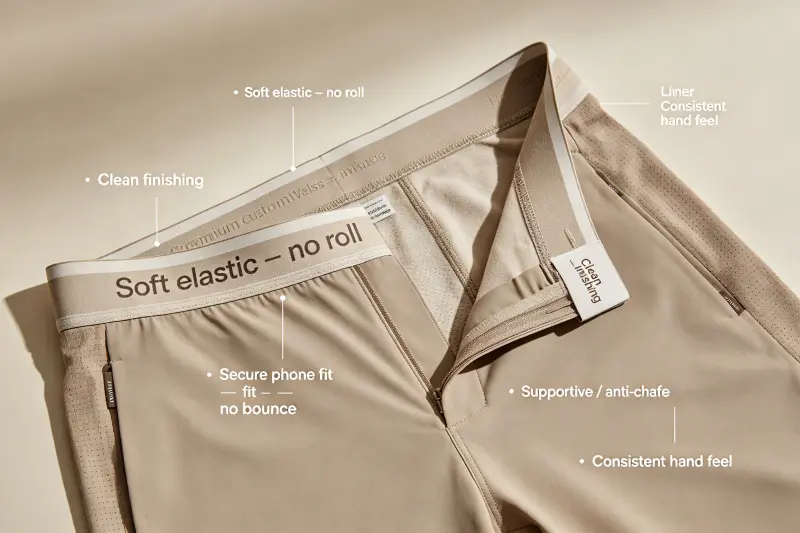
Customers are willing to pay more because the entire product feels better—from the fabric and fit to the finishing details and long-term durability.
Custom manufacturing allows brands to design that experience instead of accepting the limitations of ready-made inventory.
Premium Products Are Built Through Hundreds Of Small Decisions
Many buyers assume premium products require expensive materials.
In reality, premium perception usually comes from thoughtful product development.
Small improvements create a noticeably better customer experience:
| Premium Feature | Customer Benefit |
|---|---|
| Consistent fit | Builds confidence in repeat purchases |
| Comfortable waistband | Improves comfort during workouts |
| Functional pockets | Adds everyday practicality |
| Well-designed compression liner | Enhances athletic performance |
| Reliable fabric quality | Creates long-term trust |
| Clean finishing details | Improves perceived product value |
Each detail may appear minor individually, but together they define how customers judge the brand.
Product Experience Builds Brand Loyalty
During OEM development, we encourage buyers to think beyond appearance.
Instead of asking:
"Can this look like Brand X?"
We encourage a different question:
"How should customers feel when they wear our product?"
That shift changes product development completely.
For example:
- A CrossFit brand may prioritize unrestricted movement.
- A running brand may focus on lightweight fabrics and reduced chafing.
- A premium gym brand may emphasize a softer waistband and cleaner silhouette.
- A training brand may prioritize durable pockets and long-term wash performance.
These decisions create a recognizable product identity that competitors cannot easily copy.
Custom development also strengthens product storytelling.
Instead of simply describing a pair of shorts, brands can explain why they selected a particular fabric, why the waistband construction was improved, or how the pocket design solves real training problems.
That type of product story helps justify premium pricing and increases customer confidence.
If your goal is to build a premium private-label collection instead of selling generic products, working with an experienced OEM manufacturer from the beginning often saves both development time and future revision costs.
👉 Explore our complete product range:
https://shortsoem.com/products/
How Should A Buyer Decide Between Stock And Custom?
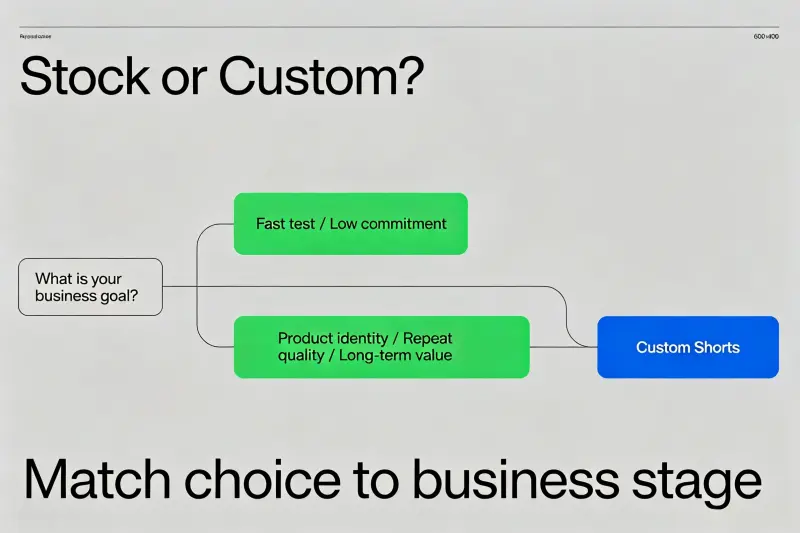
A buyer should not choose custom shorts only because they sound more professional. The right choice depends on business stage, sales data, cash flow, product goals, and the level of control the brand needs.
Stock shorts are useful when a brand needs fast testing and low commitment. Custom shorts become the better choice when the goal is product identity, repeat quality, better fit, and long-term brand value.
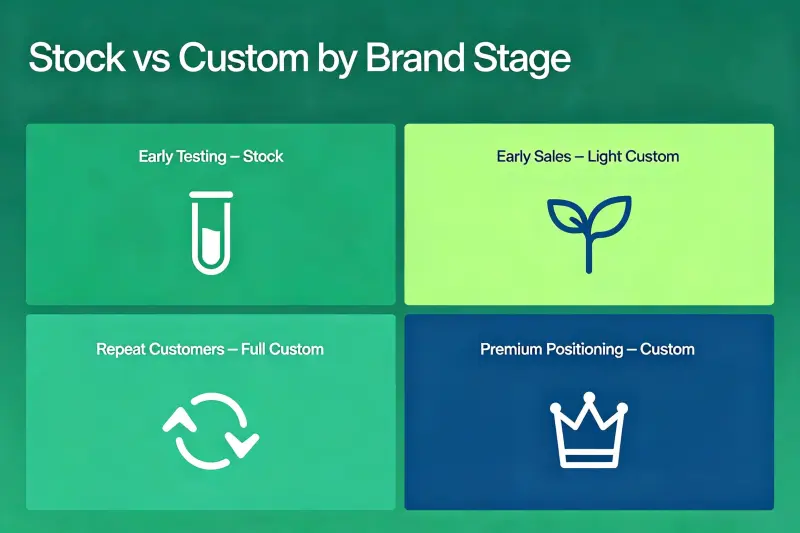
Match The Choice To Your Business Stage
The decision becomes much clearer when buyers stop asking only, "Which option is cheaper?" and start asking, "What stage is my brand in?"
A first-time seller may need speed. A growing brand may need better fit. A premium brand may need a unique product experience. A wholesale buyer may need repeatable specifications across multiple orders.
| Business Stage | Better Choice | Why It Makes Sense |
|---|---|---|
| First market test | Stock | Speed and low commitment matter most |
| Early sales traction | Light custom | The brand can improve key product details without taking too much risk |
| Repeat customer base | Full custom | Consistency, fit, and quality control become more important |
| Premium positioning | Custom | Product details help justify a higher selling price |
| Wholesale expansion | Custom | Buyers expect stable specifications and reliable repeat production |
For many brands, the best path is not choosing stock forever or jumping into full customization immediately. A staged development plan often works better.
A buyer may start by improving the fabric and fit first. After receiving market feedback, the brand can upgrade the waistband, add a liner, adjust pocket construction, or create more detailed packaging.
This approach keeps the first custom order more manageable while still moving the brand away from generic stock products.
A Practical Decision Framework For Buyers
Before deciding between stock and custom shorts, buyers should review several practical questions:
- Do customers already respond well to this product category?
- Is the brand trying to compete on price, quality, function, or identity?
- Will the same product need to be reordered later?
- Does the buyer need control over fabric, fit, waistband, pockets, or liner?
- Is the target customer expecting a premium product experience?
- Can the current supplier repeat the same quality across future orders?
If the answer is mostly about speed and low commitment, stock shorts may still be suitable.
If the answer involves product control, repeat production, sizing consistency, premium positioning, or long-term brand trust, custom shorts are usually the stronger option.
Choose A Supplier Who Can Support Product Development
A strong custom supplier should do more than accept a logo file and quote a price.
The supplier should be able to discuss:
- Fabric options
- Fit adjustment
- Waistband construction
- Pocket placement
- Compression liner choices
- Logo methods
- Sampling process
- MOQ planning
- Bulk production timeline
- Repeat order consistency
If a supplier only talks about price and logo placement, the buyer may not receive true custom development support.
For growing sportswear brands, the best manufacturing partner acts more like a product development partner. The supplier should understand the target customer, explain production trade-offs, and help avoid problems before bulk production begins.
This is especially important for brands that depend on customer reviews, repeat sales, and stable product quality.
Conclusion
Stock shorts can be useful at the beginning. They help brands test demand quickly and reduce first-order risk.
However, as a brand grows, stock products often become limiting. They make it harder to control fit, fabric, function, repeat quality, and brand identity.
Custom shorts give buyers a stronger foundation for long-term growth. They allow brands to define the product experience, document production standards, improve repeat consistency, and build a product that customers can recognize and trust.
For most growing sportswear brands, the best approach is gradual.
Start with the most important product improvements first. Test through sampling. Confirm the right fabric, fit, waistband, pocket function, and branding details. Then move into bulk production with clear specifications.
If you are planning to move from stock shorts to custom manufacturing, prepare your target style, size requirements, logo files, quantity plan, and market goals before contacting a factory. A clear product brief helps the manufacturer give better fabric suggestions, more accurate MOQ guidance, and a more practical development plan.
Custom manufacturing is not only about making a different-looking pair of shorts. It is about building a repeatable product standard that supports your brand after the first order.