A low unit price looks safe at first. Then sampling delays, weak trims, and unstable repeat orders can hurt my launch plan.
The best gym shorts manufacturing region in 2026 depends on product needs, MOQ, sampling speed, material access, and repeat quality. I often see China fit growing custom gym shorts brands well because China has strong fabric, trim, development, and export support in one supply chain.
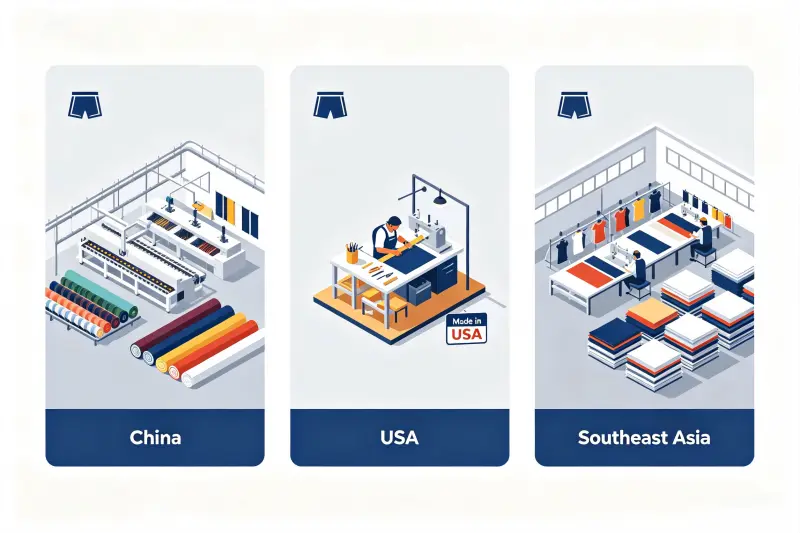
I do not judge a region by labor cost alone. I judge it by whether I can help a brand build the right gym shorts, test them fast, repeat them well, and ship them with less risk. I have seen buyers first ask for the lowest FOB price. I have also seen the same buyers later ask about fabric hand feel, waistband stretch, liner comfort, logo durability, pocket position, and bulk color consistency. That is the real work behind gym shorts manufacturing.
What Should I Compare Before I Choose a Gym Shorts Manufacturing Region?
A cheap quote can look good. Then the wrong fabric, slow samples, and weak quality control can cost more than the saving.
I compare gym shorts manufacturing regions by product execution, not by labor cost only. I look at fabric access, trims, sample speed, MOQ, communication, quality control, export workflow, and repeat-order stability before I judge the final value.
I start with the product, not the country
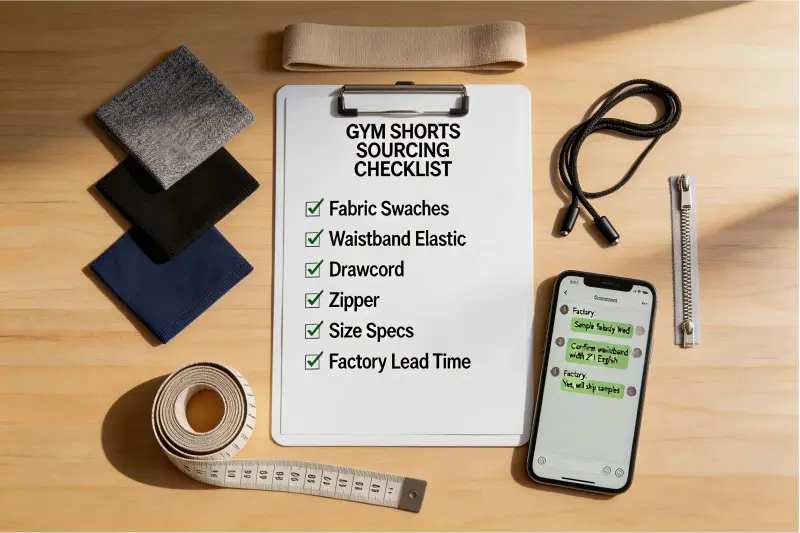
When a buyer contacts me, I do not start with "China is cheaper" or "this region is better." I start with the gym shorts. I ask simple questions. What fabric do I need to source? Is it polyester spandex, nylon spandex, recycled fabric, mesh, woven stretch, or a 2-in-1 structure? Does the buyer need a compression liner? Does the waistband need jacquard, inner elastic, drawcord, or silicone grip? Does the brand need zipper pockets, phone pockets, towel loops, reflective trims, heat transfer logos, embroidery, or rubber patches?
These questions matter because gym shorts are not just cut-and-sew items. A basic gym short can be simple. A real custom gym short can need many parts to work together. If one part is wrong, the short feels cheap. If the liner rides up, the customer complains. If the waistband loses shape, the brand loses trust.
| What I compare | Why it matters for gym shorts |
|---|---|
| Fabric access | It affects stretch, sweat control, weight, and feel |
| Trim sourcing | It affects waistband, drawcord, zipper, label, and pocket options |
| Sampling speed | It affects launch timing and product testing |
| MOQ flexibility | It affects cash flow for growing brands |
| Bulk repeat quality | It affects customer reviews and reorder confidence |
| Export workflow | It affects delivery risk and communication burden |
I have seen brands compare the USA, China, and Southeast Asia by unit price first. I understand why. Cash flow is important. But I also see a better question. Can the supplier build the right product reliably? A low labor cost does not help much if the fabric must be imported, the trims are limited, or the sample cannot be revised quickly.
Why Does China Often Fit Custom Gym Shorts Manufacturing Well?
A growing brand needs options. If the factory cannot source fabrics and trims fast, the brand loses time before launch.
China often fits custom gym shorts well because many fabrics, waistbands, drawcords, linings, zippers, labels, logo methods, and functional trims can be sourced inside one supply chain. This helps sampling, customization, and repeat production.
I see China's strength in the full supply chain
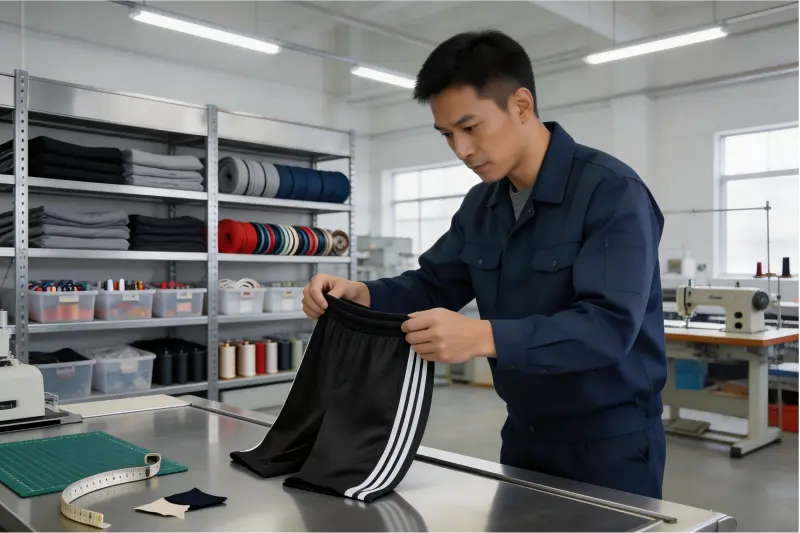
From my side as a China-based shorts manufacturer, China's biggest strength is not only sewing. It is the full material and accessory ecosystem around the sewing factory. When I develop gym shorts for an overseas brand, I can often source several fabric options, waistband options, drawcord options, pocket zipper options, logo methods, and packaging choices without sending the buyer into a long search.
This matters a lot for custom gym shorts. If a buyer says, "I want a lightweight training short with a soft liner and a hidden phone pocket," I need more than sewing workers. I need fabric suppliers, mesh suppliers, elastic suppliers, zipper suppliers, heat transfer logo suppliers, label suppliers, and packaging suppliers. I also need them to respond fast. If the first fabric is too thick, I need a second choice. If the first logo cracks in testing, I need another method.
| Custom part | Common gym shorts decision |
|---|---|
| Outer fabric | Woven stretch, knit, recycled polyester, nylon blend |
| Liner | Mesh brief, compression liner, no liner, 2-in-1 structure |
| Waistband | Elastic, jacquard, inner drawcord, outer drawcord |
| Pockets | Side pocket, zipper pocket, phone pocket, back pocket |
| Logo | Heat transfer, screen print, embroidery, woven label, rubber patch |
| Function trims | Reflective tape, cord lock, zipper puller, towel loop |
I have worked with buyers who first asked for a low MOQ and a fast sample. Then they changed the waistband, liner, logo, and pocket after seeing the first sample. This is normal in product development. China often supports this process well because many parts are close to each other. The buyer still needs a strong factory partner. A supply chain does not manage itself. But when the factory knows shorts and has local sourcing channels, the brand can move faster with less trial and error.
When Can USA Manufacturing Make Sense for Gym Shorts?
USA production can feel safer for local brands. But higher cost and limited supplier options can create pressure for price and scale.
USA gym shorts manufacturing can make sense for brands that need local production, small domestic runs, fast local communication, or "Made in USA" positioning. I still compare cost, fabric access, trim options, and scale before I choose it.
I treat USA production as a strategic choice
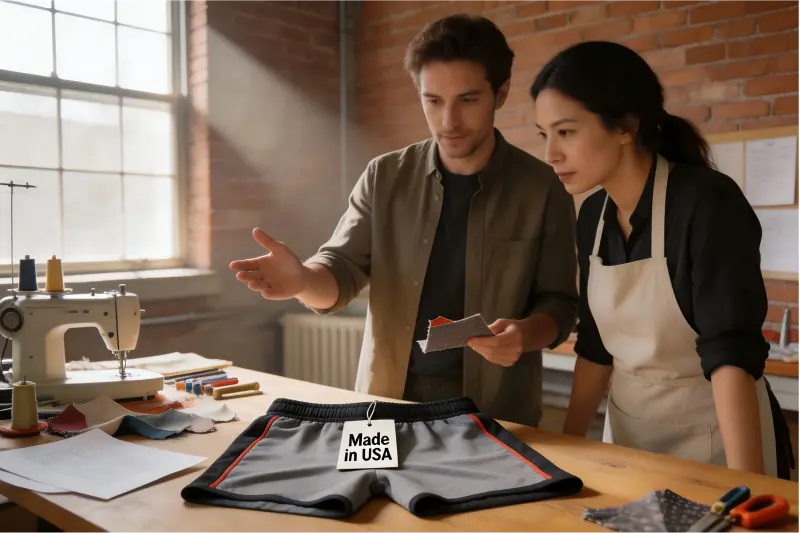
I do not say USA manufacturing is bad. I see it as a different decision. A brand may choose USA production because the brand story needs it. A buyer may want local control. A team may want to visit the factory often. A company may sell to customers who care about domestic production. These reasons can be valid.
But I also see clear questions that a buyer should ask. Does the local factory have access to the exact performance fabric needed for gym shorts? Can it source a custom waistband, custom drawcord, liner mesh, zipper pocket, and logo application in the same way? Can it support the target price after labor, overhead, and local material costs? Can it scale if the short sells well? Current labor cost, tariff, and domestic capacity should be verified with current data. I do not guess these numbers.
| USA production question | Why I ask it |
|---|---|
| Is "Made in USA" important? | It can support brand position and local trust |
| Is the product simple or complex? | Complex gym shorts need more material choices |
| Is the target retail price high enough? | Higher production cost needs margin support |
| Is fabric sourced locally or imported? | Imported materials can reduce the speed benefit |
| Can the factory scale? | A good launch can become a supply problem |
In presales calls, I sometimes hear buyers say, "I want the quality of premium activewear, but I also need a competitive landed cost." That is where the decision becomes serious. USA production may fit a certain brand model. It may not fit every DTC or wholesale model. If a brand sells premium, values local identity, and accepts higher cost, USA production can work. If the brand needs full OEM customization, flexible MOQ, and broad material choices at a more balanced cost, I usually compare China very carefully.
When Can Southeast Asia Be a Good Option for Gym Shorts?
Southeast Asia can look attractive because of labor cost. But material flow and coordination still decide the real result.
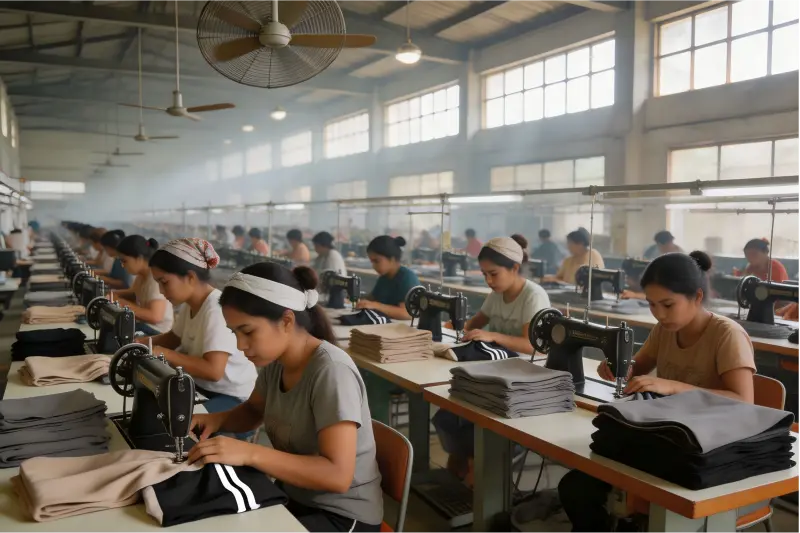
Southeast Asia can be a good option for larger-volume programs, mature sourcing teams, or supply-chain diversification. I still check fabric origin, trim sourcing, sample revision speed, communication flow, and total lead time before I choose it.
I view Southeast Asia with a fair but careful eye
I do not describe Southeast Asia as one single market. Vietnam, Cambodia, Indonesia, Thailand, and other countries have different strengths. Some factories are strong. Some factories work with major global brands. Some buyers use the region for diversification. I respect that.
But for custom gym shorts, I still ask practical questions. Where does the fabric come from? Where does the waistband come from? Where are the drawcords, zipper pulls, mesh linings, labels, heat transfers, and packaging produced? If a factory sews well but must import key materials, the buyer may face longer development cycles. If a sample needs revision, each material change can take extra time. If a brand needs several custom options, the coordination cost can rise.
| Southeast Asia factor | What I verify before production |
|---|---|
| Fabric source | Local, China, Korea, Taiwan, or another market |
| Trim source | Local stock or imported custom trim |
| Sample revision cycle | How fast the factory can change fabric and details |
| Volume fit | Whether MOQ matches the buyer's launch plan |
| Communication flow | Whether the supplier can manage product details clearly |
| Export setup | Whether shipping and documents match the buyer's market |
I have seen some brands explore Southeast Asia after they grow. That can make sense when the order volume is stable and the product is already developed. A mature brand may develop the style in one place and produce in another. A larger company may split risk across regions. But for a growing brand that still adjusts fit, liner, pocket, logo, and waistband, the material ecosystem can be as important as sewing cost. I always suggest that buyers verify the actual supplier, not only the country name.
Why Does Material Access Matter So Much for Custom Gym Shorts?
A factory can sew well. But if the right fabric and trims are missing, the finished gym shorts still fail.
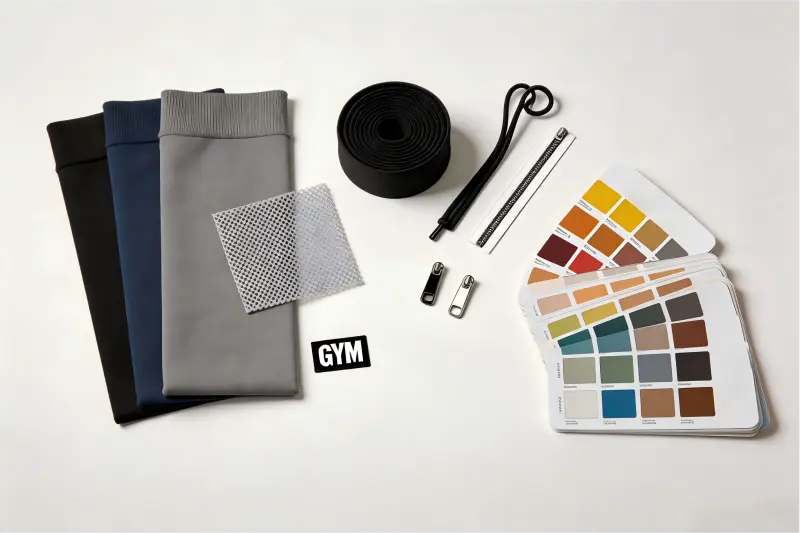
Material access matters because gym shorts performance depends on fabric stretch, weight, sweat control, liner comfort, waistband recovery, pocket function, and logo durability. A strong material network helps reduce sample risk and repeat-order problems.
I see materials decide the product experience
I often explain this to buyers in a simple way. The sewing line creates the shape. The materials create the customer experience. If the outer fabric is too stiff, the short feels cheap. If the fabric is too light, it may be see-through. If the liner mesh is rough, the customer will not wear it again. If the waistband elastic is weak, the short loses fit after washing. If the pocket bag is too shallow, the phone falls out during training.
For gym shorts, small details are not small. They become reviews, returns, and reorder problems. A sourcing manager may focus on FOB price. A founder may focus on the brand feel. A product manager may focus on fit and test feedback. I need to support all three sides.
| Gym shorts material | Main risk if it is wrong |
|---|---|
| Stretch woven fabric | Poor movement, tight feeling, weak recovery |
| Knit or mesh liner | Chafing, heat, bad comfort, riding up |
| Waistband elastic | Loose fit, twisting, bad wash performance |
| Drawcord | Cheap look, weak function, poor color match |
| Zipper | Breakage, rough hand feel, pocket complaints |
| Heat transfer logo | Cracking, peeling, weak brand image |
| Pocket fabric | Bulky feel, poor storage, bad drape |
This is why I believe China often gives growing brands a strong advantage. I can check more materials. I can compare hand feel. I can test logo methods. I can adjust details before bulk. I can also repeat the same material in future orders when the supply chain is stable. This does not mean every Chinese factory is good. The buyer still needs to choose carefully. But a shorts-focused factory with real OEM ability can use China's material depth to reduce execution risk.
How Should I Choose the Best Region for My 2026 Gym Shorts Launch?
A launch can fail before marketing starts. Poor sourcing choices can create late samples, cash pressure, and inconsistent bulk goods.
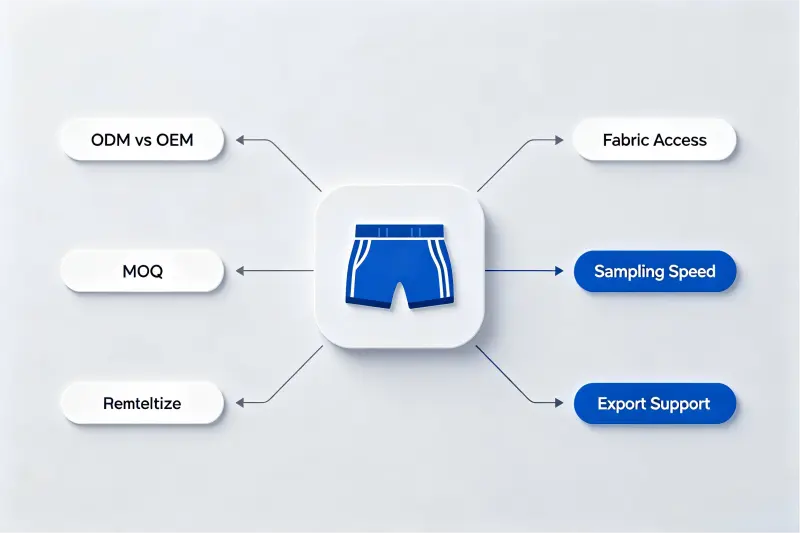
I choose the best gym shorts manufacturing region by matching the product stage, MOQ, customization level, launch date, margin target, and repeat-order plan. The best region is the one that protects execution, not only the quote.
I use a practical decision framework
When I speak with a new buyer, I try to understand the business stage first. A startup gym brand may need low MOQ, fast sampling, and help with fabric choices. An Amazon seller may need stable sizing, barcode packaging, and repeat stock. A wholesale importer may need price control and reliable bulk delivery. A larger procurement team may need audits, clear documents, and multi-style coordination. These buyers do not need the same region for the same reason.
I also ask about the launch date. If the buyer wants to launch in a few months, sample revisions matter. If the product is still only an idea, material access matters more. If the buyer already has a mature tech pack, the region decision can focus more on scale, landed cost, and risk spread. If the buyer needs true OEM work, I need more detail before quoting.
| Buyer situation | Region logic I would consider |
|---|---|
| New DTC gym brand | I look for flexible MOQ, fast samples, and strong material support |
| Private label buyer | I look for custom options, stable quality, and packaging support |
| Amazon or Shopify seller | I look for repeat consistency, size control, and delivery planning |
| Importer or wholesaler | I look for cost balance, bulk capacity, and clear communication |
| Mature brand | I look for supply-chain mix, risk control, and production stability |
I do not use one answer for every buyer. If a brand needs "Made in USA," the USA may be the right choice. If a mature brand wants diversification, Southeast Asia may be useful. If a growing brand needs custom gym shorts with flexible MOQ, fast development, broad material access, and stable export support, China is often a very strong fit.
As a shorts manufacturer, I care about the details that decide whether a product can be sold again. I want the buyer to ask more than "What is your price?" I want the buyer to ask, "Can you source this fabric?" "Can you make this waistband?" "Can you develop this 2-in-1 short?" "Can you repeat the same quality next season?" These questions lead to better decisions.
Conclusion
I would choose the region that gives my gym shorts brand the best mix of customization, speed, material access, MOQ, and repeat quality.