
Why Board Shorts Usually Use a Fixed Waistband Instead of Elastic
Some product decisions look small on a spec sheet but become very obvious in real water use. The waistband is one of them.
For casual beach shorts, elastic can make sense because it gives an easy fit and reduces sizing pressure. For true surf board shorts, however, a fixed waistband usually performs better. It holds the body more securely, reduces unwanted movement in water, and keeps the product structure more stable after repeated use.
A fixed waistband is commonly used in surf board shorts because it gives stronger hold, better control, and longer-lasting shape than a fully elastic waistband. Elastic works better for beach shorts, volley shorts, and casual swimwear, but it can create slippage, drag, and durability problems in serious surf use.
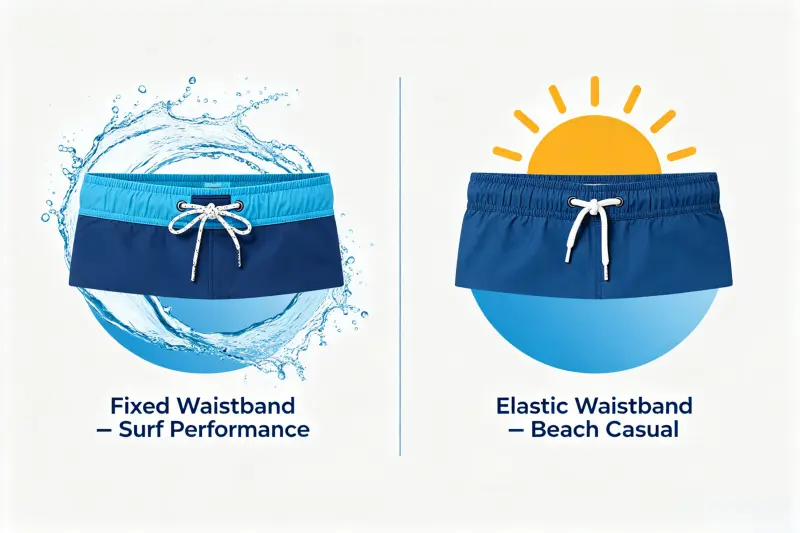
During product development, this question comes up often: “If board shorts are made for water, why not make the waistband softer and more flexible?”
The question is reasonable. Elastic feels comfortable when the customer tries the shorts on dry. It also fits more waist sizes, which looks helpful for online selling. But board shorts are not only judged by fitting-room comfort. They are judged when the fabric is soaked, pulled by moving water, twisted during paddling, and exposed to salt, sun, and repeated washing.
In our factory, I separate true board shorts from general swim shorts before discussing waistband construction. A pair of surf board shorts needs to stay locked in place. A pair of casual beach shorts needs easy comfort. Those are different product promises, and they should not always use the same waistband.
Why Is a Fixed Waistband Better for Surfing?
For surfing and active water sports, waistband stability matters more than soft stretch. A fixed waistband keeps the waist measurement more controlled when the shorts are wet and under pressure.
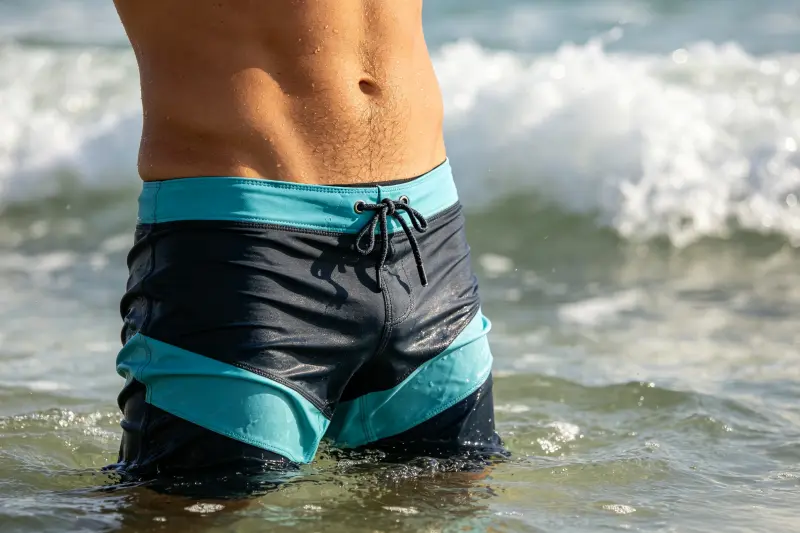
Water Pressure Changes the Way Shorts Fit
On land, elastic feels comfortable because it expands easily. In moving water, that same stretch can become a weakness.
When a surfer dives, paddles, sits on a board, or falls into a wave, the shorts are pulled from different directions. Wet fabric also becomes heavier. If the waistband stretches too much, the shorts may shift downward or feel loose at the wrong moment.
A fixed waistband has a different job. It keeps the waist shape stable. When paired with a lace-up fly or secure drawcord, it allows the wearer to tighten the shorts manually before entering the water.
| Design Choice | What Happens in Surf Use | Risk for a Brand |
|---|---|---|
| Fixed waistband | Holds the waist shape more securely under water pressure | Lower risk of slippage complaints |
| Elastic waistband | Stretches under pull, water weight, and movement | Higher risk of poor fit feedback |
| Lace-up fly | Allows tighter manual control | Better for active water sports |
| Elastic with simple drawcord | Comfortable but less structured | Better for casual swim shorts |
One issue we frequently encounter is that new brands judge waistband comfort only during dry fitting. The sample may feel good in the office, but the real test is different. Board shorts need to stay secure when the wearer is moving, soaked, and exposed to water force.
That is why a fixed waistband is not an old-fashioned detail. It is a performance choice.
Why Does Elastic Break Down Faster in Board Shorts?
Elastic is useful, but it is also more sensitive than many buyers expect. Saltwater, sun exposure, chlorine, sweat, and heat can all affect elastic recovery over time.
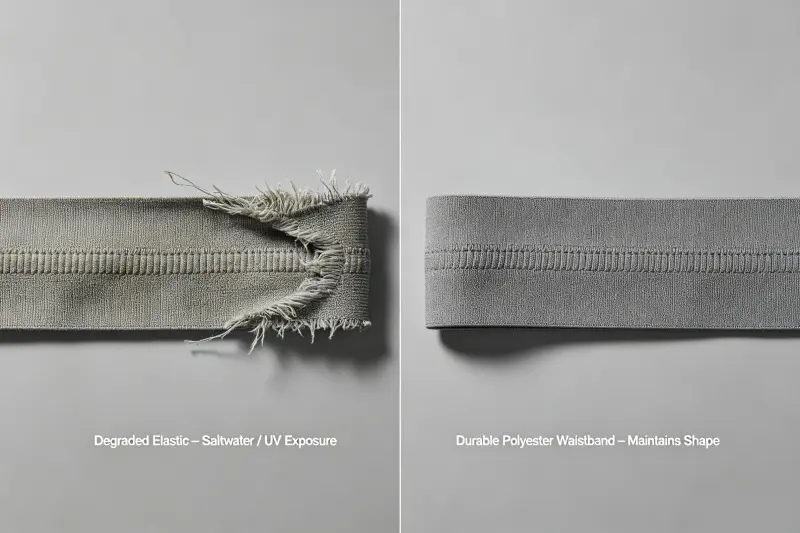
Elastic Recovery Matters After Repeated Use
During bulk production and repeat orders, waistband stability becomes one of the areas we pay close attention to. A board short can still look acceptable in photos, but if the waistband becomes loose, the customer immediately feels the quality problem.
Elastic fibers can lose recovery after repeated exposure to outdoor and water conditions. Once recovery drops, the waistband may not return to its original shape. This can create a loose fit, uneven gathering, or a stretched-out look.
For serious board shorts, a woven fixed waistband made with suitable polyester or nylon fabric usually keeps its structure better. Polyester and nylon are common board shorts materials because they absorb less water than cotton, dry faster, and perform better for outdoor use when the fabric and finishing are selected properly.
| Material Factor | What We Check During Development | Why It Matters |
|---|---|---|
| Saltwater exposure | Waistband recovery after washing and drying | Salt can speed up material fatigue |
| UV exposure | Color stability and fiber strength | Sunlight can weaken stretch materials |
| Chlorine exposure | Elastic response after pool-like conditions | Chlorine can damage elastic faster |
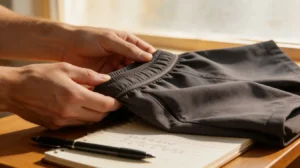
| Waistband fabric | Structure, hand feel, and recovery | The waist controls long-term fit |
This does not mean stretch fabric should never be used in board shorts. Stretch can be very useful in the main body fabric, especially for movement and comfort. The key is where the stretch is placed.
For surf board shorts, I prefer to put stretch where the body needs movement and keep structure where the garment needs control. The waistband is the anchor point, so it should not be the weakest part of the product.
Is This a Board Shorts Problem or a Beach Shorts Problem?
Many sourcing mistakes start with product naming. Some buyers call every swim short “board shorts,” but the end use may actually be beachwear, resort wear, or casual pool shorts.
That difference matters.
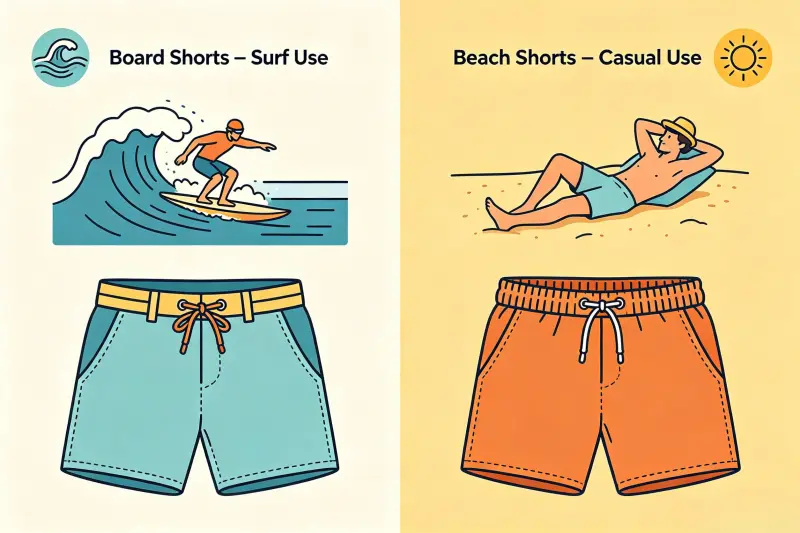
The Wearing Scene Should Decide the Waistband
Before sample development, the first question should not be “fixed waistband or elastic waistband?” The better question is:
Where will the customer actually wear these shorts?
If the final customer surfs, paddles, or uses the shorts in active water conditions, a fixed waistband is usually the safer choice. If the customer mainly walks on the beach, swims casually, travels, or wears the shorts as resort clothing, elastic can be a better option.
| Product Type | Waistband Usually Recommended | Best Use Case | Main Buyer Concern |
|---|---|---|---|
| Surf board shorts | Fixed waistband with lace-up fly | Surfing and active water sports | Security and durability |
| Beach shorts | Elastic waistband with drawcord | Travel, pool, beach leisure | Comfort and easy fit |
| Volley shorts | Elastic or semi-elastic waist | Casual swim and lifestyle wear | Fit range and price |
| Hybrid shorts | Fixed or partially structured waist | Water-to-land use | Balance of function and comfort |
Based on our OEM experience, many early-stage brands choose elastic because they want to reduce size risk. That can be correct for casual swimwear. But if the product is marketed as true board shorts, elastic may weaken the product positioning.
A surf customer expects the shorts to feel secure. If the waistband moves too much in water, the customer may not describe the issue as “wrong construction.” They will simply say the product feels cheap or not like real board shorts.
That is a brand problem, not only a factory problem.
Can Modern Board Shorts Still Feel Flexible Without Elastic?
Yes. Modern board shorts can still feel flexible without using a fully elastic waistband. The better solution is usually to place stretch in the body fabric while keeping the waistband structured.
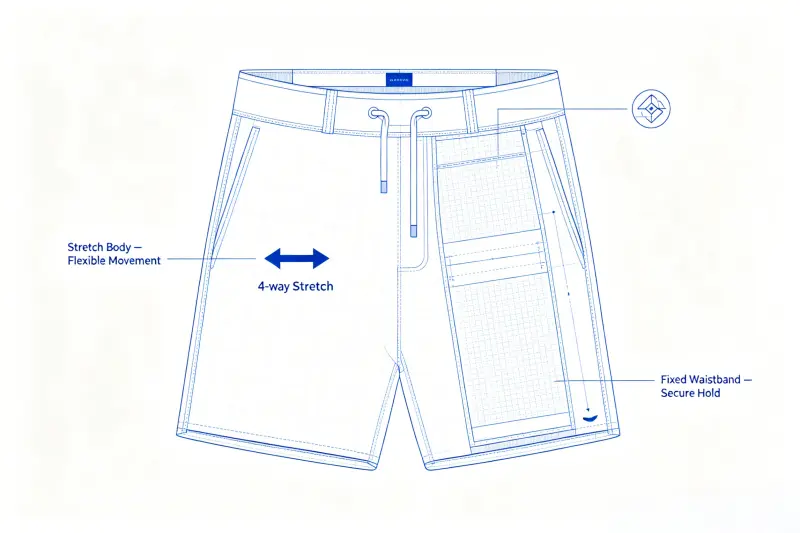
Put Stretch in the Body and Structure in the Waist
During sample approval, I often explain this to buyers with one simple rule:
Movement belongs in the fabric. Security belongs in the waistband.
A 4-way stretch polyester or nylon blend can make the main body comfortable for squatting, paddling, sitting, jumping, and walking. At the same time, a fixed waistband keeps the shorts anchored to the body.
This hybrid construction is common in premium surf and water-sport shorts. It gives the wearer enough flexibility without losing the secure feel expected from real board shorts.
| Construction Area | Common Factory Choice | Purpose |
|---|---|---|
| Main body fabric | 4-way stretch polyester or nylon blend | Movement and comfort |
| Waistband | Fixed woven waistband | Secure fit in water |
| Fly system | Lace-up closure or secure drawcord | Adjustable lock |
| Inner finishing | Smooth seam or soft binding | Less rubbing |
| Pocket design | Drainage eyelet or mesh pocket bag | Faster water release |
One common mistake is adding stretch only because it sounds good in marketing. Stretch fabric still needs proper recovery, suitable weight, quick-dry performance, and stable washing results. A cheap stretch fabric may feel soft at first but bag out after use.
For repeat production, this becomes even more important. If the first order sells well but the second order uses a slightly different fabric or waistband structure, customers may notice the fit change immediately. That is why the waistband, fabric recovery, and pattern should be confirmed carefully before bulk production.
For brands developing custom board shorts, this is where OEM experience matters. The goal is not to add every feature. The goal is to match fabric, waistband, fly construction, pocket design, and final customer use.
What Should Brands Choose When Developing Custom Board Shorts?
The best waistband depends on the product promise. A surf product needs security. A resort product needs easy comfort. A hybrid product needs balance.
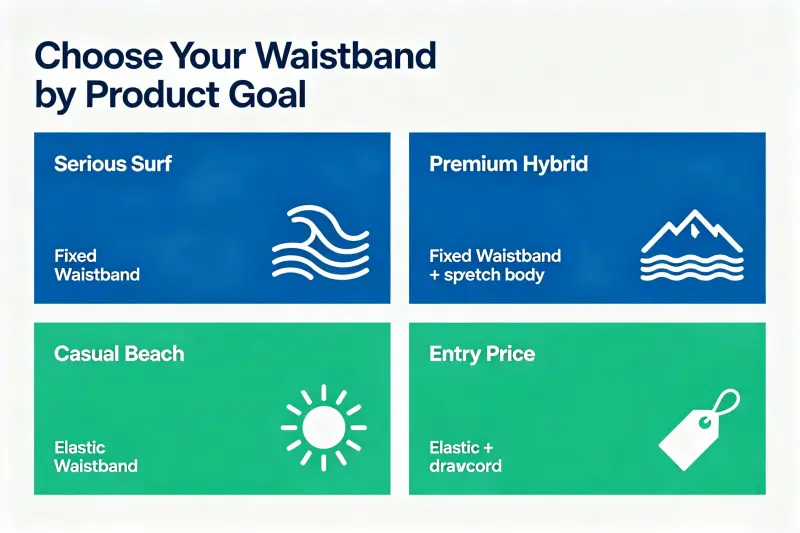
A Simple Decision Framework Before Sampling
Before making samples, brands should define the product level clearly. This saves time, reduces wrong samples, and avoids unnecessary cost before bulk production.
At EWO, our standard sample lead time is 7–10 days, and the usual MOQ is 300 pcs. For a 600 pcs bulk order, production is usually around 15–20 days, depending on fabric, printing, trims, and packaging details. Because sample development already takes real time and cost, the waistband decision should be made based on use case, not only appearance.
| Brand Goal | Waistband Advice | Why It Makes Sense |
|---|---|---|
| Serious surf product | Fixed waistband | Supports performance, security, and trust |
| Premium hybrid product | Fixed waistband with stretch body | Balances comfort and function |
| Casual beach product | Elastic waistband | Improves easy fit and comfort |
| Entry-price swim short | Elastic with simple drawcord | Helps control cost and sizing risk |
| Private label resort line | Elastic or semi-elastic waist | Fits leisure and travel buyers |
Practical Checklist for B2B Buyers
Before confirming the board shorts sample, check these points:
- Will the customer use the shorts for surfing or casual beachwear?
- Does the waistband need to stay tight in moving water?
- Is the fabric quick-dry and suitable for saltwater use?
- Does the stretch fabric have good recovery after washing?
- Is the fly system secure enough for active water sports?
- Are pockets designed with drainage or mesh lining?
- Does the waistband match the brand’s product positioning?
- Can the same fabric and trims be repeated for future orders?
This checklist is especially useful for private label buyers and growing sportswear brands. A sample may look good in a product photo, but the real question is whether it matches the customer’s use scene.
If your brand is developing a full water-sport collection, you can also review our custom board shorts manufacturing options to compare fabric, waistband, pocket, logo, and OEM / ODM details.
Common Mistakes When Choosing Board Shorts Waistbands
A wrong waistband choice can create problems after launch, even if the sample looks acceptable.
Mistake 1: Using Elastic Because It Feels More Comfortable
Comfort is important, but surf board shorts need control first. If the waistband moves too much in water, the product may fail its main purpose.
Mistake 2: Calling Casual Swim Shorts “Board Shorts”
This creates the wrong buyer expectation. If the product is mainly for pool, beach travel, or resort wear, it may be better to call it beach shorts, swim shorts, or volley shorts.
Mistake 3: Ignoring Long-Term Waistband Recovery
Elastic can lose recovery after repeated exposure to saltwater, chlorine, heat, and UV. For premium board shorts, waistband durability should be tested before repeat production.
Mistake 4: Adding 4-Way Stretch Without Checking Fabric Recovery
Stretch fabric is useful, but poor recovery can cause bagging and loose fit. The fabric should support both movement and shape retention.
Mistake 5: Making the Sample Before Defining the End Use
A factory can make fixed waistbands, elastic waistbands, semi-elastic waistbands, and hybrid structures. But the correct choice depends on the final customer, price point, and brand positioning.
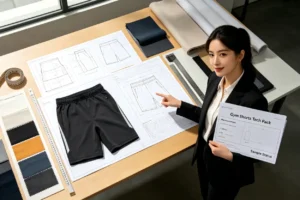
For brands that need help turning a design idea, tech pack, or reference sample into a production-ready product, our OEM and ODM development process can help organize fabric, pattern, sample approval, and bulk production steps.
FAQ: Fixed Waistband vs Elastic Waistband in Board Shorts
Are fixed waistbands better for board shorts?
For true surf board shorts, a fixed waistband is usually better because it gives stronger hold in moving water. It helps reduce slippage and keeps the waist structure more stable when the shorts are wet.
Are elastic waistbands bad for swim shorts?
No. Elastic waistbands are not bad. They are often a good choice for beach shorts, volley shorts, pool shorts, resort shorts, and casual swimwear. They are less suitable for serious surf board shorts where secure hold matters more.
Can board shorts use 4-way stretch fabric?
Yes. Many modern board shorts use 4-way stretch fabric in the main body for better movement. The important point is to keep the waistband structured enough to secure the shorts in water.
What is the best waistband for private label board shorts?
For a surf-focused private label product, a fixed waistband with a lace-up fly is usually recommended. For casual beachwear or resort collections, elastic or semi-elastic waistbands may be more suitable.
Should I choose fixed or elastic waistband for my first board shorts order?
Start with the customer use case. If your customers surf or use the shorts in active water sports, choose a fixed waistband. If they mainly want comfort for beach travel or casual swimming, elastic may be the better option.
Conclusion
A fixed waistband is not a missing comfort feature. For real board shorts, it is part of the performance structure.
Elastic works well for casual swim shorts, beach shorts, and resort wear. But for surf board shorts, the waistband needs to hold firmly when the shorts are wet, pulled by water, and used in active movement. That is why fixed waistbands remain the better choice for serious surf products.
For B2B brands, the smartest decision is not simply fixed waistband vs elastic waistband. The better question is: what does the final customer expect this product to do?
If your brand is developing custom board shorts, beach shorts, or hybrid water-sport shorts, you can contact EWO to discuss fabric, waistband construction, sample development, and OEM / ODM production details.