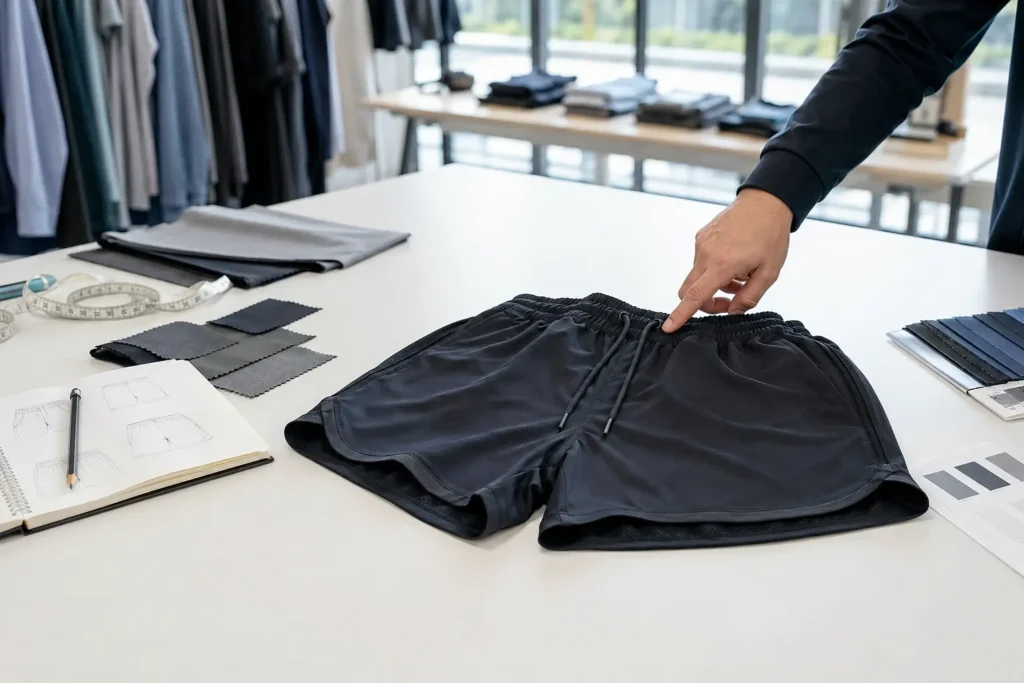
Many brands rush into gym shorts with only a logo idea. I often see this create weak samples, unclear quotes, and risky first orders.
I start a private label gym shorts project by defining the buyer, product specs, order quantity, target price range, and delivery needs before I quote or sample. This process helps me reduce wrong fabric choices, poor fit, high returns, late delivery, and weak market response.
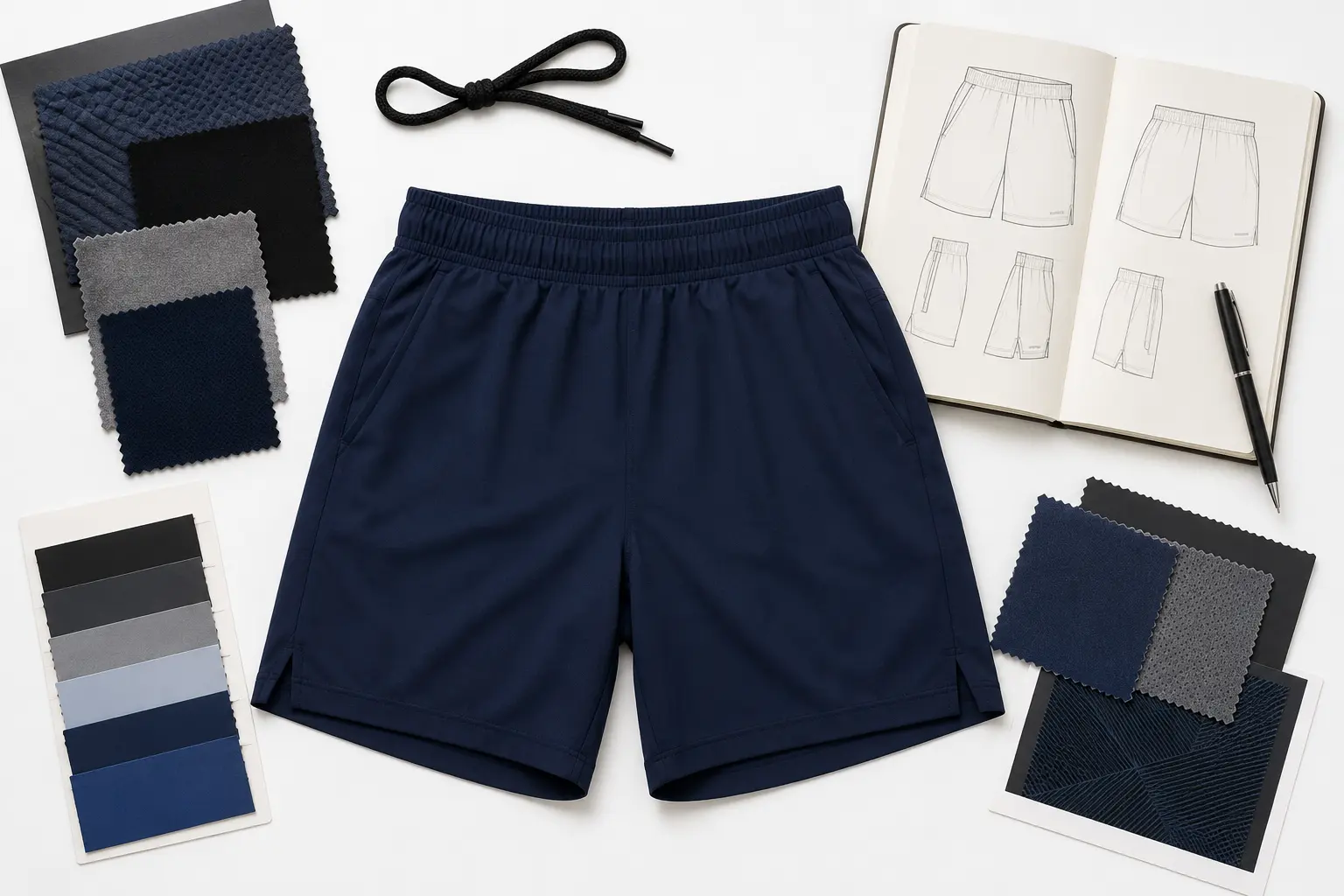
I have worked with overseas apparel brands that want to add gym shorts to their product line. I know the first message is often simple. A buyer may ask, "What is your MOQ?" or "How much for gym shorts with my logo?" I understand why they ask. Price and quantity matter. But I also know that a useful answer needs more detail. A private label gym shorts order is not only a logo order. It is a product development and order planning process. If I do not understand the style, fabric, fit, waistband, pockets, lining, packaging, and delivery needs, I can only give a rough guess. That guess may look fast, but it can cause problems later. I always prefer to slow down at the start, because a clear start often makes the sample and bulk order much faster.
What Should I Prepare Before I Contact a Gym Shorts Manufacturer?
A brand can lose time when it asks for a quote without clear product direction. I see this problem often in new private label inquiries.
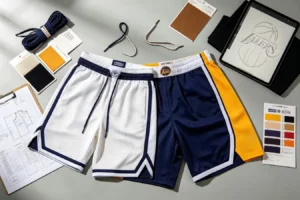
I prepare style references, target buyers, fabric ideas, fit needs, logo method, size range, packaging details, first-order quantity, and target price range before I request sampling or quotation.
I Treat Private Label as Product Planning
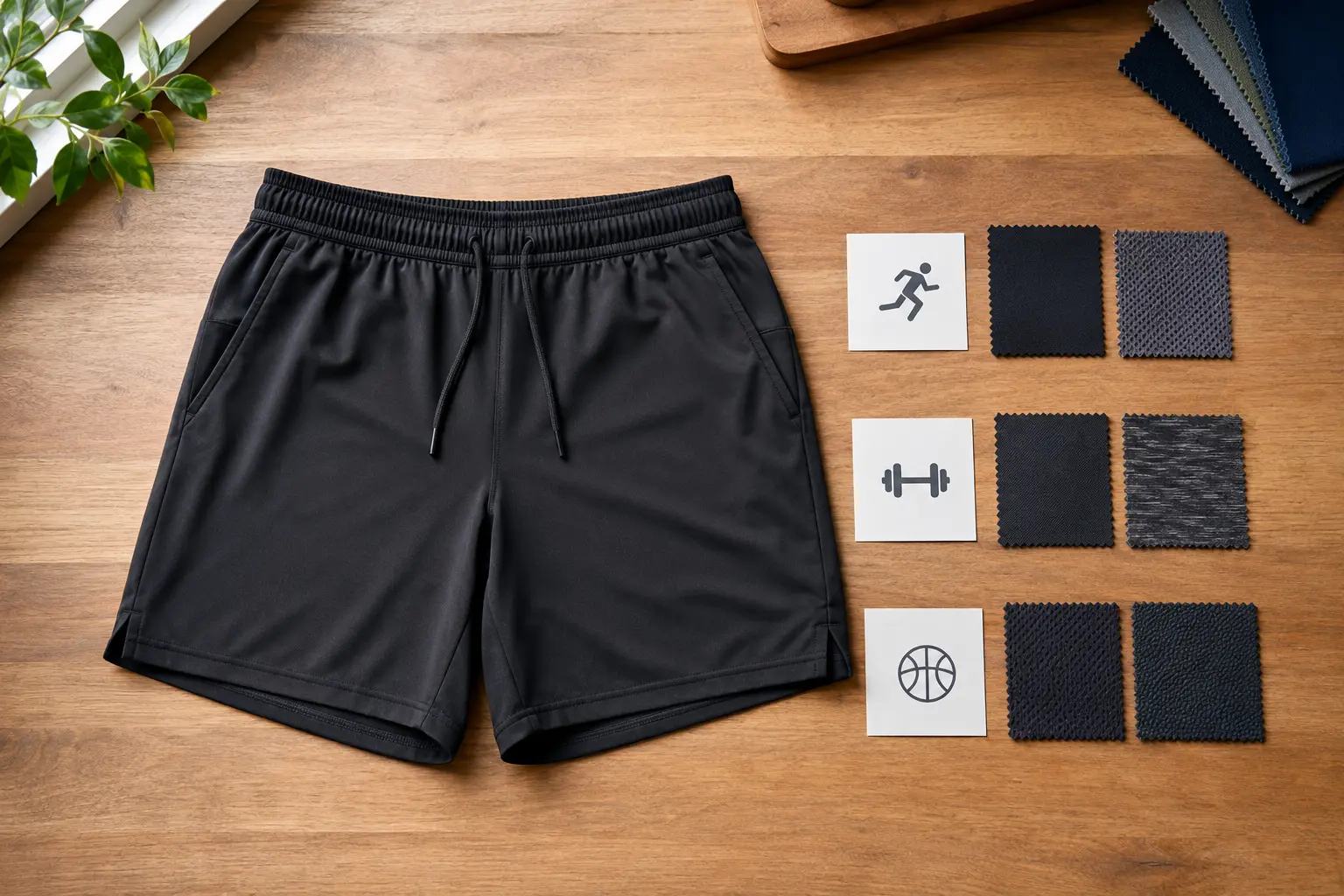
I do not treat private label gym shorts as "add my logo to any shorts." I treat it as a product that must match a real customer. I first ask who will buy the shorts. A running customer may care about light fabric and a secure phone pocket. A gym customer may care about stretch, squat comfort, and sweat control. A basketball customer may care about loose movement and strong seams. A boxing or training customer may care about waistband hold and short length. This buyer question decides many product details.
| What I prepare | What I decide | Why I care |
|---|---|---|
| Style reference | Running, gym, basketball, boxing, or hybrid style | I need the shape before I discuss cost |
| Fabric | Polyester, nylon, spandex blend, mesh, woven, or knit | I connect hand feel, stretch, and price |
| Weight | Light, medium, or heavy | I match comfort and season |
| Fit | Slim, regular, loose, short inseam, or long inseam | I reduce return risk |
| Branding | Print, heat transfer, embroidery, woven label | I match brand look and durability |
| Packaging | Polybag, hangtag, barcode, carton mark | I plan retail or wholesale delivery |
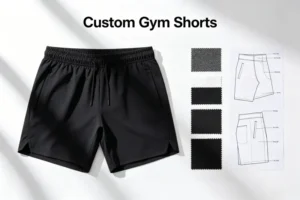
I also ask for clear photos or links. I do not copy another brand, but I use references to understand the direction. I need front view, back view, waistband view, pocket detail, and logo position. If the buyer has a tech pack, I can work faster. If the buyer has no tech pack, I can still help, but I need enough clear answers. I also ask for target quantity and target price range. I do this because fabric, workmanship, packaging, and MOQ all affect the final quote.
How Do I Connect Gym Shorts Specs to the Real Buyer?
A product can look good in a sample room and still fail in the market. I see this when specs do not match user habits.
I connect gym shorts specs to the end user by asking what the buyer cares about during movement, washing, storage, and purchase. I then choose fabric, fit, pockets, lining, and branding around those real needs.
I Start With Use, Not With Fabric Names
I often receive questions like "What is the best fabric for gym shorts?" I do not answer with one fixed fabric. I first ask how the shorts will be used. A buyer for a gym brand may need four-way stretch and a smooth inner feel. A team buyer may need durable fabric and easy size sorting. A wholesale buyer may need stable pricing and simple repeat production. These needs are not the same.
| End buyer | What I usually check | What this changes |
|---|---|---|
| Gym users | Squat comfort, stretch, sweat handling | I focus on fabric recovery and gusset or seam comfort |
| Runners | Weight, pocket security, anti-chafe feel | I focus on light fabric and inner brief options |
| Basketball players | Loose movement, breathability, seam strength | I focus on mesh panels and stronger sewing |
| Boxing or training users | Waistband hold, leg opening, short length | I focus on waistband build and pattern shape |
| Wholesale buyers | Price level, size range, repeat supply | I focus on simple specs and stable materials |
I also explain commercial impact to buyers. If a brand chooses a cheap fabric, the short may hit the target price, but it may feel weak after washing. If a brand chooses a premium stretch fabric, the unit price may rise, but the product may feel better and receive fewer complaints. If a brand adds zipper pockets, lining, custom drawcord tips, thick waistband, silicone logo, and retail packaging, the product may look stronger, but labor and material cost will increase. I do not say one choice is always better. I help the buyer decide what the customer will notice and what the customer will pay for.
What Is the Practical Workflow With a Manufacturer?
A private label order becomes messy when the buyer treats sampling as a small formality. I have seen this delay bulk production.
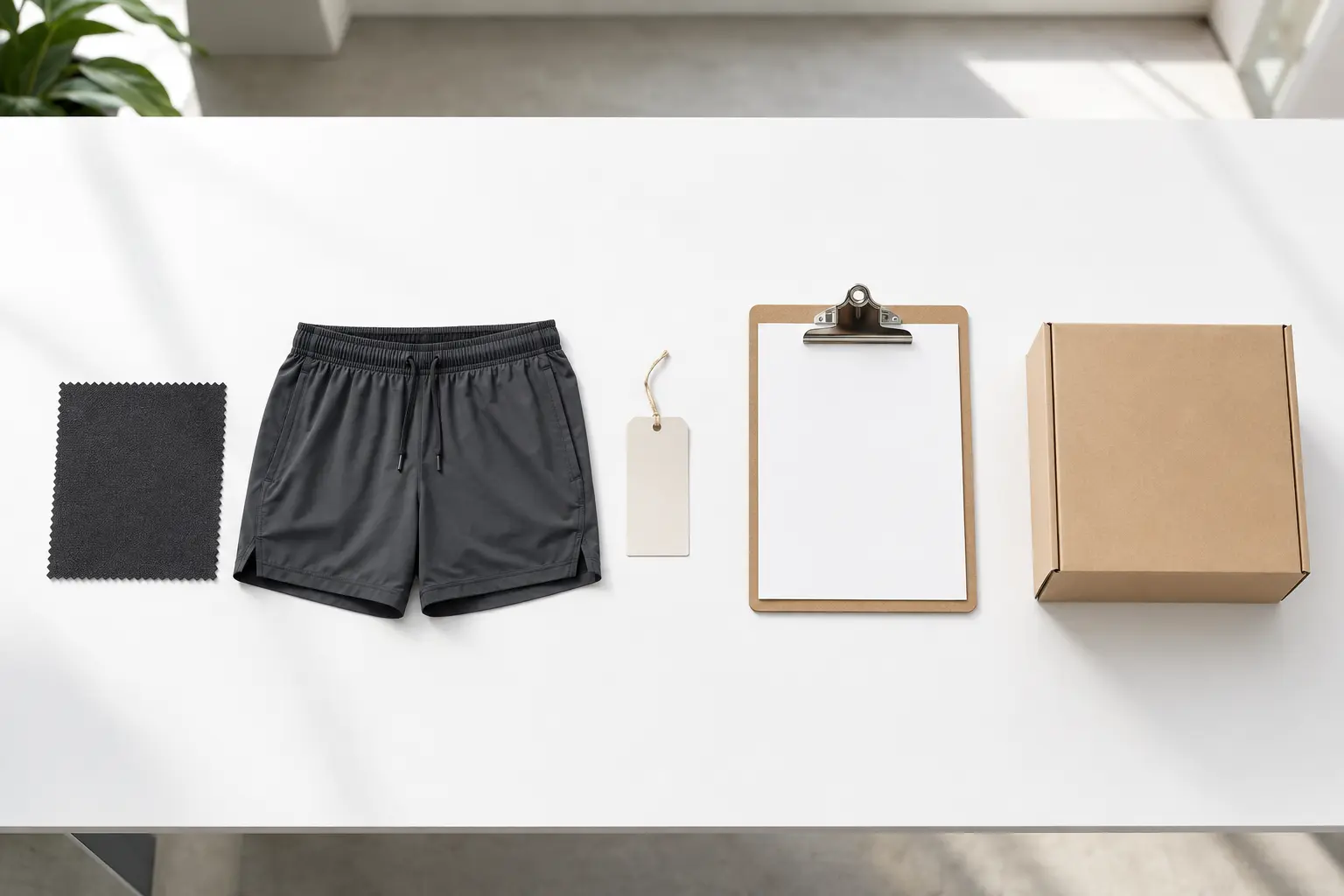
I follow a simple workflow: inquiry, spec clarification, quotation, sample, revision, approval, bulk production, quality check, and shipping. I plan sampling and revision time before the launch date.
I Use a Step-by-Step Process
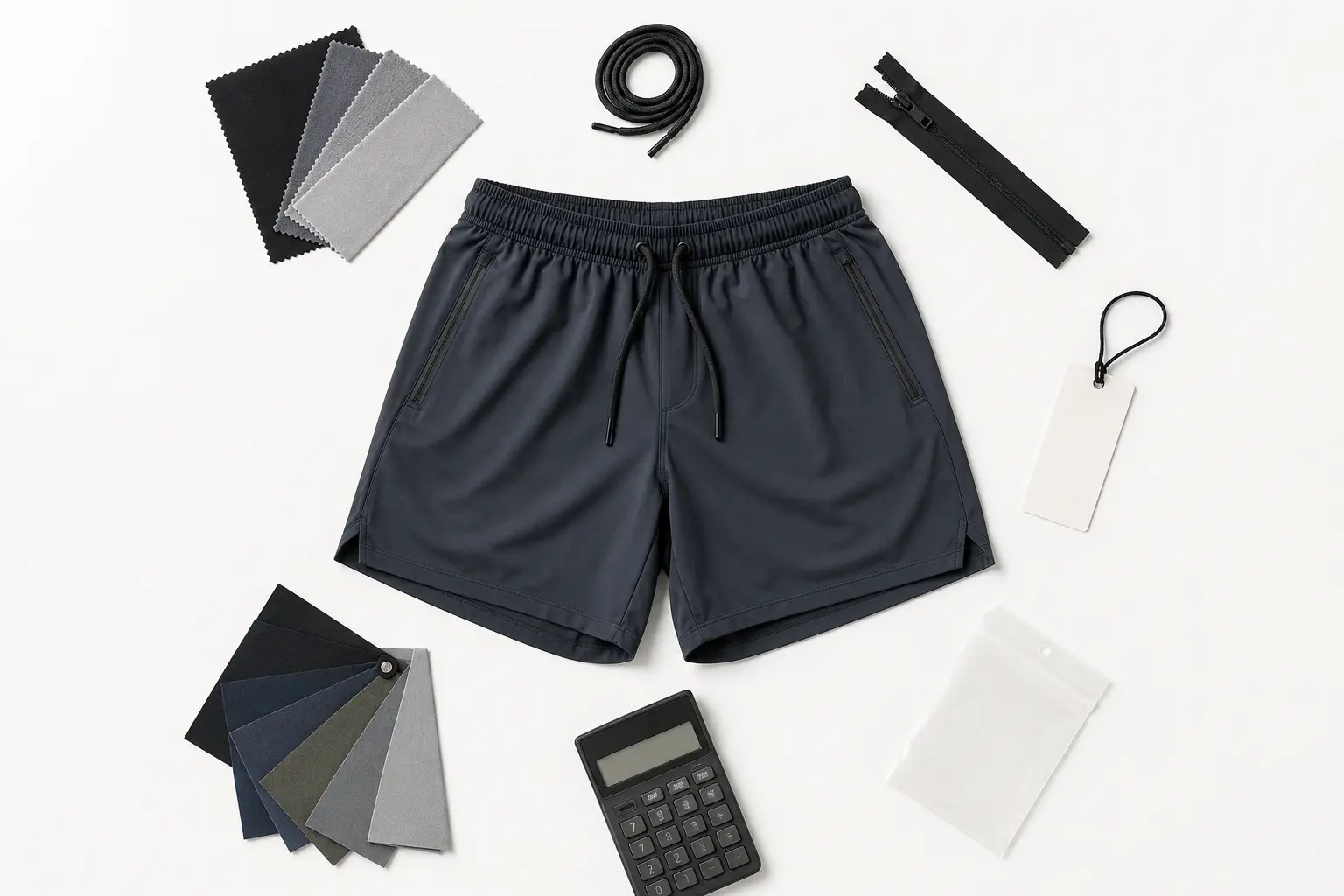
I like clear steps because gym shorts have many small details. If I miss one detail, the sample may look close but still not be ready for sale. I usually start with an inquiry. The buyer sends references, quantity, size range, fabric direction, logo needs, packaging, and delivery country. I then clarify specs. I ask about inseam, waistband, drawcord, pocket type, lining, stitching, logo size, label position, and colorways. After that, I quote based on the known details. A quote without specs is only a rough estimate.
| Step | What I do | What I need from the brand |
|---|---|---|
| Inquiry | I review the project direction | I need style photos, quantity, and target market |
| Spec clarification | I check all product details | I need fabric, size, color, logo, and packaging notes |
| Quotation | I calculate based on real requirements | I need target price and order quantity |
| Sample | I make a physical sample | I need logo file and approved details |
| Revision | I adjust fit, fabric, or trims | I need clear comments and photos if possible |
| Approval | I lock the production standard | I need written confirmation |
| Bulk production | I coordinate fabric, cutting, sewing, packing | I need deposit and final approved files |
| QC and shipping | I check and arrange delivery | I need shipping method and consignee details |
I always tell buyers to plan revision time. A first sample may need changes. The waistband may feel too tight. The pocket may sit too low. The logo may need a different method. The size grading may need adjustment. These changes are normal. They are not failure. They are part of building a sellable product. But they become a problem when the brand has already announced a launch date and expects bulk production to start at once. I prefer to set a realistic calendar from the beginning. The calendar should include material sourcing, sample making, buyer review, revision, production, QC, packing, and shipping.
How Do MOQ, Unit Price, Fabric, and Lead Time Affect Each Other?
A low quote can look attractive at first. I often see hidden trade-offs appear after the buyer reviews fabric, packaging, and quality needs.
I explain cost by showing how MOQ, unit price, fabric choice, workmanship, packaging, quality expectations, and lead time work together. A cheaper quote may reduce options or increase product risk.
I Discuss Trade-Offs Early
I never like to promise one fixed MOQ, price, or lead time for every private label gym shorts project. The answer changes with fabric, color count, logo method, trims, packaging, workmanship, and factory schedule. A simple solid-color short with standard fabric may have a different requirement from a multi-panel short with custom waistband, zipper pockets, liner, and retail packaging. I explain this early because buyers need a real plan, not a nice number that fails later.
| Cost factor | What can lower cost | What may raise cost |
|---|---|---|
| MOQ | Standard fabric and fewer colors | Custom fabric, many colors, special trims |
| Unit price | Simple sewing and common materials | Complex pockets, lining, premium fabric |
| Fabric | Stock or common fabric | Custom weight, custom color, special hand feel |
| Logo | Simple print | Embroidery, silicone patch, multiple logo positions |
| Packaging | Plain polybag | Hangtags, barcode, retail bag, custom carton mark |
| Lead time | Approved standard materials | Fabric dyeing, repeated revisions, urgent schedule |
| Quality control | Clear standard before production | Vague standard and last-minute changes |
I also explain that low MOQ and low unit price do not always work together. A smaller order may help a brand test the market, but it may limit fabric options or raise the unit price. A larger order may improve price, but it increases inventory risk if the product direction is not proven. A cheaper quote may remove helpful details like better elastic, stronger stitching, or nicer packaging. A fast lead time may be possible for simple products, but it may not be safe for custom fabric or many revisions. I prefer to ask the buyer for a target price range instead of only asking for the lowest price. Then I can suggest where to save cost and where not to cut.
How Can I Reduce First Launch Risk Before Bulk Production?
A first launch can fail when the brand buys too much of the wrong product. I see this risk before production starts.
I reduce first launch risk by locking approved samples, testing fit comments, choosing a focused size and color range, setting clear QC standards, and keeping the first order aligned with market demand.
I Keep the First Order Focused
I believe the first gym shorts order should prove the product direction. It should not try to solve every possible market need. A brand may want five colors, two fabrics, several inseams, and many logo versions. I understand the reason. More options can look stronger online. But too many options can create slow production, high cost, confusing stock, and uneven sales. I often suggest a focused first order when the buyer is still testing the product category.
| Launch choice | Safer first-order approach | Risky first-order approach |
|---|---|---|
| Colors | I choose core colors first | I launch many untested colors |
| Sizes | I use a clear size range based on target market | I guess sizes without buyer data |
| Fit | I approve one strong fit first | I change fit during bulk production |
| Fabric | I use one main fabric direction | I mix many fabrics too early |
| Branding | I keep logo placement clear | I add many branding details without testing |
| Packaging | I match sales channel needs | I overbuild packaging before demand is proven |
I also remind buyers to check the sample like a customer, not only like a brand owner. I ask them to wear it, wash it, move in it, put a phone in the pocket, tie the drawcord, and compare size feel. If the shorts have lining, I ask them to check comfort and support. If the shorts are for teams or wholesale, I ask them to check size labels, carton marks, and packing list needs. I want all approval comments before bulk production. After bulk production starts, changes become expensive and slow. A clear approved sample is the most useful standard for production and quality control.
Conclusion
I start private label gym shorts with clear buyers, specs, quantity, price range, samples, and standards, so the first order has lower risk.