Struggling to choose the right athletic shorts for your brand? The wrong choice can lead to poor reviews and wasted inventory, hurting your reputation before you even get started.
The "perfect fit" isn't a universal size. It’s the right combination of style, fabric, and features for a specific activity and target customer. This guide breaks down 8 key styles to help you make the right product development choice for your brand and avoid costly mistakes.
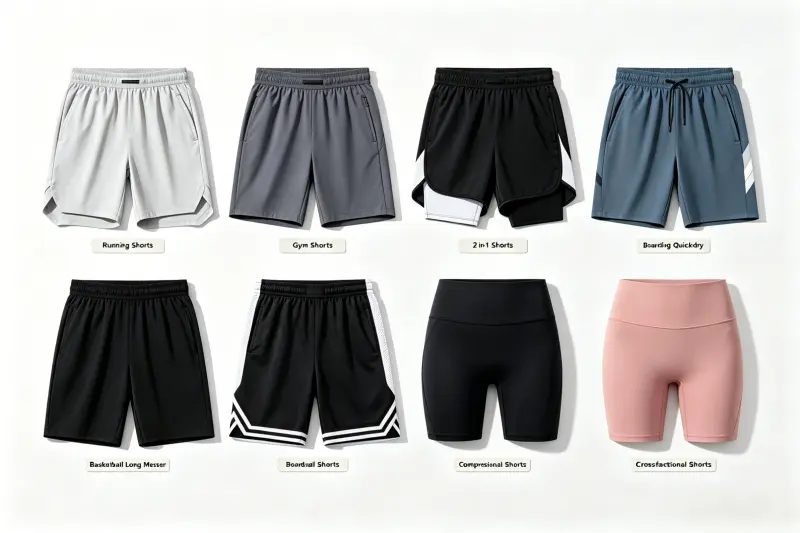
As a manufacturer, I see many brand owners think of shorts as a simple visual item. They pick a style they like, and we move to sampling. But the most successful brands I work with think differently. They understand that the "perfect fit" is a technical decision that directly impacts user comfort, performance, and ultimately, their brand's success. This is about building a product that solves a real problem for a specific customer. Let's look at the functional differences so you can make a smarter choice for your next collection.
Are Running Shorts the Right Choice for Your Brand?
Your customers need shorts for running, but a generic gym short will chafe and feel heavy. This leads to discomfort and negative feedback, which is bad for your brand.
Running shorts are the solution, prioritizing lightweight fabrics and freedom of movement. They are perfect for brands targeting serious runners, marathoners, or joggers who value performance and comfort on the road or trail. They are built for motion, not for standing still.
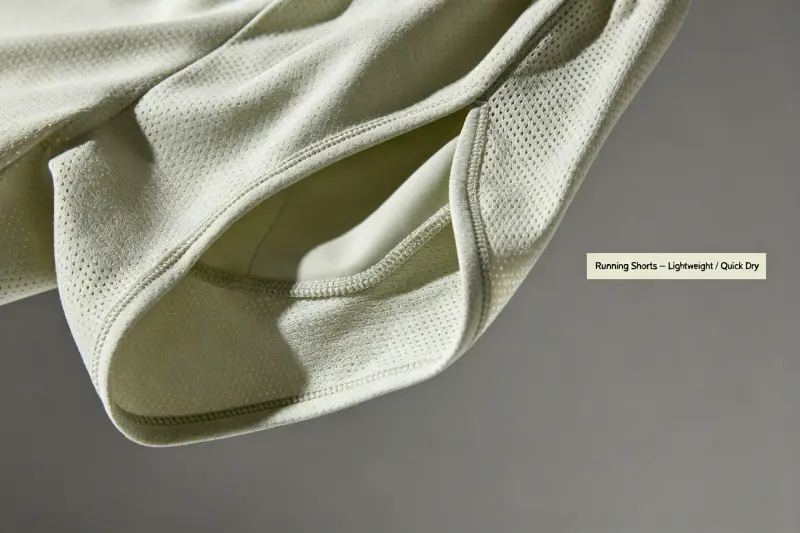
When a client asks for "running shorts," my first question is always: "For what kind of runner?" An elite marathoner needs something different from a casual weekend jogger. This decision impacts everything from inseam length to fabric weight. For example, a split-seam short with a 3-inch inseam offers maximum range of motion but might be too revealing for a mass-market audience. A 5-inch inseam is a safer, more versatile choice for most brands. We also discuss liners—a built-in brief liner is standard for reducing friction, but some brands targeting trail runners prefer to sell a separate compression liner. The key is to match the technical specs to your target user's needs.
Key Manufacturing Decisions for Running Shorts
Choosing the right components is crucial for creating a high-performance product that customers will love and buy again.
| Feature | Common Specification | Why It Matters for Your Brand |
|---|---|---|
| Inseam | 3" - 7" | Shorter inseams (3-5") maximize leg movement for speed. |
| Fabric | Lightweight Polyester/Spandex | Ensures the short feels weightless and dries extremely fast. |
| Liner | Built-in Mesh or Jersey Brief | Provides essential support and prevents chafing. |
| Waistband | Thin, elastic with a drawstring | Offers a secure fit without adding bulk or trapping heat. |
| Pockets | Small zippered back or side pocket | Securely holds small items like a key or gel without bouncing. |
Are Gym/Training Shorts the Right Choice for Your Brand?
Your audience needs durable shorts for varied gym workouts. A flimsy running short will tear during lifts, and a bulky basketball short gets in the way during dynamic movements.
Gym/training shorts are the versatile workhorse. Made from durable, stretch-woven fabrics, they are ideal for brands targeting fitness enthusiasts who do everything from weightlifting and HIIT to functional training. They balance toughness with flexibility.
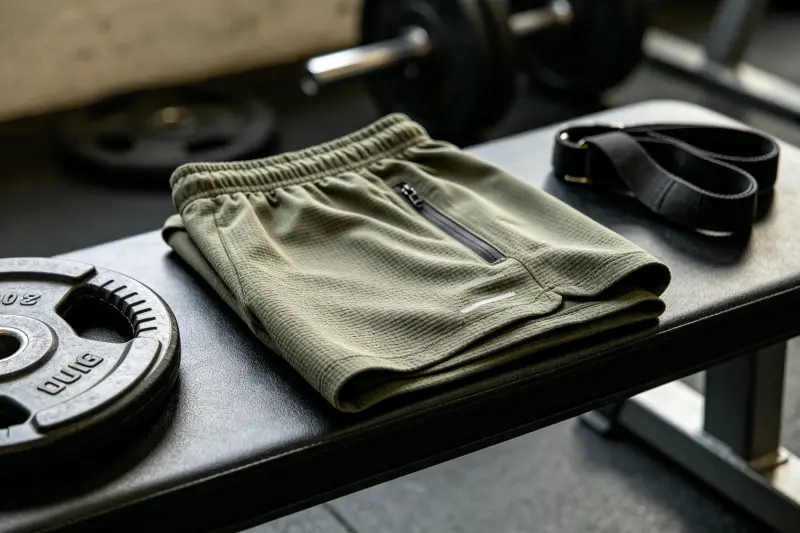
Gym shorts are probably the most common request we get, but also the one with the most variation. The "perfect" gym short has to withstand abrasion from barbells, stretch during squats, and still look good. The most important factor here is the fabric. A 4-way stretch woven fabric, usually a polyester/spandex blend, is the gold standard. It moves with the body in every direction. We often discuss inseam length with clients; 7 inches is the sweet spot for most gym activities, offering coverage without restricting mobility. Pocket design is another key conversation. We can add zippered pockets to keep a phone secure during box jumps or deep-weld pockets for a cleaner look. Getting these details right makes your product a go-to piece for your customers.
Key Manufacturing Decisions for Gym/Training Shorts
The goal is to create a short that can handle any workout your customer throws at it.
| Feature | Common Specification | Why It Matters for Your Brand |
|---|---|---|
| Inseam | 7" - 9" | Provides good coverage for squats and deadlifts without getting in the way. |
| Fabric | 4-Way Stretch Woven | Offers durability and complete freedom of movement for diverse exercises. |
| Liner | Typically unlined | Allows customers to pair with their own preferred compression base layer. |
| Waistband | Flat, comfortable elastic | Stays in place without digging in during core exercises or stretches. |
| Pockets | Zippered or deep side pockets | Keeps essentials like a phone and keys secure during active movement. |
Are 2-in-1 Shorts the Right Choice for Your Brand?
Your customers want the support of a compression short and the look of a regular short. But selling two separate items is less convenient and can feel bulky when layered improperly.
2-in-1 shorts solve this by combining a supportive, form-fitting inner liner with a lightweight outer shell. They are perfect for brands targeting high-intensity training, running, and customers who value comfort, security, and a modest look.
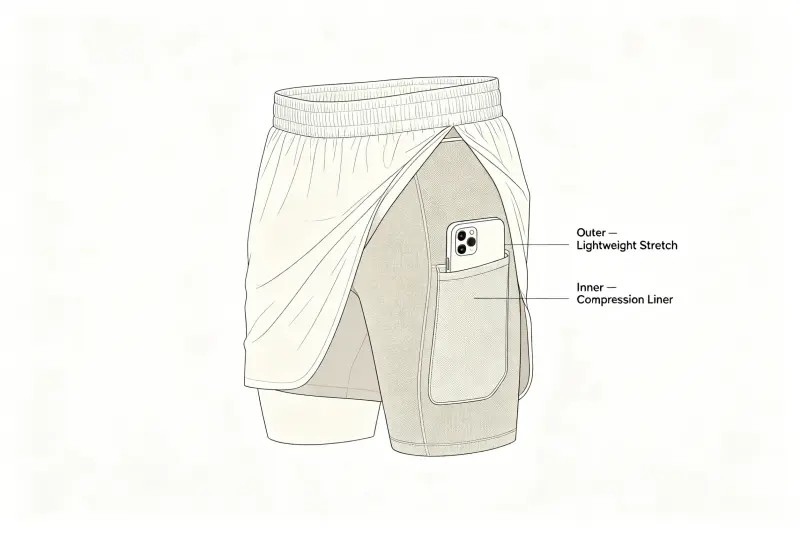
From a manufacturing standpoint, 2-in-1 shorts are a more complex product, but they solve a real customer problem. The magic is in the relationship between the inner and outer layers. The inner liner must be made from a high-spandex blend (like 80% Polyester, 20% Spandex) to provide true compression and muscle support. It also needs flatlock seams to prevent chafing. The outer short is typically a lightweight, stretchable fabric similar to a running short. A common mistake I see brands make is using a cheap, non-compressive fabric for the liner. This offers no real benefit and leads to customer disappointment. We work with clients to ensure the liner provides functional support and often add features like a hidden phone pocket on the liner's thigh, which is a huge selling point.
Key Manufacturing Decisions for 2-in-1 Shorts
Success here depends on getting the engineering of both layers right.
| Feature | Common Specification | Why It Matters for Your Brand |
|---|---|---|
| Outer Short | Lightweight Stretch Fabric, 5" Inseam | Provides coverage and freedom of movement without adding weight. |
| Inner Liner | Compression Knit, 7-8" Inseam | Delivers muscle support, prevents chafing, and holds a phone securely. |
| Seams | Flatlock on inner liner | Prevents skin irritation and chafing during repetitive movements. |
| Waistband | Soft, branded elastic | Offers a secure, comfortable fit that unites both layers perfectly. |
| Features | Liner phone pocket, outer zip pocket | Adds significant functional value that customers actively look for. |
Are Board Shorts/Beach Shorts the Right Choice for Your Brand?
Your customer wants shorts for the beach or pool. But standard athletic shorts absorb water, get heavy, and lack the right style for a waterside environment.
Board shorts are designed for water, made from quick-drying polyester with a non-absorbent finish. They are perfect for surf brands, beachwear lines, or lifestyle brands whose customers are active in and around water. They blend style with water-ready function.
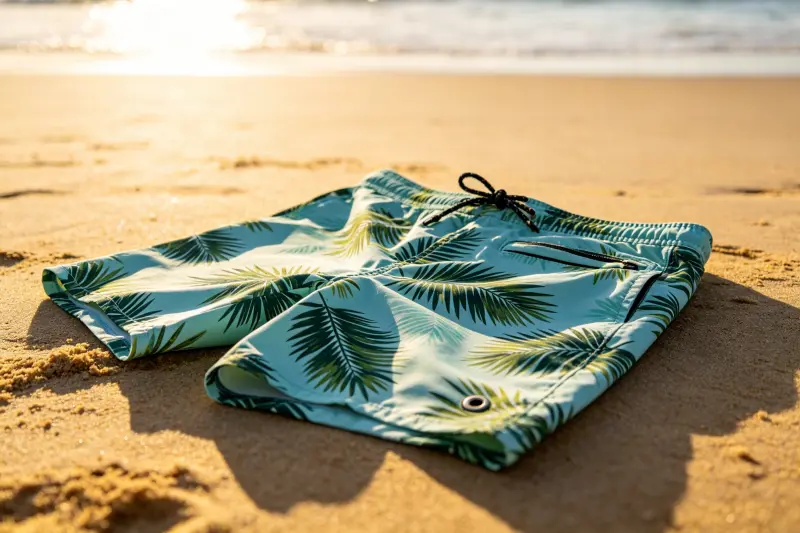
When clients ask for board shorts, the conversation immediately turns to fabric and construction. Unlike gym shorts, the priority here is not 4-way stretch but how fast the fabric sheds water. We often use a polyester microfiber with a DWR (Durable Water Repellent) finish. The construction is also different. A traditional board short has a fixed waistband with a lace-up fly, which is very secure in the surf. However, for a more casual "beach short," an elastic waistband is more comfortable and appeals to a broader audience. We also eliminate mesh liners, which can trap sand and cause irritation. Instead, the seams are triple-stitched for durability against saltwater and sun. Choosing the right style depends on whether your customer is a serious surfer or just enjoying the sun.
Key Manufacturing Decisions for Board Shorts
The details determine whether a short works in water or just looks like it does.
| Feature | Common Specification | Why It Matters for Your Brand |
|---|---|---|
| Inseam | 9" - 11" | Provides protection from surfboard wax and sun exposure. |
| Fabric | Quick-Dry Polyester with DWR Finish | Sheds water rapidly to stay lightweight and comfortable. |
| Liner | None | Prevents sand from getting trapped and increases comfort. |
| Waistband | Fixed with lace-up fly or full elastic | Fixed waist is for performance surfing; elastic is for casual beachwear. |
| Pockets | One back pocket with drainage grommet | Allows water to drain out and securely holds wax or a key. |
Are Basketball Shorts the Right Choice for Your Brand?
Your customers play basketball, but standard gym shorts are too restrictive. They need something longer and looser that allows for explosive jumps and quick directional changes on the court.
Basketball shorts are defined by their length and breathable fabric. Made from lightweight mesh polyester, they offer maximum airflow and an unrestricted fit, making them ideal for brands targeting team sports, basketball players, or a relaxed, athletic streetwear look.
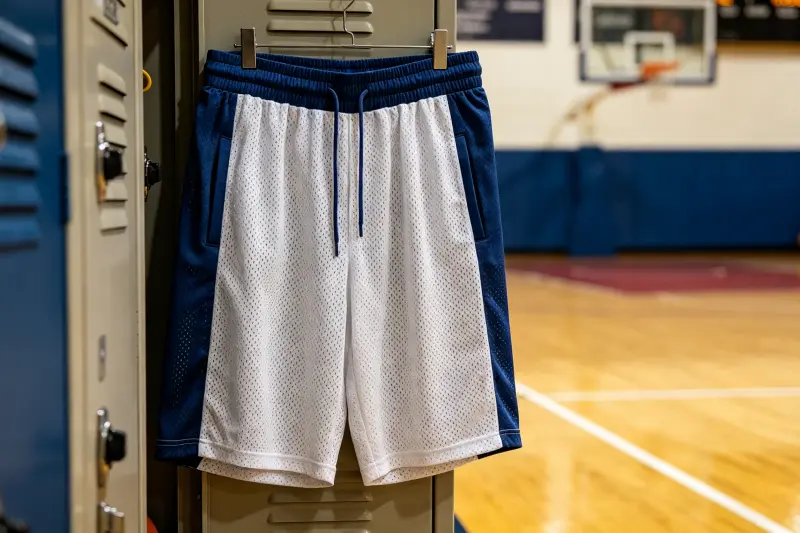
The key to a great basketball short is simple: length and breathability. These shorts need to have an inseam of at least 9 inches, often 11 inches, to fall at or below the knee. This provides coverage and a classic on-court look without hindering movement. The fabric choice is almost always a lightweight, open-hole mesh. This material provides incredible ventilation, which is critical during a fast-paced game. Unlike training shorts, basketball shorts are rarely lined, maximizing airflow and allowing players to wear their own compression gear underneath. Deep side pockets are a must-have for off-court wear. For brands, this style is not just for performance; it has crossed over into a major streetwear and lifestyle trend.
Key Manufacturing Decisions for Basketball Shorts
Focus on airflow, length, and a relaxed fit for on-court performance and off-court style.
| Feature | Common Specification | Why It Matters for Your Brand |
|---|---|---|
| Inseam | 9" - 11" | Provides the classic, long basketball fit that doesn't restrict movement. |
| Fabric | Lightweight Polyester Mesh | Maximizes airflow to keep players cool and dry during intense games. |
| Liner | None | Enhances breathability and allows for personal layering preferences. |
| Waistband | Wide, encased elastic with cord | Ensures a secure and comfortable fit that stays in place. |
| Pockets | Deep side pockets | Adds off-court functionality for carrying essentials like a phone. |
Are Compression Shorts the Right Choice for Your Brand?
Your customers need muscle support and chafe prevention. But they are often sold flimsy "base layers" that lose their shape and don't provide any real performance benefits.
True compression shorts are an engineered garment. Made from a dense, high-spandex knit, they apply pressure to muscles to improve blood flow and reduce vibration. They are perfect for performance-focused brands selling to serious athletes in any sport.
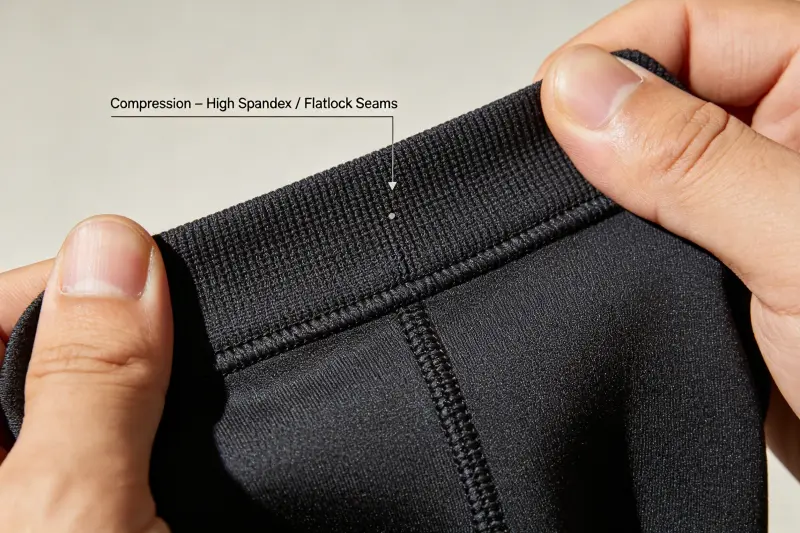
As a manufacturer, I can tell you there is a huge difference between a "tight short" and a "compression short." It all comes down to the fabric and construction. A real compression fabric has a high percentage of spandex (15-25%) and a dense knit structure that provides firm, consistent pressure. We use flatlock stitching for all seams to eliminate any chance of chafing when worn as a base layer. When a brand wants to develop compression shorts, we discuss the level of compression needed—a running short needs to support hamstrings and quads, while a training short might need a more all-around fit. This is a technical product, and getting it right can build huge trust with performance-oriented customers.
Key Manufacturing Decisions for Compression Shorts
This is a technical product where fabric and seam construction are everything.
| Feature | Common Specification | Why It Matters for Your Brand |
|---|---|---|
| Fabric | High-Spandex Polyester/Nylon Knit (15-25%+) | Provides graduated pressure for muscle support and improved recovery. |
| Seams | Flatlock Stitching | Sits flat against the skin to completely eliminate chafing. |
| Fit | Ergonomic, second-skin fit | Panels are cut to follow the shape of muscles for targeted support. |
| Waistband | Wide, soft elastic | Stays in place without rolling or digging in during intense activity. |
| Function | Worn as a base layer or standalone | Versatile for running, training, and team sports. |
Are Yoga Shorts the Right Choice for Your Brand?
Your customers practice yoga, and they need shorts that move with them. Gym shorts are too baggy, and running shorts are too restrictive for deep stretches and inversions.
Yoga shorts are all about a secure, second-skin fit and total freedom of movement. Made from soft, ultra-stretchy, and opaque fabrics, they are perfect for brands targeting yoga, pilates, and barre enthusiasts who need coverage and flexibility.
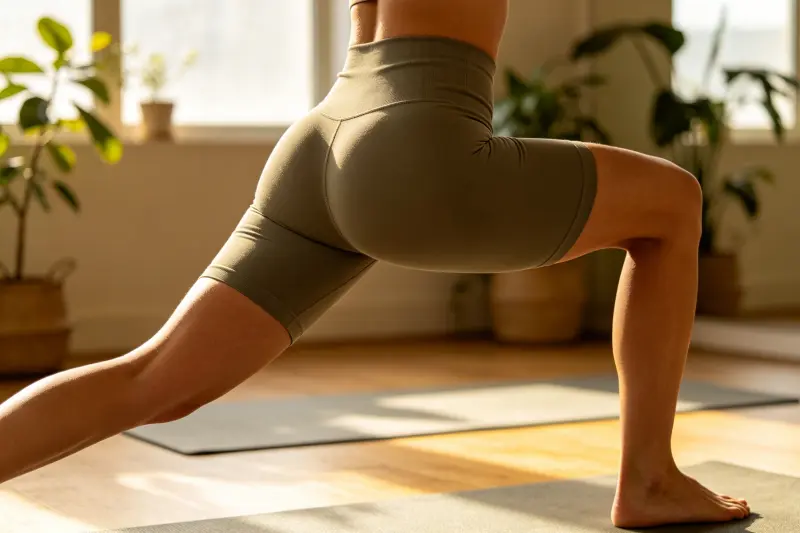
When we produce yoga shorts, the fabric conversation is number one. The material must have incredible 4-way stretch, but it also has to be completely opaque—what we call "squat-proof." A blend of nylon and spandex is often preferred over polyester for its softer hand-feel and matte finish. The fit needs to be close to the body to prevent the shorts from riding up or getting in the way during complex poses. A high, wide waistband is a critical feature. It provides coverage, a feeling of security, and helps keep the shorts in place. Unlike other athletic shorts, yoga shorts often have minimal seams and no pockets to create a smooth, distraction-free experience for the wearer. This is a product where comfort and confidence are the primary goals.
Key Manufacturing Decisions for Yoga Shorts
The focus is on stretch, softness, and a fit that feels like a second skin.
| Feature | Common Specification | Why It Matters for Your Brand |
|---|---|---|
| Fabric | Soft, Opaque Nylon/Spandex | Delivers maximum stretch while ensuring total coverage in all poses. |
| Fit | Form-fitting, bike short style | Stays in place and moves with the body without any distractions. |
| Waistband | High and wide, seamless style | Provides a secure, flattering fit that won't roll down or dig in. |
| Seams | Minimal, with flatlock finish | Reduces potential irritation points for ultimate comfort. |
| Inseam | 6" - 8" | Offers a good balance of coverage and freedom for the legs. |
Are Cross-Functional Shorts the Right Choice for Your Brand?
Your customer lives an active life and wants one short that can handle a run, a gym session, and a coffee run. They don't want to own five different pairs of shorts.
Cross-functional shorts are the ultimate hybrid. They blend the lightweight feel of a running short with the durability of a training short, designed for the modern, versatile athlete. They are perfect for direct-to-consumer brands targeting a lifestyle of fitness.
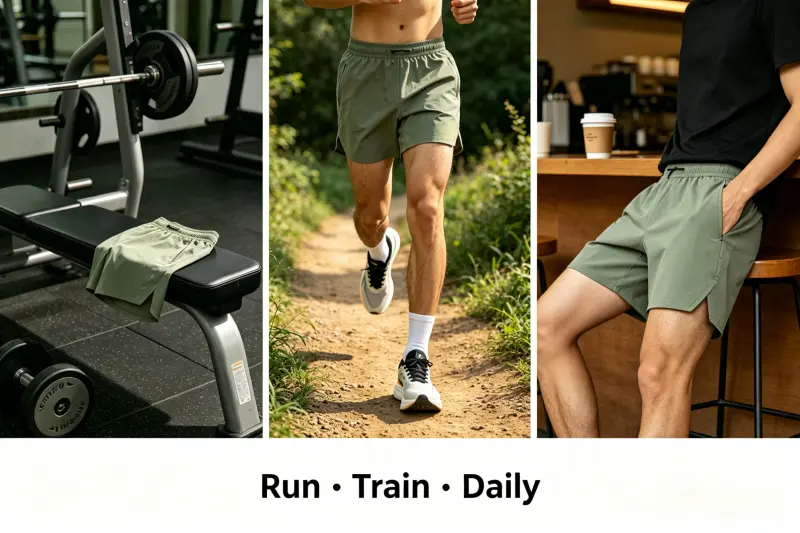
This is an exciting category that many modern brands are building their entire business on. Creating a successful cross-functional short is about making smart compromises. We can't use an ultra-light running fabric because it won't hold up to gym equipment. We can't use a heavy training fabric because it's not comfortable for a 5k run. The solution is a lightweight, 4-way stretch woven fabric that does both things well. We often include a comfortable, anti-odor liner (less compressive than a 2-in-1, more supportive than a brief) that works for most activities. The key is adding thoughtful features: a zippered pocket for a phone, a regular pocket for hands, and a 7-inch inseam that works everywhere. This short isn't the best for any single sport, but it's great for everything.
Key Manufacturing Decisions for Cross-Functional Shorts
This is about creating a "do-it-all" product through smart feature and fabric choices.
| Feature | Common Specification | Why It Matters for Your Brand |
|---|---|---|
| Fabric | Lightweight 4-Way Stretch Woven | Balances durability for the gym with a light feel for cardio. |
| Inseam | 7" | The most versatile length, not too short for the gym, not too long for a run. |
| Liner | Optional soft boxer-brief liner | Adds comfort and support without being overly compressive. |
| Pockets | Multiple types (zip, open, liner) | Offers secure storage for a phone and easy access for keys or a card. |
| Style | Clean, modern aesthetic | Designed to look good in and out of the gym, increasing its value. |
Conclusion
The perfect athletic short is not one-size-fits-all. It's a strategic choice that aligns the right style, fabric, and function with your specific customer for long-term brand success.