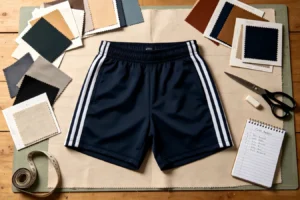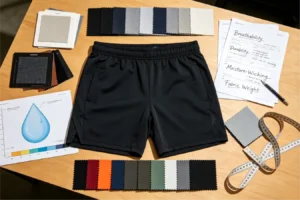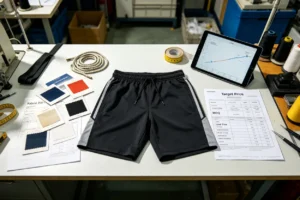
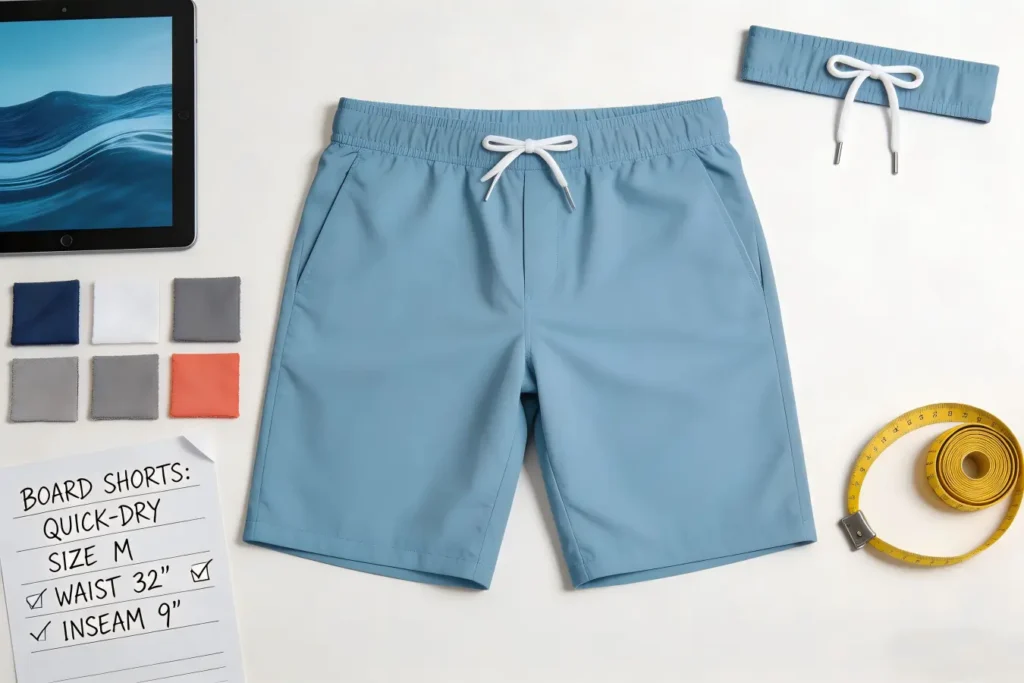
[High-quality fabric for custom gym shorts can fail if buyers judge it by GSM or spandex percentage alone. The risk grows when the sample feels good, but bulk production pills, shrinks, shines through, or loses recovery. A safer approach is to evaluate yarn, knit structure, finishing, and production stability together before approving the order.
High-quality fabric for custom gym shorts should match the workout task, then pass bulk-ready tests for opacity, pilling, color fastness, stretch recovery, and shrinkage. Buyers should compare yarn type, knit density, GSM range, finish, and heat-setting control instead of relying on one number like fabric weight or spandex content.
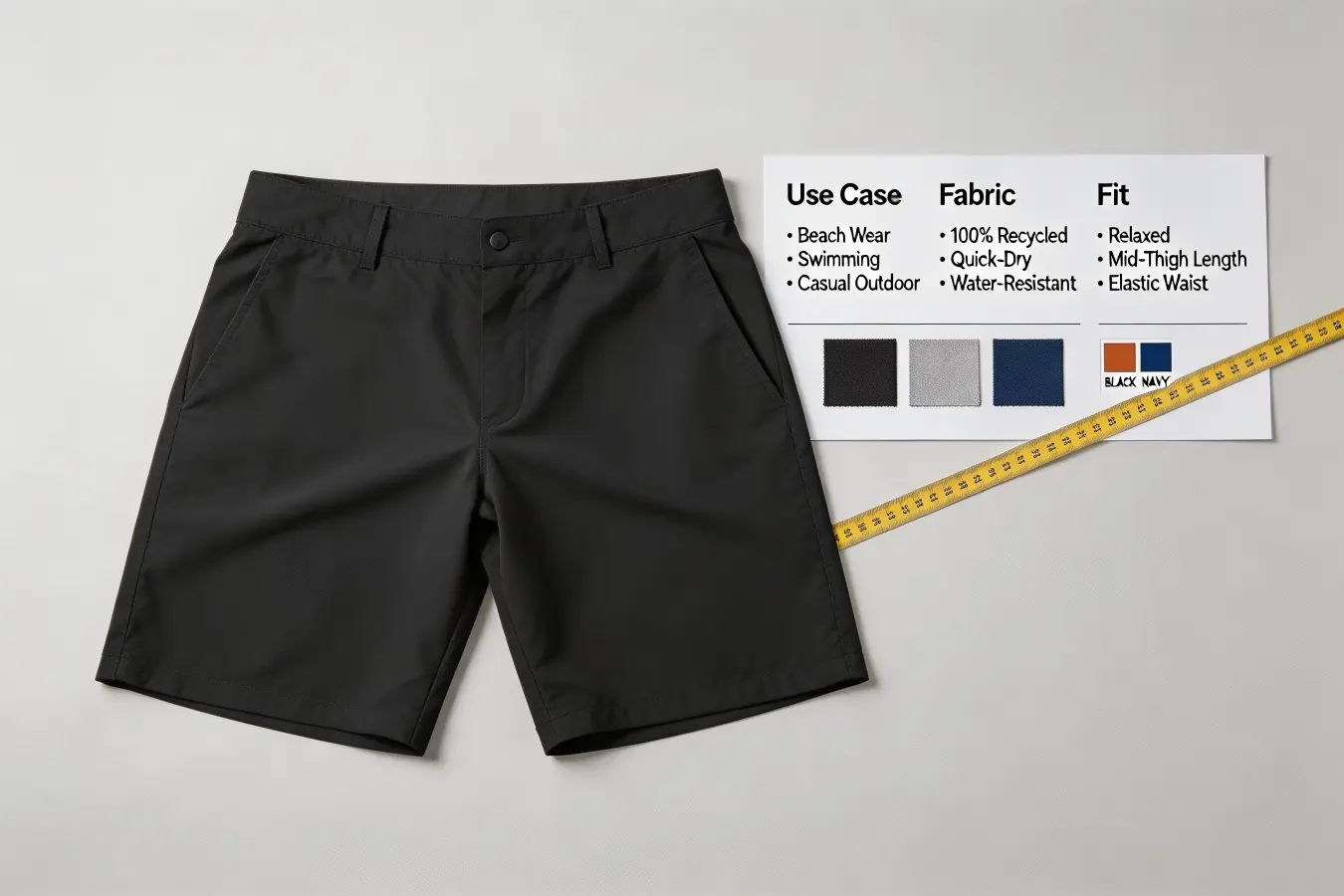
A fabric that works for HIIT may not work for squat-heavy training. A fabric that looks premium in black may become risky in light grey. During sample approval, the best decision is not "Which fabric feels nicest?" It is "Which fabric can perform, wash, and scale in bulk?"
What Makes High-Quality Fabric for Custom Gym Shorts Different?
A gym shorts fabric can look clean on the sample table and still cause problems after three months of wear. Buyers often feel pressure to approve quickly, but fabric risk usually hides inside structure, finishing, and bulk consistency. This is where custom shorts development becomes more technical than it first appears.
High-quality fabric for custom gym shorts is not defined by one specification. It comes from a balanced combination of yarn quality, knit construction, fabric weight, stretch recovery, finishing treatment, and stable mass production control. The best fabric is the one that fits the training scene and passes agreed acceptance tests before bulk cutting.
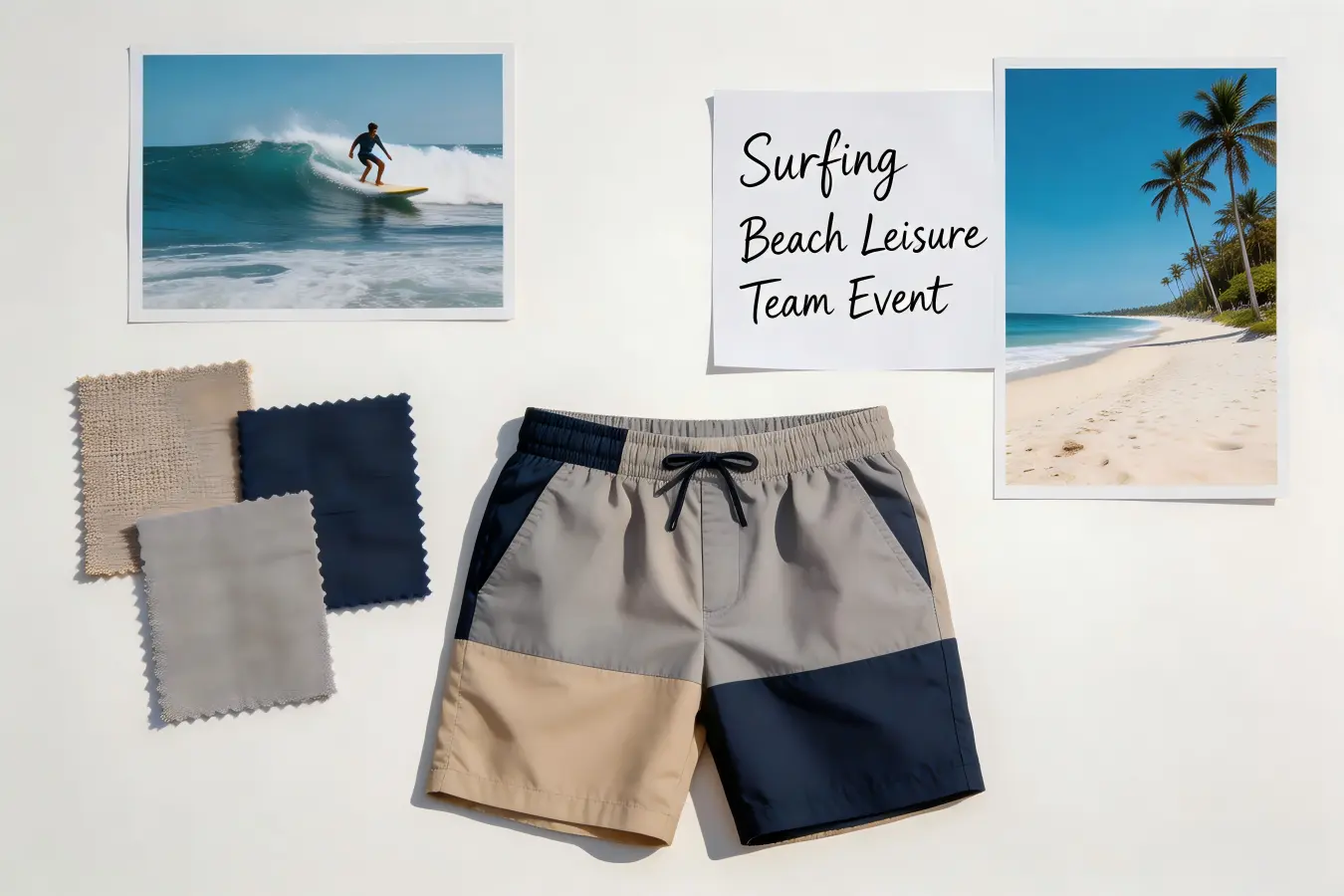
Fabric quality is a combination decision
In our factory work, fabric discussions often begin with GSM. A buyer may say, "We want 220 gsm because it feels premium." Another may request "at least 15% spandex" because they want stretch. Those numbers matter, but they do not tell the full story.
A 200–220 gsm nylon tricot with dense knitting and proper heat-setting can outperform a heavier polyester interlock for opacity and recovery. On the other hand, a lighter polyester-spandex interlock may be the better choice for fast-drying all-round training shorts if the buyer needs cost control and quick moisture movement.
The main factors are:
- Yarn type: Polyester, nylon, recycled polyester, cotton blends, or mixed yarns.
- Yarn denier: Finer yarns can feel smoother, while heavier denier can improve structure.
- Knit structure: Interlock, tricot, double knit, mesh, micro eyelet, or jersey.
- GSM range: Fabric weight affects drape, opacity, and warmth, but it does not guarantee performance.
- Spandex quality: Stretch percentage matters less than recovery stability after wash and wear.
- Finishing: Moisture-wicking, anti-snag, peaching, brushing, matte finishing, or soft-hand treatment.
- Heat-setting: This affects shrinkage, shape stability, and stretch recovery.
A practical evaluation table
| Factor | What buyers often check | What should also be checked |
|---|---|---|
| GSM | Weight and hand feel | Opacity, drape, drying speed, heat comfort |
| Spandex % | Stretch level | Recovery after repeated stretch and washing |
| Fabric type | Polyester or nylon | Knit density, yarn denier, finishing stability |
| Color | Brand match | Opacity difference between dark and light colors |
| Finish | Softness or wicking claim | Durability after wash and bulk consistency |
| Sample approval | One nice prototype | PP sample, test report, and sealed production standard |
One issue we frequently encounter is that the approved sample has a better hand feel than the bulk fabric. This can happen when the mill uses a slightly different yarn lot, adjusts the finishing recipe, or changes heat-setting conditions. The difference may not look big at first, but it can show up after washing or during a deep squat.
For OEM and ODM projects, buyers can reduce this risk by asking the supplier to lock the fabric specification in the purchase order. The spec should include the yarn composition, GSM tolerance, knit structure, finishing requirement, shrinkage standard, color fastness target, and approval process. If the project is new, a small pilot run can reveal problems before full production.
For buyers building a new product line, our OEM/ODM custom shorts service is often where fabric selection, fit development, and sample review are discussed together. This avoids treating fabric as a separate decision from pattern, waistband, liner, and printing.
Which High-Quality Fabric for Custom Gym Shorts Fits Each Training Scene?
Fabric risk changes by workout type. A runner needs airflow and fast drying. A strength athlete needs opacity and recovery. A team buyer may need durability and repeat-order stability. If the fabric is chosen only by hand feel, the product may look fine but fail in the actual training scene.
The best fabric for custom gym shorts depends on the intended use. Polyester-spandex interlock suits HIIT and all-round training, nylon-spandex tricot or double knit works well for strength and squat-proof styles, and mesh or micro eyelet fabrics fit high-heat cardio when airflow is more important than coverage.
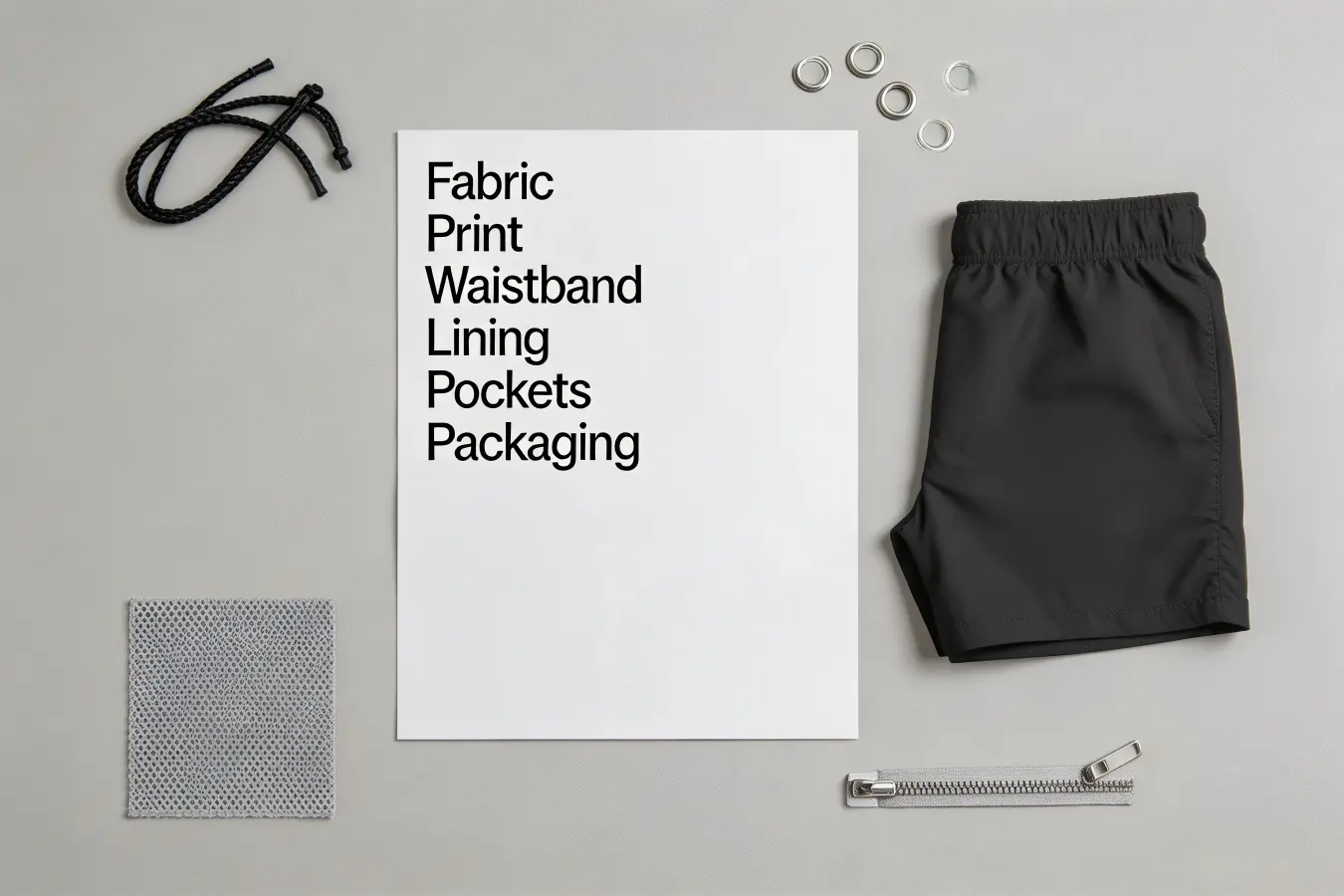
Scene-to-fabric mapping for OEM buyers
During product development, we start with the training scene before touching fabric swatches. A brand selling all-round gym shorts has different risk points from a brand selling compression-style training shorts or loose running shorts.
Here is a practical fabric map that buyers can use during supplier discussions.
| Training scene | Orderable fabric combo | Common GSM range | Main benefit | Main trade-off |
|---|---|---|---|---|
| HIIT / all-round gym | Polyester + spandex interlock, 4-way stretch | 180–240 gsm | Fast dry, stretch, balanced cost | May need better finishing for pilling control |
| Strength / squat-proof | Nylon + spandex high-gauge tricot or double knit | 160–220 gsm | Dense, matte, strong recovery | Light colors need separate opacity checks |
| Cardio / high heat | Knit mesh or micro eyelet with anti-snag finish | Varies by structure | Airflow and sweat comfort | Snagging and opacity need control |
| Yoga / large stretch | Soft-hand high-recovery knit | Usually medium weight | Comfort and movement | Recovery must be tested after washing |
| Gym-to-street | Higher-GSM interlock with peaching | 220 gsm+ in many cases | Better drape and premium look | Slower dry and warmer feel |
These are not universal rules. They are starting points that should be validated with each mill, each colorway, and each product pattern.
HIIT and all-round gym shorts
For HIIT shorts, the buyer usually wants a balance of:
- Stretch
- Fast drying
- Reasonable cost
- Shape stability
- Durability after repeated washing
A polyester-spandex interlock in the 180–240 gsm range often works well here. The fabric can support 4-way stretch, and polyester helps with quick drying. A moisture-wicking finish can improve comfort, but the finish should be checked after wash. A nice wicking effect on a fresh lab dip is not enough.
The critical factory point is heat-setting. If heat-setting is not stable, the fabric may shrink more than expected or lose recovery after repeated use. For repeat production, the mill should lock the temperature and time window as part of the process record.
Strength training and squat-proof shorts
For strength training, opacity becomes a major risk. This is especially true for tight or semi-fitted shorts. A heavier fabric is not always more squat-proof. A dense structure and matte surface can do more than extra weight.
A nylon-spandex high-gauge tricot or dense double knit in the 160–220 gsm range can perform well. Nylon often gives a smooth hand feel and strong abrasion resistance. The dense knit helps reduce shadowing during deep movement.
However, light colors need special care. White, beige, pale blue, and light grey can expose shadows even when the black sample passes. During sample approval, the buyer should test both dark and light colors before confirming the full color range.
High-heat cardio and running
For running or high-heat cardio, airflow becomes more important. Mesh or micro eyelet fabric can improve breathability, but the hole size and yarn denier need control. If the hole is too open, opacity drops. If the yarn is too delicate, snagging increases.
A practical solution is to pair a breathable outer fabric with a liner. This gives airflow without exposing the wearer. For brands developing running styles, our custom gym and running shorts manufacturing page explains how outer fabric, liner, waistband, and pocket design should be considered together.
How Should Buyers Test High-Quality Fabric for Custom Gym Shorts Before Bulk?
The most expensive fabric problems usually appear after approval. The sample looks fine, the photos look clean, and the first fitting feels comfortable. Then bulk arrives, and customers report pilling, see-through panels, color transfer, or waist and leg opening distortion after washing.
Buyers should test high-quality fabric for custom gym shorts with a clear acceptance checklist before bulk. Key checks include 90° deep-squat opacity review, Martindale pilling and abrasion, dry/wet crocking, perspiration fastness, 20% stretch recovery, and shrinkage after repeated home washing. These standards should be written into the PO.

The four failures that cause most complaints
Based on our after-sales issue logs and 3–12 month post-delivery reviews, most fabric complaints fall into four groups:
- Opacity failure
- Pilling or abrasion
- Color fastness problems
- Recovery and shrinkage instability
These issues are not always visible during a first sample review. The sample may be worn once in a fitting room, not through repeated workouts and washes. That is why acceptance testing must connect lab checks with real-use scenarios.
Practical acceptance tests
The following thresholds come from our production experience and buyer-side requirements in sports shorts projects. They should be validated with the fabric mill and, when needed, a qualified third-party lab.
| Risk | Practical test | Suggested acceptance target |
|---|---|---|
| Opacity / squat-proof | 90° deep-squat check in dark and light colors, plus backlight comparison | Reject visible shadowing |
| Pilling / abrasion | Martindale test | Grade 4 or above at 5,000–7,000 rubs |
| Color transfer | Dry and wet crocking | Grade 4 or above |
| Sweat resistance | Perspiration color fastness | Grade 4 or above |
| Stretch recovery | 20% stretch recovery test | 85% or above |
| Wash stability | Home-wash shrinkage review | 3% or below after 30 washes |
These numbers are not a promise that the product will never fail. They are useful acceptance controls. Real wear still depends on garment design, user behavior, wash method, print placement, seam tension, and storage conditions.
How to run a better opacity test
Opacity is one of the easiest tests to misunderstand. A fabric can pass on the table and fail on the body. A fabric can pass in black and fail in light beige. A fabric can pass under factory lighting and fail in daylight.
A better process includes:
- Test the actual garment, not only the fabric swatch.
- Use a 90° deep-squat movement for fitted shorts.
- Check both front and back panels.
- Compare under normal light and backlight.
- Test dark and light colorways separately.
- Include liner or pocket bags if they affect visibility.
A buyer once sent feedback that a light grey sample looked slightly transparent during a squat, even though the black colorway had passed. The fabric weight was the same. The structure was the same. The color changed the perceived coverage. We solved the issue by adjusting the knit density and using a more matte surface direction for the light color group. Client details stay confidential, but the lesson is simple: color is part of performance.
How to write tests into the purchase order
A purchase order should not only say "good quality fabric." That phrase does not protect either side. A better PO includes:
- Fabric composition and tolerance
- GSM range and tolerance
- Knit structure
- Colorway list
- Finishing requirements
- Shrinkage target
- Color fastness target
- Pilling or abrasion target
- Stretch recovery target
- PP sample approval requirement
- Bulk inspection process
For a new fabric combination, a PP sample must pass before cutting bulk fabric. If the fabric or finish is new, a small pilot of around 100 pieces can help check sewing behavior, post-wash fit recovery, and customer-facing appearance before scaling.
Our standard sampling schedule is also part of planning. Once everything is approved, samples usually take 8–10 working days for production, plus 5–7 days for express shipping. Bulk production usually takes 25–30 working days. Shipping can take 5–7 days by FedEx/DHL express or 10–15 days by air freight. Buyers should leave room in the calendar for fabric testing before bulk approval.
How Can You Make Fabric for Custom Gym Shorts Scale From Sample to Bulk?
Sample approval feels like progress, but it is not the finish line. Bulk fabric can drift from the approved hand feel, recovery, shade, or shrinkage if the production process is not locked. This is why good suppliers treat PP samples and test reports as production controls, not paperwork.
To scale fabric for custom gym shorts from sample to bulk, buyers should lock the yarn specification, knit density tolerance, finishing recipe, heat-setting window, colorway testing process, sealed PP sample, and bulk inspection plan. If the fabric or finish is new, a pilot run helps expose risk before full production.
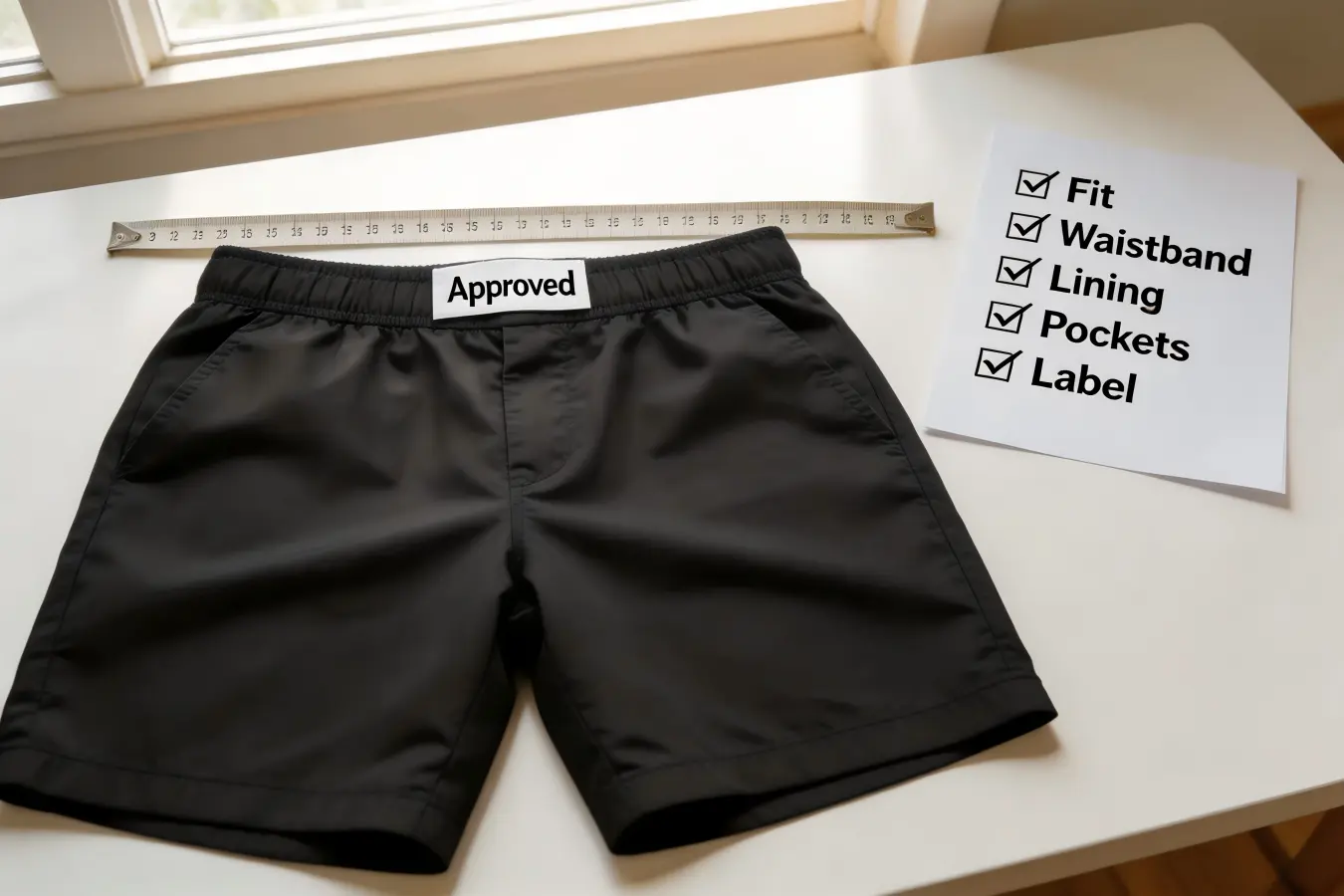
Why samples pass but bulk fails
During bulk production, small process changes can create visible performance differences. Some changes come from the mill. Some come from the dye house. Some come from the garment factory. Most are not intentional, but they still affect the buyer's product.
Common causes include:
- Yarn lot changes
- Different denier or filament quality
- Knit density drift
- Uneven heat-setting temperature or time
- Finishing recipe adjustment
- Colorway-specific dye behavior
- Fabric relaxation differences before cutting
- Bulk fabric not matched against the sealed PP sample
A buyer may approve a navy sample that feels firm and supportive. In bulk, the same fabric description may feel softer and stretchier. If knit density or heat-setting changed, the garment can grow after wear or shrink after washing. The customer does not care why it happened. The customer only sees a product that does not match expectations.
What should be locked before bulk?
For repeat production, the supplier and buyer should agree on a technical file that controls fabric quality. The file does not need to be complicated, but it should be specific.
Fabric specification checklist:
- Fiber content, such as polyester/spandex or nylon/spandex
- Yarn type and denier range
- Spandex quality requirement
- Knit structure, such as interlock, tricot, double knit, or mesh
- GSM range and tolerance
- Width and usable width
- Shrinkage target
- Stretch and recovery target
- Pilling or abrasion target
- Color fastness target
- Finishing type, such as wicking, anti-snag, peaching, or matte finish
- Heat-setting temperature and time window, controlled by the mill
- Approved lab dip and bulk shade tolerance
- Sealed PP sample and test report
This checklist helps both sides. The buyer gets a clearer production standard. The supplier gets fewer subjective disputes. The mill and dye house get a documented process target.
Why the PP sample matters
The PP sample should represent real bulk production. It should use the correct fabric, correct color, correct trims, correct waistband, correct print or embroidery, and correct washing behavior. If the PP sample passes, it becomes the reference for bulk.
A sealed PP sample is especially useful for:
- Comparing hand feel
- Checking shade and surface
- Reviewing stitching tension
- Checking opacity on the finished garment
- Verifying waistband recovery
- Confirming post-wash dimensions
During bulk production, our team compares the bulk pieces against the sealed PP sample and approved test report. This does not replace third-party inspection, but it gives the factory floor a practical reference.
Buyers who want to understand how fabric moves through sampling, cutting, sewing, inspection, and packing can review our sports shorts production process. The production sequence matters because fabric quality must survive every step, not only pass the swatch stage.
A simple decision framework
For procurement teams, the following framework keeps the conversation focused.
-
Define the main workout risk
- Squat-proof?
- Fast dry?
- Anti-pilling?
- Abrasion resistance?
- Soft hand feel?
- Recovery after washing?
-
Choose a fabric family
- Polyester-spandex interlock for all-round use
- Nylon-spandex tricot or double knit for strength and opacity
- Mesh or micro eyelet for airflow
- Higher-GSM peached interlock for gym-to-street
-
Confirm colorway risk
- Test light colors separately.
- Do not assume black results apply to white or beige.
-
Set acceptance tests
- Opacity
- Pilling
- Color fastness
- Recovery
- Shrinkage
-
Seal PP sample
- Keep one with the buyer.
- Keep one with the supplier.
- Use it during bulk comparison.
-
Approve bulk only after evidence
- Test report
- PP sample
- Pilot run if needed
- Fabric lot confirmation
This process may feel slower than simply choosing the nicest swatch. However, it saves time later. Returns, remakes, and brand complaints cost more than a careful approval stage.
Frequently Asked Questions
Is higher GSM always better for custom gym shorts?
No. Higher GSM can improve drape and coverage, but it can also reduce breathability and drying speed. A dense 200 gsm fabric may outperform a loose 240 gsm fabric. Buyers should judge GSM together with knit structure, yarn type, opacity, recovery, and finishing stability.
What fabric is best for squat-proof gym shorts?
Nylon-spandex high-gauge tricot or dense double knit is often a strong option for squat-proof gym shorts. The fabric should have a dense structure, matte surface, and stable recovery. Light colors should be tested separately with a 90° squat and backlight check before bulk approval.
How much spandex should gym shorts fabric have?
Spandex percentage alone does not guarantee performance. Many gym shorts use stretch fabrics with enough elastane for movement, but recovery quality matters more than the number itself. Buyers should test 20% stretch recovery and post-wash shape stability before approving bulk production.
What tests should I request before bulk production?
Buyers should request opacity checks, Martindale pilling or abrasion testing, dry and wet crocking, perspiration color fastness, stretch recovery, and shrinkage testing. For new fabric combinations, a PP sample and small pilot run can reduce the risk of bulk surprises.
Why did my sample pass but bulk fabric feel different?
Bulk fabric can differ because of yarn lot changes, knit density drift, finishing adjustments, or heat-setting variation. The safest approach is to lock the yarn, knit structure, GSM tolerance, finishing recipe, and heat-setting window. A sealed PP sample should guide bulk comparison.
Conclusion
High-quality fabric for custom gym shorts comes from a balanced decision, not one attractive number. Buyers should match the fabric to the workout scene, test the main failure risks, and lock the production standard before bulk. From our OEM experience, the safest projects connect fabric selection with prototyping, PP approval, and mass-production control. If you are developing gym, running, training, or team shorts, you can send your tech pack, request a sample, or contact us to discuss your fabric options.