
7 Questions to Ask a Gym Shorts Supplier Before Placing a Bulk Order
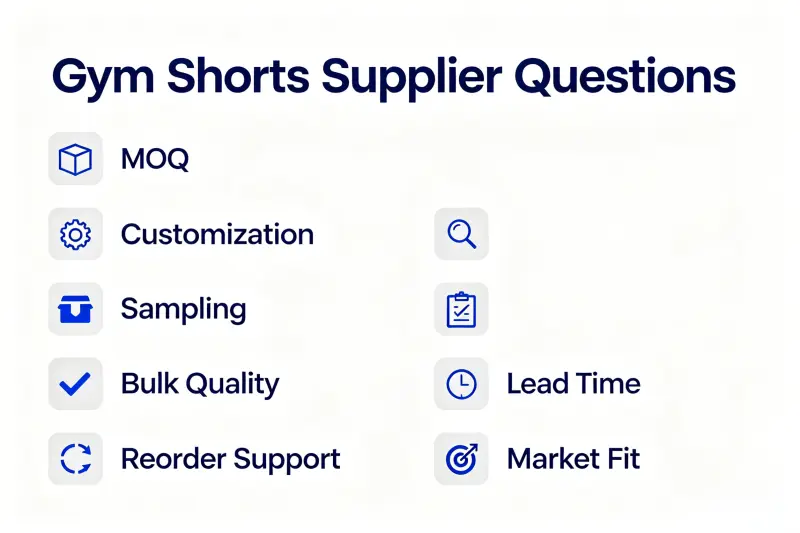
Choosing a gym shorts supplier involves much more than comparing quotations. A competitive price means little if the factory cannot maintain consistent quality, deliver on time, or support future reorders.
Based on our OEM and ODM manufacturing experience, buyers who ask detailed production questions before placing an order usually experience smoother sampling, fewer revisions, and more reliable bulk production. The goal isn't simply to find the lowest-cost supplier—it's to find a manufacturing partner capable of supporting your brand as it grows.
This guide outlines the most important questions to ask before selecting a gym shorts supplier, helping you evaluate production capability, customization options, quality control, lead times, and long-term supply stability.
What Should You Ask About MOQ Before Placing a Bulk Order?
MOQ is often one of the first topics discussed, but it shouldn't be viewed as a single number. It directly affects inventory planning, cash flow, and future reorder flexibility.
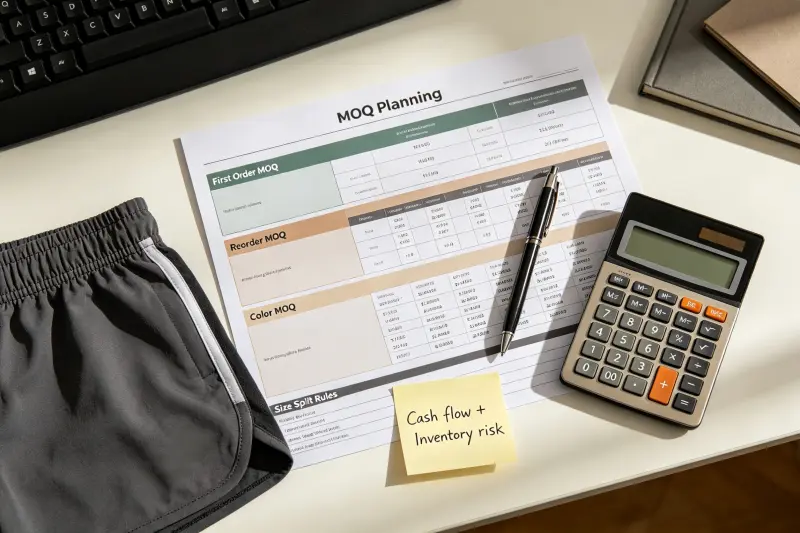
During OEM projects, we encourage buyers to understand how the MOQ is structured, not just what the minimum quantity is.
For example, ask whether the MOQ applies to:
- Each style
- Each color
- Each fabric
- Each size ratio
- The total order quantity
A factory may advertise a low MOQ, but if it's required for every colorway, the total order size can become much larger than expected.
For growing brands, it's equally important to ask about future flexibility. A supplier that supports smaller reorders can significantly reduce inventory pressure while allowing you to respond more quickly to market demand.
| Question | Why It Matters | What You Should Learn |
|---|---|---|
| What is the MOQ for the first order? | Controls launch risk | Whether small production runs are supported |
| What is the reorder MOQ? | Helps future inventory planning | Whether repeat orders are more flexible |
| Is the MOQ calculated per style or per color? | Prevents unexpected quantity increases | How production quantities are structured |
| Can production capacity increase if sales grow? | Supports long-term expansion | Whether the supplier can scale with your business |
Another practical question involves size ratios.
For example, North American brands often require higher quantities of sizes M, L, and XL, while European markets may follow different distributions. A manufacturer familiar with your target market can often recommend more realistic production ratios, helping reduce excess inventory.
It's also worth asking whether the supplier can reserve fabrics or trims for future reorders. This helps maintain product consistency across multiple production batches.
What Does "Custom Gym Shorts" Actually Include?
Many suppliers advertise custom manufacturing, but the level of customization varies considerably.
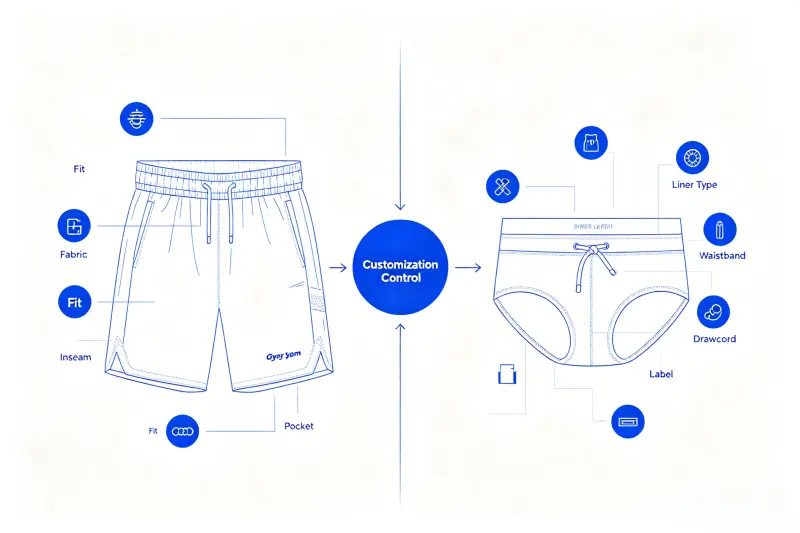
Some factories simply add logos to existing products, while others provide full OEM development from the pattern stage onward.
If you're building a private-label sportswear brand, it's important to understand exactly what can be customized.
Typical customization options include:
- Fabric selection
- Pattern adjustment
- Inseam length
- Waistband construction
- Pocket configuration
- Compression liner design
- Drawcords and trims
- Labels and packaging
- Brand-specific measurements
The more control you have during development, the easier it becomes to create products that stand apart from generic market offerings.
| Customization Area | Key Question | Why It Matters |
|---|---|---|
| Fabric | Can different fabrics be sourced or developed? | Determines product positioning and comfort |
| Fit | Can measurements and patterns be adjusted? | Improves customer satisfaction |
| Functional Features | Can liners, zipper pockets, or phone pockets be added? | Supports different training scenarios |
| Trims | Are custom waistbands, labels, and drawcords available? | Enhances brand identity |
| Packaging | Can custom polybags, hangtags, and barcodes be supplied? | Supports retail and e-commerce requirements |
Based on our OEM experience, customization doesn't stop after sample approval.
Equally important is understanding how those specifications are maintained during bulk production.
Ask whether the factory documents:
- Approved measurements
- Fabric specifications
- Sewing standards
- Trims
- Packaging requirements
These production records make repeat orders far more consistent.
For brands without a complete Tech Pack, it's also helpful to ask whether the supplier can assist with product development instead of simply requesting finished documentation.
Related Reading: Learn how our OEM & ODM Development Process supports brands from concept to production-ready samples.
How Can You Tell Whether a Good Sample Will Lead to Reliable Bulk Production?
A well-made sample is an important milestone, but it does not guarantee consistent mass production. The real question is whether the supplier has a production system that can reproduce the approved sample accurately across every batch.
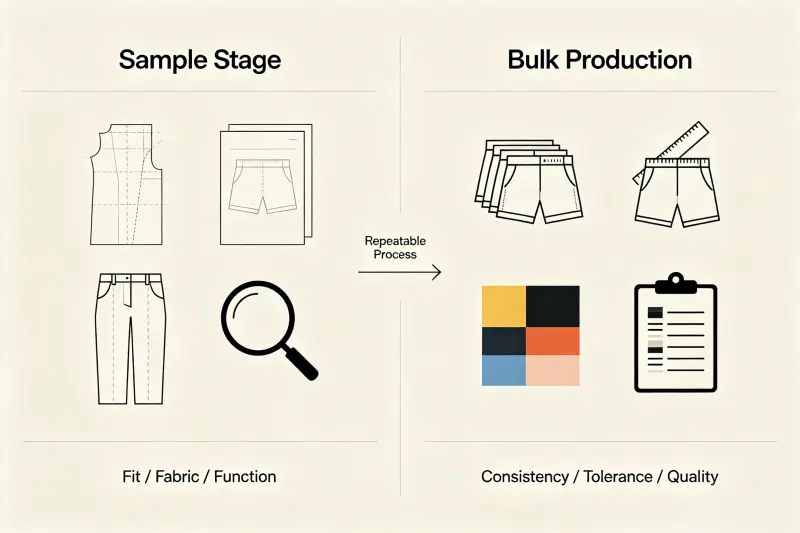
Based on our OEM experience, many quality issues occur not because the sample was incorrect, but because the production standards were never clearly documented before bulk manufacturing began.
During product development, we treat the approved sample as the production benchmark. Before cutting bulk fabric, our team reviews measurements, fabric specifications, trims, logo placement, sewing details, and packaging requirements to ensure everyone is working from the same standard.
When evaluating a supplier, ask how they manage the transition from sampling to production.
| Quality Control Stage | Question to Ask | Why It Matters |
|---|---|---|
| Pre-production sample | Will I approve a final PP sample before production? | Confirms every detail before bulk cutting begins |
| Measurement standards | What tolerance will be used during production? | Reduces sizing inconsistencies |
| Fabric & color approval | How do you control color consistency? | Prevents shade variations between batches |
| In-line inspection | Is quality checked during sewing? | Detects issues before they become widespread |
| Final inspection | What inspections are completed before shipment? | Ensures finished products meet expectations |
Another valuable question is whether the supplier provides production updates.
For overseas buyers, regular photos or videos during production improve transparency and allow potential issues to be identified before shipment. This doesn't mean monitoring every sewing operation—it simply creates confidence that production is progressing according to the approved standards.
In our factory, production records are maintained throughout each project. Approved measurements, fabrics, trims, and workmanship standards are documented so repeat orders can follow the same specifications instead of starting from scratch each time.
The most reliable suppliers don't simply promise that bulk production will match the sample—they have documented processes that make consistency repeatable.
What Lead Time Questions Should You Ask Before Confirming an Order?
One of the biggest misunderstandings in apparel manufacturing is treating lead time as a single number.
In reality, custom gym shorts production consists of several stages, each requiring its own timeline.
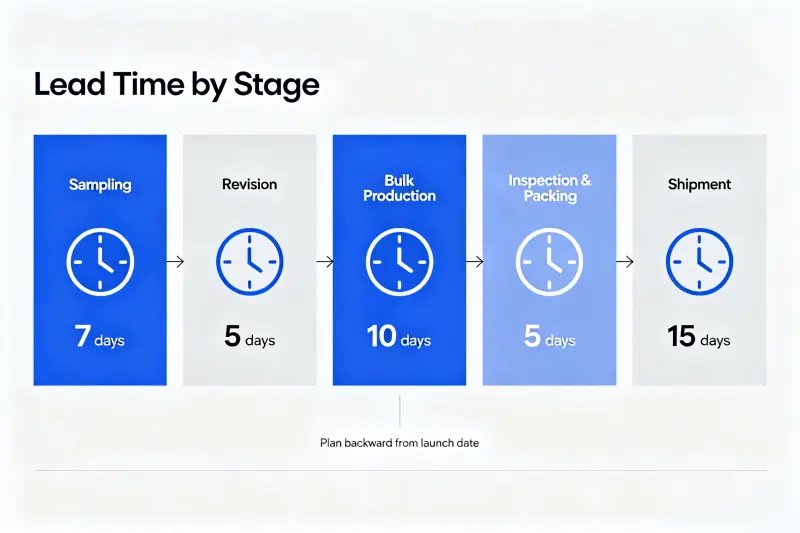
Rather than asking, "How long will my order take?", experienced buyers usually ask how long each stage of the project requires.
For example:
- Sample development
- Sample revisions
- Material approval
- Pre-production sample
- Bulk production
- Quality inspection
- Packaging
- Shipping
Breaking the timeline into individual steps creates a much more realistic production schedule.
| Production Stage | Question to Ask | Why It Matters |
|---|---|---|
| Sample development | How long does the first sample take? | Helps plan the product launch |
| Sample revisions | How many days are needed for modifications? | Prevents unrealistic expectations |
| Pre-production sample | Is a PP sample required before production? | Confirms final approval |
| Bulk production | How long after approval does production begin? | Establishes the manufacturing schedule |
| Inspection & packing | How much time is allocated for QC and packaging? | Avoids rushed shipments |
| Shipping | Which shipping methods are available? | Balances delivery speed and logistics cost |
Based on our standard production schedule:
- Sample development: 7–10 days
- MOQ: 300 pcs
- Bulk production: approximately 15–20 days for 600 pieces
Actual lead times may vary depending on fabric availability, customization requirements, order quantity, and seasonal production demand.
Another useful question is what information the factory needs from you to keep production moving.
In many projects, delays are caused not by manufacturing capacity but by missing artwork, incomplete Tech Packs, slow sample approvals, or late packaging confirmation.
The earlier both parties finalize specifications, the smoother production typically becomes.
Related Reading: Learn more about our complete Production Process, from sample development to final quality inspection.