[A gym shorts supply chain can look simple until one bulk order arrives with the wrong fabric handfeel, loose waistbands, uneven logos, or delayed shipping. That problem becomes more expensive when your launch date is fixed. The solution is not only finding a factory. It is building a clear decision system before production starts.
A reliable gym shorts supply chain is built by aligning product specifications, sample standards, production controls, order rhythm, and delivery expectations before judging a supplier. For activewear brands, the key is to confirm fabric, fit, trims, logo method, MOQ, packaging, lead time, and quality standards before bulk production begins.
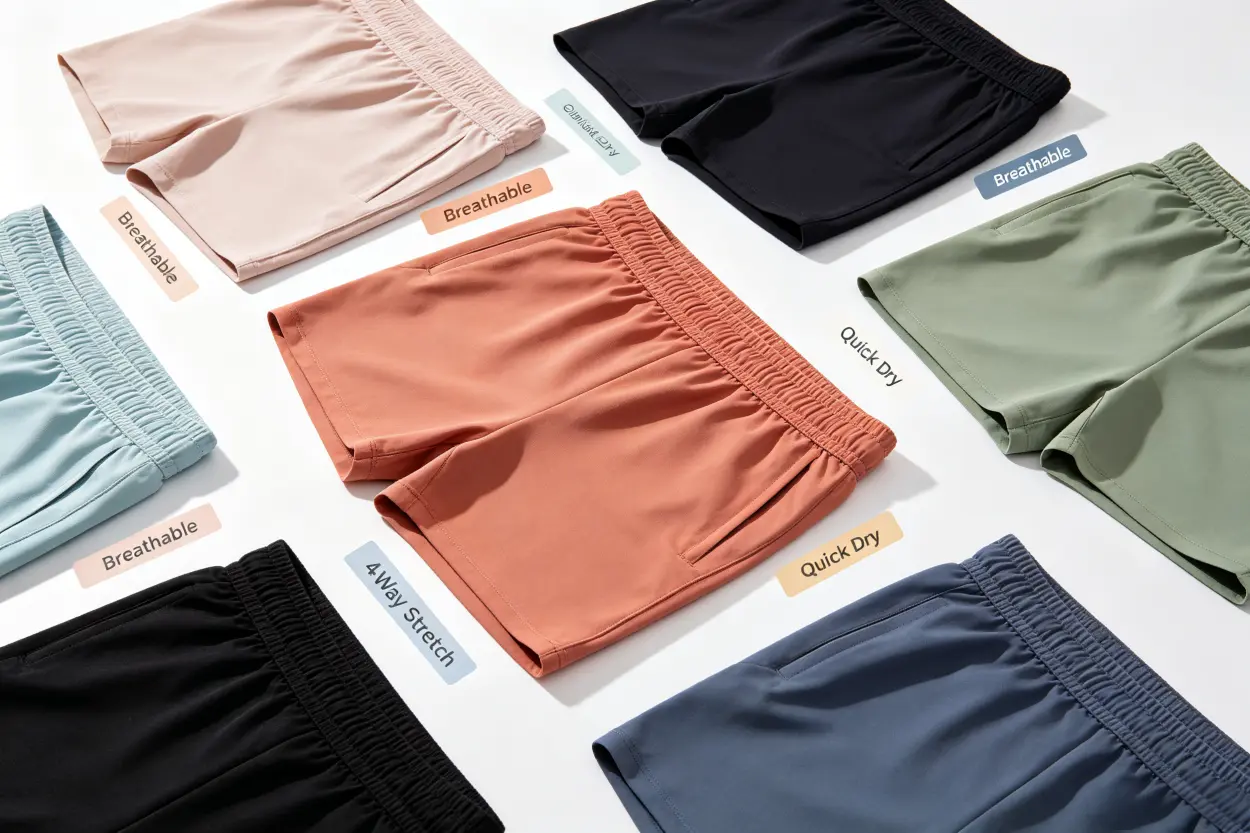
Many buyers first ask us for price and lead time. That is normal. However, in our OEM/ODM gym shorts projects, those numbers only become meaningful after the product details are clear. The sections below explain how I would evaluate reliability from the factory side.
Why Is a Gym Shorts Supply Chain a Decision System, Not a Supplier List?
Many brands start sourcing by collecting factory names, comparing quotes, and asking who can ship fastest. That can feel efficient, but it often hides risk. A gym shorts supply chain becomes reliable only when each decision connects to product requirements, order structure, and quality expectations.
A reliable gym shorts supply chain is a decision system because the supplier cannot perform well without clear inputs. Buyers and manufacturers need to define fabric, GSM, stretch, lining, waistband, pockets, drawcords, sizing, logos, MOQ, SKU structure, packaging, and delivery needs before judging reliability.
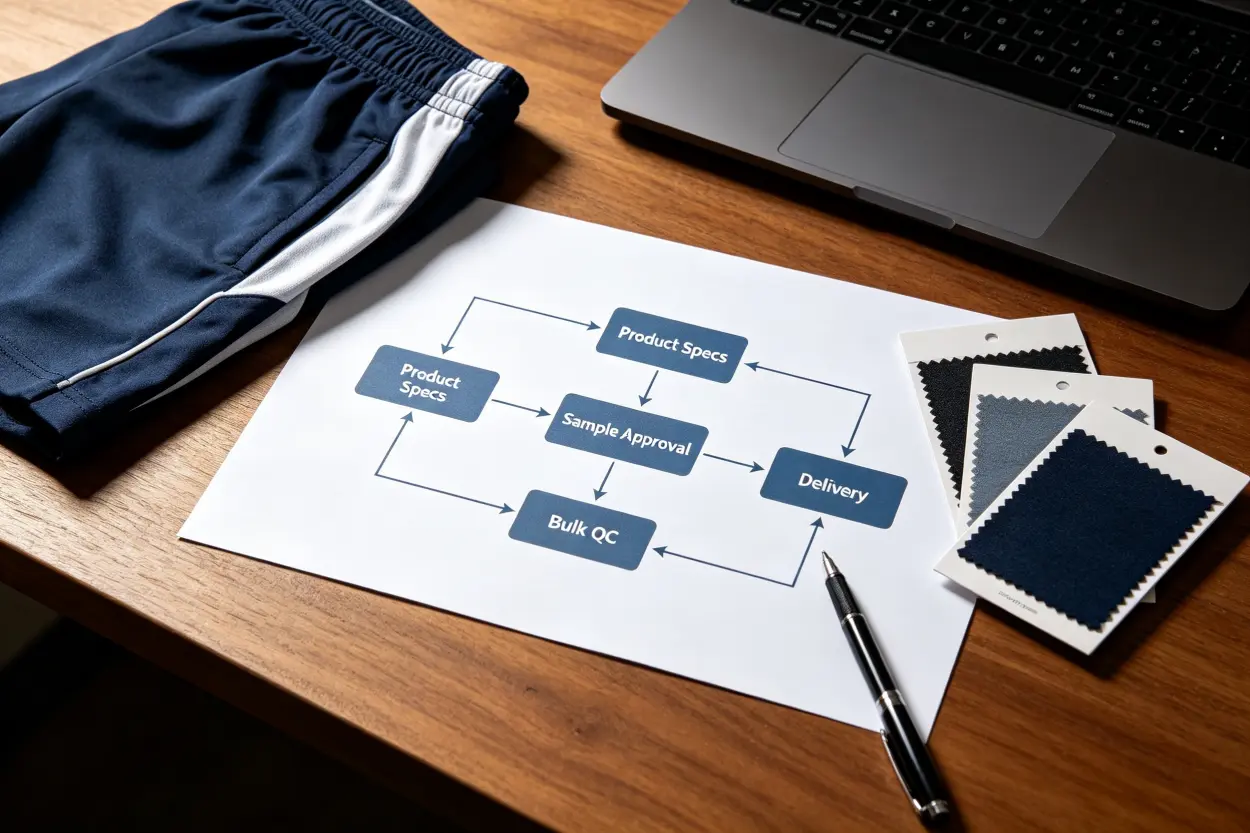
Start With the Product Before the Supplier
In our factory, the first useful sourcing conversation is rarely "What is your best price?" The better question is usually:
"What exactly are we producing, and what must stay consistent in every reorder?"
For gym shorts, small details change production difficulty and cost. A training short with a compression liner is not the same as a lightweight running short. A basketball short with heavy mesh, wide waistband, and embroidered logo needs a different quotation basis from a simple polyester gym short with heat transfer branding.
A clear product definition should cover:
- Fabric type: polyester, nylon, spandex blend, mesh, woven, or knit
- Fabric weight: usually discussed in GSM, depending on the style
- Stretch requirement: 2-way or 4-way stretch
- Lining: no liner, mesh brief, or compression liner
- Waistband: elastic width, stitching style, inner or outer drawcord
- Pockets: side pockets, zipper pockets, phone pocket, hidden pocket
- Logo method: heat transfer, screen print, embroidery, woven patch, rubber patch
- Size range: men's, women's, youth, extended sizes
- Packaging: polybag, barcode, hangtag, carton marks
- Market requirements: labeling, fiber content, care label, and compliance documents to verify
Why Supplier Lists Are Not Enough
A supplier list only tells you who may be able to produce. It does not tell you whether the manufacturer understands your target customer, preferred fit, brand positioning, or launch calendar.
Here is a simple comparison I often use in sourcing discussions:
| Sourcing Approach | What It Focuses On | Main Risk | Better Practice |
|---|---|---|---|
| Supplier list | Factory names and contacts | Similar quotes may not be comparable | Build a product specification first |
| Cheapest quote | Lowest unit price | Missing fabric, trim, or packaging details | Compare quotes using the same tech pack |
| Fastest lead time | Quick delivery promise | Rushed sampling or unstable bulk quality | Confirm sample and production schedule |
| Decision system | Product, sample, QC, delivery | Needs more preparation | Reduces sample-to-bulk surprises |
Practical Decision Framework
Before selecting a gym shorts manufacturer, I recommend building a basic decision sheet. It does not need to be complicated. It should help both sides avoid assumptions.
Buyer checklist before supplier comparison:
- Do we have a reference sample or tech pack?
- Do we know the target fabric and handfeel?
- Do we have size specs with tolerance?
- Do we know logo size, placement, and method?
- Do we know estimated order quantity by color and size?
- Do we need custom trims or stock trims?
- Do we have a target delivery date?
- Do we know shipping method preferences?
- Do we need labels, barcodes, or retail packaging?
- Do we have compliance documents that buyers must verify?
This step may feel slow at the beginning. But during production, it saves time. In our OEM work, unclear early information usually returns later as sample revisions, quotation changes, or delivery pressure.
If your brand is still defining the product category, you can review examples of custom gym and running shorts manufacturing to organize style direction before preparing a detailed inquiry.
How Should Sampling Protect Your Gym Shorts Supply Chain?
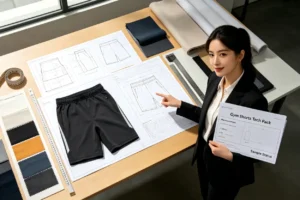
Sampling is often treated as a visual check. A sample looks good, so the buyer approves it. That can be risky. For a gym shorts supply chain, sampling should test communication, material selection, fit accuracy, workmanship, logo execution, and documentation.
Sampling protects your gym shorts supply chain by creating the approved standard for bulk production. A good sample process confirms fabric, fit, size specs, stitching, waistband, pockets, logo placement, labels, and packaging notes. It also records all changes so bulk production does not drift from the approved version.
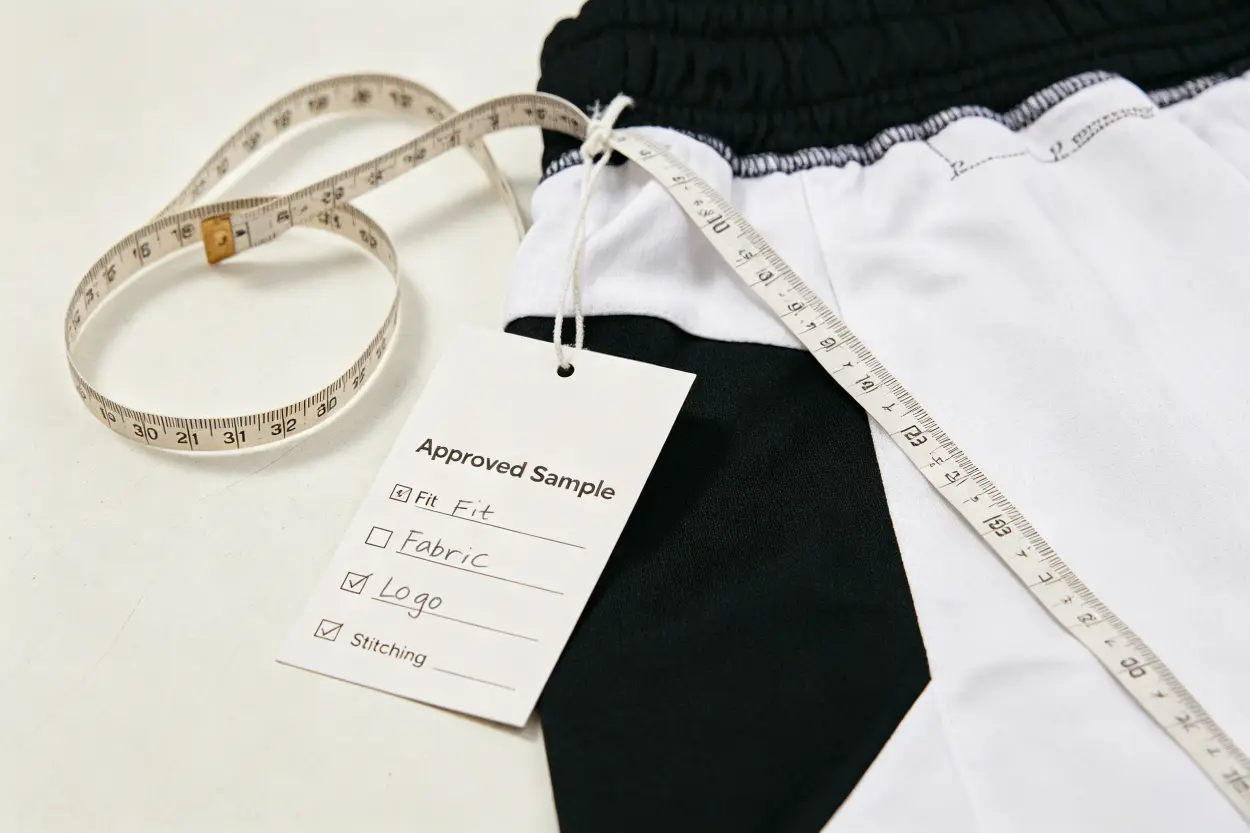
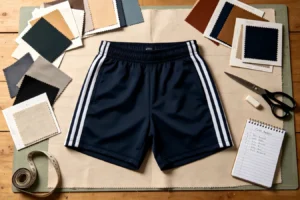
A Good Sample Is More Than a Good-Looking Short
During product development, a sample can look acceptable in photos but still fail as a production reference. The fabric may be close but not exact. The waistband may feel slightly loose. The pocket depth may not match the intended use. The logo may pass visually but crack after stretching if the method is not suitable.
In our factory, sample approval works best when the buyer reviews the sample in four layers:
- Appearance: Does it match the design?
- Fit: Does it sit correctly on the body?
- Function: Does it support training, running, basketball, or team use?
- Production reference: Can the factory reproduce it consistently?
Typical Sampling Timeline
For our usual process, sample production takes 8–10 working days once everything is approved, and express shipping usually takes 5–7 days. This timing depends on confirmed materials, logo files, trims, and sample complexity.
If fabric needs custom dyeing, trims are special, or artwork needs repeated adjustment, the timeline can change. That is why the sampling stage should not start with vague information.
What to Confirm Before Approving a Sample
A confirmed sample should be supported by clear notes. I prefer approval records because memory is not a production standard.
| Sample Element | What to Check | Why It Matters |
|---|---|---|
| Fabric | Composition, weight, stretch, handfeel | Prevents bulk material mismatch |
| Fit | Waist, hip, rise, inseam, leg opening | Controls customer returns and complaints |
| Waistband | Elastic width, tension, drawcord | Affects comfort and durability |
| Pockets | Depth, zipper, placement | Impacts function during training |
| Logo | Method, size, color, position | Prevents branding inconsistency |
| Stitching | Seam type, thread, reinforcement | Affects durability |
| Labels | Size, care, fiber content | Supports retail and compliance needs |
| Packaging | Bag, hangtag, barcode | Helps warehouse and wholesale handling |
Common Sampling Mistakes
One issue we frequently encounter is that buyers approve a sample after checking only the front view and logo. Later, during bulk production, they notice the inseam length, waistband feel, or pocket position more carefully. At that stage, change becomes more expensive.
Common mistakes include:
- Approving a sample without checking measurements
- Comparing bulk goods against a photo instead of the physical approved sample
- Changing fabric after sample approval without updating cost and lead time
- Forgetting to confirm logo color under real lighting
- Assuming all sizes will grade correctly from one sample size
- Not documenting revisions between sample versions
Best Practice: Use a "Final Approved Sample" System
For repeat production, the best reference is a physical approved sample plus a written specification. The physical sample shows handfeel and workmanship. The written spec controls measurements and details.
A basic sample approval note may include:
- Version number
- Date approved
- Fabric code or fabric description
- Trim details
- Measurement table
- Logo artwork version
- Buyer comments
- Factory comments
- Bulk production notes
This system does not remove all risk. Apparel production always has tolerances. But it gives both buyer and manufacturer a shared standard.
If you want to understand how sample approval connects with bulk workflow, our production process page gives a practical overview of the steps from development to delivery.
Why Do Price, MOQ, and Lead Time Change After Product Details Are Clear?
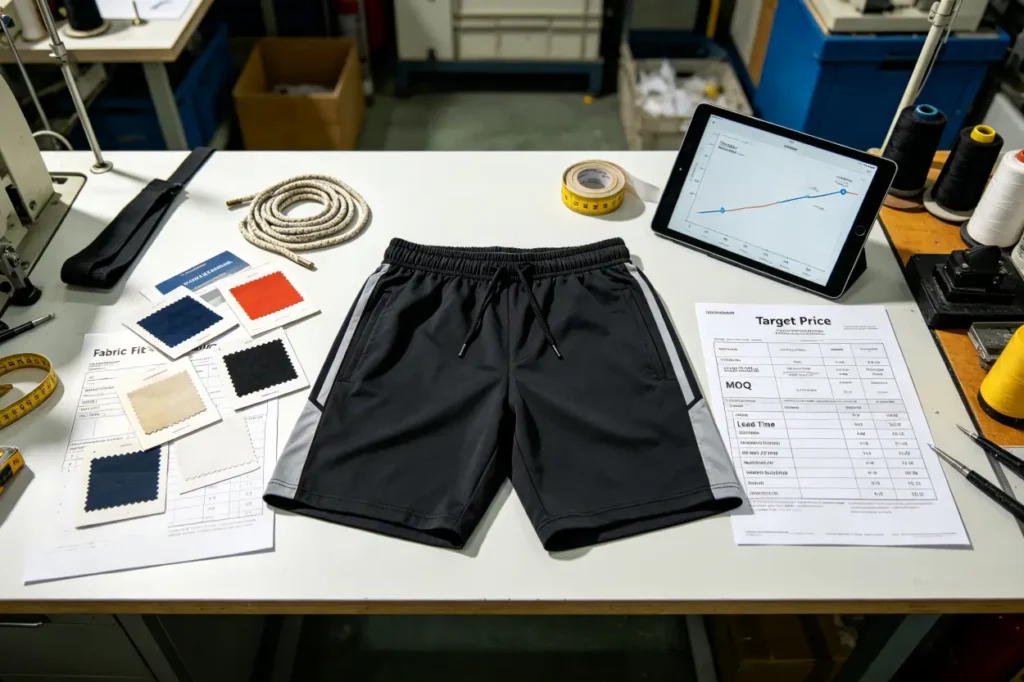
Many buyers feel frustrated when a quote changes after more information is shared. I understand that reaction. However, for gym shorts, price and lead time are conditional numbers. They depend on materials, trims, quantity, color-size breakdown, packaging, logo method, and future reorder plans.
Price, MOQ, and lead time change because each product detail affects fabric sourcing, cutting efficiency, labor, trims, branding, packing, and production scheduling. A quote without clear specifications is only an estimate. Reliable suppliers should explain the conditions behind MOQ, cost, and timing before bulk production.
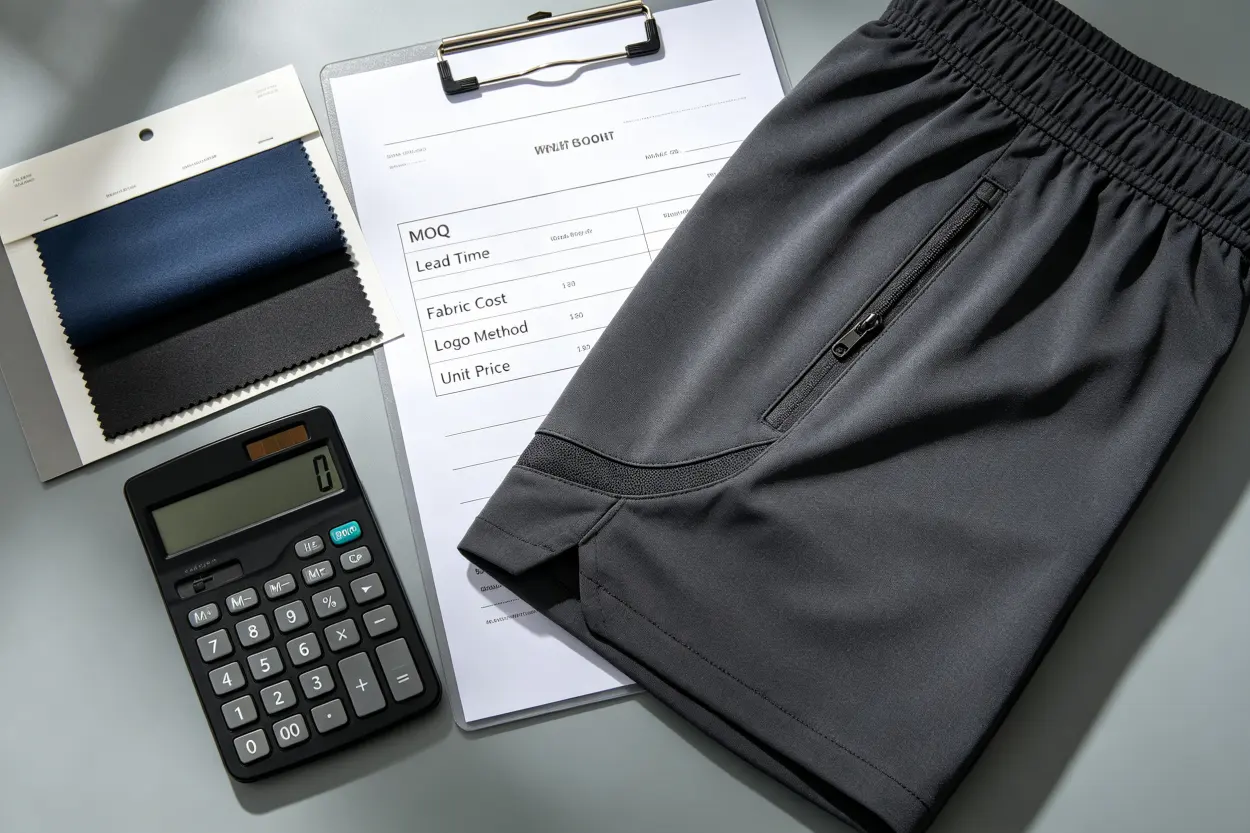
Why the Lowest Quote Can Be Misleading
A low quote is not always bad. Some styles are simple, materials are available, and trims are standard. In that case, a competitive price can be realistic. The problem starts when two suppliers quote based on different assumptions.
For example, one factory may quote:
- Basic polyester fabric
- No liner
- Standard elastic waistband
- Screen print logo
- Simple polybag packing
Another factory may quote:
- 4-way stretch fabric
- Compression liner
- Zipper pockets
- Heat transfer logo
- Custom hangtag and barcode
Those prices should not be compared as if they are the same product.
The Details That Affect Cost
The main cost drivers for gym shorts include:
| Cost Factor | Lower-Cost Option | Higher-Cost Option |
|---|---|---|
| Fabric | Stock polyester | Custom fabric or higher stretch blend |
| Liner | No liner | Compression liner or mesh brief |
| Pockets | No pocket or simple side pocket | Zipper pocket or hidden phone pocket |
| Waistband | Standard elastic | Custom jacquard waistband |
| Logo | Simple print | Embroidery, patch, multi-position branding |
| Colors | One or two colors | Many colors with small quantities |
| Packaging | Plain polybag | Retail-ready packaging with barcode |
| Size range | Core sizes | Extended sizes or youth/adult split |
Lead Time Is Also Conditional
For our regular process, bulk production usually takes 25–30 working days after all production details are confirmed. Shipping time depends on the method:
- Express shipping, such as FedEx or DHL: usually 5–7 days
- Air freight: usually 10–15 days
These are practical reference ranges, not universal guarantees. The final timeline depends on order volume, material readiness, packaging requirements, inspection arrangements, and export schedule.
MOQ Should Match the Order Structure
MOQ is not just a factory rule. It is connected to fabric procurement, dyeing, cutting, labor setup, and color-size distribution. A 500-piece order in one color is different from 500 pieces split across five colors and six sizes.
A more reliable MOQ discussion includes:
- Total quantity
- Quantity per color
- Quantity per size
- Fabric availability
- Logo method
- Packaging type
- Reorder plan
- Delivery deadline
Practical Tip for Growing Brands
If your brand is still testing the market, avoid making the first order too complicated. Too many colors, trims, and logo placements create more production variables. A cleaner first order can help test fit, fabric, customer feedback, and reorder rhythm.
For example, a first gym shorts program may start with:
- 1–2 core fabrics
- 2–3 colors
- A focused size range
- One main logo method
- Standard packaging
- Clear reorder plan if sell-through is good
This approach helps the factory stabilize production. It also helps the buyer understand demand before expanding the SKU structure.
For brands that need more development support, OEM/ODM customization can be useful when design, sample making, and production planning need to connect from the beginning.
How Can Front-Loaded Quality Control Strengthen a Gym Shorts Supply Chain?
Some buyers think quality control means checking finished goods before shipment. Final inspection matters, but it is too late to solve many root problems. A stronger gym shorts supply chain puts quality control into product specification, sample approval, material checking, production setup, and communication.
Front-loaded quality control strengthens a gym shorts supply chain by preventing defects before they become bulk problems. For gym shorts, QC should begin with clear specifications, approved samples, fabric and trim confirmation, measurement tolerances, stitching standards, logo checks, in-line review, and final inspection before export delivery.
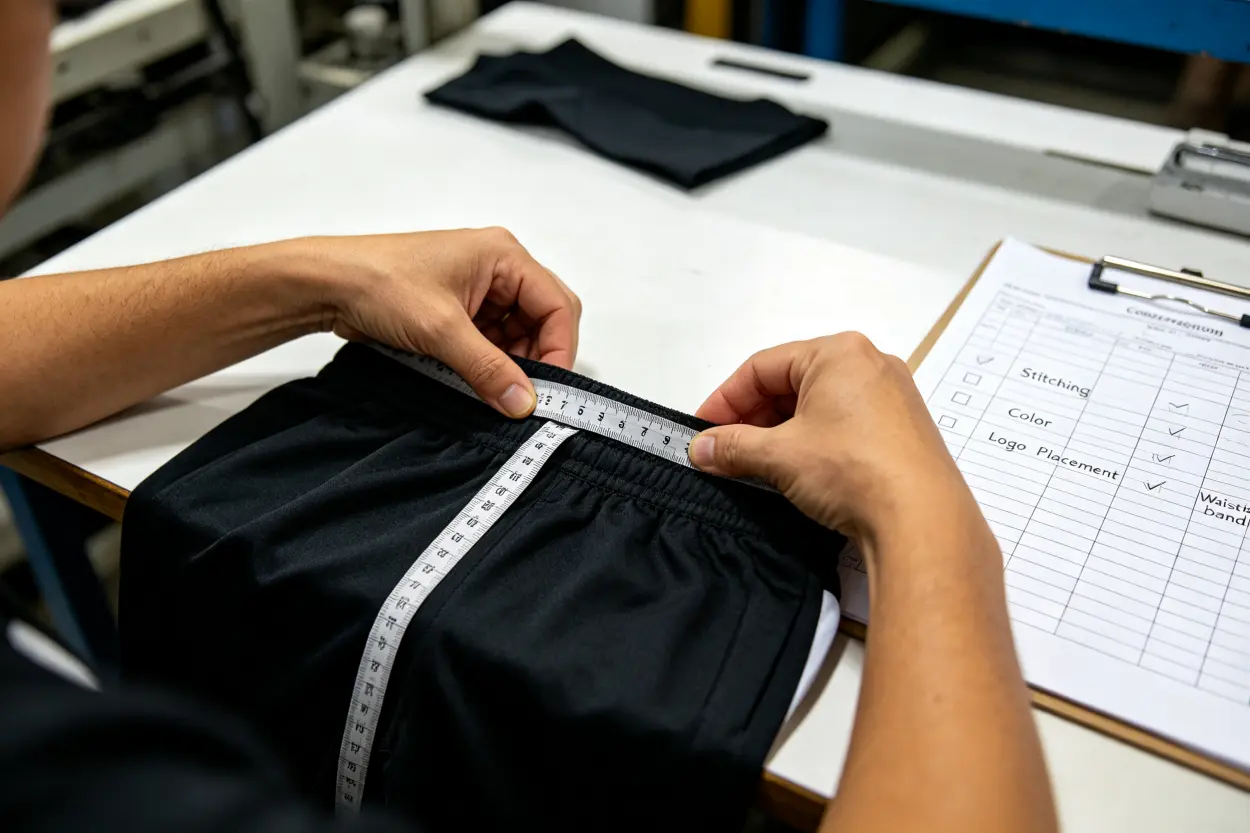
QC Starts Before Cutting
In our factory, many quality problems can be traced back to unclear decisions before cutting begins. If the fabric is not confirmed, the bulk handfeel may be questioned. If the size chart is not final, measurement disputes may happen. If the logo placement is not marked clearly, workers may follow the wrong reference.
Front-loaded QC should include:
- Final tech pack or specification sheet
- Approved physical sample
- Confirmed fabric and trims
- Confirmed size chart and tolerance
- Confirmed logo artwork and placement
- Confirmed packaging instructions
- Production comments from sampling stage
Key QC Points for Gym Shorts
Gym shorts have several areas that need special attention because customers feel problems quickly during movement.
| QC Area | What to Inspect | Common Issue |
|---|---|---|
| Waistband | Elastic tension, stitching, drawcord | Too tight, too loose, twisting |
| Crotch seam | Reinforcement and seam strength | Seam failure during training |
| Fabric | Color, stretch, weight, defects | Wrong handfeel or shade variation |
| Pockets | Symmetry, depth, zipper function | Phone does not fit, zipper catches |
| Liner | Attachment, comfort, stretch | Pulling or discomfort |
| Logo | Position, color, adhesion | Peeling, cracking, misalignment |
| Measurements | Waist, hip, rise, inseam | Fit inconsistency across sizes |
| Packaging | Labels, barcodes, carton marks | Warehouse receiving errors |
In-Line Review Matters
Final inspection can identify problems, but it cannot always fix them without delay. In-line review allows the factory to catch issues while production is still running.
During bulk production, we pay attention to:
- First pieces from the production line
- Stitching consistency
- Measurement checks during sewing
- Logo application quality
- Thread trimming and workmanship
- Packing accuracy
This process does not mean every garment will be perfect. Apparel is still a manual and material-based product. However, front-loaded checks reduce the chance of large-scale inconsistency.
Buyer Pain Points QC Should Address
European and North American buyers often worry about three problems:
- Sample-to-bulk difference: The approved sample feels better than bulk goods.
- Size inconsistency: Medium in one order feels different from medium in the next order.
- Delivery pressure: Quality issues are found too close to the shipping date.
A stronger QC system addresses these risks earlier. It also keeps communication practical. If a buyer changes a logo method or fabric after sampling, the QC standard should be updated. If the factory finds a fabric issue before cutting, the buyer should know before production continues.
Documents Buyers Should Verify
For export projects, brands may request documents related to materials, labeling, or compliance. A manufacturer can provide available documents, but buyers should verify whether they meet the requirements of their market, retailer, or legal advisor.
Useful documents may include:
- Fabric composition information
- Care label details
- Packing list and commercial invoice
- Test reports if available and relevant
- Certifications if claimed, which buyers should verify directly
This is not legal advice. For application-specific, regulatory, or retailer compliance decisions, buyers should consult qualified professionals or testing bodies.
How Should You Plan Reorders and Delivery for a More Reliable Gym Shorts Supply Chain?
A first order tests the supplier relationship, but reorders test the real supply chain. If your activewear brand grows, the challenge becomes consistency across seasons. A reliable gym shorts supply chain needs order rhythm, material planning, forecast communication, and realistic shipping decisions.
Reorder and delivery planning improves reliability by giving the manufacturer enough time to prepare fabric, trims, production capacity, packing, and export shipping. Brands should share forecast ranges, best-selling colors, size ratios, launch dates, and preferred shipping methods before inventory becomes urgent.
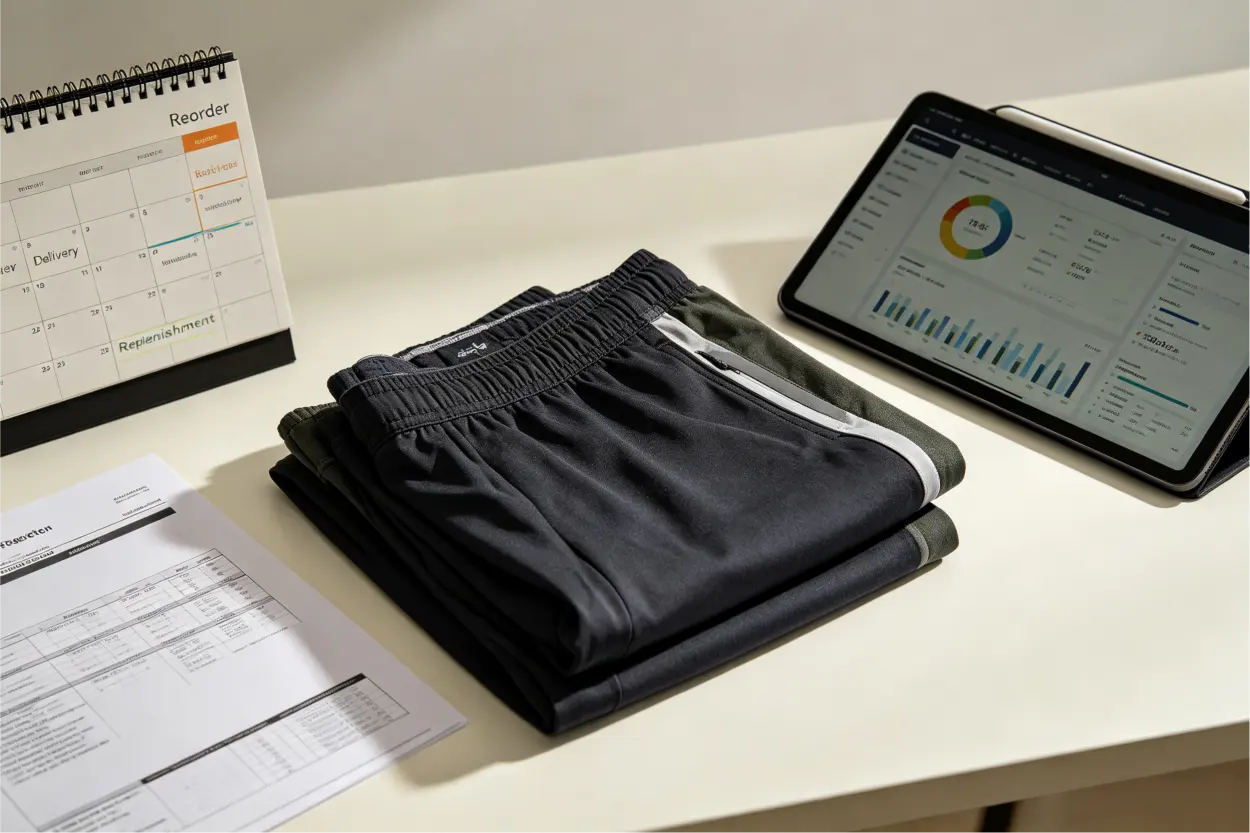
Repeat Orders Need Control, Not Assumptions
A repeat order sounds simple because the design is already approved. But changes can still happen. Fabric batches may vary. Trim availability may change. Size ratios may shift after sales data comes in. A new logo color may be added. Packaging may need barcodes for a new warehouse.
For repeat production, I recommend keeping a reorder file that includes:
- Previous order specification
- Approved sample reference
- Fabric and trim records
- Size ratio from the last order
- Buyer feedback from customers
- Any requested improvements
- Updated delivery date
- Shipping method
Use Sales Feedback Carefully
Customer feedback is useful, but it should be translated into production language. "The shorts feel too tight" could mean several things:
- Waistband tension is too strong
- Hip measurement is too small
- Fabric stretch is not enough
- Rise is too short
- Liner is pulling during movement
Before changing the pattern, the buyer and factory should identify the real cause. Otherwise, one correction may create a new problem.
Delivery Planning: Express vs Air Freight
Shipping method should match urgency, budget, and order size. Express shipping is fast and simple for samples or smaller urgent shipments. Air freight can work for larger time-sensitive orders, but it needs more planning.
| Shipping Method | Typical Time | Best Use | Buyer Note |
|---|---|---|---|
| Express, such as FedEx/DHL | 5–7 days | Samples, urgent small shipments | Higher cost per piece |
| Air freight | 10–15 days | Larger urgent shipments | Needs better cargo planning |
For sea freight, timelines vary by route and season, so buyers should confirm with their freight forwarder. I avoid giving one fixed number because port, destination, customs, and seasonal congestion can change the result.
Best Practice for Seasonal Launches
If you sell gym shorts for spring and summer training, do not start bulk discussions too close to launch. Sampling, revisions, production, inspection, and shipping all need time.
A practical planning sequence looks like this:
- Product concept and tech pack
- Sample development
- Sample review and revisions
- Final sample approval
- Bulk order confirmation
- Material and trim preparation
- Bulk production
- In-line and final QC
- Packing and export documents
- Shipping and delivery
A reliable supply chain is not slow. It is prepared. The more your factory knows about reorder timing, the easier it becomes to protect consistency.
If you already have a tech pack or sample reference, you can contact us to discuss your gym shorts project and clarify sampling, MOQ, production timing, and export delivery options.
Frequently Asked Questions
What is the most important part of a gym shorts supply chain?
The most important part is specification alignment before production. Fabric, fit, waistband, lining, pockets, logo method, sizing, packaging, MOQ, and delivery expectations should be clear. A supplier cannot be judged fairly if each factory is quoting or producing from different assumptions.
How long does gym shorts sampling usually take?
In our regular OEM/ODM process, sample production usually takes 8–10 working days once everything is approved. Express shipping usually takes another 5–7 days. The timeline can change if fabric, trims, artwork, or sample revisions are not confirmed.
How long does bulk production take for custom gym shorts?
Bulk production usually takes 25–30 working days after all details are confirmed. This includes approved sample standards, material preparation, production scheduling, sewing, quality checks, and packing. Shipping time is separate and depends on express, air freight, sea freight, or buyer-arranged logistics.
Why does a gym shorts quote change after I send more details?
A quote can change because fabric, lining, pockets, trims, logo method, packaging, quantity, and color-size distribution affect cost. A simple gym short and a lined training short with zipper pockets are different products. Reliable quotation needs clear specifications.
Should I approve gym shorts bulk production based only on photos?
Photos help, but they should not be the only approval standard. A physical approved sample, size chart, material confirmation, logo artwork, and written production notes give the buyer and factory a stronger reference. This reduces sample-to-bulk inconsistency.
Conclusion
A reliable gym shorts supply chain is not built by chasing the cheapest quote or the fastest promise. It is built by aligning product details, approving samples carefully, treating price and lead time as conditional, and putting quality control before bulk problems appear. In our OEM/ODM experience, the best projects start with clear communication and practical documentation. If you are preparing a new gym shorts program, you can send your tech pack, reference sample, or product idea and request a quote or sample discussion.