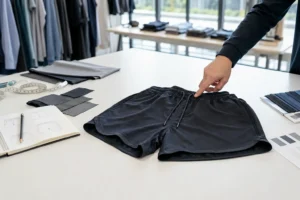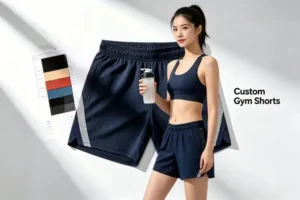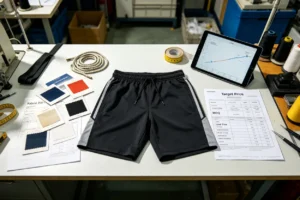
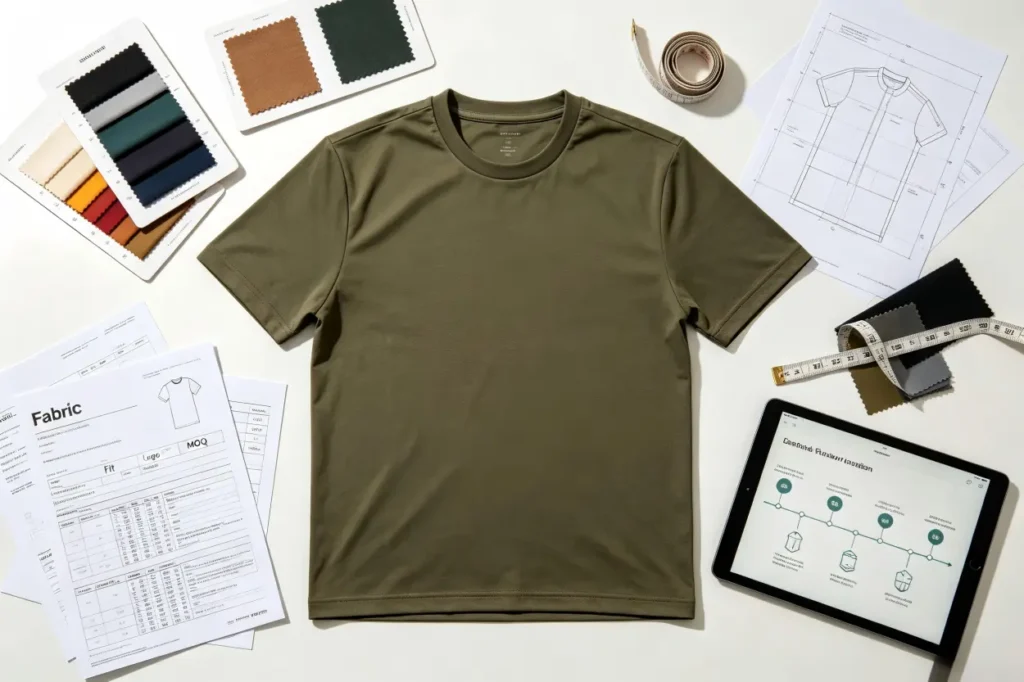
A custom performance T-shirt manufacturer can help reduce confusion, but many buyers start with the wrong question. They ask for "the best quick-dry fabric," then discover problems with fit, logo effect, MOQ, or bulk consistency. A better path is to align sport use, design details, sampling, and production conditions before ordering.
A custom performance T-shirt project should start with the end use, not only the fabric name. Buyers should define the sport scenario, target fit, handfeel, decoration method, budget, MOQ, size range, packaging needs, and lead time. Then the manufacturer can turn the design into a sample and reproduce it more reliably in bulk production.
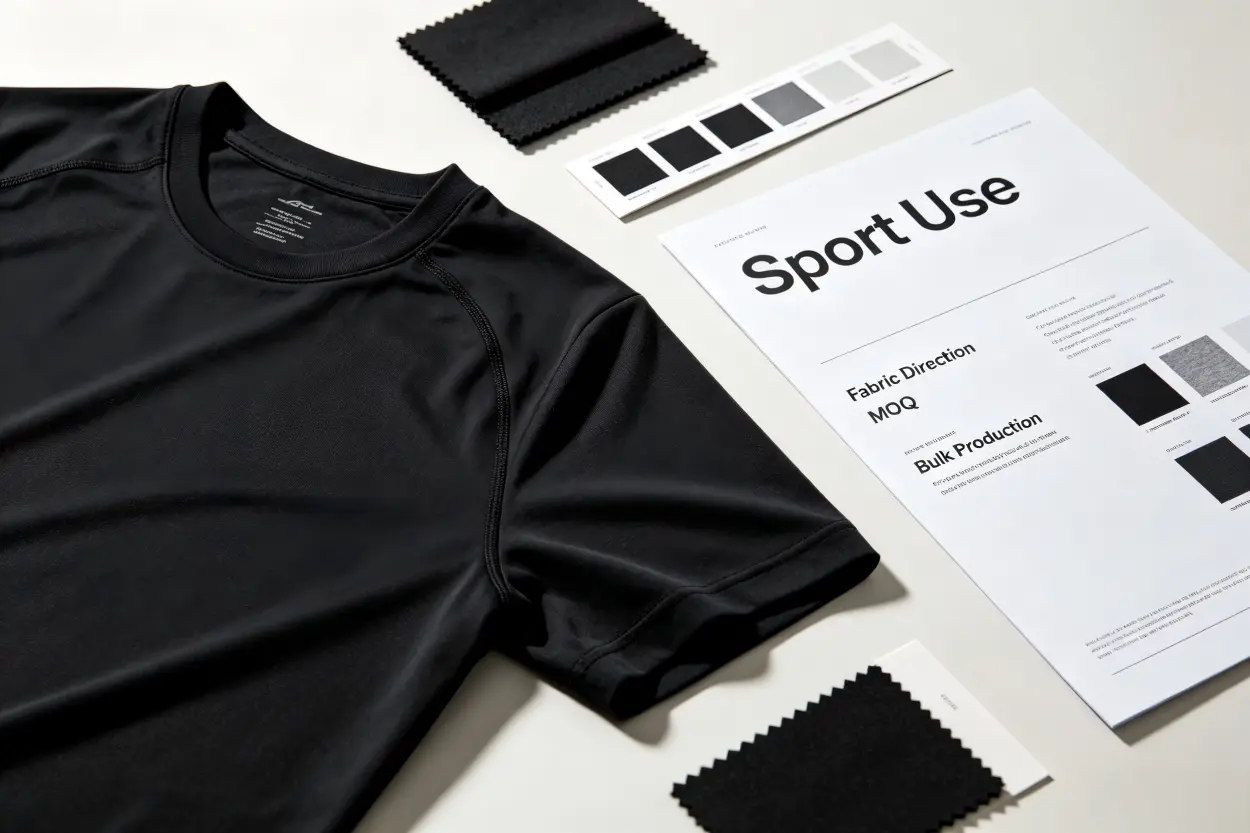
Many European and North American brands come to our factory with good ideas but incomplete production information. That is normal. The real work starts when the idea becomes measurable: fabric weight, pattern, logo position, size chart, sample feedback, and final approval.
How Should a Custom Performance T-Shirt Manufacturer Match Fabric to Sport Use Case?
Many buyers begin with a material name. They request polyester, spandex, mesh, or "quick-dry." The problem is that fabric names do not explain how the shirt will feel during training. If the use case is unclear, the final product may look correct but perform poorly for the wearer.
A custom performance T-shirt manufacturer should match fabric to the sport, fit, target handfeel, stretch need, breathability, durability, decoration method, budget, and MOQ. The practical question is not "Which fabric is best?" The better question is "Which fabric supports this product's actual training scenario and price range?"
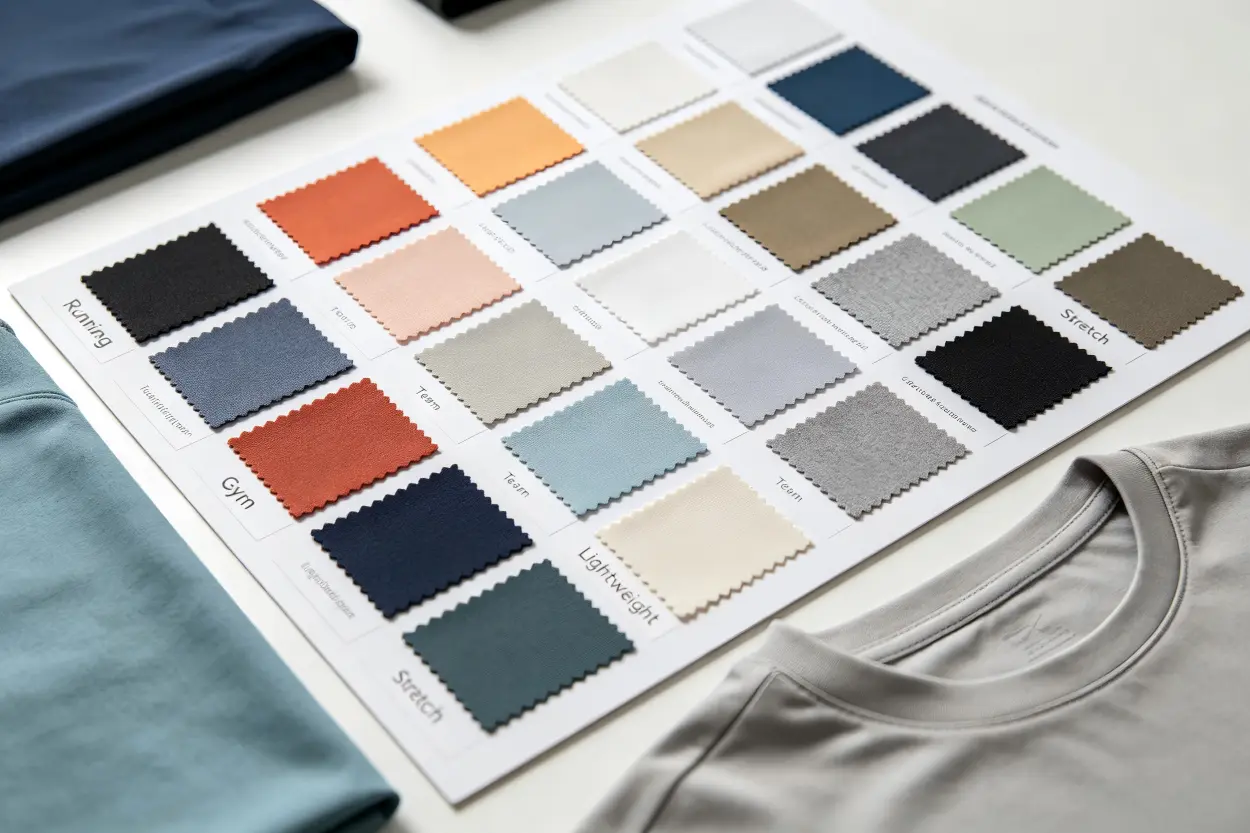
Fabric Selection Starts With the Wearer
During product development, fabric discussions often become too broad. A buyer may say, "We need a premium gym T-shirt," but "premium" can mean different things. Some customers want a soft handfeel. Some want a dry touch. Some want high stretch. Some want a strong, stable fabric that keeps shape after repeated team use.
For custom sportswear, the sport context matters more than the material label.
A running club may prefer a lightweight and breathable T-shirt. A gym brand may prefer a more structured fabric with stretch and recovery. A basketball training program may care about sweat management and movement. A startup apparel brand may need a fabric that feels good, prints well, and stays within a launch budget.
Practical Fabric Questions Buyers Should Answer
Before asking for a quote, buyers can prepare short answers to these questions:
- What sport or training activity is the T-shirt for?
- Will the fit be slim, regular, oversized, or compression-inspired?
- Should the fabric feel soft, cool, dry, smooth, or structured?
- Does the design need stretch in one direction or multiple directions?
- Will the logo be screen printed, heat transferred, embroidered, or sublimated?
- Is this for retail, team uniforms, event merchandise, or wholesale distribution?
- What price level should the product target?
These answers help a supplier narrow options faster. They also prevent a common mistake: choosing a fabric sample because it feels nice in the hand but does not match the final use.
Simple Fabric Decision Framework
| Buyer Priority | Fabric Direction to Discuss | Risk If Ignored |
|---|---|---|
| Lightweight training | Lower weight, breathable structure | Shirt may feel heavy during exercise |
| Gym and fitness | Stretch, recovery, stable handfeel | Fit may restrict movement |
| Team uniforms | Durability, color consistency, repeatability | Reorders may look different |
| Logo-heavy design | Surface suitable for decoration | Print may crack, bleed, or feel too thick |
| Startup launch | Balanced cost and availability | Budget or MOQ may become unrealistic |
Factory Experience: Fabric Handfeel Can Mislead
In our factory, one issue we frequently encounter is the difference between handfeel approval and wearing approval. A small fabric swatch can feel excellent on a desk. After the T-shirt is cut, sewn, printed, and worn during training, the buyer may notice different issues.
For example, the finished shirt may:
- Hang differently on the body
- Feel warmer than expected
- Show print texture too strongly
- Stretch more than the size chart allowed
- Need a different neckline or sleeve opening
That is why fabric selection should not happen alone. It should be connected to pattern, fit, logo method, and sample review.
A capable OEM/ODM supplier does not need to push one "best" fabric. The supplier should help the buyer compare workable options. For buyers developing a broader activewear line, our OEM/ODM custom sportswear service explains how we usually move from concept discussion to sample and production planning.
What Design Information Does a Custom Performance T-Shirt Manufacturer Need Before Sampling?
A strong design idea can still fail in production if the information is incomplete. A logo file and a front-view mockup are useful, but they are not enough. Factories need exact instructions before they can create a reliable sample.
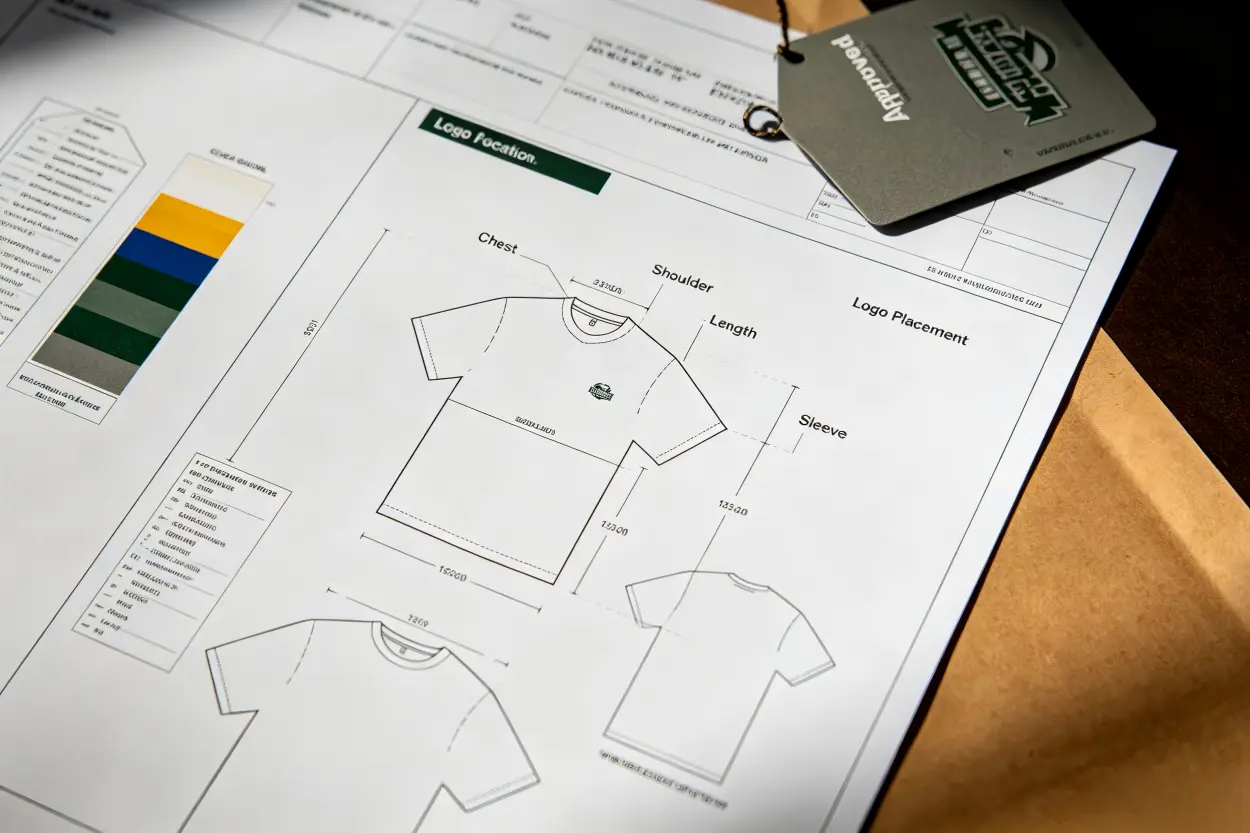
A custom performance T-shirt manufacturer needs production-ready design information, including fit direction, size chart, fabric choice, color references, logo files, logo placement, decoration method, trims, labels, packaging, and sample approval standards. The clearer the brief, the fewer revisions usually happen before bulk production.
A Mockup Is Not a Tech Pack
Many buyers send a clean mockup and expect a factory to "make it like this." The mockup helps, but it does not answer many production questions. A manufacturer must know how the shirt should be built, not only how it should look in a flat image.
During OEM communication, our team often clarifies details such as:
- Neckline shape and rib width
- Sleeve length and sleeve opening
- Body length and hem shape
- Side seam or seamless-looking construction
- Logo size in centimeters or inches
- Logo distance from neckline, hem, or side seam
- Inside neck label and care label information
- Polybag, carton, barcode, or hangtag requirements
Small details can change production cost and timing. They also affect the sample result.
Design Information Checklist
A buyer does not always need a perfect tech pack at the first contact. However, these details make communication more efficient:
-
Product reference
- Similar product photos
- Target fit description
- Intended sport or customer group
-
Size information
- Existing size chart
- Target market sizing, such as US or EU
- Tolerance expectations if already defined
-
Color information
- Pantone reference if available
- Main body color
- Contrast panel or trim colors
-
Logo and artwork
- Vector file when possible
- Logo size and position
- Decoration method preference
-
Packaging
- Individual polybag or bulk packing
- Hangtag, barcode, sticker, or retail packing
-
Order plan
- Estimated quantity
- Size and color breakdown
- Target delivery time
Comparing Decoration Methods
Decoration affects the look, handfeel, cost, and durability of a custom performance tee. No method is perfect for every design.
| Decoration Method | Common Use | Buyer Should Check |
|---|---|---|
| Heat transfer | Logos, team names, small graphics | Handfeel, stretch, washing behavior |
| Screen printing | Larger graphics, simple colors | Color layers, print thickness |
| Sublimation | All-over prints on suitable fabrics | Fabric compatibility and color result |
| Embroidery | Small premium logo details | Weight, backing, comfort on lightweight fabric |
A buyer should confirm decoration on the sample, not only on a digital mockup. A logo may look excellent on screen but feel too heavy on a lightweight training shirt.
Common Mistake: Approving Design Without Measurements
A frequent issue during sample approval is that buyers comment only on the visual design. They say the shirt "looks good," but they do not measure chest width, body length, sleeve length, or neckline. Later, during bulk production, size feedback becomes difficult because the approved sample was not checked carefully.
For performance apparel, measurements matter. The body moves. The fabric stretches. The shirt must fit the sport. A gym T-shirt with a narrow shoulder may restrict lifting. A running tee that is too long may feel uncomfortable. A team shirt with inconsistent sizing may create complaints across the group.
For buyers preparing their first production file, our custom T-shirt manufacturing page gives a practical overview of how custom T-shirt projects are discussed before sampling.
Why Is Sampling a Risk-Control Step Before Bulk Performance T-Shirt Production?
Some buyers treat sampling as a formality. They expect the first sample to be perfect, or they want to skip sampling to save time. That can create larger risks later. A sample is not only a preview. It is the checkpoint where assumptions become physical evidence.
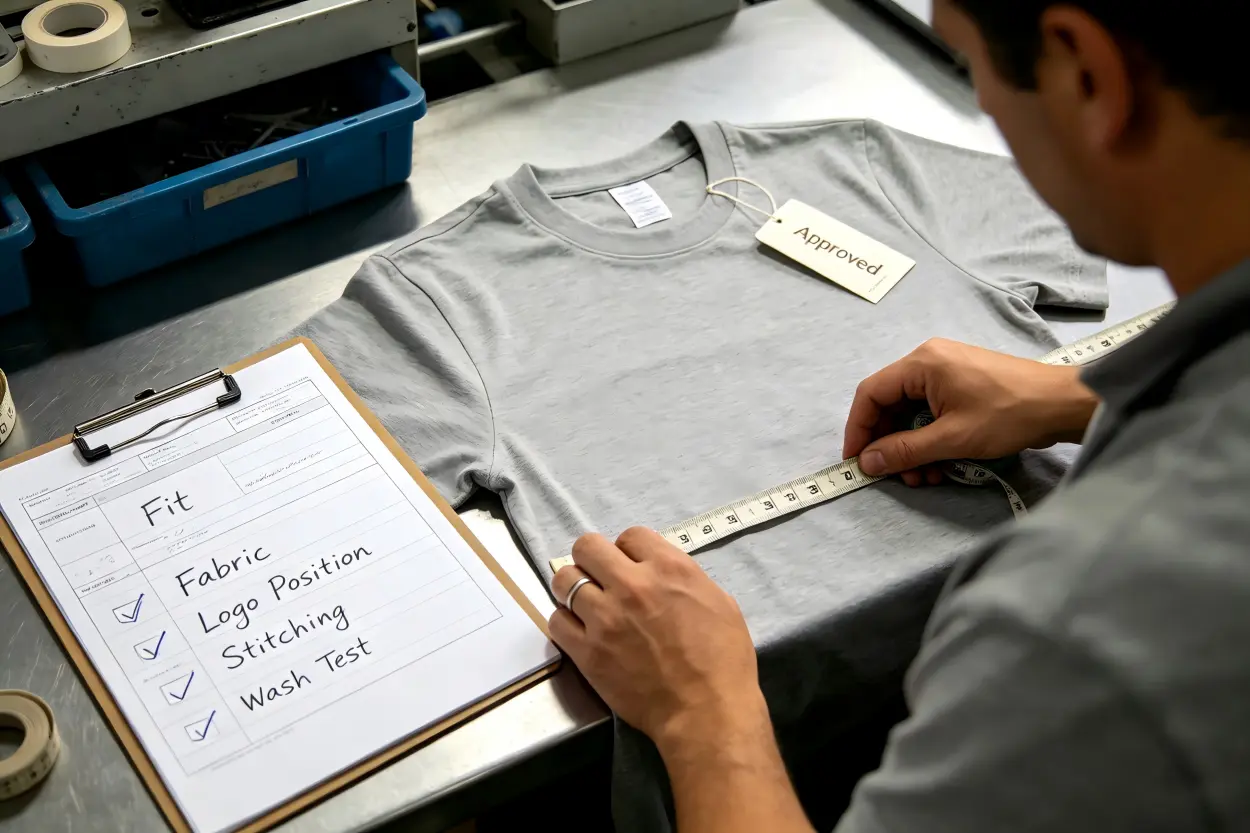
Sampling controls risk by allowing buyers to check fabric handfeel, fit, sizing, color, logo effect, stitching, workmanship, and packaging before bulk production. No responsible supplier should promise perfect mass production without sample confirmation, because bulk quality depends on approved materials, approved measurements, and approved workmanship standards.
What a Sample Can Reveal
A sample often answers questions that messages and mockups cannot answer. During sample approval, buyers can wear the T-shirt, stretch it, wash-test it in their own way, compare it with their brand sizing, and review it with their team.
The sample can reveal:
- Whether the selected fabric feels right on the body
- Whether the fit matches the target customer
- Whether the neckline and sleeves sit correctly
- Whether the logo size looks balanced
- Whether the decoration method feels comfortable
- Whether the stitching and seams meet expectations
- Whether the color direction matches the brand plan
This step protects both sides. The buyer avoids ordering bulk goods based on assumptions. The supplier receives clear confirmation before purchasing materials and arranging production.
Realistic Sampling Timeline
For our production discussions, the usual sample timing is:
| Step | Typical Timing |
|---|---|
| Sample production after all details are approved | 8–10 working days |
| Express shipping for samples | 5–7 days |
| Buyer review and feedback | Depends on buyer team |
| Revised sample, if needed | Based on changes required |
These timelines can change if the fabric is special, artwork needs adjustment, or trims are not ready. Buyers should plan sampling time into the launch schedule. If the delivery deadline is close, the project should be simplified rather than rushed blindly.
Sample Feedback Should Be Specific
Good sample feedback saves time. Vague feedback creates confusion. Instead of writing "make it better," buyers can give exact comments.
Helpful feedback looks like this:
- "Increase body length by 2 cm."
- "Move chest logo 1.5 cm higher."
- "Change neckline rib to a softer quality."
- "Sleeve opening feels too tight for gym use."
- "Print handfeel is too thick; please suggest another method."
- "Size M chest is acceptable; please grade other sizes from this base."
This kind of feedback helps the pattern maker and production team understand the change. It also creates a better record for bulk production.
Factory Experience: Sample Approval Is a Shared Responsibility
Based on our OEM experience, sample approval works best when both sides treat it seriously. The supplier should make the sample according to confirmed details. The buyer should review the sample carefully and give written approval or clear revision instructions.
A sample should not be approved only because the delivery date is urgent. If the fit is wrong, bulk production will not magically fix it. If the logo method feels uncomfortable, the issue may become bigger when hundreds or thousands of pieces are produced.
For buyers who want to understand the factory steps after approval, our production process overview explains how we usually manage custom sportswear orders from discussion to delivery.
Practical advice: approve the sample only when the fabric, fit, logo, color direction, and workmanship are acceptable for your brand's actual customers.
How Should Buyers Evaluate Bulk Production, MOQ, and Supplier Reliability?
Many buyers focus first on unit price. Price matters, but it is not the full cost of a custom performance apparel project. A cheap quote can become expensive if MOQ, size breakdown, fabric availability, packaging, delays, or rework risks are not clear.
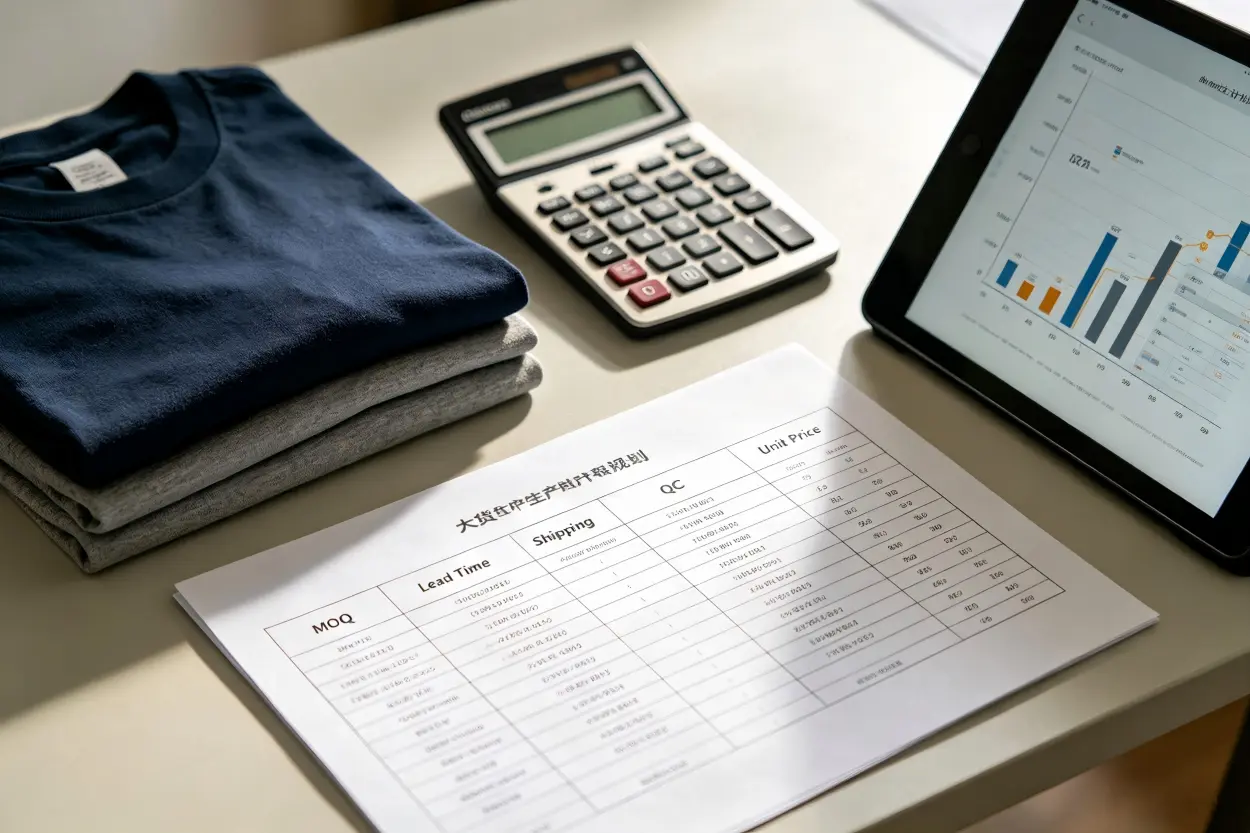
Buyers should evaluate bulk production by reviewing MOQ, fabric availability, color and size combinations, confirmed sample standards, packaging, lead time, communication quality, and the supplier's ability to reproduce the approved sample. A reliable supplier helps buyers understand total order risk, not only the lowest unit price.
Unit Price Is Only One Part of Cost
During bulk production discussions, a buyer may compare quotes from several suppliers. That is reasonable. However, the lowest unit price may be based on assumptions that do not match the project.
For example, the quote may assume:
- One fabric color only
- Simple logo printing
- Standard packaging
- Large quantity per color
- No special labels
- No complex size split
- Available fabric stock
If the final order has four colors, eight sizes, custom labels, special packaging, and urgent shipping, the real cost changes. Buyers should ask what the quote includes and what it excludes.
MOQ and Size/Color Breakdown Matter
MOQ is not only about total quantity. Factories also consider quantity per color, per fabric, and sometimes per size range. A 500-piece order with one color is easier to manage than 500 pieces split across five colors and seven sizes.
Here is a simple comparison:
| Order Structure | Production Difficulty | Buyer Risk |
|---|---|---|
| 500 pcs, 1 color, 5 sizes | Lower | Easier cost and production control |
| 500 pcs, 5 colors, 5 sizes | Higher | Small quantities per color may raise cost |
| 300 pcs, many sizes, custom packaging | Higher | MOQ and material waste may become an issue |
| Repeat order from approved sample | Lower | Easier to reproduce if materials remain available |
For startup brands, a focused first drop is often easier to control. Fewer colors and a clear size range reduce risk. After sales feedback, repeat production can expand.
Bulk Lead Time and Shipping Planning
For our standard bulk discussions, production usually takes 25–30 working days after approvals and material readiness. Shipping depends on the method:
| Shipping Method | Typical Shipping Time |
|---|---|
| Express, such as FedEx/DHL | 5–7 days |
| Air freight | 10–15 days |
These are practical planning figures, not a guarantee for every case. Holidays, customs clearance, remote delivery areas, material delays, and artwork changes can affect timing. Buyers should confirm schedules before placing an order.
Supplier Evaluation Checklist
A buyer can use this checklist before selecting a custom sportswear supplier:
- Does the supplier ask about sport use and target wearer?
- Does the supplier clarify fabric weight, stretch, and handfeel?
- Does the supplier request size chart and logo placement details?
- Does the supplier explain sampling before bulk production?
- Does the supplier provide realistic lead times?
- Does the supplier discuss MOQ by color and size?
- Does the supplier confirm packaging and export requirements?
- Does the supplier keep written records of approved details?
- Does the supplier avoid unrealistic promises?
Factory Experience: Repeatability Is the Real Test
Bulk production is about consistency. After the sample is approved, the production team must reproduce the same direction across many pieces. This includes cutting, sewing, logo placement, size tolerance, trimming, ironing, folding, and packing.
One issue we frequently encounter is that buyers change details after sample approval. Sometimes the change is small, such as a logo moved slightly. Sometimes it is bigger, such as a fabric color or decoration method change. These changes can affect cost, timing, and quality risk.
A professional supplier should document changes before bulk production begins. Buyers should also keep internal approval organized. If the design team, purchasing team, and marketing team give different instructions, the factory may receive conflicting information.
For buyers ready to review a project, they can contact us to discuss a custom T-shirt order with details such as design files, quantity, size range, fabric direction, and target delivery time.
Frequently Asked Questions
What is the best fabric for a custom performance T-shirt?
There is no single best fabric for every custom performance T-shirt. The better choice depends on sport use, fit, handfeel, stretch, breathability, logo method, budget, and MOQ. A running tee, gym tee, and team training shirt may need different fabric directions.
How long does sampling usually take for custom performance T-shirts?
Once all details are approved, sample production usually takes 8–10 working days. Express shipping often takes 5–7 days. Buyers should also allow time for internal review, wear testing, measurement checking, and possible sample revisions.
Can I start bulk production without approving a sample?
Bulk production without sample approval is risky. A sample helps confirm fabric, fit, logo effect, color direction, workmanship, and sizing before mass production. A responsible supplier should recommend sample confirmation before bulk order production.
What information should I send to get an accurate quote?
You should send design mockups, logo files, target fabric direction, size chart, quantity, color breakdown, decoration method, packaging needs, and delivery deadline. If you do not have all details, you can still send references and ask the supplier to help clarify options.
Why does MOQ change by color or design?
MOQ can change because fabric dyeing, material purchasing, cutting, printing, and packaging are affected by color and design combinations. One color in larger quantity is usually easier to manage than many colors split into small size runs.
Conclusion
A custom performance T-shirt manufacturer should help buyers connect fabric, fit, design, sampling, MOQ, and bulk production into one practical plan. Fabric names alone are not enough. A production-ready brief, careful sample approval, and realistic bulk planning reduce risk for brands, teams, clubs, and wholesalers. If you are preparing a custom performance T-shirt project, send your design, quantity, size range, and target timeline. We can review the details and help you request a quote or sample.