The total landed cost of custom gym shorts can surprise buyers who only compare "price per piece." A low unit price looks attractive, but sampling, trims, packaging, freight, duties, and local delivery can change the final budget. The solution is to calculate every cost from product development to warehouse arrival before confirming production.
The total landed cost of custom gym shorts is the complete cost to receive finished shorts at your warehouse, not just the factory unit price. It usually includes product cost, sampling, customization, labels, packaging, international freight, customs duties, clearance, local delivery, and a contingency buffer for revisions or logistics changes.
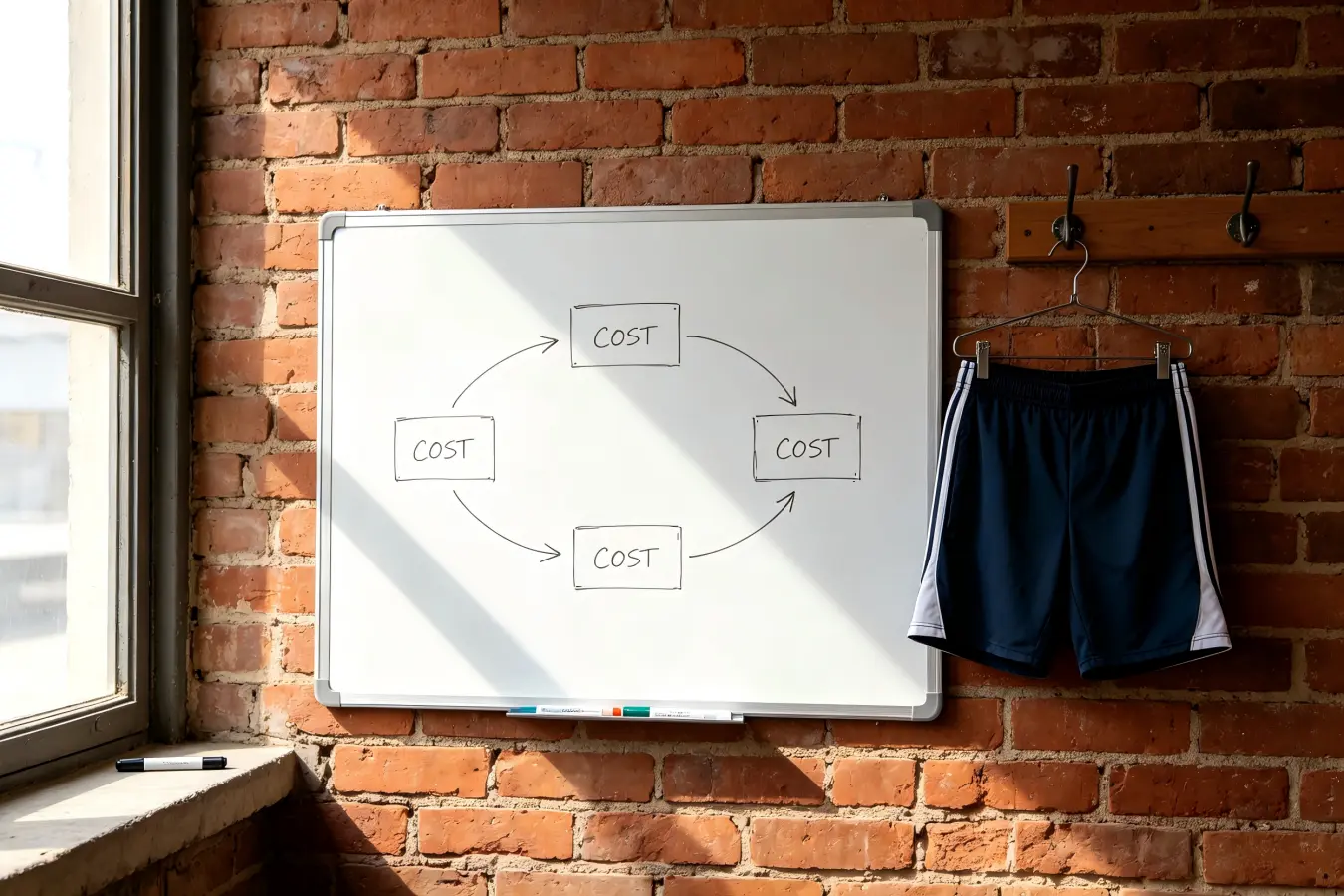
Many buyers ask me, "How much per short?" That question is normal, but it is incomplete. Before I can quote properly, I need to know the order quantity, fabric, waistband, pockets, decoration, packaging, destination, shipping method, and trade term. Without those details, two quotes can look similar but lead to very different landed costs.
What Does the Total Landed Cost of Custom Gym Shorts Include?
A buyer may plan a clean launch budget, then discover extra charges after sampling or shipping begins. That creates pressure on cash flow and retail pricing. A better approach is to treat the total landed cost of custom gym shorts as a full buying model, not a factory invoice.
The total landed cost of custom gym shorts includes all costs needed to develop, produce, export, import, and deliver the shorts to your final receiving point. The basic formula is: product cost + sampling + customization + packaging + international freight + customs costs + local delivery + risk buffer.
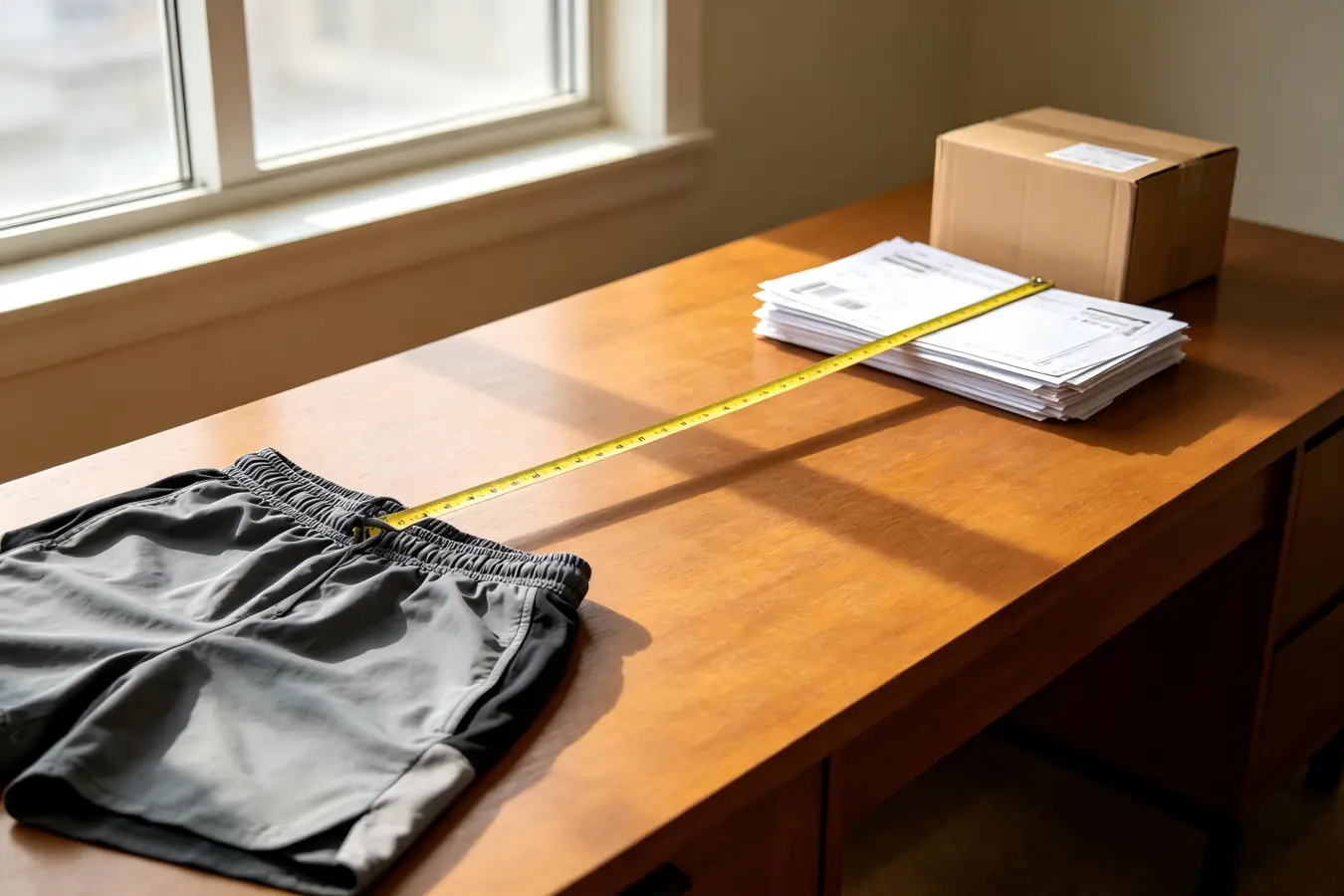
A Practical Landed Cost Formula
For custom gym shorts, I suggest buyers start with this simple formula:
Landed Cost = Product Cost + Development Cost + Packaging Cost + Export/Import Logistics + Duties/Taxes + Local Delivery + Contingency Buffer
This formula helps you compare supplier quotes more fairly. It also prevents the common mistake of treating the quoted unit price as the final cost.
Here is a buyer-friendly breakdown:
| Cost Item | What It Covers | Why It Matters |
|---|---|---|
| Product cost | Fabric, cutting, sewing, trims, labor, QC | This is the factory unit price |
| Sampling cost | First sample, revisions, express sample shipping | Custom fit and details often need adjustment |
| Customization | Printing, embroidery, woven labels, heat transfers | Branding changes both cost and lead time |
| Packaging | Polybags, hangtags, stickers, cartons, retail packs | Branded packaging affects cost and carton volume |
| International freight | Air, sea, courier, or forwarder shipping | Freight can vary heavily by volume and destination |
| Import costs | Duties, taxes, customs clearance | Must be verified with a broker or forwarder |
| Local delivery | Port or airport to warehouse | Often missing from early factory comparisons |
| Buffer | Price changes, extra samples, carton changes, delays | Protects your project from small surprises |
Product Cost Is Only the Starting Point
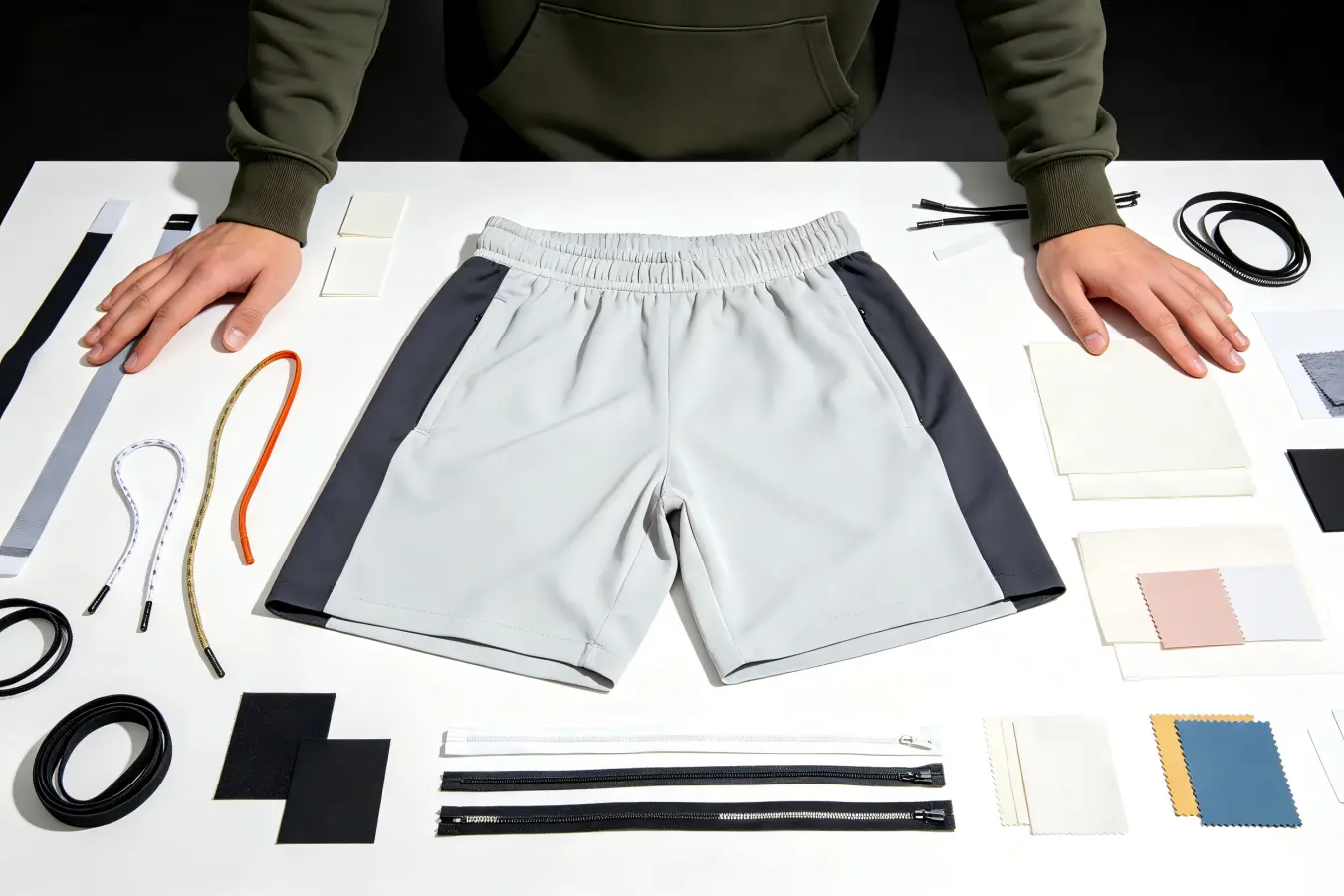
In our factory, the product cost is built from physical details. A basic training short with a standard elastic waistband will not cost the same as a lined gym short with zip pockets, contrast panels, silicone drawcord tips, and reflective logos.
Common gym short cost drivers include:
- Fabric type: polyester, spandex blend, nylon, mesh, recycled fabric
- Fabric weight: lightweight running fabric vs heavier training fabric
- Waistband construction: basic elastic, enclosed elastic, jacquard elastic, inner drawcord
- Pockets: side pockets, zip pockets, phone pocket, hidden key pocket
- Lining: no liner, brief liner, compression liner, mesh liner
- Decoration: screen print, heat transfer, embroidery, woven patch
- Size mix: larger sizes consume more fabric
- MOQ: our usual MOQ starts from 300 pcs, and larger runs often improve cost efficiency
During product development, I have seen buyers reduce cost without lowering quality by simplifying pocket construction or choosing one logo technique instead of mixing embroidery and heat transfer. Small decisions can matter.
Sampling and Development Costs Need Their Own Line
Sampling is not just a formality. For custom athletic shorts, sample approval controls fit, comfort, waistband tension, pocket placement, and logo position. Our typical sample time is 7–10 days, depending on material availability and design complexity.
Buyers should budget for:
- Initial sample
- Possible sample revision
- Sample shipping
- Lab dips or strike-offs if color or print accuracy is critical
- Pre-production sample for larger or repeat orders
If you want to review our typical workflow, our production process explains how development, sampling, bulk production, and quality checks connect.
Why Is the Factory Price Not the Total Landed Cost of Custom Gym Shorts?
A low unit price can feel like a win, but it may hide missing costs. Buyers sometimes compare three supplier quotes and pick the cheapest one. Later, they find that packaging, inland transport, export handling, or shipping was not included. That is how budgets move out of control.
The factory unit price is not the total landed cost of custom gym shorts because it usually covers only production under a specific trade term. It may exclude sampling, branded packaging, freight, customs clearance, duties, taxes, and delivery from the destination port to your warehouse.
The "How Much Per Short?" Question Is Too Small
One issue we frequently encounter is that buyers ask for only the unit price before defining the full project. I understand why. Buyers need a quick number to compare suppliers and plan retail margins. But for custom gym shorts, the answer depends on the details.
A useful quotation request should include:
- Quantity
- Size breakdown
- Fabric composition or target hand feel
- Short length and inseam
- Waistband type
- Pocket details
- Liner requirement
- Logo method and placement
- Label and hangtag needs
- Packaging style
- Destination country and city
- Preferred trade term
- Delivery deadline
Without these details, the factory can only give a rough estimate. That estimate may not survive once the real design is confirmed.
Example: Two Shorts With the Same Unit Price Can Land Differently
Let's say two suppliers quote similar factory prices for custom gym shorts. On paper, they look equal. But the total budget may change after you review what is included.
| Quote Area | Supplier A | Supplier B | Risk |
|---|---|---|---|
| Unit price | Includes standard polybag | Packaging not included | Later packaging cost |
| Trade term | FOB China port | EXW factory | Buyer pays more local China costs |
| Logo | One heat transfer included | Logo priced separately | Decoration cost gap |
| Sample | Charged separately | Included once | Revision cost difference |
| Shipping | Not included | Estimated DDP | Hard to compare without details |
The cheapest number is not always the cheapest landed result. A quote can only be compared fairly when the scope is the same.
Common Hidden Costs in Custom Gym Shorts Projects
Here are the costs that buyers often miss:
- Extra sample revisions after fit changes
- Special trims, such as branded drawcord tips or custom zipper pullers
- Retail packaging, such as printed zip bags or custom cartons
- Carton volume changes caused by bulky packaging
- Air freight upgrades when launch dates become urgent
- Local delivery charges after the shipment clears customs
- Storage or delay fees, depending on destination logistics
I do not claim to control every destination-country charge. A factory can support product cost, export documents, packing details, and shipment coordination. But import duties, taxes, broker charges, and final local delivery must be checked with your licensed customs broker or freight forwarder.
The Factory Price Still Matters
The factory price is still important. It affects your margin, MOQ planning, and wholesale strategy. But it should sit inside the larger landed cost model.
For example, if your order is close to our 300 pcs MOQ, sampling and freight may have a stronger effect per piece. If your order is larger, those fixed costs spread across more units. For a 600 pcs bulk order, our normal production time is about 25–30 days after approval, depending on fabric and customization. That timing also affects whether you can ship by sea or need faster air options.
How Do EXW, FOB, and DDP Change the Total Landed Cost of Custom Gym Shorts?
Trade terms can make quotes confusing. A buyer may receive one EXW price, one FOB price, and one DDP price, then assume they are comparable. They are not. Each term shifts cost and responsibility between factory, buyer, freight forwarder, and customs broker.
EXW, FOB, and DDP change the total landed cost of custom gym shorts by deciding which party pays for local pickup, export handling, international freight, customs clearance, duties, taxes, and final delivery. Buyers should compare quotes only after converting them into the same landed-cost basis.
A Simple Trade Term Comparison
Here is a simplified way to understand the difference. Actual responsibility can vary by agreement, so buyers should confirm details in writing.
| Trade Term | Usually Included in Supplier Quote | Usually Not Included | Best For |
|---|---|---|---|
| EXW | Goods ready at factory | China pickup, export, freight, import, delivery | Buyers with strong forwarder support |
| FOB | Goods delivered to China port and export cleared | International freight, import, local delivery | Buyers comparing freight options |
| DDP | Delivered to buyer address, duties handled by seller or logistics provider | Some destination exceptions may apply | Buyers who want simpler budgeting |
EXW Can Look Cheap but Feel Expensive Later
EXW means the goods are ready at the factory. The buyer or buyer's forwarder handles pickup and the later steps. This quote can look very low because many logistics costs are outside the factory price.
EXW may work well if you have:
- A trusted forwarder in China
- Consolidated shipments from multiple suppliers
- Experience managing export documents
- A clear import process in your country
But EXW can be risky for new buyers because local pickup, export handling, documentation, and coordination can become confusing.
FOB Is Often Easier for Quote Comparison
FOB is common for B2B apparel exports. Under FOB, the factory usually handles delivery to the departure port and export clearance. The buyer then handles international freight, import clearance, duties, taxes, and local delivery.
For custom gym shorts, FOB can be useful because it separates product and export-side cost from overseas freight and import cost. Buyers can ask different forwarders for freight quotes and compare them.
DDP Can Simplify Budgeting, but Buyers Still Need Clarity
DDP can be attractive because it offers a more complete delivered estimate. However, buyers still need to ask what is included. Some DDP quotes may have limitations based on destination, product category, delivery address, or customs requirements.
I always suggest buyers confirm these points:
- Is the delivery address commercial or residential?
- Are duties and taxes included?
- Who is the importer of record?
- What documents will be provided?
- Are there remote-area or appointment-delivery charges?
- What happens if customs requests extra information?
As a manufacturer, we can coordinate with logistics partners, but we are not a customs broker or tax advisor. Any HS code, duty rate, import rule, or compliance question should be verified with a licensed customs broker or freight forwarder in your market.
Why Trade Terms Affect Cash Flow
Trade terms also affect when you pay. With EXW or FOB, you may pay product cost to the factory and freight/import charges separately. With DDP, more costs may be bundled into one logistics quote.
This matters for brand founders and wholesalers because cash flow is often tight before a product launch. A simple landed cost sheet helps you avoid surprises before you approve samples and bulk production.
If you want a factory-direct discussion around OEM or ODM projects, our OEM/ODM service page explains how we support custom development and production planning.
Which Custom Gym Shorts Details Change Your Landed Budget?
A budget problem often starts inside the product itself. A buyer may plan one cost, then add a liner, change to zipper pockets, request custom packaging, or revise the print. Each change is reasonable, but every detail can affect the real landed cost.
Custom gym shorts details that can change your landed budget include fabric, waistband, drawcord, pocket design, liner, logo method, labels, size mix, MOQ, sample revisions, packing volume, and shipping method. The more complex the product, the more carefully buyers should model total cost.
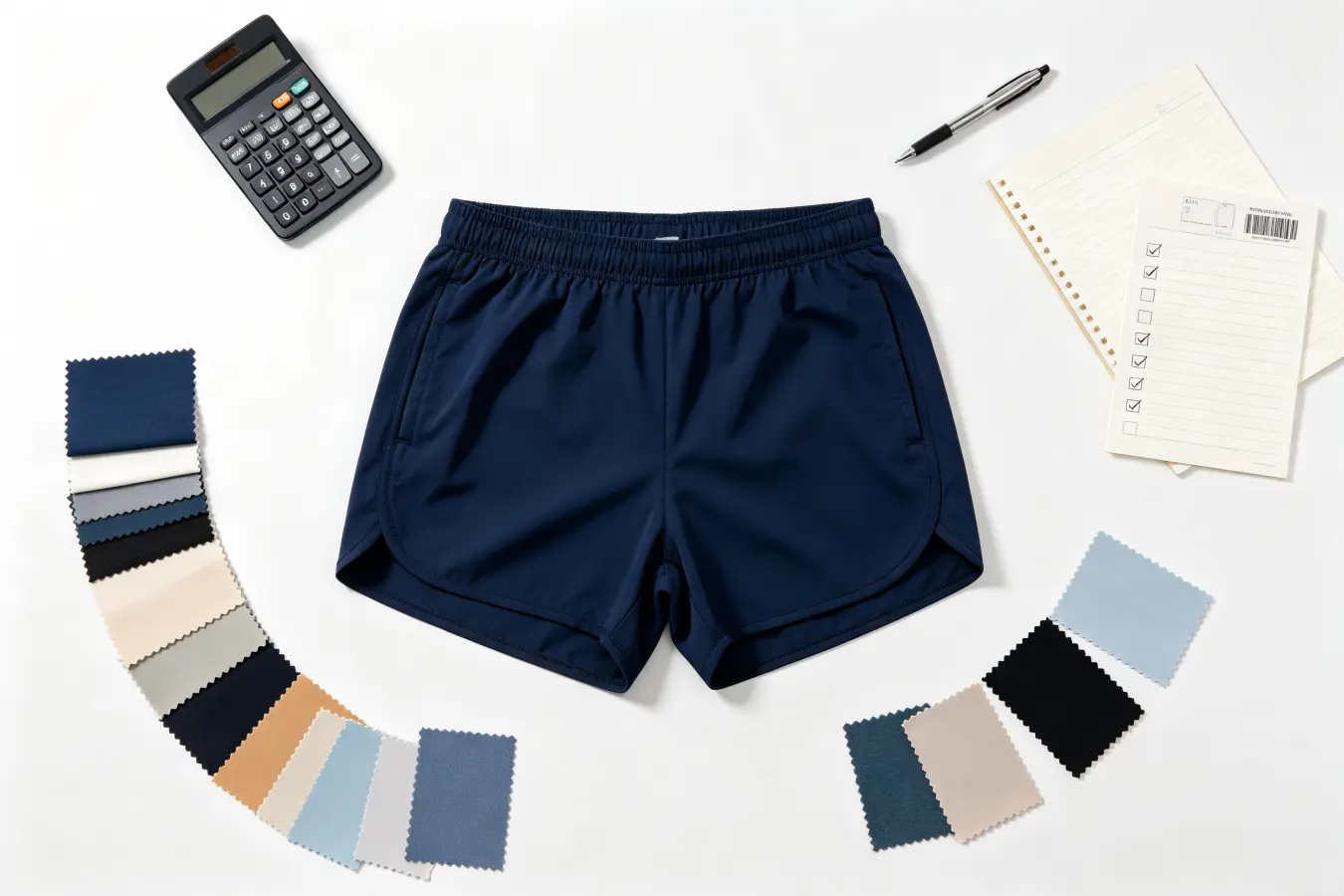
Fabric Choice Has the Biggest Product-Cost Impact
Fabric is usually one of the largest cost drivers. A light polyester fabric for gym training shorts may cost less than a nylon-spandex blend with stronger stretch and a softer hand feel. Recycled fabrics, special finishes, and custom-dyed materials may also affect MOQ and lead time.
Common fabric questions include:
- Do you need stretch for squats, lunges, or boxing movement?
- Do you need quick-dry performance?
- Do you need a soft cotton-like touch?
- Do you need mesh ventilation?
- Do you need recycled material for brand positioning?
A buyer can save money by choosing an available fabric color instead of custom dyeing. This can also reduce development risk for first orders.
Waistband, Drawcord, and Pockets Change Sewing Time
The waistband looks simple, but it changes labor and comfort. A basic elastic waistband is different from a multi-channel waistband with inner drawcord and branded tips. For gym shorts, waistband stability matters because the shorts must stay secure during training.
Pockets also influence cost. A side seam pocket is usually simpler than a zipper pocket. A hidden phone pocket or bonded pocket may require more sewing time and testing.
Here is a practical comparison:
| Detail | Lower-Cost Option | Higher-Cost Option | Buyer Consideration |
|---|---|---|---|
| Waistband | Standard elastic | Jacquard elastic or inner drawcord | Comfort and brand feel |
| Drawcord | Plain round cord | Branded tips or custom color | Small detail, higher trim cost |
| Standard side pocket | Zipper or hidden phone pocket | Function vs cost | |
| Liner | No liner | Compression liner | Adds fabric and sewing work |
| Logo | One heat transfer | Multiple prints or embroidery | Branding vs production complexity |
Branding and Packaging Affect Freight Too
Branded packaging can improve retail presentation, but it also changes carton size and weight. A simple polybag takes less space than a thick zip bag with hangtag, sticker, cardboard insert, and retail display carton.
This matters because freight is often calculated by actual weight or volumetric weight. A packaging decision that adds only a small cost per unit may increase freight cost if the cartons become larger.
Practical packaging options include:
- Standard clear polybag
- Polybag with size sticker
- Custom printed polybag
- Hangtag and barcode sticker
- Retail-ready package
- Custom export carton markings
For many first-time buyers, I suggest starting with clean but controlled packaging. Strong branding is good, but over-designed packaging can quietly raise landed cost.
MOQ and Size Mix Affect Average Cost
Our general MOQ starts from 300 pcs, but the final structure depends on style, fabric, and customization. A size mix with many sizes can create production complexity. Larger sizes use more fabric. Very uneven size ratios can also complicate planning.
For repeat production, buyers often get better control after sales data shows which sizes move fastest. For first orders, I suggest using a practical size curve and avoiding too many colorways. One strong colorway at a reasonable quantity is often safer than three colors with thin quantities in each.
If your project focuses on training products, our custom training shorts page can help you match design details with use cases.
How Can Buyers Build a Simple Landed Cost Checklist Before Ordering?
Many budget overruns happen because the buyer confirms production before all cost lines are visible. The project then moves too fast. Sampling, revisions, packaging, and freight decisions arrive one by one, and the final landed cost becomes harder to control.
Buyers can build a simple landed cost checklist by listing every cost from sample to warehouse arrival, confirming the trade term, asking what is included in the supplier quote, verifying import costs with a broker, and adding a contingency buffer before placing the order.
Step 1: Define the Product Before Asking for Price
A clear product brief makes the quote more accurate. You do not need a perfect tech pack at the first message, but you should provide enough detail.
A useful first inquiry includes:
- Product type: gym shorts, running shorts, training shorts, boxing shorts
- Target fabric or reference sample
- Quantity
- Size range
- Colorways
- Logo method
- Waistband type
- Pocket requirements
- Liner requirement
- Packaging requirement
- Destination country and city
- Target delivery date
If the design is still open, say that clearly. Then the factory can suggest cost-effective options.
Step 2: Ask the Supplier What Is Included
This is where buyers avoid confusion. Every quotation should answer the same questions.
Ask:
- Is the price EXW, FOB, CIF, or DDP?
- Does the unit price include labels?
- Does the unit price include packaging?
- Does it include logo printing or embroidery?
- Are sample costs included or separate?
- Are sample revisions included?
- What is the MOQ?
- What is the bulk production time?
- What documents can be provided for export?
- What costs are not included?
A professional supplier should not be offended by these questions. Clear questions reduce mistakes on both sides.
Step 3: Confirm Freight and Import Costs Separately
Freight changes quickly. Air shipping can be useful for urgent launches, but it can raise the landed cost sharply. Sea shipping can be more economical for larger orders, but it requires more time.
Buyers should ask a freight forwarder for:
- Estimated international freight
- Customs clearance charges
- Possible duty and tax estimate
- Local delivery cost
- Required import documents
- Delivery timeline
- Any remote-area or appointment-delivery charges
Again, duty rates and HS classification should be verified by a licensed customs broker or forwarder. A factory can share product composition, invoice details, packing list information, and export documents, but final import compliance belongs to the buyer's import process.
Step 4: Add a Contingency Buffer
A buffer is not a waste. It protects the order. For custom gym shorts, small changes can happen during sample approval or bulk preparation.
A buffer may cover:
- One extra sample revision
- Slight trim price changes
- Additional logo testing
- Carton adjustment
- Freight quote movement
- Local delivery changes
- Extra inspection or quality check needs
I prefer buyers to plan this before ordering rather than negotiate every small change under stress. It keeps the relationship healthier and the launch more predictable.
Step 5: Compare Quotes on the Same Basis
A simple comparison sheet can prevent poor decisions.
| Comparison Point | Supplier 1 | Supplier 2 | Supplier 3 |
|---|---|---|---|
| Unit price | |||
| MOQ | |||
| Sample cost | |||
| Logo included? | |||
| Packaging included? | |||
| Trade term | |||
| Freight estimate | |||
| Import estimate verified? | |||
| Local delivery | |||
| Estimated landed cost | |||
| Production time |
The goal is not to make the lowest factory unit price win. The goal is to find the best combination of cost, quality, communication, timeline, and risk control.
Frequently Asked Questions
What is the easiest way to calculate landed cost for custom gym shorts?
The easiest way is to list every cost line: product cost, sampling, logo, labels, packaging, freight, customs clearance, duties, taxes, local delivery, and buffer. Then divide the total project cost by the number of shorts to get an estimated landed cost per piece.
Why do two Chinese factory quotes for gym shorts look so different?
Two quotes may use different fabrics, trims, logo methods, packaging, MOQs, sample terms, and trade terms. One quote may be EXW while another is FOB or DDP. Buyers should ask what is included before comparing prices.
Should I use EXW, FOB, or DDP for custom gym shorts?
FOB is often easier for experienced B2B buyers because it gives cleaner factory-side cost and lets you choose your forwarder. DDP may be simpler for budgeting, but buyers must confirm what is included. EXW works best when you have strong logistics support in China.
Do custom labels and packaging affect landed cost?
Yes. Custom labels, hangtags, printed polybags, barcode stickers, and retail packaging add unit cost. They can also increase carton size, which may affect freight. Buyers should include packaging in the landed cost calculation from the beginning.
Can a factory tell me the exact duty rate for my country?
A factory can provide product details, composition, invoice, and packing information, but it should not give final customs conclusions. Duty rate, HS code, tax, and clearance requirements should be verified with a licensed customs broker or freight forwarder in your destination market.
Conclusion
The total landed cost of custom gym shorts is a full budget model, not a single factory unit price. Buyers should include product development, samples, trims, labels, packaging, international freight, customs costs, local delivery, and a practical buffer. The safest approach is to define the product clearly, confirm the trade term, and compare supplier quotes on the same basis. If you are planning an OEM or ODM gym shorts order, you can contact us to send your tech pack, request a sample, or discuss a factory-direct quotation.