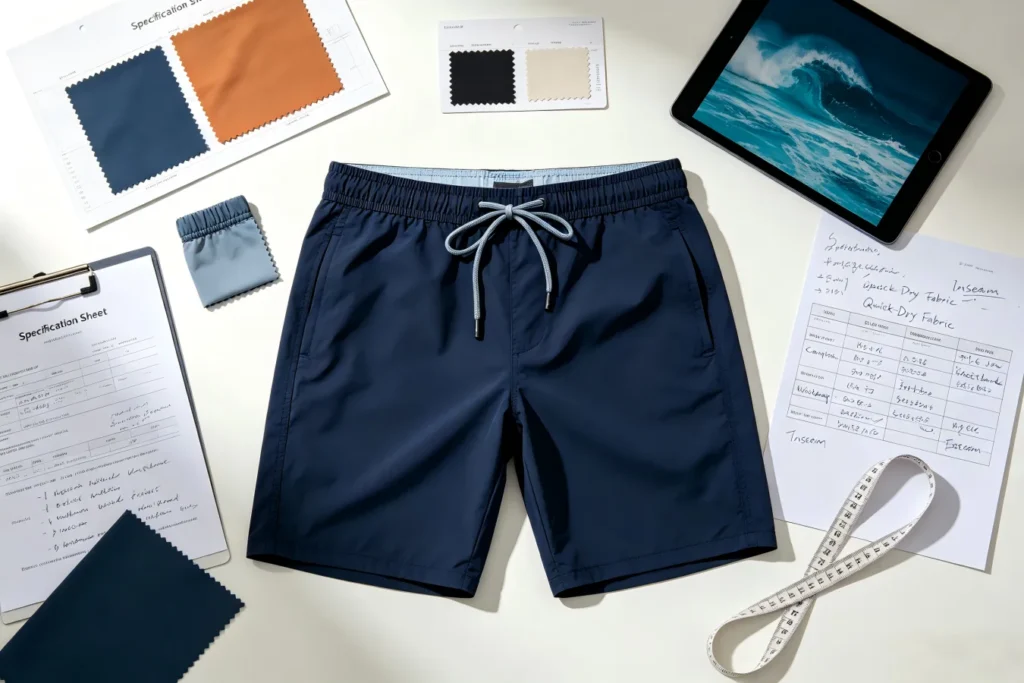
[Wholesale custom board shorts ODM projects often look simple at first: send a logo, choose a fabric, and ask for a price. The problem starts when the sample does not match the target customer, retail positioning, or delivery plan. A better approach is to turn the idea into a clear product specification before comparing suppliers.
A wholesale custom board shorts ODM project should be evaluated by specification readiness, not unit price alone. Buyers should confirm the use case, fabric, fit, waistband, lining, pockets, branding method, MOQ, packaging, sample timeline, bulk production plan, and export requirements before approving a supplier or final quotation.
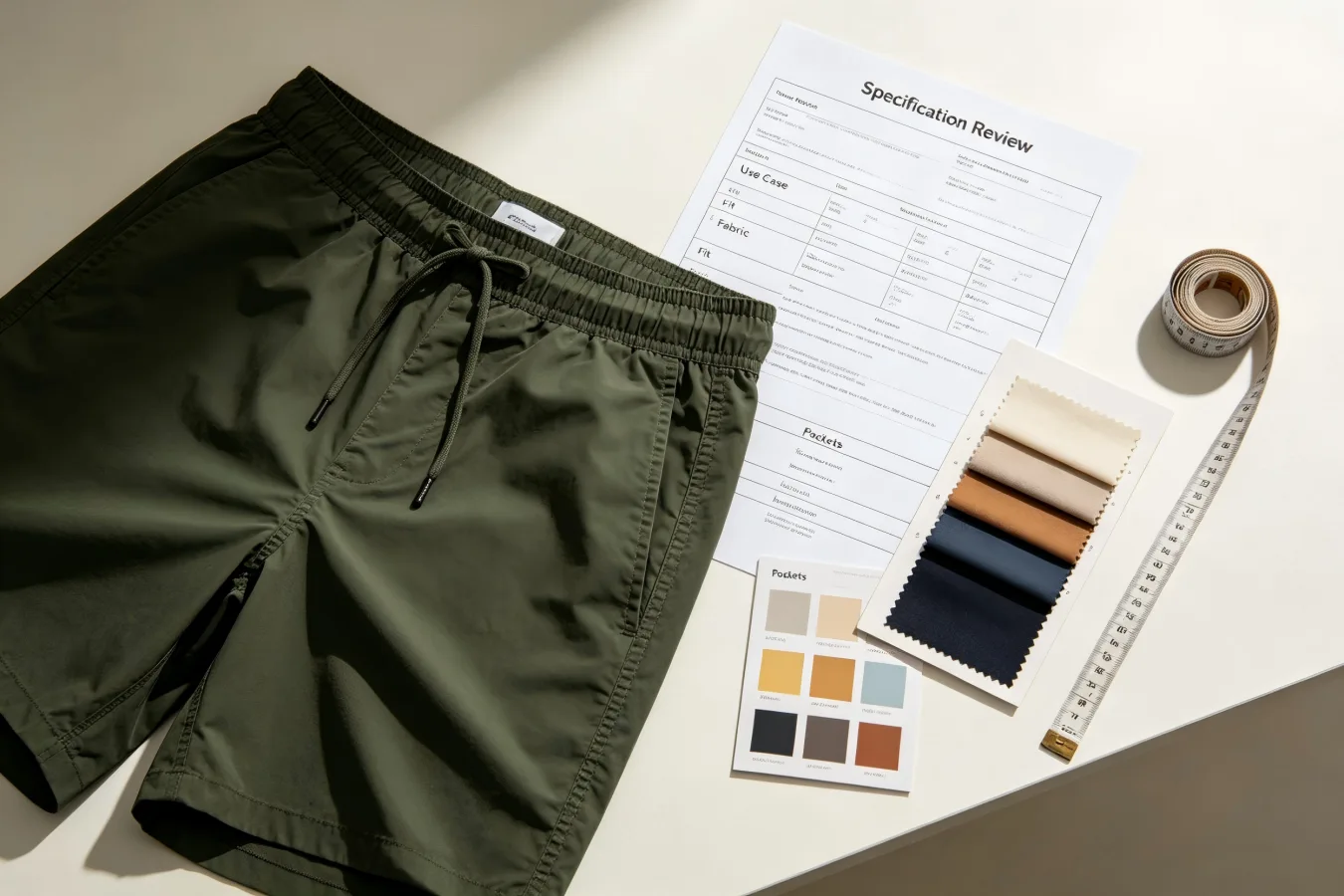
Many buyers come to us with a reference photo and a target price. That is a useful starting point, but it is not enough for production. Below, I will explain how I review board shorts inquiries from a manufacturing side, so brands and wholesalers can reduce sampling mistakes and quotation gaps.
Why Should Wholesale Custom Board Shorts ODM Start With Use Case?
A board shorts project can fail when the product task is unclear. A beach event short, a surfwear retail short, and a wholesale replenishment short may look similar in photos. However, they need different fabric, fit, trims, packaging, and cost control.
A wholesale custom board shorts ODM project should start with the intended use case because the use case drives every technical decision. Surfing, beach leisure, team events, resort retail, and wholesale distribution all affect fabric weight, stretch, quick-dry expectations, waistband comfort, pocket design, inseam length, and branding method.
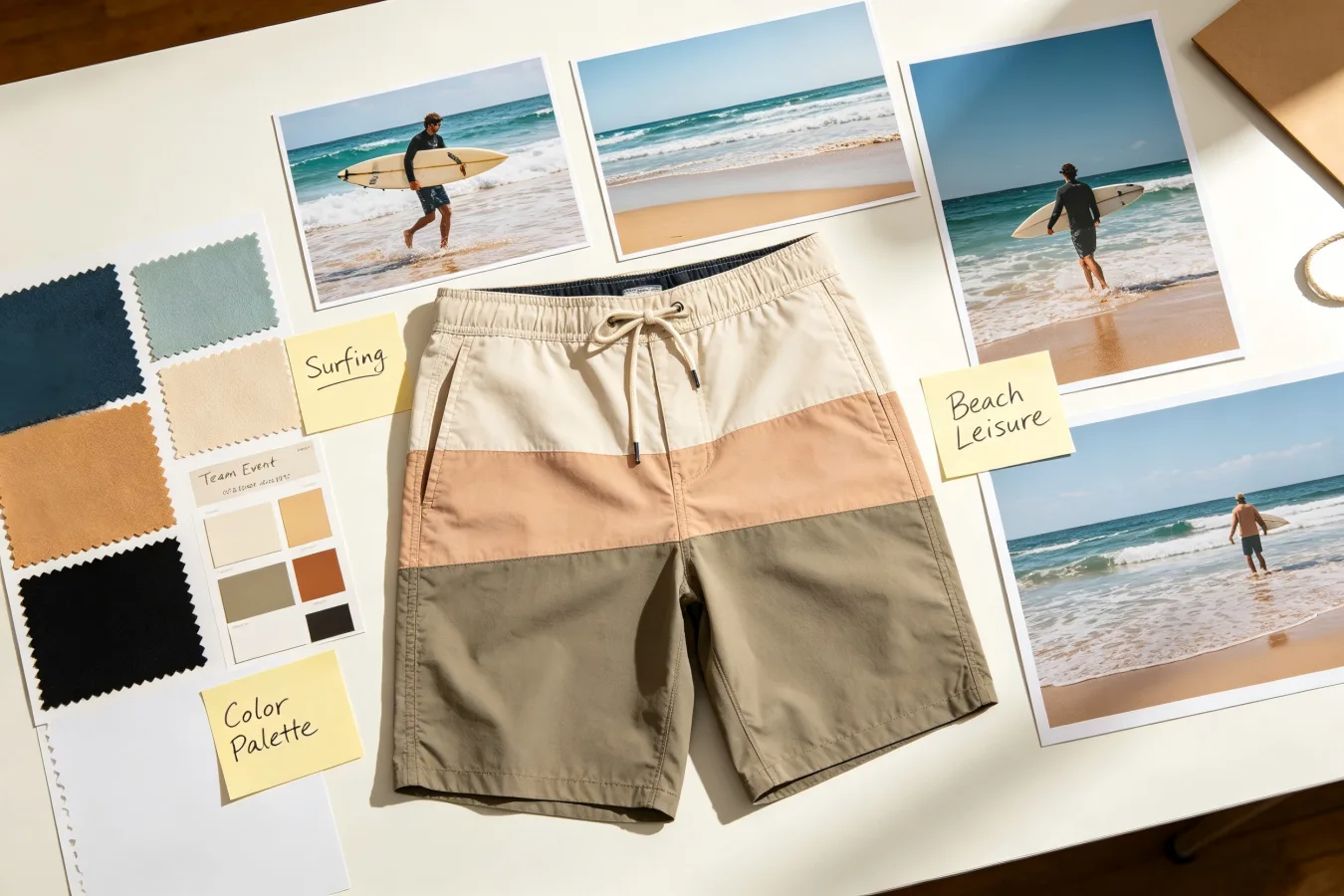
During product development, one issue we frequently encounter is that buyers describe the product as "board shorts with our logo." From a factory perspective, that phrase is too broad for accurate sampling. It does not tell us whether the short is for active water use, casual beachwear, club uniforms, promotional merchandise, or retail sales.
Common Use Cases and What They Change
| Use Case | Main Buyer Concern | Specification Impact |
|---|---|---|
| Surfwear retail collection | Brand look, comfort, repeat sales | Better fabric handfeel, cleaner stitching, custom print or woven label |
| Beach leisure shorts | Lightweight comfort and easy styling | Softer fabric, relaxed fit, practical pockets |
| Team or club shorts | Consistent logo and sizing | Stable color matching, size range planning, simple packaging |
| Event or resort merchandise | Budget and delivery control | Standard trims, clear MOQ, less sampling complexity |
| Wholesale replenishment | Repeat production consistency | Confirmed patterns, fabric continuity, stable packaging |
The fabric choice should match the real wearing scenario. Some buyers request a premium four-way stretch fabric, but their product is mainly for beachside leisure. Other buyers want a low-cost fabric, but they plan to sell the shorts as a functional surfwear item. Both situations can create problems.
In manufacturing communication, we often need to confirm:
- Target user: men, women, youth, club members, resort guests, or general retail buyers
- Activity level: active water use, beach walking, casual travel, gym-to-beach lifestyle, or team event use
- Fit preference: slim, regular, relaxed, long length, mid-thigh, or above-knee
- Lining requirement: no lining, mesh brief, compression liner, or custom inner short
- Pocket design: side pockets, back patch pocket, zipper pocket, drainage eyelet, or no pocket
- Branding position: hem logo, waistband label, all-over print, drawstring tip, hangtag, or packaging sticker
A Small Factory-Side Example
A buyer may send a photo of a board short with a tropical print and ask for "same style, better price." Before quoting, I still need to know whether the print is sublimation, digital printing, or screen printing. I also need to know whether the waistband is elastic, fixed, half-elastic, or flat with a drawstring. These differences change the fabric, sewing process, and cost.
That is why wholesale custom board shorts ODM should begin with a product task, not a price target only. A good ODM supplier should help translate your use case into a sample-ready direction. However, the brand should still own the market positioning, aesthetic judgment, and final sales decision.
For buyers who are still comparing categories, our overview of OEM and ODM shorts manufacturing may help clarify how development support works in practice.
What Specifications Affect Wholesale Custom Board Shorts ODM Price?
Price confusion happens when buyers compare quotations without comparing specifications. One supplier may quote a basic polyester short. Another may include stretch fabric, custom print, inner lining, branded trims, and export packaging. The prices are different because the products are different.
Wholesale custom board shorts ODM price is mainly affected by fabric, lining, waistband construction, print method, trims, pocket details, packaging, MOQ, sample revisions, and delivery requirements. A meaningful quotation should clearly state what is included, what is optional, and what may change after sample approval.
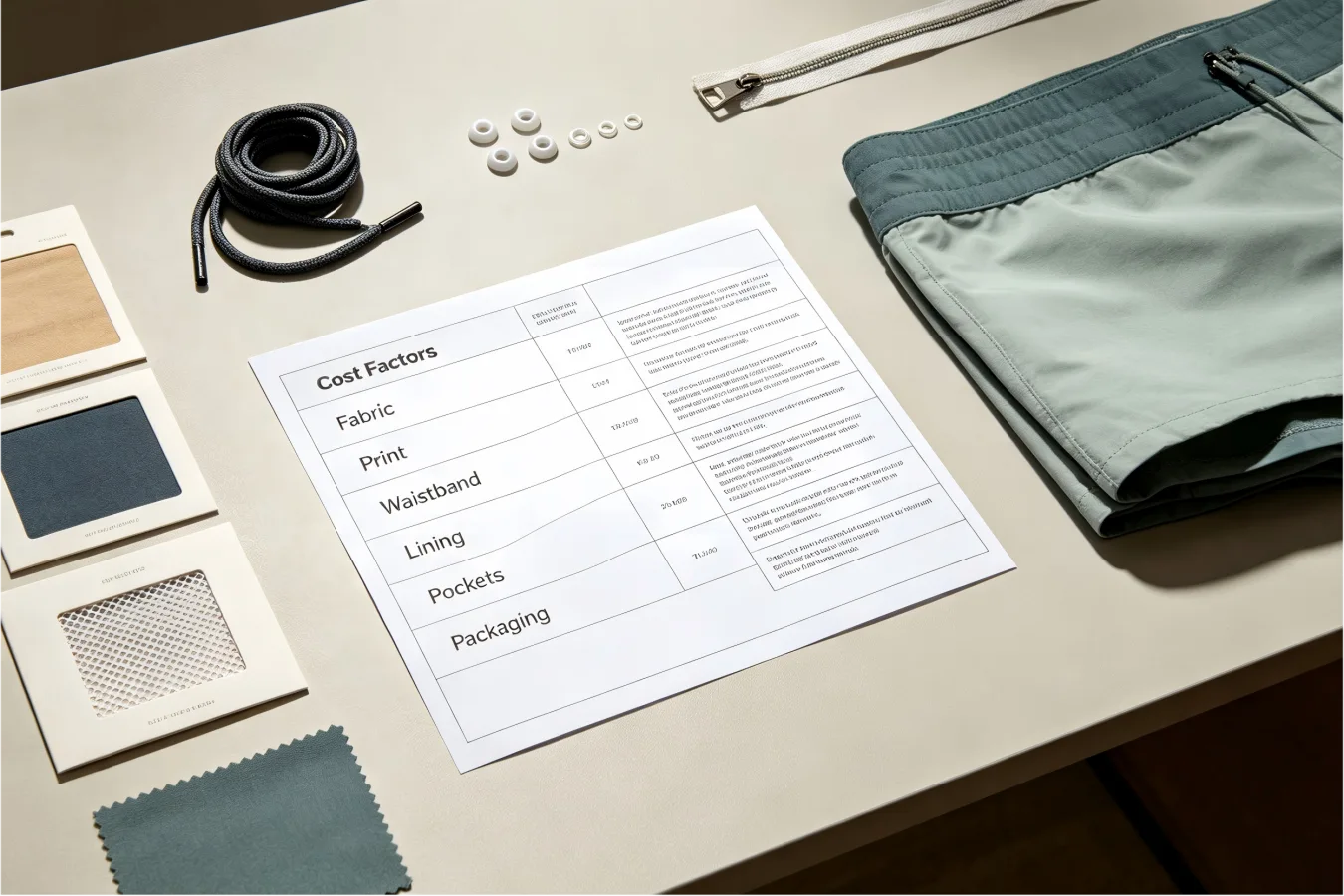
From a supplier's perspective, quotation accuracy depends on how much specification detail the buyer provides. If the request only says "quick-dry board shorts, logo print, 500 pieces," the price can only be a rough estimate. It may help with early budgeting, but it should not be treated as a final production quote.
Major Cost Drivers Buyers Should Confirm
| Cost Factor | Lower-Cost Option | Higher-Spec Option | Buyer Checkpoint |
|---|---|---|---|
| Fabric | Standard polyester | Stretch woven, recycled fabric, softer handfeel | Ask for fabric composition and weight |
| Single logo print | All-over print or complex placement | Confirm print method and artwork file | |
| Waistband | Basic elastic | Fixed waistband with drawcord and eyelets | Check comfort and construction |
| Lining | No lining | Mesh brief or compression liner | Confirm target user preference |
| Pockets | Simple side pockets | Zipper pocket, back flap, drainage | Check function and sewing complexity |
| Trims | Stock drawcord | Custom tips, woven patch, rubber patch | Confirm MOQ and lead time |
| Packaging | Polybag only | Hangtag, barcode, carton mark, retail pack | Match wholesale or retail channel |
Fabric Is Not Just a Material Line
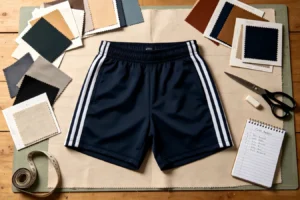
Many buyers ask for "quick-dry fabric." In daily factory communication, that phrase still needs more detail. A light woven polyester can dry faster than a heavier fabric, but handfeel, opacity, stretch, and durability also matter. Some buyers prefer a crisper surfwear feel. Others want a soft casual beach short.
A practical fabric discussion should include:
- Composition: polyester, nylon, spandex blend, or recycled option if available
- Stretch: non-stretch, two-way stretch, or four-way stretch
- Weight: light, medium, or heavier feel based on sample swatches
- Handfeel: smooth, peach, crisp, soft, or textured
- Print compatibility: suitable for sublimation, digital print, or other methods
Printing and Branding Can Change the Real Cost
A small logo print is not the same as an all-over artwork. A placed panel print requires more control than a repeat pattern. A woven patch may need separate sampling and MOQ. A rubber label can look strong, but it may not fit every budget or timeline.
For wholesale custom board shorts ODM, brands should send artwork files early. Vector files are usually better for logos. Color references help reduce back-and-forth communication. If the buyer uses Pantone references, the supplier can discuss color matching more clearly, although final results still depend on material and print method.
MOQ, Revisions, and Delivery Also Matter
A low MOQ is attractive, but small orders can raise unit cost because fabric purchasing, printing setup, cutting, sewing, inspection, and packing still require labor. Multiple sample revisions can also extend the timeline.
Our general timeline is:
- Samples: 8–10 working days for production once everything is approved
- Express sample shipping: usually 5–7 days
- Bulk production: usually 25–30 working days
- Express bulk shipping by FedEx/DHL: usually 5–7 days
- Air freight: usually 10–15 days
These timelines should be confirmed project by project. Fabric availability, custom trims, printing complexity, holidays, and approval delays can affect the schedule.
How Can Buyers Judge a Reliable Wholesale Custom Board Shorts ODM Supplier?
A weak supplier may quote quickly and promise everything. That feels convenient, but it can hide risk. If the supplier does not ask enough questions before pricing, the sample may be based on assumptions instead of your product goal.
A reliable wholesale custom board shorts ODM supplier should ask about use case, reference style, logo, color, fabric preference, size range, order quantity, target market, budget range, packaging, timeline, and export needs before giving a serious recommendation. Careful questions usually lead to better samples and fewer production surprises.
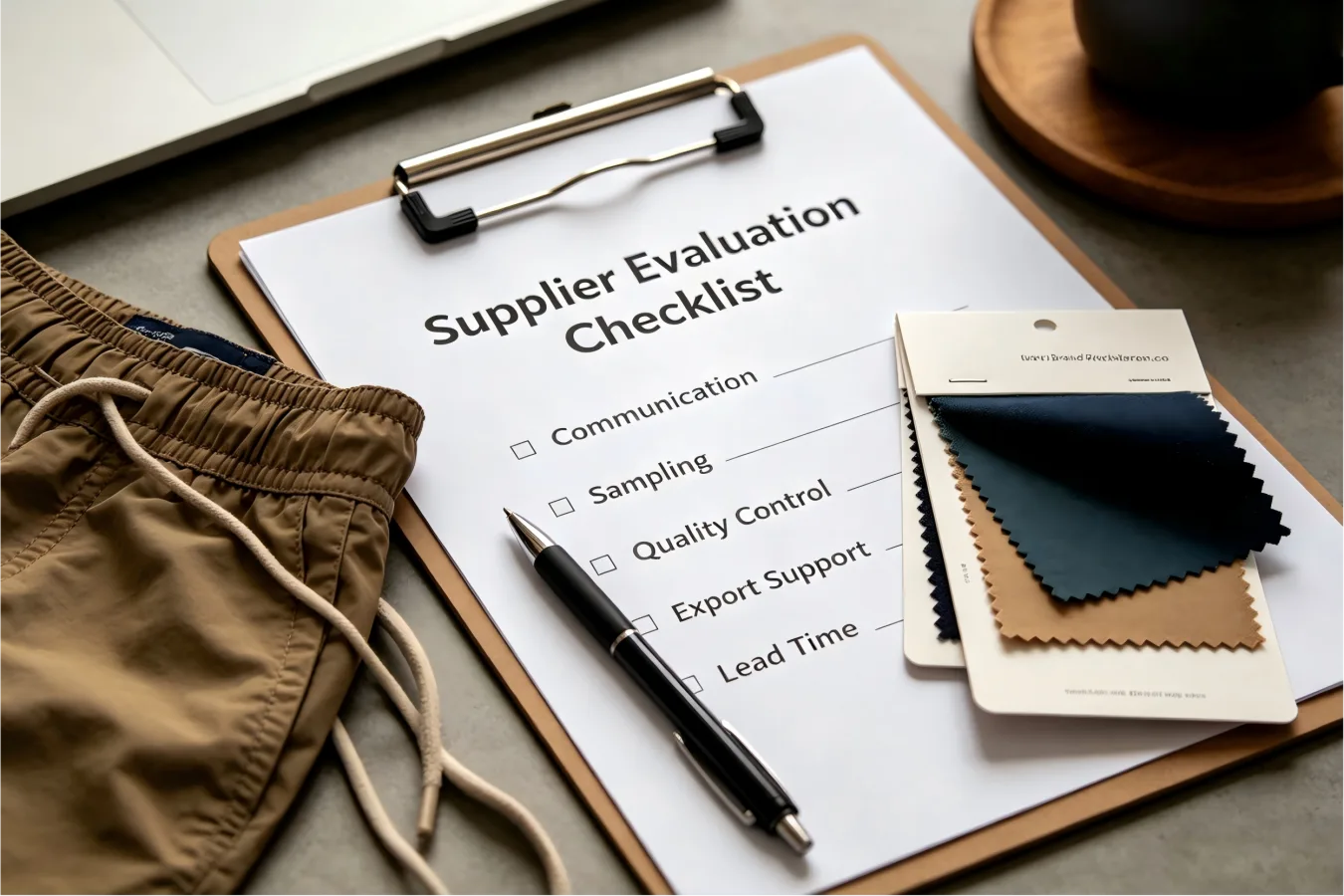
Based on our OEM experience, I do not view "we can make anything" as a strong answer. It sounds flexible, but it is not enough for procurement. A factory should be able to explain what can be done, what needs confirmation, what may affect cost, and what may create production risk.
Questions a Supplier Should Ask You
A serious supplier will usually confirm details such as:
- What is the target use case: surfwear, beachwear, event, team, retail, or wholesale?
- Do you have a reference sample, product photo, or tech pack?
- What fabric feel do you want: lightweight, stretch, soft, crisp, or premium?
- Do you need lining, and what type?
- What is your size range, and do you need graded measurements?
- What branding do you need: logo print, woven label, rubber patch, hangtag, packaging?
- What is your estimated order quantity per color and per size?
- What is your target budget range, if you have one?
- What is your delivery deadline?
- Do you need support with export cartons, carton marks, barcodes, or shipping documents?
These questions are not delays. They protect both sides. From a supplier's perspective, they help prevent a quotation that looks attractive but becomes inaccurate after sampling.
Supplier Evaluation Framework
| Evaluation Area | What to Look For | Warning Sign |
|---|---|---|
| Communication | Clear questions and written confirmation | Vague promises |
| Sampling | Sample plan, artwork check, size confirmation | No clear approval process |
| Production | Bulk timeline and inspection steps | Unclear lead time |
| Quality control | Measurement, stitching, color, packing checks | "No problem" without details |
| Export support | Carton marks, packing list, shipping coordination | No export experience |
| ODM boundary | Feasible product development support | Claims to replace brand strategy |
Factory Experience: Where Problems Usually Start
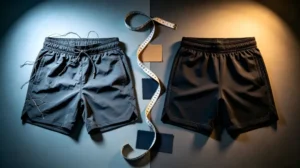
During sample approval, problems often start from missing measurement details. A buyer may approve the look but not review the waist, inseam, rise, leg opening, or pocket depth. Later, during bulk production, the buyer notices the fit is not what the sales team expected. At that point, changes are more difficult.
For board shorts, I recommend checking:
- Waist relaxed and stretched measurement
- Outseam and inseam length
- Front rise and back rise
- Leg opening
- Pocket depth and pocket opening
- Drawstring length and position
- Lining comfort if used
- Logo size and placement
- Care label content
- Packaging method and carton information
Procurement Tip: Ask for Written Specification Confirmation
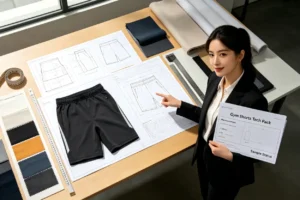
A good sample discussion should end with a written specification sheet or at least a clear message summary. The document does not need to be complicated for every project, but it should record the decisions. This is especially useful for repeat production.
Useful confirmation points include:
- Fabric name or fabric reference
- Color or print artwork
- Size chart
- Logo method and placement
- Lining type
- Pocket and waistband details
- Packaging
- Quantity breakdown
- Sample approval comments
- Bulk production timeline
Buyers can also review our general production process for custom shorts to understand how sampling, approval, bulk production, inspection, and shipping coordination usually connect.
What Should Be Included Before Sample Approval for Wholesale Custom Board Shorts ODM?
A sample can look "almost right" and still be risky for bulk production. If the buyer approves only the photo, small details may be missed. Those details can create fit complaints, packaging issues, or inconsistent branding later.
Before sample approval for wholesale custom board shorts ODM, buyers should confirm measurements, fabric, print or logo placement, waistband construction, lining, pocket design, stitching quality, label content, packaging, size grading, and any changes needed before bulk production. Written approval should be clear enough for production workers to follow.
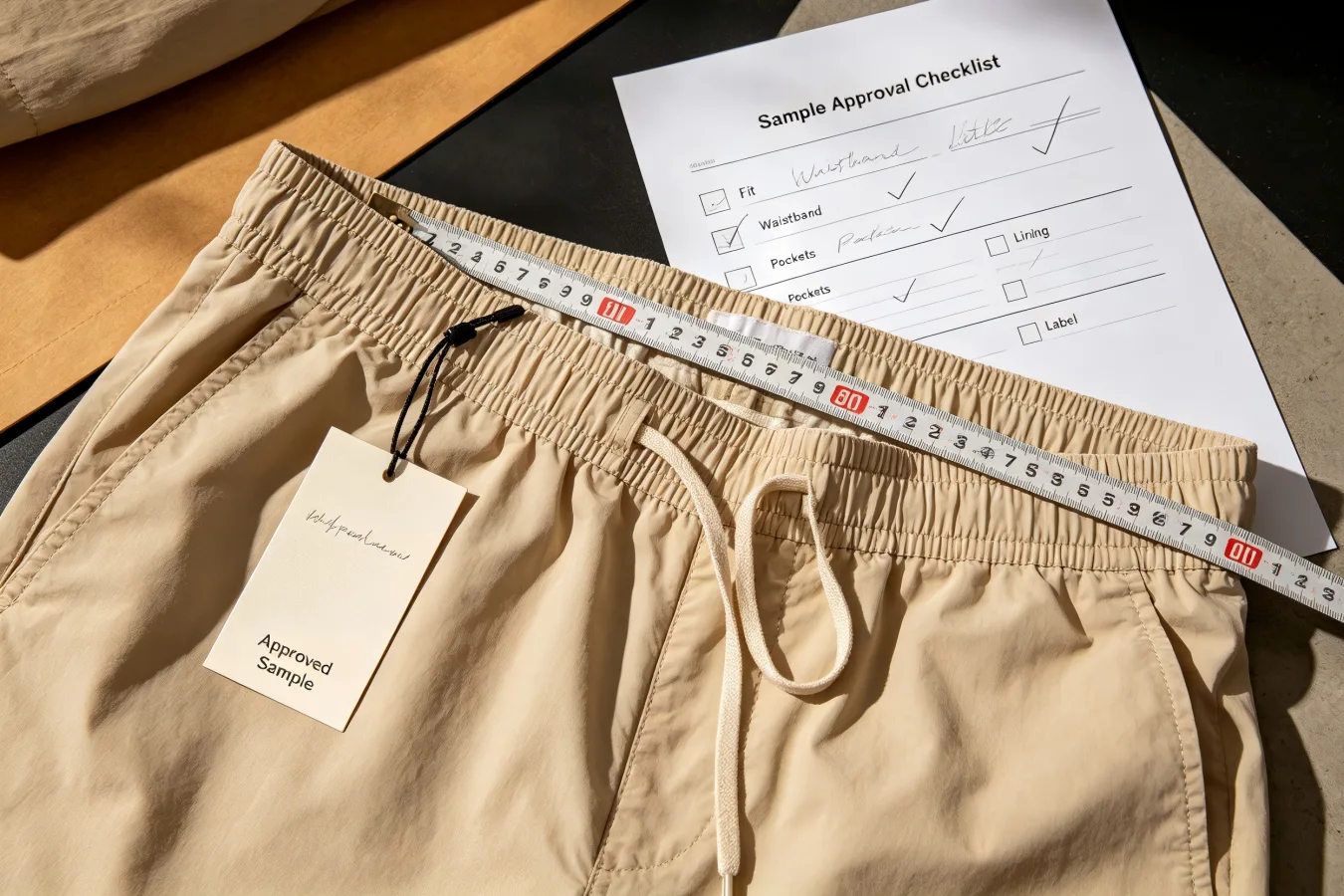
In our factory, sample approval is not only about whether the buyer likes the style. It is also the point where the product becomes a production instruction. If approval comments are unclear, the bulk production team may not know which details must be changed and which details are already accepted.
Sample Approval Checklist
| Checkpoint | What Buyer Should Review | Why It Matters |
|---|---|---|
| Fit | Waist, length, rise, leg opening | Controls customer comfort |
| Fabric | Stretch, handfeel, weight, opacity | Matches product positioning |
| Branding | Logo size, placement, color | Protects brand consistency |
| Waistband | Elastic strength, drawstring, eyelets | Affects wearing comfort |
| Lining | Fit, softness, coverage | Prevents complaints |
| Pockets | Depth, zipper, flap, drainage | Affects function |
| Stitching | Seam neatness and reinforcement | Affects perceived quality |
| Labels | Size, care, brand label | Supports retail and compliance needs |
| Packaging | Polybag, hangtag, barcode, carton mark | Supports wholesale or retail flow |
Common Mistakes Before Bulk Production
One common mistake is approving a sample without checking the full size range. A medium sample may look good, but the grading for XL or 2XL still needs logic. Another mistake is changing fabric after sample approval while expecting the same fit and handfeel. A different fabric can change drape, stretch, and comfort.
Other common mistakes include:
- Approving artwork from a phone photo only
- Forgetting hangtag, care label, or barcode requirements
- Not confirming carton marks for wholesale delivery
- Requesting urgent delivery after several late design changes
- Comparing price without comparing fabric and construction
- Assuming the factory knows the buyer's retail channel
Best Practice for Revisions
If the first sample needs changes, the buyer should send comments in a structured way. Clear comments reduce misunderstanding.
A useful revision format is:
- Keep: "Keep fabric and waistband construction."
- Change: "Move logo 2 cm higher on left leg."
- Adjust measurement: "Increase inseam by 1 cm."
- Confirm: "Use black drawstring with white tip."
- Packaging: "Add hangtag and individual polybag."
This style is simple, but it works. During bulk production, the team can follow written points more easily than scattered messages across email, WhatsApp, and image comments.
ODM Support Has Boundaries
A factory can help develop a feasible sample and scalable production plan. We can suggest construction options, fabric directions, practical trims, and packaging methods. However, the brand still owns the product identity. The brand should decide the target customer, retail price level, color story, collection theme, and sales channel.
This boundary matters because it keeps the project realistic. A supplier should not pretend to replace customer research or brand strategy. At the same time, a buyer should not expect a factory to quote accurately without product details.
If your project is still at the early concept stage, you can start with a simple inquiry through our custom shorts OEM/ODM contact page and include your reference style, target use case, quantity, budget range, packaging needs, and timeline.
How Should Brands Control MOQ, Quality, and Delivery Risk?
MOQ, quality, and delivery are connected. A buyer may want many colors, many sizes, custom trims, and a small first order. That is understandable, but each extra variation can increase production complexity and raise the risk of delays or uneven cost.
Brands can control wholesale custom board shorts ODM risk by simplifying the first order, confirming specifications before sampling, reducing unnecessary colorways, planning realistic MOQ, approving samples in writing, and allowing enough time for production and shipping. Clear decisions usually reduce cost surprises and delivery pressure.
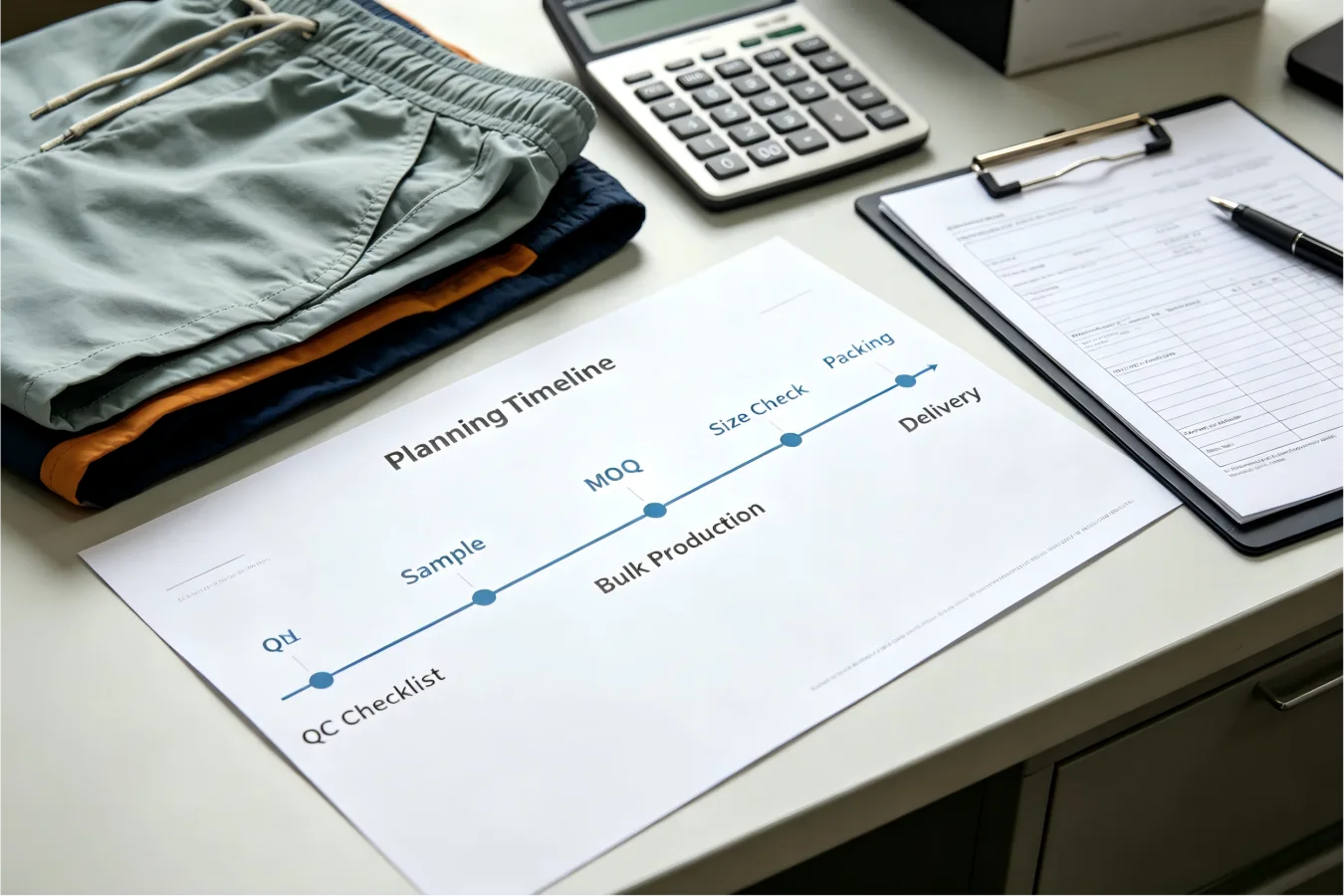
For first-time projects, I prefer a practical launch plan over an overloaded product plan. A brand may want six prints, five colors, full custom trims, and special packaging from the beginning. That can work for mature buyers, but it may be risky for a first order if the sales forecast is still uncertain.
Practical MOQ Planning
MOQ depends on fabric, color, print method, trims, and factory arrangement. Buyers should ask whether MOQ is calculated by:
- Total order quantity
- Quantity per color
- Quantity per print
- Quantity per size
- Quantity per fabric
- Quantity per custom trim
This matters because 500 pieces in one color is not the same as 500 pieces split across five colors and seven sizes. Cutting, printing, thread changes, label sorting, and packing all become more complicated.
Quality Control Points for Board Shorts
Quality control should match the agreed specification. It should not be a vague statement like "good quality." For board shorts, buyers should focus on measurable or visible points:
- Measurement tolerance based on size chart
- Fabric and color consistency
- Logo placement and print clarity
- Waistband elasticity and drawstring function
- Stitching neatness at stress points
- Pocket position and pocket depth
- Lining attachment if included
- Label and care instruction accuracy
- Packing quantity and carton marks
During bulk production, quality control is easier when the approved sample and written specifications are clear. If the buyer changes details after production starts, quality control becomes harder because the target keeps moving.
Delivery Planning With Realistic Timelines
A realistic schedule protects both the buyer and supplier. Our usual timeline is:
| Stage | Typical Time |
|---|---|
| Sample production after approval | 8–10 working days |
| Express sample shipping | 5–7 days |
| Bulk production | 25–30 working days |
| Express shipping by FedEx/DHL | 5–7 days |
| Air freight | 10–15 days |
These are general references, not a promise for every project. A complex all-over print, custom hardware, special packaging, or late artwork approval can extend the timeline. Public holidays and shipping conditions can also affect delivery.
A Simple Decision Framework
Before placing an order, buyers can use this framework:
- Product task: What is the board short supposed to do?
- Specification: Is the fabric, fit, lining, and branding clear?
- Commercial fit: Does the cost match the target market?
- Sampling plan: Who approves what, and when?
- MOQ plan: Are colors and sizes realistic for the first order?
- Quality standard: What will be checked before shipment?
- Delivery plan: Is the timeline realistic after sample approval?
This approach helps buyers avoid judging wholesale custom board shorts ODM by unit price alone. A cheap quote can become expensive if the sample needs too many revisions, the fabric is not suitable, or the delivery schedule becomes unrealistic.
Frequently Asked Questions
What information should I send for a custom board shorts ODM quotation?
You should send a reference photo or tech pack, target use case, fabric preference, logo artwork, color requirements, size range, quantity, packaging needs, budget range, and timeline. These details help the supplier give a more accurate quotation and practical sampling recommendation.
How long does custom board shorts sampling usually take?
After all key details are approved, sample production usually takes 8–10 working days. Express shipping normally takes another 5–7 days. The timeline may change if the fabric, print artwork, trims, or measurements need extra confirmation before production starts.
Why do different suppliers quote very different prices?
Different prices usually come from different specifications. Fabric, stretch, lining, waistband construction, print method, pockets, trims, packaging, MOQ, and delivery requirements all affect cost. Buyers should compare quotations line by line instead of only comparing the final unit price.
Can an ODM factory design the whole board shorts collection for my brand?
An ODM supplier can help turn your idea into a feasible sample and production-ready specification. However, your brand should still decide market positioning, customer research, style direction, retail pricing, and sales strategy. Good ODM support should complement your brand decisions, not replace them.
What should I check before approving bulk production?
You should check measurements, fit, fabric, logo placement, stitching, waistband, lining, pockets, labels, packaging, quantity breakdown, and revision comments. Written sample approval is best because it gives the production team a clear standard to follow.
Conclusion
Wholesale custom board shorts ODM works best when the buyer and supplier build the specification before chasing the lowest price. The use case, fabric, fit, waistband, lining, branding, MOQ, packaging, quality control, and timeline all shape the final result. If you are planning a surfwear, beachwear, team, or wholesale board shorts project, send your reference style, target use case, quantity, budget range, packaging needs, and deadline. We can review the details and discuss a sample-ready plan.