The Rise of Athleisure: Why Gym Wear Is Taking Over Everyday Fashion
Gym wear once had a clear destination: the gym.
Today, that boundary is much less obvious.
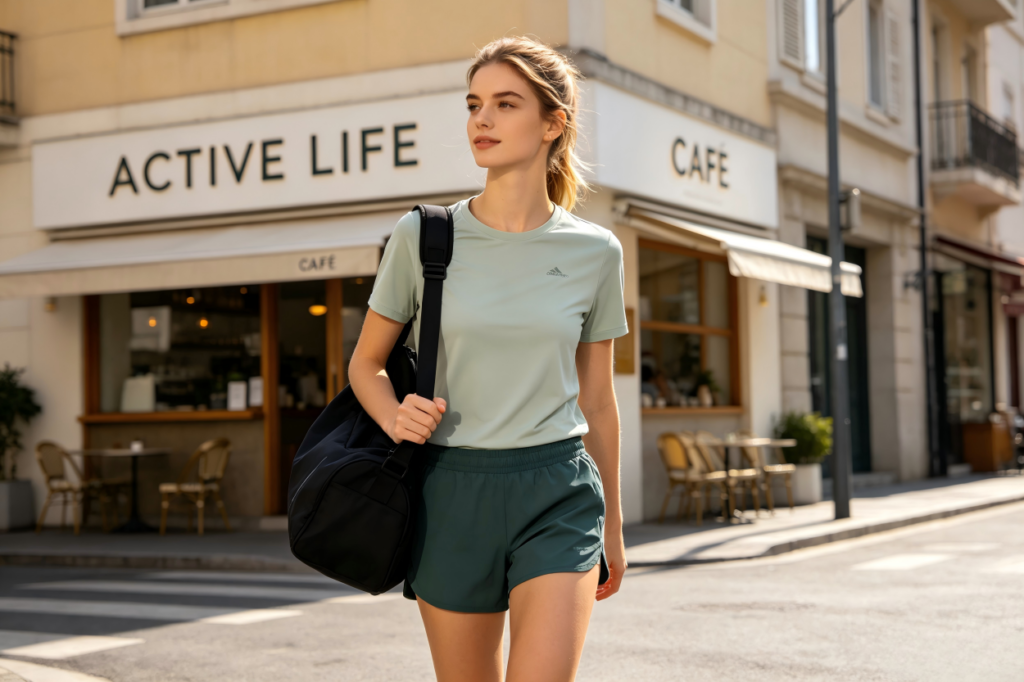
A pair of training shorts may be worn for lifting in the morning, commuting afterward, meeting friends, and traveling later in the day. A performance T-shirt may be developed for exercise but styled like a clean everyday basic.
That shift helps explain the rise of athleisure.
The rise of athleisure reflects growing demand for clothing that combines comfort, movement, performance, and everyday styling. Gym shorts, running-inspired shorts, training apparel, performance T-shirts, leggings, and other activewear products increasingly move between exercise and daily life rather than serving only one sporting activity.
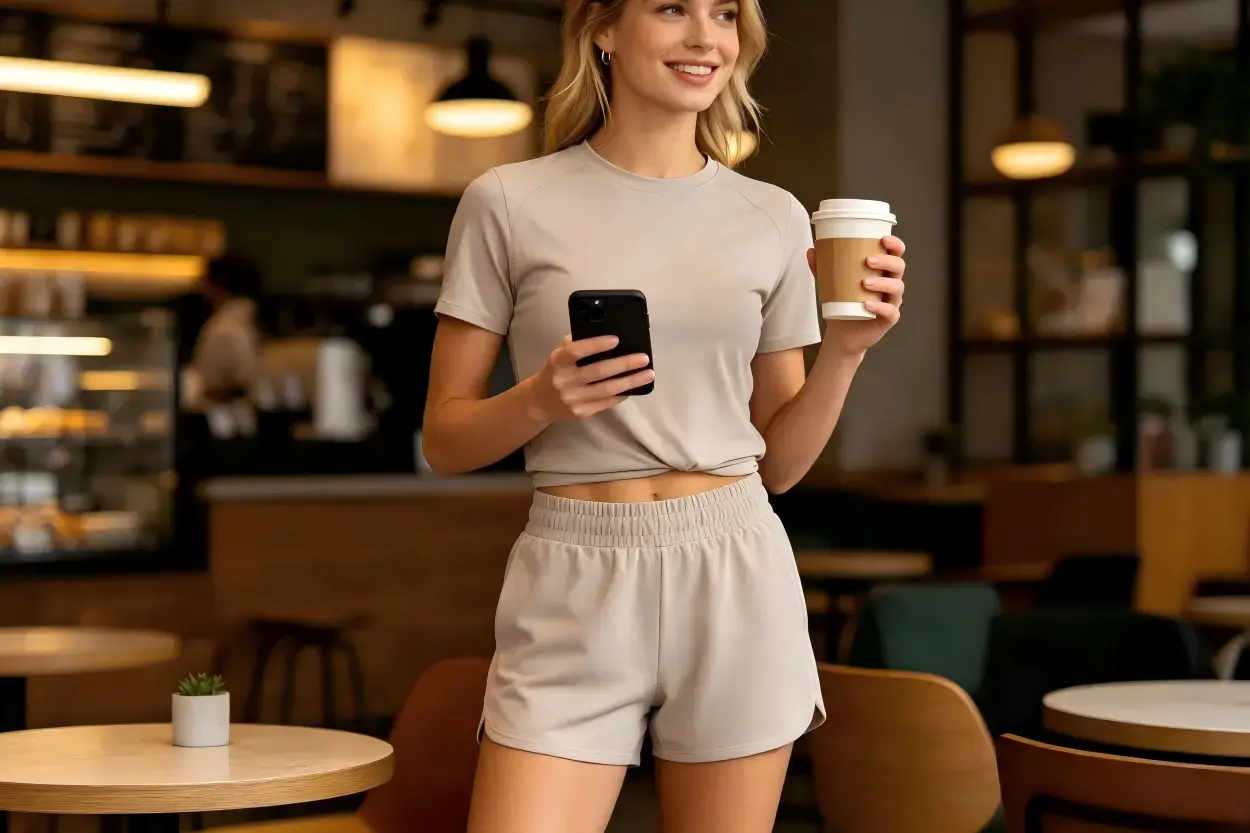
For activewear brands, the athleisure trend is not only about changing fashion.
It also influences fabric selection, fit, pocket design, colors, branding, and how technical a garment should feel outside the gym.
What Is Athleisure?
Athleisure combines characteristics of athletic apparel and everyday casual clothing.
Traditional sportswear was usually developed around a specific activity.
Running shorts were designed primarily for running. Gym shorts focused on training. Technical T-shirts emphasized sweat management and ventilation.
Athleisure makes these boundaries less rigid.
A modern pair of training shorts may still need stretch and freedom of movement, but buyers may also want:
- Practical phone storage
- A clean silhouette
- Soft hand feel
- Neutral colors
- Minimal branding
- Comfortable all-day wear
The garment still performs as sportswear, but its use is no longer limited to sport.
How Big Is the Athleisure Trend?
Industry estimates use different definitions of athleisure, so market-size figures vary significantly between research companies. They should be treated as evidence of the overall direction rather than directly compared as if they measure exactly the same category.
For example:
- Grand View Research valued the global athleisure market at approximately USD 358.08 billion in 2023 and projected a 9.3% compound annual growth rate from 2024 to 2030.
- Fortune Business Insights estimated the market at approximately USD 390.20 billion in 2023 and projected it to reach about USD 662.56 billion by 2032.
- Allied Market Research, using an earlier market period, valued athleisure at USD 155.2 billion in 2018 and projected it to reach approximately USD 257.1 billion by 2026.
The methodologies and products included in these reports differ, but they point in the same direction: clothing that combines athletic function with everyday wear has developed into a substantial apparel category.
Industry sources: Grand View Research, Athleisure Market Size, Share & Trends Analysis Report; Fortune Business Insights, Athleisure Market Size, Share & Industry Analysis; Allied Market Research, Athleisure Market by Product Type and Distribution Channel.
Traditional Gym Wear vs Athleisure
The difference is not that athleisure removes performance.
It changes the balance between performance and everyday usability.
| Product Area | Traditional Gym Wear | Athleisure |
|---|---|---|
| Primary use | Exercise or sport | Exercise + everyday wear |
| Fabric priority | Technical performance | Performance + comfort + appearance |
| Fit | Activity-specific | More versatile |
| Styling | Clearly athletic | Athletic but easier to wear casually |
| Pockets | Sport-specific or minimal | Greater everyday utility |
| Colors | Performance-oriented | More neutral and lifestyle-friendly |
| Branding | Often more visible | Frequently cleaner or more subtle |
| Construction | Function-first | Function + clean appearance |
| Typical use | Gym, running, training | Gym, travel, commuting, casual wear |
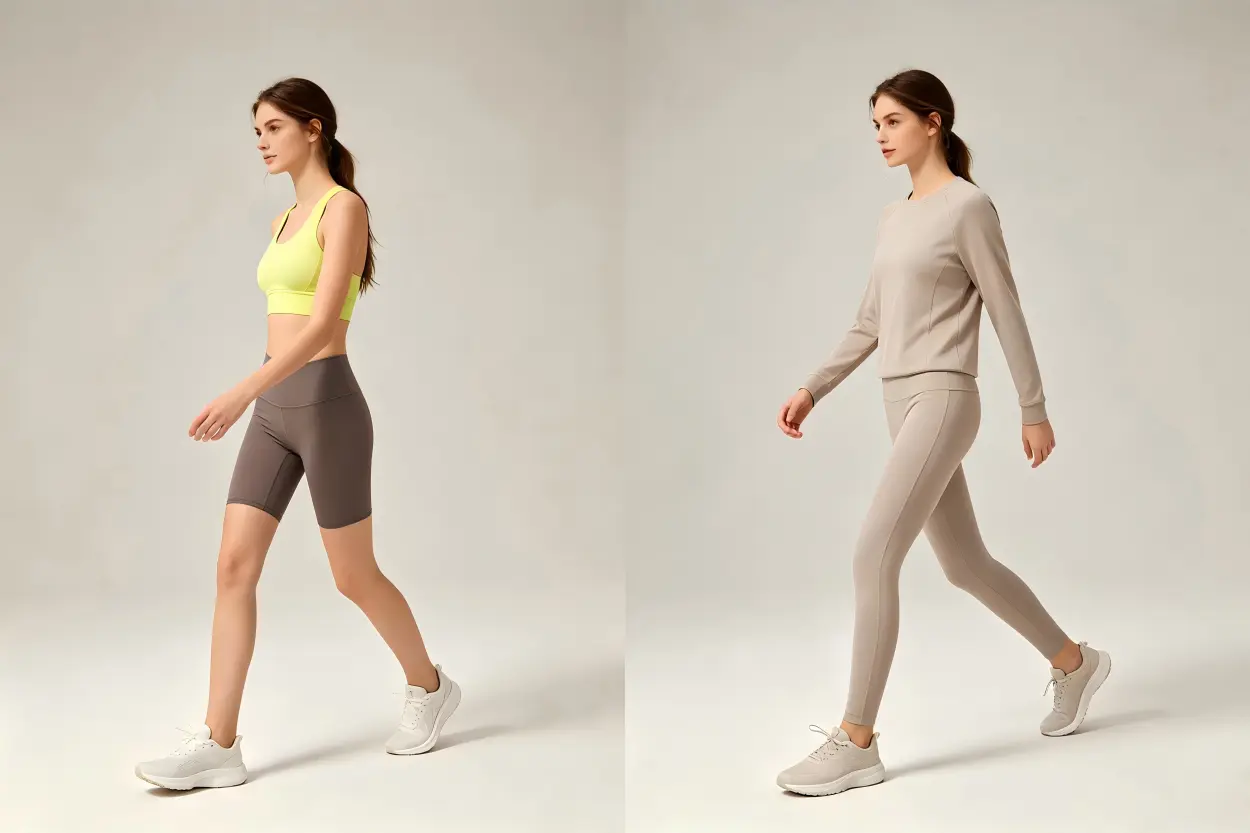
This distinction helps explain why athleisure is not simply casual clothing made from stretch fabric.
A successful athleisure product still needs a clear functional purpose.
Why Is Gym Wear Becoming Everyday Fashion?
Many characteristics that make sportswear useful during exercise are also useful in normal life.
Comfort Has Become a Daily Requirement
Stretch fabrics, elastic waistbands, lightweight materials, and less restrictive construction allow comfortable movement.
Those benefits matter whether someone is:
- Training
- Walking
- Traveling
- Commuting
- Shopping
- Working from home
Consumers do not need to be exercising to appreciate a garment that moves comfortably with the body.
Technical Fabrics Look Less Technical
Performance fabrics have also changed visually.
Modern activewear can use:
- Matte surfaces
- Softer hand feel
- Neutral colors
- Clean textures
- Minimal logos
- Refined silhouettes
A technical garment no longer needs to look like a competition uniform.
That makes gym wear easier to combine with casual clothing.
Why Are Gym Shorts Important to the Rise of Athleisure?
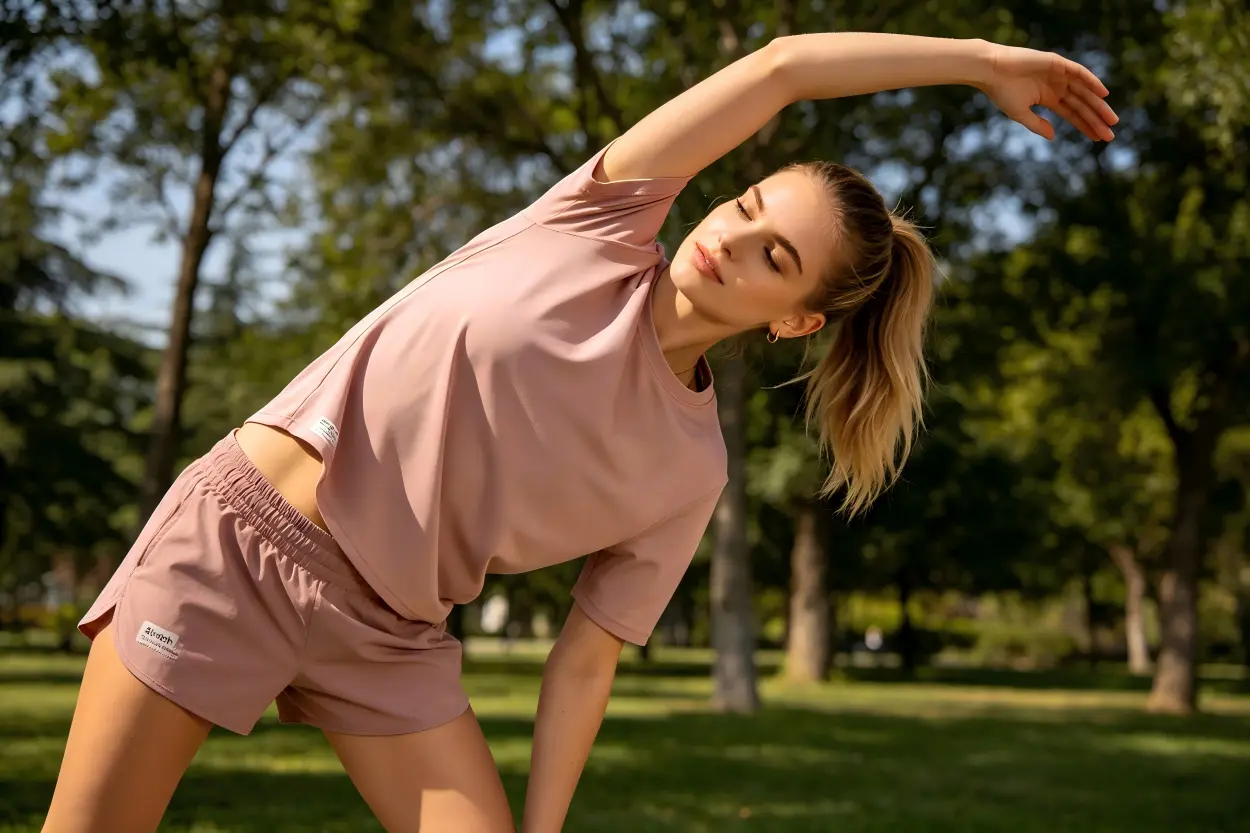
Gym shorts are one of the clearest examples of sportswear moving into everyday wardrobes.
A good training short may already include:
- Stretch fabric
- Elastic waistband
- Internal drawcord
- Useful pockets
- Lightweight construction
- Comfortable fit
Those features remain useful after the workout ends.
Gym Shorts Are Becoming More Versatile
Modern gym shorts may use:
- Cleaner side seams
- Smaller logos
- Matte fabrics
- Neutral colors
- Hidden or zip pockets
- Minimal trims
This creates a product that can still handle strength training without looking overly technical outside the gym.
A customer can train in the morning and continue wearing the same shorts afterward.
Everyday Use Changes Pocket Design
Athleisure also increases the importance of storage.
A person wearing shorts throughout the day may carry:
- Smartphone
- Keys
- Wallet
- Earbuds
A race-focused running short may only need a small storage pocket.
A gym or athleisure short may need deeper pockets or secure zippers.
For brands developing gym and running shorts, this difference in end use can influence the entire construction.
How Are Running Shorts Influencing Athleisure?
Running apparel has contributed several design ideas to modern everyday activewear.
These include:
- Shorter inseams
- Lightweight woven fabrics
- Side splits
- Elastic waistbands
- Reflective details
- Minimal logos
However, a pure running short and an athleisure-oriented short are not necessarily the same product.
A race short may prioritize minimum weight and maximum ventilation.
A crossover product may accept slightly more structure in exchange for:
- Better pockets
- More coverage
- Cleaner styling
- Greater daily versatility
This creates an important product-development decision for activewear brands.
The question is not simply whether a garment looks like running apparel.
The question is how much running performance it needs to retain.
Why Do 2-in-1 Training Shorts Fit the Athleisure Trend?
2-in-1 training shorts combine a loose outer shell with a fitted inner liner.
The outer layer may provide:
- Styling
- Lightweight movement
- Pockets
- Brand identity
The inner liner may provide:
- Stretch
- Support
- Compression
- Reduced friction
- Phone storage
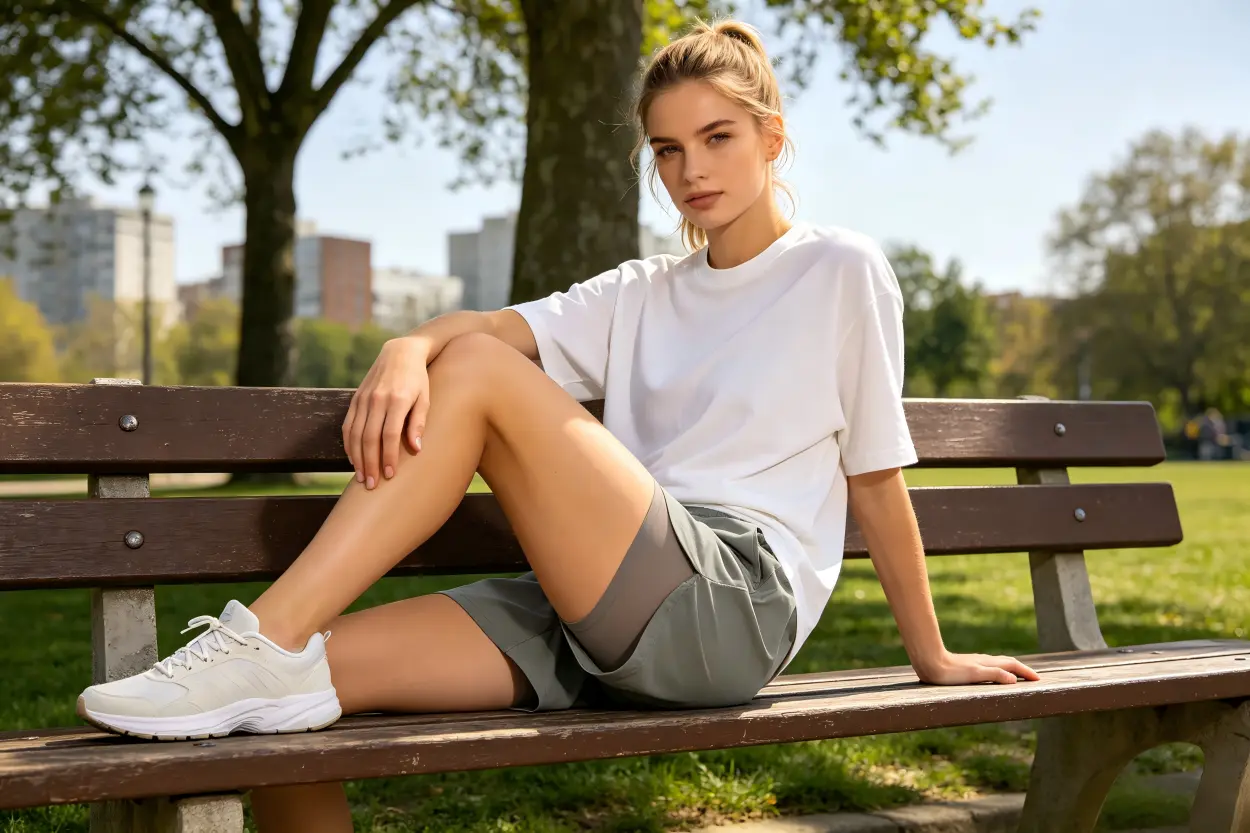
This combination gives the garment a strong training identity while keeping the outer appearance relatively clean.
But it also creates more product-development complexity.
The shell and liner normally need different fabric properties.
The outer layer may prioritize lightweight durability and pocket support, while the liner requires greater stretch, recovery, and skin comfort.
For 2-in-1 and training shorts, those two layers should therefore be considered separately rather than treated as one fabric decision.
How Are Performance T-Shirts Changing With Athleisure?
Performance T-shirts are another clear connection between sport and everyday clothing.
A traditional technical running shirt may prioritize:
- Low weight
- Ventilation
- Moisture management
An athleisure-oriented performance T-shirt may retain those characteristics while adding more emphasis on:
- Soft hand feel
- Better drape
- Stable neckline
- Everyday fit
- Subtle branding
- Cleaner appearance
Fabric Feel Matters More
A fabric can perform well during exercise but still feel too technical for daily wear.
For example, a shiny lightweight mesh may suit a running event shirt but feel less natural as an everyday T-shirt.
A smoother polyester-spandex fabric or soft synthetic knit may create a more versatile product.
Fit Has Become More Flexible
Performance T-shirts are also no longer limited to close athletic fits.
Athleisure collections can include:
- Slim fit
- Regular fit
- Relaxed fit
This allows brands to combine functional fabrics with more lifestyle-oriented silhouettes.
For performance T-shirts, fabric and fit therefore need to be considered together.
What Does the Athleisure Trend Mean for Activewear Brands?
The rise of athleisure changes the product brief.
A garment no longer needs to answer only:
“Does this work during exercise?”
It may also need to answer:
“Would someone still want to wear this after exercise?”
That affects decisions around:
- Fabric surface
- Hand feel
- Pocket usability
- Fit
- Color
- Branding
- Garment weight
- Construction complexity
The challenge is finding the right balance.
Common Mistake: Making Athleisure Too Generic
One risk of following the athleisure trend is removing so much athletic function that the product becomes ordinary casual clothing.
A gym short still needs to move comfortably during squats and training.
A performance T-shirt still needs to remain comfortable when the wearer sweats.
Athleisure should not mean:
“Make sportswear look casual and ignore performance.”
A stronger approach is:
Keep the performance features that matter, then make the garment easier to wear outside the gym.
This helps preserve a clear activewear identity.
How Should Brands Think About Athleisure Product Development?
A useful starting point is defining both the primary and secondary use.
Gym Shorts
Primary use: Training Secondary use: Everyday wear
Possible priorities:
- Stretch
- Durable fabric
- Secure pockets
- Matte surface
- Clean branding
Running-Inspired Shorts
Primary use: Running or light training Secondary use: Travel or casual wear
Possible priorities:
- Lightweight fabric
- Breathability
- Comfortable waistband
- Useful pocket
- Simple styling
Performance T-Shirts
Primary use: Training Secondary use: Everyday activewear
Possible priorities:
- Moisture management
- Soft hand feel
- Stable neckline
- Comfortable fit
- Clean appearance
The primary use should remain the starting point.
Otherwise, trying to make one product suitable for every situation can create unnecessary compromises.
Athleisure Product Development Checklist
Before developing an athleisure product, brands should define:
- Primary activity
- Secondary use
- Target customer
- Fabric weight
- Stretch requirement
- Hand feel
- Fit
- Pocket requirements
- Color direction
- Branding level
- Wash expectations
- Target product position
The key question remains:
What should this garment do first?
That answer helps determine which performance features should remain and which lifestyle characteristics can be added.
Frequently Asked Questions
What does the rise of athleisure mean?
The rise of athleisure refers to the growing use of athletic and performance clothing as everyday apparel. Consumers increasingly wear gym shorts, performance T-shirts, leggings, training apparel, and running-inspired clothing outside traditional sports settings.
Why is gym wear becoming everyday fashion?
Gym wear combines comfort, stretch, lightweight fabrics, practical construction, and easy movement. These characteristics are useful during everyday activities as well as exercise.
Is athleisure the same as activewear?
Not exactly. Activewear is primarily designed for physical activity, while athleisure combines athletic functionality with styling and comfort suitable for broader everyday use.
Why are gym shorts popular in athleisure?
Gym shorts combine elastic waistbands, stretch fabrics, useful pockets, lightweight construction, and freedom of movement. These characteristics make them suitable for both training and casual wear.
Are performance T-shirts part of the athleisure trend?
Yes. Performance T-shirts with softer fabrics, versatile fits, stable construction, and clean styling can transition easily between exercise and everyday wear.
Conclusion
The rise of athleisure reflects a broader change in how people expect clothing to perform.
Gym shorts no longer need to stay inside the gym.
Running-inspired shorts can function as everyday warm-weather clothing.
2-in-1 training shorts combine technical support with modern activewear styling.
Performance T-shirts increasingly balance athletic function with softer fabrics, versatile fits, and cleaner aesthetics.
The important shift is not that sportswear has stopped being technical.
It is that consumers increasingly expect technical clothing to work in more than one part of their day.
That balance between performance, comfort, and everyday wearability is at the center of the athleisure trend.