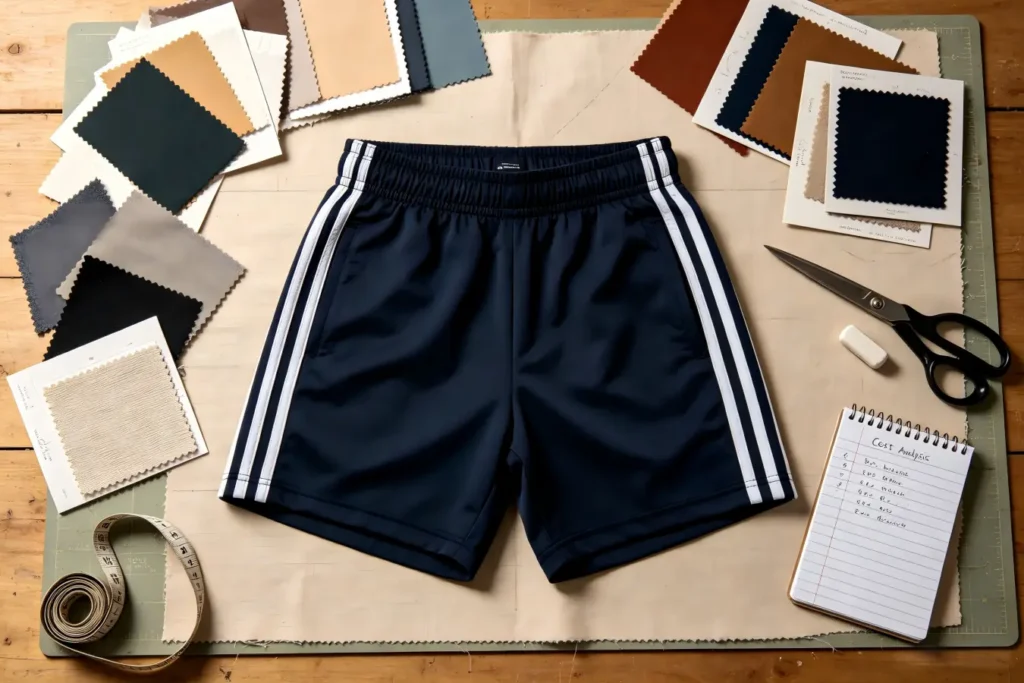
Custom gym shorts can become more expensive than expected when fabric is treated as just a material name or a price per meter. That creates confusion, slows sampling, and may cause quality risks in bulk production. The better approach is to match fabric to training use, target price, and production stability.
Fabric choice affects the cost of custom gym shorts through composition, fabric structure, weight, stretch, hand feel, shrinkage, color performance, cutting loss, and sewing behavior. A higher fabric price does not always mean better value. The best fabric is the one that fits the product purpose, buyer budget, and bulk production requirements.
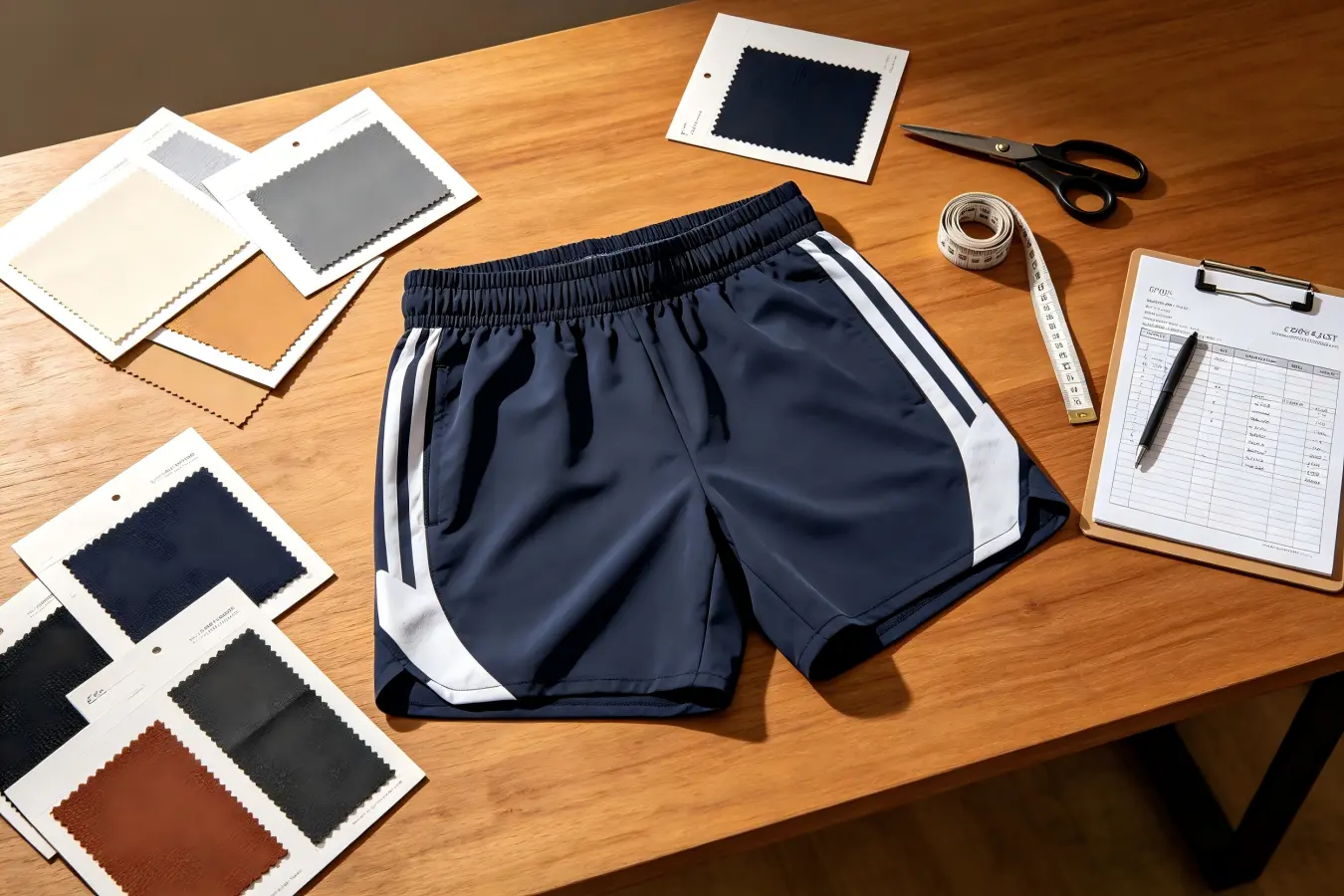
Many buyers first ask me, "What is the cheapest fabric?" That question is understandable, but it is not enough. During product development, I have learned that two fabrics with similar names can create very different samples, costs, and production risks.
Why Does Fabric Price Alone Not Explain the Cost of Custom Gym Shorts?
Fabric price looks simple on a quotation sheet, but it can hide many details. Buyers may compare polyester, nylon, or spandex blends as if the name tells the full story. Then the sample arrives, and the hand feel, stretch, or fit does not match the expectation.
The cost of custom gym shorts is not decided by fabric price alone. The final cost depends on fabric composition, knit or woven structure, GSM weight, stretch level, recovery, dyeing stability, cutting efficiency, and sewing compatibility. A cheaper fabric can work well if it fits the intended gym use.
Fabric name is only the starting point
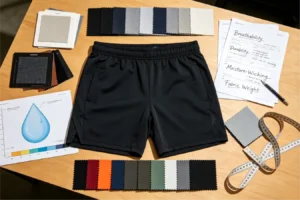
A fabric name can be useful, but it is not a complete buying decision. "Polyester spandex" may sound clear, yet it can feel very different depending on:
- Spandex percentage
- Fabric weight
- Knitted or woven structure
- Surface finish
- Stretch direction
- Moisture-wicking treatment
- Dyeing process
- Supplier consistency
For example, one polyester-spandex fabric may feel light and smooth for running-style gym shorts. Another may feel thicker and more compressive, which may suit strength training better. Both can be valid. Neither is automatically right.
Why price per meter can mislead buyers
Some buyers compare only the quoted fabric price. That method misses several cost factors that appear later.
| Fabric Factor | Why It Matters for Cost | Possible Risk |
|---|---|---|
| Fabric width | Affects marker efficiency | Higher cutting waste |
| GSM weight | Affects fabric consumption | Heavier garment cost |
| Stretch and recovery | Affects fit and comfort | Bagging or tightness |
| Shrinkage | Affects sizing after washing | Size inconsistency |
| Hand feel | Affects buyer approval | More sampling rounds |
| Sewing behavior | Affects production speed | Higher defect risk |
In our factory, one issue we frequently encounter is that buyers request a quotation based only on composition. They may say, "Please quote 90% polyester, 10% spandex." That sounds specific, but it still leaves many questions open. The fabric could be lightweight or heavy, brushed or smooth, soft or stiff, stable or difficult to sew.
Production stability also has a cost
A fabric that cuts cleanly, sews smoothly, and keeps a stable size usually supports more efficient production. A fabric that rolls at the edge, slips during sewing, shrinks unpredictably, or reacts poorly to heat can create more handling work.
That does not mean unstable fabrics are always bad. Some premium performance fabrics need careful handling. The key point is simple: fabric cost must include production behavior, not only purchase price.
For OEM or ODM gym shorts, I prefer to review the fabric together with the design. If the shorts have a compression liner, curved panels, zip pockets, or heat-transfer logos, the fabric must work with those details. You can explore our broader development approach on our OEM / ODM customization page.
Is More Expensive Fabric Always Better for Custom Gym Shorts?
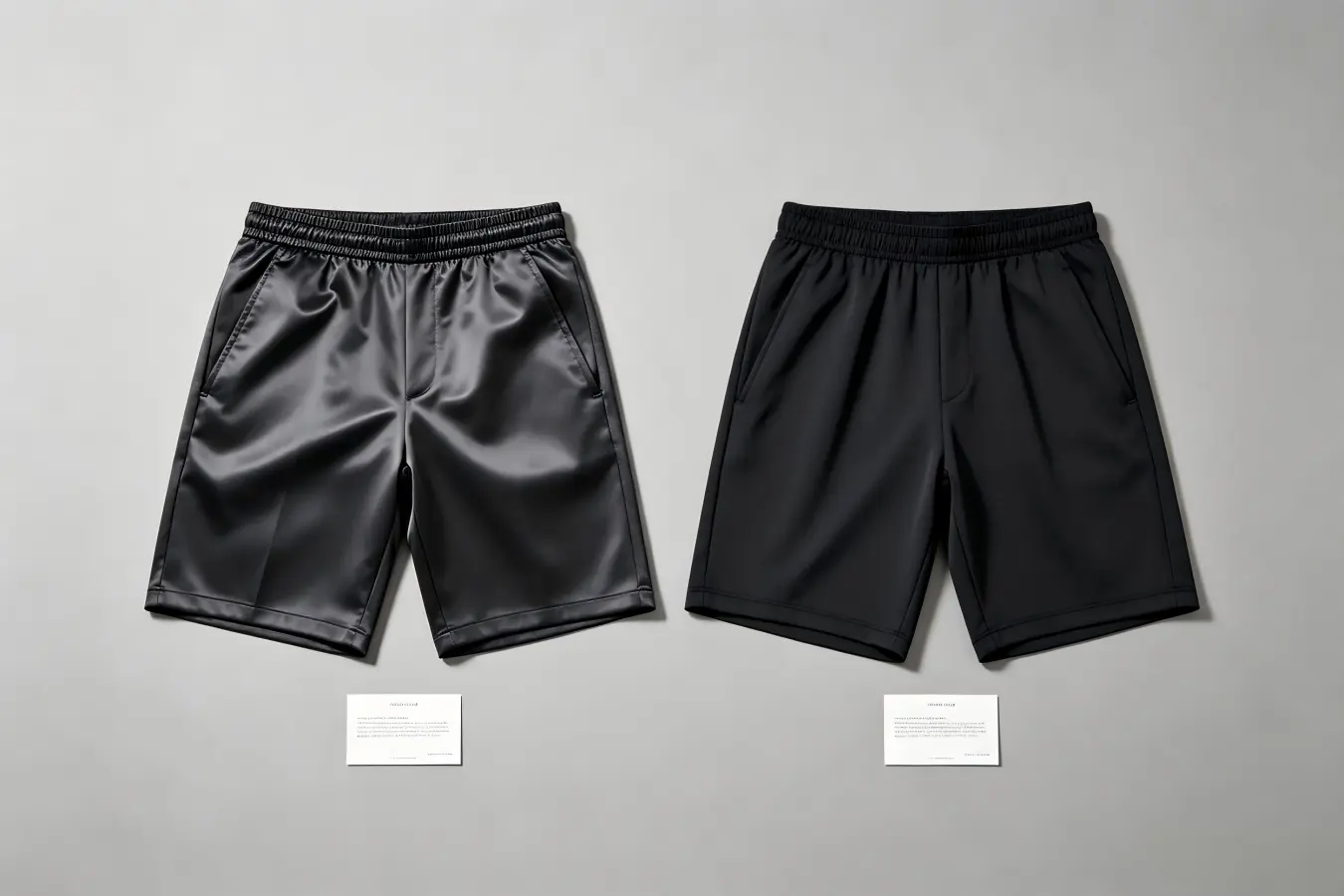
Premium fabric can feel impressive in a sample room, but it does not always create better custom gym shorts. Buyers can overspend when they choose a high-end material that does not improve the real training experience. That budget may be better used on fit, pattern, waistband, or branding.
More expensive fabric is not always better for custom gym shorts. A fabric should be judged by whether it improves comfort, stretch, breathability, durability, and brand positioning for the intended user. A mid-range fabric can be the smarter option when it meets performance needs and supports stable production.
Fit-for-purpose matters more than "premium"
A gym short for heavy lifting does not always need the same fabric as a running short. A club training short may need durability and repeat-order stability more than a luxury hand feel. A wholesale program may need a balanced fabric that works across several colors and sizes.
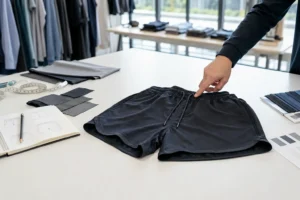
During sample approval, fabric choice often becomes clearer after the buyer tries the shorts on a real body. A fabric may look excellent on a swatch card, but the sample may show problems:
- The shorts feel too heavy for high-sweat training.
- The fabric stretches well but does not recover well.
- The surface looks premium but snags too easily.
- The hand feel is soft, but the shape feels unstable.
- The fabric cost pushes the final price above the target retail plan.
These are not rare problems. They happen because fabric is not only a raw material. It is part of the whole product experience.
A practical comparison for buyers
| Buyer Goal | Fabric Direction | Cost Logic |
|---|---|---|
| Entry-level gym short | Stable polyester blend | Controls cost and supports volume |
| Training short with stretch | Polyester-spandex or nylon-spandex | Adds mobility and comfort |
| Running-gym hybrid | Lightweight woven stretch fabric | Reduces weight and improves movement |
| Premium club or brand line | Softer hand feel and better recovery | Supports higher positioning |
| Team or wholesale order | Durable and repeatable fabric | Reduces reorder risk |
This table is not a universal ranking. It is a decision guide. The best choice depends on the product purpose.
Where premium fabric can make sense
Premium fabric may be worth the extra cost when it creates a clear benefit. For example:
-
The brand sells at a higher retail price.
The user expects a better touch, stretch, and finish. -
The product depends on movement.
Deep squats, lunges, and functional training require strong stretch recovery. -
The design has a minimalist look.
When there are fewer trims or prints, fabric quality becomes more visible. -
The buyer wants repeat orders.
A stable fabric can protect consistency across future production.
Where premium fabric may be wasted
Premium fabric may not be necessary when the end use is basic team training, promotional gym wear, or a price-sensitive wholesale program. In those cases, a reliable lower-cost fabric can be appropriate if it meets the required comfort and durability.
The mistake is not choosing a lower-cost fabric. The mistake is choosing a fabric without testing whether it fits the use case.
For many emerging brands, I suggest starting from the target wearer and sales channel. If the shorts are sold to gym members who train three to five times per week, the fabric should feel better and recover well. If the shorts are for occasional team use, the fabric can be more basic but still stable.
How Do Sampling and Bulk Production Change Fabric Cost Risk in Custom Gym Shorts?
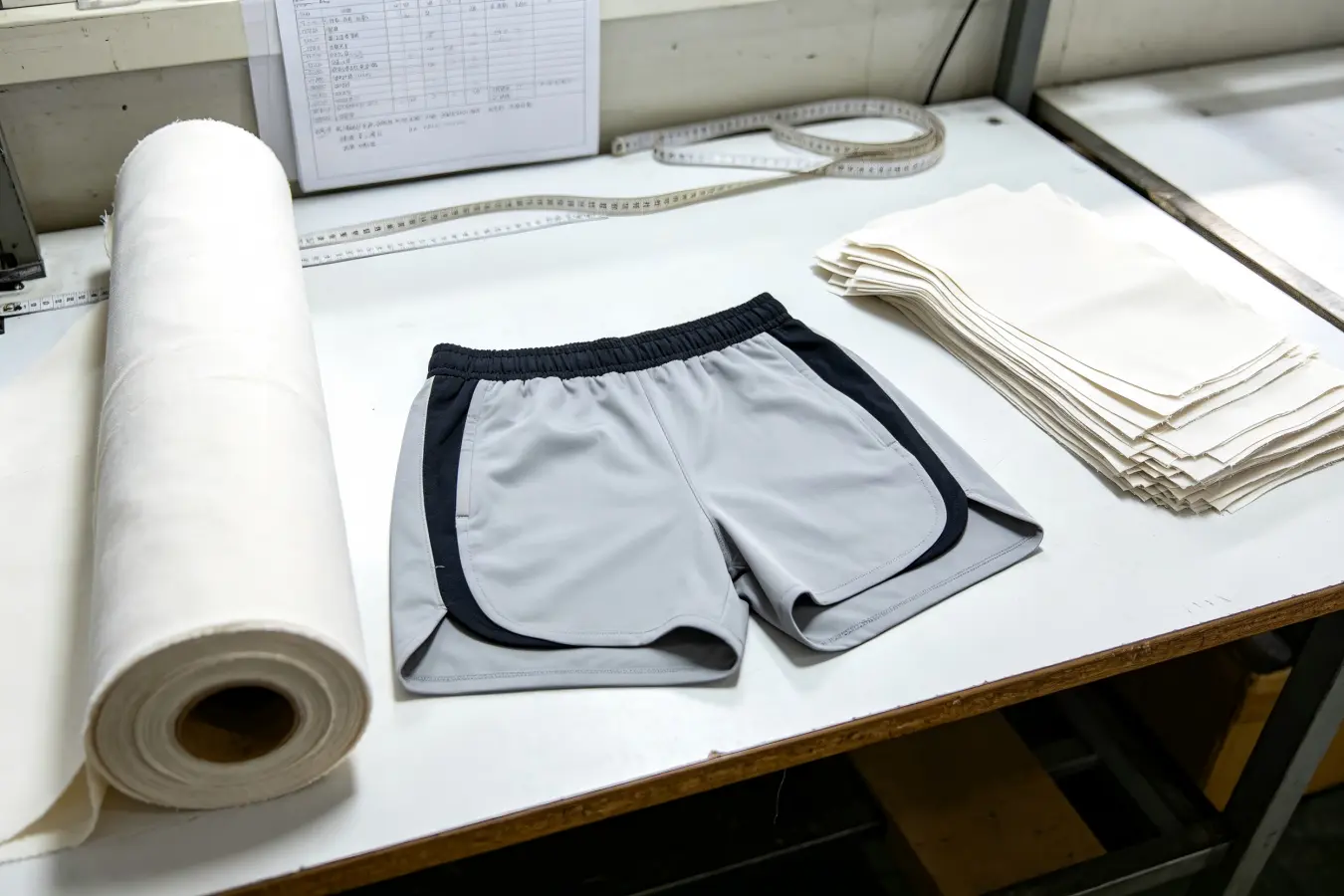
A fabric can look acceptable during quotation, but the real test starts when custom gym shorts move into sampling and bulk production. This is where hidden cost risks appear. Stretch, shrinkage, color fastness, cutting loss, and sewing behavior can all affect the final result.
Sampling and bulk production change fabric cost risk because small swatches do not show everything. A full sample reveals fit, hand feel, stretch, and shrinkage better. Bulk production then tests consistency, cutting efficiency, color stability, and sewing performance across hundreds of pieces.
What sampling tells us
Sampling is where a fabric becomes a real garment. In our factory, standard sample development usually takes 7–10 days, depending on fabric availability, pattern needs, trims, and artwork details.
During sample development, I pay attention to several practical points:
- Does the fabric match the expected hand feel?
- Does the sample stretch in the right direction?
- Does the waistband sit correctly?
- Does the fabric pull or wrinkle near the crotch?
- Does the length change after pressing or washing?
- Does the print or logo sit cleanly on the surface?
- Does the inner liner work with the outer shell?
A swatch can look good on a desk. A finished pair of custom gym shorts must move with the body.
What bulk production reveals
Bulk production brings different pressures. For example, a fabric may work for one sample, but the production roll may have width variation, shade difference, or higher cutting loss. A fabric may also behave differently when many layers are cut together.
For a reference order, our bulk production timeline is usually 25–30 days for 600 pcs, depending on confirmed materials and order details. Our MOQ is 300 pcs, which helps brands test the market without overcommitting.
Bulk production can reveal:
| Production Variable | Why It Affects Cost |
|---|---|
| Shrinkage | Pattern and size specs may need adjustment |
| Cutting loss | More fabric may be needed than expected |
| Shade variation | Color matching may require control |
| Sewing compatibility | Slower sewing may increase handling time |
| Edge curling | Operators need more care during assembly |
| Stretch distortion | Fit consistency may be harder to maintain |
Common mistake: approving fabric too quickly
One common mistake is approving a fabric because the swatch feels good. Another mistake is approving only the first sample without checking how the garment behaves after wear or washing.
For custom gym shorts, I suggest buyers review samples in a simple but practical way:
-
Try the shorts during real movement.
Squat, lunge, sit, and walk. -
Check the recovery.
The fabric should not stay stretched out at stress points. -
Review the inner construction.
Linings and pockets can change how the outer fabric feels. -
Check the waistband tension.
A good fabric can still fail if the waistband balance is wrong. -
Confirm color and logo method.
Some fabrics work better with certain print or transfer methods.
Why fabric decisions should happen early
Fabric should not be an afterthought. Once the design, fit, and quotation are based on one fabric, changing fabric later can affect the pattern, sample fit, sewing method, and final price.
This is why our production process starts with product requirements, fabric direction, sampling, approval, and then bulk production. A clear process reduces confusion and helps buyers avoid repeated sample changes.
Which Fabric Factors Should Buyers Compare Before Ordering Custom Gym Shorts?
Buyers often ask for the "best fabric," but that question can create confusion. A better question is: "Which fabric factors matter most for this product?" That question connects the fabric to the wearer, the budget, and the production plan.
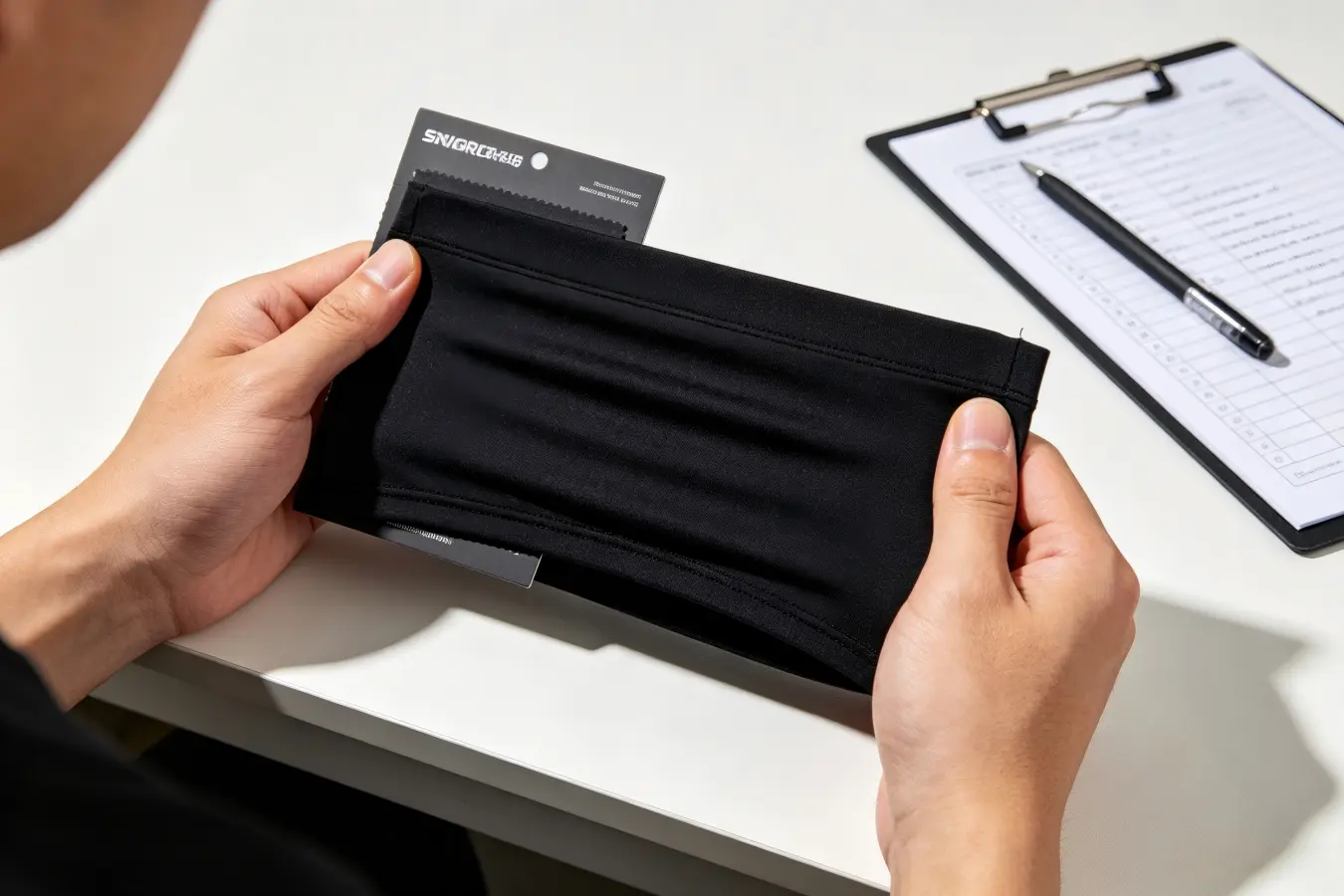
Before ordering custom gym shorts, buyers should compare training use, fabric weight, stretch direction, recovery, breathability, durability, hand feel, shrinkage, color performance, and compatibility with linings, pockets, prints, and trims. These factors help balance comfort, cost, and production stability.
A simple decision framework
A practical fabric decision should begin with the product goal. I often break the discussion into five questions.
1. What training is the short made for?
Different gym activities need different fabric behavior.
- Weight training: Needs durability, comfort, and stable fit.
- HIIT: Needs stretch, breathability, and sweat comfort.
- Running-gym hybrid: Needs light weight and movement.
- Basketball-style gym training: Needs room, strength, and airflow.
- Boxing or combat training: Needs mobility and fabric resilience.
This does not mean each category has one fixed fabric. It means the fabric should match the movement.
2. What retail level is the brand targeting?
A budget gym short and a premium gym short can both be good products. They simply serve different buyers.
| Brand Position | Fabric Priority |
|---|---|
| Price-sensitive wholesale | Stable cost and durability |
| Emerging fitness brand | Balanced hand feel and performance |
| Premium training brand | Better stretch recovery and finish |
| Team or club supply | Repeatability and easy care |
For B2B buyers, this matters because the fabric must support the final selling price. Overspending on fabric can make the product difficult to sell. Underspending can damage user experience.
3. How much stretch is really needed?
Stretch is helpful, but more stretch is not always necessary. High-stretch fabrics may cost more, and they may require more careful sewing. Some designs can achieve comfort through pattern and cut rather than fabric stretch alone.
For example, side slits, gussets, and a correct rise can improve mobility. Fabric choice should work with design structure, not replace it.
4. Will the fabric work with the full product?
Fabric cost is affected by the garment structure around it. Even though this article focuses on fabric, buyers should remember that the following details can amplify cost impact:
- Inner compression liner
- Mesh lining
- Zipper pockets
- Hidden phone pocket
- Drawcord tips
- Heat-transfer logo
- Sublimation print
- Embroidery
- Contrast panels
- Special waistband construction
A fabric that works for a plain short may not work as well for a lined training short with multiple pockets.
5. Can the fabric support repeat orders?
For wholesalers and teams, repeat production is a major issue. A fabric should be available in the required colors and stable enough for reorders. If the fabric is unusual or hard to source again, the second order may become more difficult.
Repeat production also depends on color consistency. A black fabric may look simple, but shade variation can still happen between batches. For custom gym shorts, this matters when buyers reorder the same style months later.
Practical checklist before confirming fabric
Before confirming fabric for custom gym shorts, buyers can use this checklist:
- Confirm the target training use.
- Set a realistic target price range.
- Review fabric swatches before sampling.
- Make a physical sample before bulk production.
- Test movement, comfort, and fit.
- Check washing and shrinkage behavior when needed.
- Confirm logo and print compatibility.
- Review lining and pocket interaction.
- Confirm MOQ and production timeline.
- Keep one approved fabric record for repeat orders.
This process does not make the product more complicated. It makes the decision clearer.
If you are developing a new style, our page for custom gym and running shorts manufacturing shows the type of product direction we support for brands, teams, and wholesalers.
How Can Buyers Control Fabric Cost Without Hurting Quality in Custom Gym Shorts?
Cost control can go wrong when buyers only push the fabric price lower. That approach may save money on the quotation, but it can create problems in sampling, fit, durability, or production. Better cost control starts with clearer product priorities.
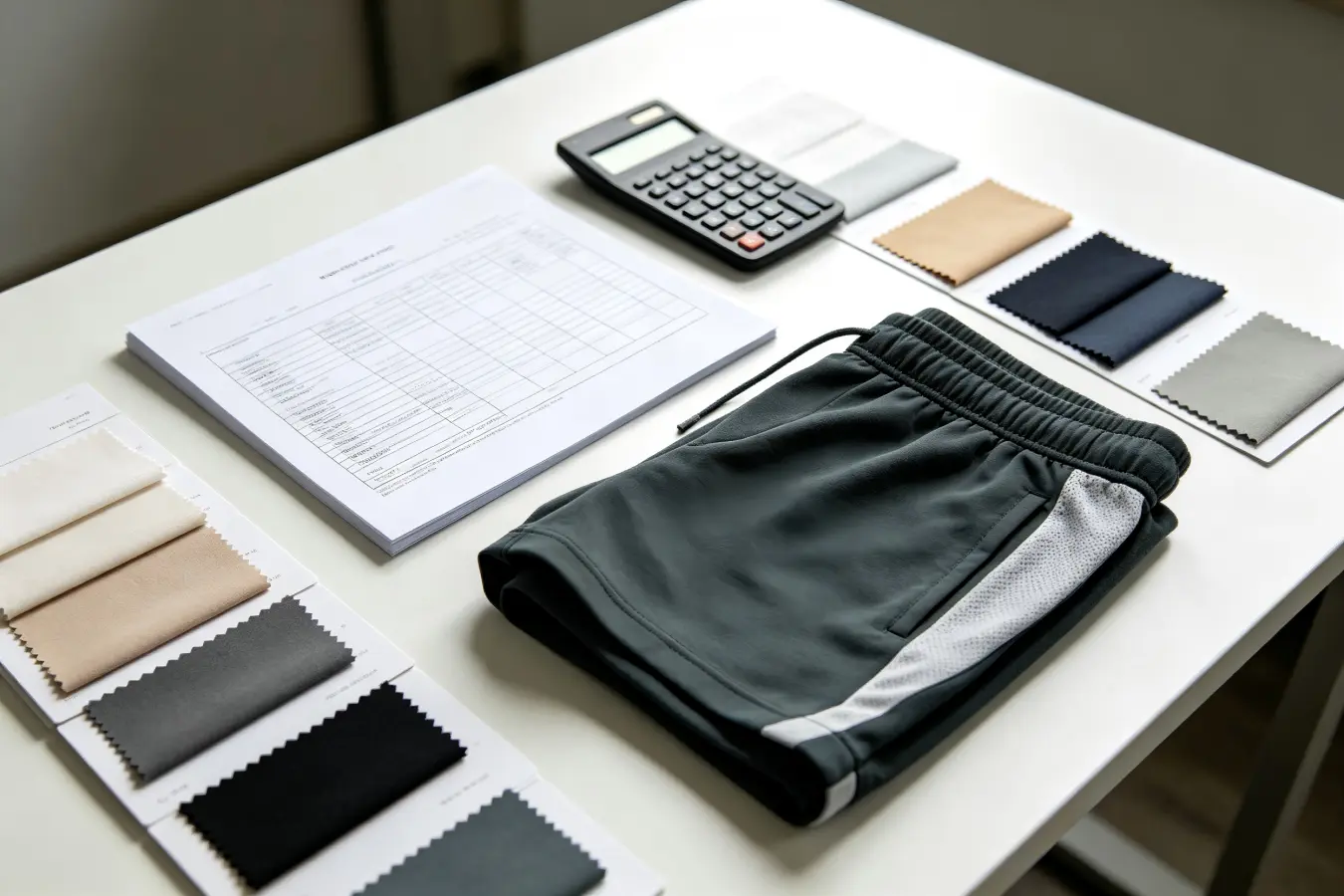
Buyers can control fabric cost in custom gym shorts by defining the training use, avoiding unnecessary premium features, confirming samples before bulk production, simplifying fabric combinations, choosing stable materials, and matching fabric quality to the brand's real selling position.
Start with the non-negotiables
Every product has a few things that cannot fail. For custom gym shorts, the non-negotiables often include:
- Comfortable waistband
- Enough movement range
- Good fabric recovery
- Acceptable breathability
- Stable sizing
- Suitable durability
- Clean logo appearance
- Consistent color
Once these are clear, the buyer can decide where to spend and where to simplify.
Do not upgrade everything at once
A common buyer mistake is upgrading fabric, trims, lining, pockets, and branding all at the same time. The final garment may look attractive, but the cost can move too far from the target.
A more controlled approach is to upgrade only the features that the user will truly notice.
For example:
| Upgrade Option | User Noticeability | Cost-Control Comment |
|---|---|---|
| Better stretch recovery | High | Often worth testing |
| Softer hand feel | Medium to high | Depends on brand level |
| Special print effect | Medium | Useful for branding |
| Extra pocket structure | Medium | Adds labor and fabric use |
| Premium drawcord tip | Low to medium | Nice detail, not always necessary |
| Multiple fabric panels | Medium | Can increase cutting and sewing work |
This type of comparison helps brands avoid emotional material choices. It also supports clearer communication with the factory.
Use sampling to control risk
A sample is not just a preview. It is a cost-control tool. If the fabric is wrong, the sample will usually show it before bulk production begins.
During sample approval, buyers should focus on:
-
Movement test
The wearer should feel comfortable during real gym motion. -
Fit balance
The fabric should not pull, twist, or sag. -
Logo surface
The selected print method should sit well on the fabric. -
Construction compatibility
Pockets, liners, and waistbands should not fight the fabric. -
Overall value
The short should feel appropriate for the target selling price.
Keep fabric records for repeat orders
For repeat production, fabric records matter. The fabric name alone is not enough. Buyers should keep:
- Composition
- GSM or weight reference
- Fabric supplier or approved equivalent
- Color standard
- Approved sample
- Shrinkage notes when available
- Logo method
- Bulk comments
This helps reduce confusion when the buyer reorders. It also helps the factory maintain consistency.
Work with a factory before locking the design
Fabric cost decisions are easier when the factory is involved early. A tech pack is helpful, but a short conversation about training use, buyer budget, and expected order volume can prevent wrong assumptions.
For example, a buyer may request a heavy stretch fabric because it sounds premium. After reviewing the target customer, a lighter stable fabric may fit better. Another buyer may want a very low-cost option, but the planned liner and pocket structure may require a more stable outer fabric.
That is why I prefer to discuss fabric together with the whole garment. Custom gym shorts are simple at first glance, but small material decisions can change the final result.
Frequently Asked Questions
What is the best fabric for custom gym shorts?
There is no single best fabric for custom gym shorts. The best option depends on training use, budget, stretch needs, breathability, durability, and brand positioning. A strength-training short, running-gym hybrid short, and team training short may each need a different fabric direction.
Does higher GSM mean better gym shorts?
Higher GSM does not automatically mean better gym shorts. A heavier fabric may feel durable, but it can also feel hot or restrictive. A lighter fabric may feel faster and more breathable. The right GSM should match the design, training purpose, and user expectation.
Can I use a cheaper fabric for a quality gym short?
Yes, a lower-cost fabric can still work well if it meets the product requirements. The key is fit-for-purpose selection. The fabric should provide enough comfort, stretch, recovery, and durability for the intended use. Cheap should not mean careless.
Why does my sample price differ from bulk production price?
Sample cost and bulk production cost follow different logic. Sampling includes development time, small-quantity handling, pattern adjustment, and material preparation. Bulk production depends more on fabric consumption, cutting efficiency, sewing behavior, order quantity, trims, and confirmed construction.
What information should I send before requesting a fabric quote?
You should send the target use, preferred style, size range, target order quantity, reference photos, logo method, lining needs, pocket details, and target price level. A tech pack is ideal. Clear information helps the factory recommend suitable fabric for custom gym shorts faster.
Conclusion
Fabric choice affects the cost of custom gym shorts because fabric is tied to comfort, performance, cutting, sewing, shrinkage, and repeat production stability. A premium fabric is not always the smartest choice, and a lower-cost fabric is not automatically poor quality. The right decision comes from matching fabric to training use, budget, and product structure. If you are developing OEM or ODM gym shorts, you can send your tech pack, reference sample, or product idea and contact us to discuss fabric options and request a sample.